
Baking soda is one of those ingredients that does two different jobs at once, and most cooks don't realize it until their swap goes wrong. It generates carbon dioxide for lift, and it neutralizes acid in the batter.
The right baking soda substitute depends on which job matters more in your specific recipe.
Batters with buttermilk, yogurt, or lemon juice already have acid present. That acid needs an alkaline partner to produce bubbles.
Batters with no acid at all need a self-contained leavener that doesn't require a partner.
The best baking soda substitute depends on your batter's acid content. Baking powder works when no acid is present (use 3x the amount). Potassium bicarbonate swaps 1:1 for alkaline lift. Acid-based options like buttermilk, lemon juice, or vinegar pair with baking powder when your recipe already skews acidic.
5 Best Baking Soda Substitute Options (Choose by Recipe Acid)
Every swap below is matched to what your batter actually needs, not just what sits in your pantry. The table gives you ratios at a glance, and the sections below break down when each option works and when to skip it.
| # | Substitute | Best For | Ratio | Key Note |
|---|---|---|---|---|
| 1 | Baking Powder | Both | 3:1 | Use 3x the soda amount |
| 2 | Potassium Bicarbonate | Both | 1:1 | May brown slightly less |
| 3 | Buttermilk/Yogurt + Powder | Baking | 1:1 + 1:3 | Adds tang; reduce liquids |
| 4 | Lemon Juice + Powder | Baking | 1:1 + 1:3 | Bright flavor; use sparingly |
| 5 | Vinegar + Baking Powder | Baking | 1:1 + 1:3 | Neutral after baking |
If you're working with moisture-heavy batters like pancakes or quick breads, fruit-based batter swaps are also worth knowing when you're adjusting multiple ingredients at once.
1. Baking Powder
Baking powder is the most common swap, and it works because it already contains bicarbonate and a dry acid. The catch is that it's weaker per gram, so you need about 3 teaspoons of baking powder for every 1 teaspoon of baking soda.
Baking Powder vs Baking Soda
Works for: no-acid batters (vanilla cake, plain muffins, scones), recipes where you can add volume without adjusting liquid
Skip if: your recipe has a strong acid already (buttermilk, yogurt) and you don't want to over-leaven or add a faint metallic note from excess powder
Understanding powder flavor differences helps you avoid that soapy aftertaste some bakers notice at high ratios.
- Best for: Vanilla cake, plain muffins, scones, and pancakes with no added acid
- Starting ratio: 3 teaspoons baking powder per 1 teaspoon baking soda called for
- Failure signs: Flat rise usually means you used too little; soapy or metallic taste usually means too much
- Browning note: Baking soda browns faster; baking powder gives a lighter crust, especially on cookies
2. Potassium Bicarbonate
Potassium bicarbonate is the closest thing to a true drop-in replacement. It acts the same way chemically, and you use it at a 1:1 ratio.
The only real difference is that it has no sodium, which can affect flavor slightly in salt-sensitive recipes.
We find it works almost identically in cakes and muffins. Cookies may come out a shade paler because sodium plays a small role in Maillard browning.
- Starting ratio: 1:1, same amount as baking soda called for
- What it does well: Alkaline lift, CO₂ generation, and neutralizing acid in the batter
- Browning difference: Expect slightly lighter color on cookies; add a pinch of salt to compensate for sodium loss
- Skip if: Your recipe depends on sodium for a specific flavor outcome and you can't taste-adjust before baking
3. Buttermilk or Plain Yogurt
This approach works differently. Instead of adding a leavener directly, you're leaning into the acid that buttermilk or yogurt provides to activate baking powder you add separately.
Use ¼ cup buttermilk (or yogurt) per ¼ teaspoon baking soda you're replacing, and reduce another liquid in the recipe by the same volume.
Using buttermilk before it turns matters here since older buttermilk loses some acidity, which means less CO₂ production.
- When it works: Recipes that already call for dairy liquid, quick breads, pancakes, banana bread
- Ratio guidance: ¼ cup buttermilk or yogurt replaces roughly ¼ teaspoon baking soda; also add ¼ teaspoon baking powder for extra lift
- Liquid adjustment: Reduce milk or water by the volume of buttermilk/yogurt added to keep batter consistency
- Timing tip: Mix and bake immediately; acid starts reacting with powder as soon as they combine
- Skip if: Your recipe is a delicate vanilla or white cake where yogurt tang will be noticeable in the final flavor
4. Lemon Juice + Baking Powder
Lemon juice is a clean, accessible acid that pairs with baking powder to generate lift. Use about ½ teaspoon lemon juice per ¼ teaspoon baking soda, then add ¾ teaspoon baking powder to support the rise.
The citrus note is real but usually fades during baking in most muffins and scones.
- Starting amounts: ½ teaspoon lemon juice + ¾ teaspoon baking powder replaces 1 teaspoon baking soda
- Flavor note: Bright citrus in the raw batter, gentler after baking; works well with berry or poppy seed muffins
- Best-use cases: Scones, muffins, pancakes, and quick breads where a hint of citrus is neutral or pleasant
- Skip if: Your flavor profile can't handle any citrus note, or the recipe already uses strong fruit concentrates
5. Vinegar + Baking Powder
Distilled white vinegar is a neutral-flavored acid in most baked goods once heat burns off the sharp edge. It pairs the same way as lemon juice: the vinegar provides the acid, and baking powder provides the bicarbonate that generates CO₂.
We prefer white vinegar over apple cider here because the flavor disappears more completely.
Vinegar vs Lemon Juice
Vinegar works for: neutral-flavored batters (chocolate cake, plain muffins) where citrus would clash
Lemon wins when: a hint of brightness improves the final bake (scones, berry muffins, citrus loaves)
- Starting ratio: ½ teaspoon white vinegar + ¾ teaspoon baking powder replaces 1 teaspoon baking soda
- Taste outcome: Virtually no vinegar flavor after baking, especially in chocolate or spiced batters
- Mixing note: Add vinegar to wet ingredients and powder to dry, then combine and bake right away
- Skip if: You're baking a delicate custard-based or soufflé-adjacent recipe where even trace vinegar aroma causes issues
Making Baking Soda Substitutes Work (Lift + Flavor)
Swapping baking soda goes wrong most often when cooks ignore whether acid is already in the batter. Check that first.
If your recipe has buttermilk, yogurt, or molasses, pick an acid-paired option or potassium bicarbonate. If it has none, testing your powder's freshness before reaching for the 3:1 swap is a simple step that prevents flat results.
Also check the stored powder's potency, since old powder loses CO₂ capacity and throws off any ratio you use.
- Choose by acid: No acid in the recipe means use baking powder or potassium bicarbonate; acid already present means use an acid-activation method plus baking powder for lift
- Timing matters: Once acid and bicarbonate meet in a wet batter, CO₂ starts escaping; mix gently and get it into the oven within a few minutes
- Troubleshoot by result: Flat and dense crumb means not enough leavening; overly tangy means too much acid; pale crust on cookies means reduced browning from lower sodium
Frequently Asked Questions
No. Baking powder is weaker, so you need about 3 teaspoons of baking powder for every 1 teaspoon of baking soda. Using a 1:1 ratio will give you a flat, dense result.
The buttermilk or yogurt already provides acid, so add baking powder for lift instead. Use about ¾ teaspoon baking powder per teaspoon of baking soda removed.
Usually not at the small amounts used. Heat burns off most of the sharp flavor, and the acid reacts with baking powder before the crumb sets.
Self-rising flour already contains baking powder and salt, so you must omit both from your recipe. It works best as a flour-base swap in simple quick breads and biscuits.
Only partially. Club soda adds bubbles but won't neutralize acid or provide lasting chemical lift. It works as a light emergency option in muffins and quick breads if you bake immediately.
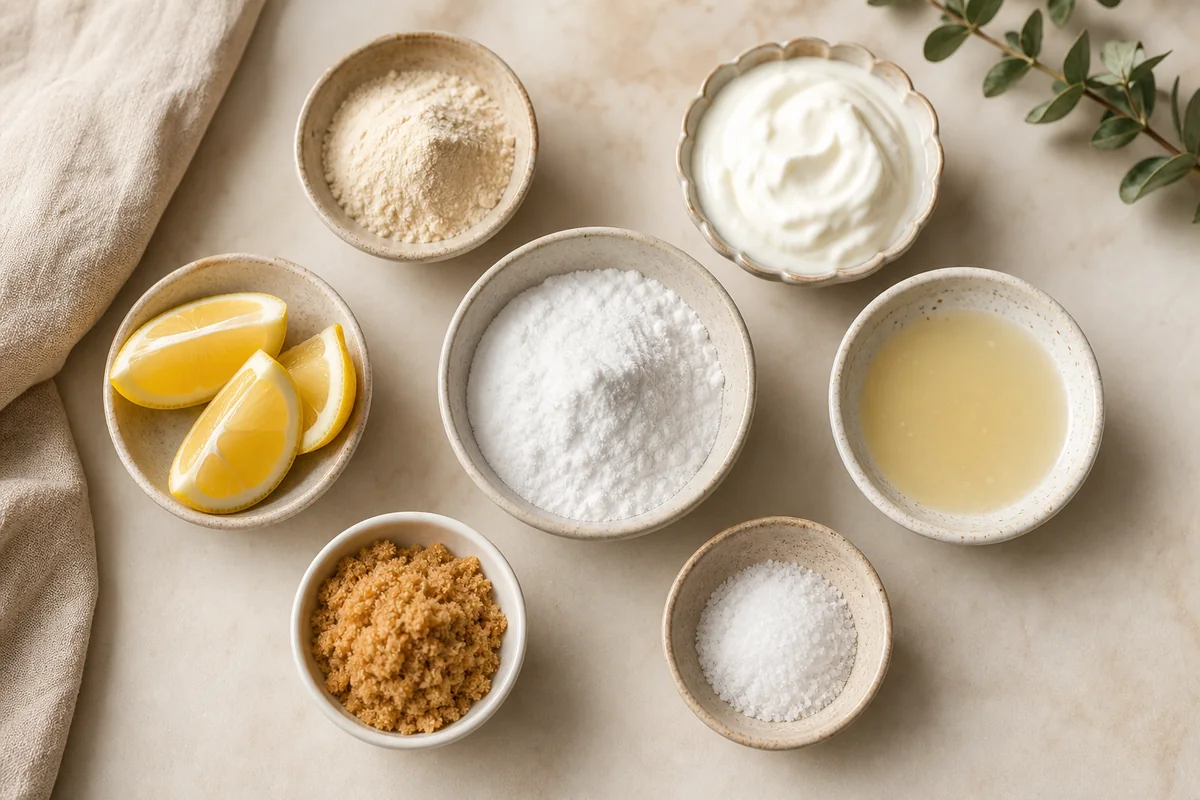
5 Best Baking Soda Substitutes (Easy Swaps)
Ingredients
Equipment
Method
- Check your recipe for added acid (buttermilk, yogurt, sour cream, vinegar, lemon juice, brown sugar molasses).
- If there’s little/no acid, pick baking powder (about 3x the baking soda amount) or potassium bicarbonate (about 1:1).
- If there’s an acid already, use an acid-paired option (acid + baking powder) so the batter still produces enough CO₂ for lift.
- Mix gently and bake right away; if you’re using liquid carbonation/acid activation, delays reduce the rise.
- After baking, note the texture: flat/soft crumb means you likely need more leavening next time; overly tangy means reduce acid.
Notes
- Ratios are starting points—your batter’s acid level and recipe type (cookies vs cakes) can change results.
Tried this recipe?
Let us know how it was!
Carrie is a food writer and editor with more than 15 years of experience. She has worked for some of the biggest names in the food industry, including Bon Appétit, Food & Wine, and Martha Stewart Living.
As the Editor in Chief of EpicureDelight, Carrie oversees all of the content on the site. She also manages the team of contributing writers and editors, who help to create delicious recipes, helpful tips, and informative articles that you’ll find on the site.
A native of the Chicago area, Carrie is passionate about all things food. She loves trying new restaurants and experimenting with new recipes in her kitchen. She’s also a graduate of the Culinary Institute of America, so she knows a thing or two about food!



