
That chewy pull when you tear open a fresh loaf comes directly from gluten strength, and bread flour is built to deliver it. Its protein content sits around 12-14%, versus 10-12% for most all-purpose flours.
That gap matters when you're shaping a sandwich loaf or stretching pizza dough.
A solid bread flour substitute doesn't just match the protein count on paper. It has to behave in the dough: building tension during kneading, holding gas during proof, and giving the crust something to push against.
This guide matches five replacements to specific baking jobs.
Bread flour's high protein creates gluten strength and chew. The best swaps are unbleached all-purpose flour (easy 1:1) or AP flour plus vital wheat gluten (closest match). Whole wheat works in blends. Cake and pastry flour are last-resort options for softer bakes only.
Bread Flour Substitutes at a Glance
These five substitutes cover most baking situations, from a weeknight sandwich loaf to pizza night. Scan the ratios first, then read each section for dough-handling notes.
| # | Substitute | Best For | Ratio | Key Note |
|---|---|---|---|---|
| 1 | All-purpose flour (unbleached) | Most breads | 1:1 | Mix longer for chew |
| 2 | AP flour + vital wheat gluten | Sandwich loaves | 1:1 | Closest to bread flour |
| 3 | Whole wheat flour (blend) | Hearty breads | ¾:1 | Add water gradually |
| 4 | Pastry flour | Soft quick breads | ⅞:1 | Low gluten, soft crumb |
| 5 | Cake flour | Tender rolls only | ⅞:1 | Expect very soft crumb |
5 Bread Flour Swaps Ranked by Gluten Strength
1. All-Purpose Flour (Unbleached)
Unbleached AP flour is the most practical swap for most home bakers. It has roughly 2% less protein than bread flour, which means the dough builds less tension, but it still rises and slices cleanly.
The trick is in the handling. A longer knead or a few sets of stretch-and-folds during bulk fermentation compensates for that protein gap.
If you want to understand AP flour's flavor profile before committing, that context helps when you're matching it to a recipe.
- Pizza dough: Use 1:1 and increase kneading by 3-4 minutes to build more structure.
- Dinner rolls: Works well at 1:1 with no changes needed; softness is welcome here.
- Sandwich bread: Add an extra 5-minute rest after the initial mix to let gluten relax and develop.
- Hydration: AP absorbs slightly less water, so reduce liquid by 1 tablespoon per cup if dough feels slack.
Skip if: You need a very chewy, high-rise sandwich loaf or pullman bread. AP may under-develop gluten even with extra mixing.
2. AP Flour + Vital Wheat Gluten
This is the closest you can get to actual bread flour behavior without buying a new bag. Adding 1 teaspoon of vital wheat gluten per cup of AP flour raises the protein content to roughly 13-14%, matching bread flour almost exactly.
- Mixing ratio: Add 1 teaspoon vital wheat gluten per cup of AP flour, then whisk together before measuring.
- Rest time: Let the dough rest 10 minutes after mixing before kneading-gluten hydrates and develops faster.
- Hydration: Vital wheat gluten absorbs water quickly; add an extra 1-2 tablespoon per cup of flour blend.
- Best uses: Sandwich loaves, bagels, focaccia, and any recipe where chew is the goal.
Skip if: Your recipe is a quick bread or muffin that doesn't need gluten development. The added gluten will make the crumb dense and rubbery.
3. Whole Wheat Flour (Use a Blend)
Whole wheat flour has enough protein on paper, but bran particles cut through gluten strands during mixing. That interruption limits rise and tightens the crumb, which is why a pure whole wheat swap often produces a brick.
All Whole Wheat
Works for: Dense sandwich loaves, seeded breads, flat breads
Skip if: You want any lift or open crumb structure
50/50 Blend with AP Flour
Works for: Most everyday loaves, hearty rolls, naan
Skip if: You're baking baguette-style bread where a light crumb is the point
If you're switching to whole wheat for the first time, the blend approach gives you more room to adjust without wrecking the loaf.
- Hydration: Whole wheat absorbs more water. Add 2 tablespoon extra per cup of whole wheat used.
- Fermentation: Extend bulk fermentation by 20-30 minutes. Bran slightly slows yeast activity.
- Ratio: Start at 50% whole wheat and 50% AP. Increase whole wheat in future bakes once you know the dough feel.
Skip if: You're aiming for a light, airy crumb in baguette-style rolls. Whole wheat tends to stay heavier no matter the blend ratio.
4. Pastry Flour
Pastry flour runs around 8-9% protein, well below bread flour's range. That lower gluten means it won't build the same elastic structure, but it's not useless for everything bread-adjacent.
Soft sandwich bread, milk bread, or tender dinner rolls can tolerate pastry flour because those recipes are designed around a softer crumb anyway. You can read about lower-protein flour options if pastry flour is all you have and the bake is flexible.
Use it at ⅞ of the bread flour amount and expect the dough to feel softer and slightly stickier than usual. Handle it gently and don't overwork it, since more mixing without gluten strength only makes the crumb gummier.
Skip if: You're making pizza dough or any sandwich bread that depends on a strong gluten network for structure and chew. Pastry flour won't build it.
5. Cake Flour
Cake flour is the lowest-protein flour on this list, usually around 7-8%, and it's also finely milled and slightly bleached. Those two traits produce an extremely tender, almost crumbly crumb that is great for cakes and not great for bread.
| Use | Ratio | Notes |
|---|---|---|
| Tender dinner rolls | ⅞:1 | Cake flour only; reduce liquid by 1 tbsp |
| Soft sandwich bread | ½:1 | Blend with AP; cake flour max 50% |
| Pizza dough | Not recommended | No gluten strength for stretch or chew |
| Artisan loaves | Not recommended | Crumb collapses without protein support |
For a detailed look at how fine-milled flour types compare, the differences in protein and grind become clear fast.
- Dough feel: Expect a very soft, almost paste-like dough. Use a loaf pan to support shape during baking.
- Hydration: Reduce liquid by 1-2 tablespoon per cup since cake flour absorbs less water than bread flour.
- Best result: Use in enriched soft rolls where butter and egg already soften the crumb anyway.
Skip if: You need strong rise and an elastic crumb. Cake flour cannot replicate bread flour's structure even with adjusted hydration.
Making Bread Flour Substitutes Work
The single biggest mistake bakers make with substitutes is treating the dough the same as the original recipe. Different flours absorb water differently, and a dough that looks right at 5 minutes may be too stiff or too slack by the end of the first rise.
Pay attention to how the dough feels, not how the clock reads. If you want to understand how high-protein flour behaves in the oven, that context helps you read your substitute dough more accurately.
- Adjust hydration first: Start with 90% of the liquid the recipe calls for, then add more 1 tablespoon at a time until the dough clears the bowl and feels tacky but not wet.
- Build gluten through rest: If you're using AP flour or a blend, try 3 sets of stretch-and-folds in the first 90 minutes instead of a heavy knead. This develops structure gently without overworking a weaker flour.
- Read the proof, not the timer: Weaker flours may rise faster or slower than bread flour. Use the poke test-dough should spring back slowly, not snap back immediately or stay dented.
Frequently Asked Questions
All-purpose flour mixed with vital wheat gluten is the closest match. Use 1 teaspoon of vital wheat gluten per cup of AP flour to replicate bread flour's protein level and elasticity.
Yes, for most everyday breads. The loaf will be slightly less chewy, but extra kneading or stretch-and-fold sets during bulk fermentation helps close the gap.
Add 2 tablespoons of extra water per cup of whole wheat flour used. Bran particles absorb more liquid than white flour and can make dough feel stiffer than expected.
It's optional for soft breads but worth adding for chewy loaves, bagels, or pizza. Plain AP flour works fine for most casual bakes without it.
Both have too little protein to form a strong gluten network. The crumb ends up soft and fragile instead of chewy and structured, no matter how long you knead.
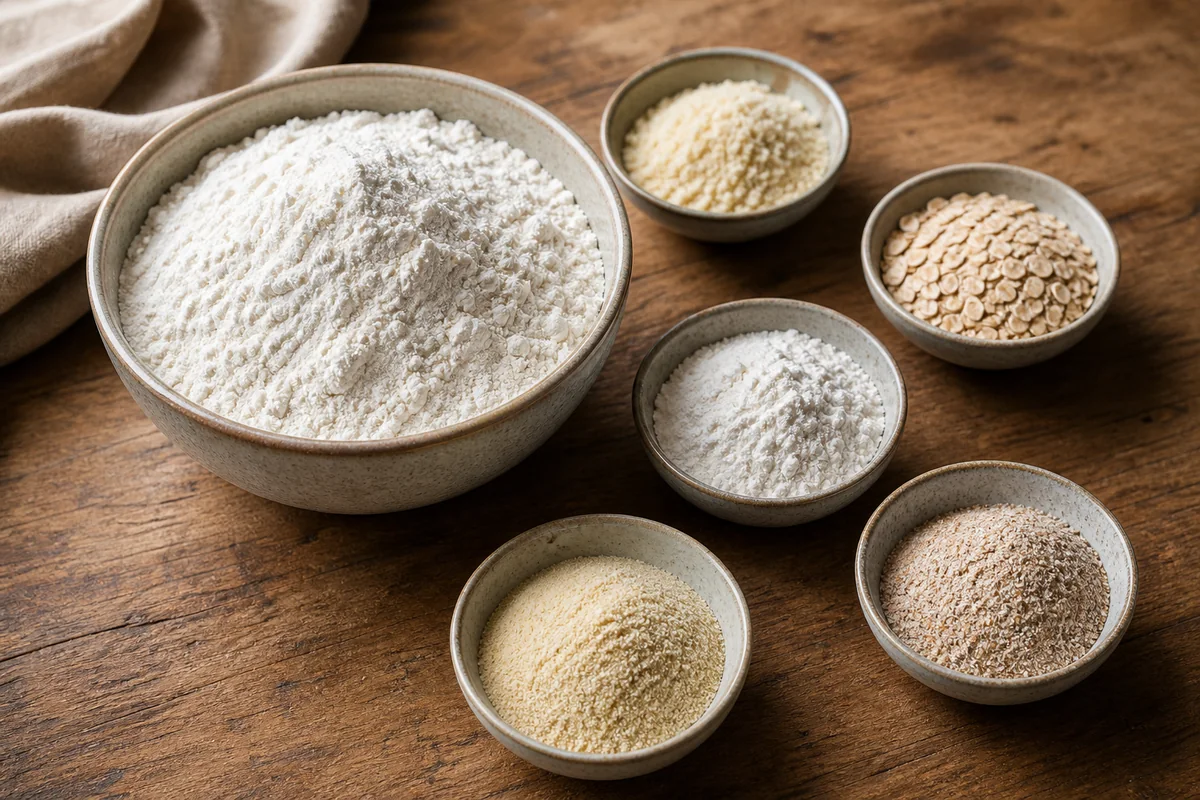
5 Best Bread Flour Substitutes (That Actually Work)
Ingredients
Equipment
Method
- Identify your bake type (sandwich loaf, pizza dough, rolls, or quick bread) so you can match gluten strength to the job.
- Pick a substitute from the reference table and use the listed ratio to replace bread flour by weight.
- If the substitute is weaker (cake/pastry/whole wheat), adjust hydration: add water 1–2 tablespoon at a time until the dough feels elastic, not sticky.
- Knead or mix appropriately: use the gluten-building window (or longer rest/sets) for AP blends, and avoid overmixing very weak flours.
- Let fermentation do the work: extend bulk fermentation slightly for weaker flours to improve flavor and rise.
Notes
- Ratios are by weight. If you measure by volume, your results will vary.
- For 100% substitution success, consider the dough’s feel: elasticity usually beats perfect numbers.
Tried this recipe?
Let us know how it was!
Carrie is a food writer and editor with more than 15 years of experience. She has worked for some of the biggest names in the food industry, including Bon Appétit, Food & Wine, and Martha Stewart Living.
As the Editor in Chief of EpicureDelight, Carrie oversees all of the content on the site. She also manages the team of contributing writers and editors, who help to create delicious recipes, helpful tips, and informative articles that you’ll find on the site.
A native of the Chicago area, Carrie is passionate about all things food. She loves trying new restaurants and experimenting with new recipes in her kitchen. She’s also a graduate of the Culinary Institute of America, so she knows a thing or two about food!



