
Tender pastry starts with the right flour. Pastry flour sits lower on the protein scale than all-purpose, usually around 8-9%, which means less gluten forms when you mix.
That lower gluten is what keeps pie crust flaky, cookies soft, and biscuits light instead of rubbery. Understanding pastry flour's flavor profile helps you pick a swap that keeps those same qualities intact.
A good pastry flour substitute closes that protein gap, either by swapping to a naturally softer flour or by diluting all-purpose with a fine starch. Both routes work.
The trick is knowing which one fits your recipe type before you mix anything.
Cake flour is the closest single-flour swap. For a pantry blend, mix all-purpose flour with cornstarch or potato starch to lower effective protein. Whole wheat pastry flour works for rustic bakes. Straight all-purpose flour can work too, but only if you shorten your mixing time.
5 Best Pastry Flour Substitutes for Any Recipe
Scan the table below before you choose. Ratios are based on weight when possible; volume works too if you spoon-and-level to avoid packing.
| # | Substitute | Best For | Ratio | Key Note |
|---|---|---|---|---|
| 1 | Cake Flour | Both | 1:1 | Finest texture match |
| 2 | AP + Cornstarch Blend | Baking | 1:1 | Softer crumb than plain AP |
| 3 | Whole Wheat Pastry Flour | Both | 1:1 | Mild nutty flavor added |
| 4 | AP + Potato Starch Blend | Baking | 1:1 | Silkier crumb than cornstarch |
| 5 | All-Purpose Flour Only | Cooking | 1:1 | Reduce mixing to prevent toughness |
1. Cake Flour
Cake flour is the most direct swap for pastry flour. Its protein content is even lower, around 6-8%, which produces a finer, softer crumb without needing any blending.
For anything that values a delicate texture, like shortbread, drop biscuits, or sugar cookies, it performs nearly identically to pastry flour.
Baking with fine-milled flour options like cake flour keeps gluten formation minimal. That means your pastry stays short and tender rather than springy.
- Cookies and bars: Direct 1:1 swap, no changes needed
- Muffins and quick breads: Swap 1:1; reduce mixing to about 10 folds after wet meets dry
- Pie crust: Works well for short, crumbly crust; less ideal for very flaky, elastic dough
- Biscuits: Excellent choice; biscuits stay lift-y and soft
Skip if: Your recipe calls for a strong, pull-apart flaky crust that needs some dough elasticity. A starch blend or whole wheat pastry flour may give you more control there.
2. All-Purpose Flour + Cornstarch
This is the blend most home bakers reach for when pastry flour is not on the shelf. The ratio is simple: for every 1 cup of pastry flour called for, use ⅞ cup (14 tbsp) of all-purpose flour and 2 tablespoons of cornstarch. Cornstarch dilutes the protein percentage of the mix, which limits gluten development and keeps your baked good from going chewy.
Whisk both together in a bowl before measuring into your recipe. Loose starch pockets give uneven texture, so blending first matters.
You can make this blend in bulk and store it like any flour. If you are curious about how neutral-tasting flour behaves on its own, the cornstarch addition keeps that same clean flavor while softening the crumb.
- Cookies: Use the full blend 1:1; mix just until no dry streaks remain
- Muffins and cakes: Works well; expect a slightly denser crumb than cake flour, but still tender
- Pie crust and biscuits: Mix just until the dough barely comes together; over-handling tightens the crumb quickly
- Handling tip: If dough feels stiff, add cold water 1 teaspoon at a time - starch absorbs more liquid than plain flour
Skip if: Your batter needs to hold a very firm structure, like a dense fruit cake. Cake flour or whole wheat pastry flour gives you more predictable density in those cases.
3. Whole Wheat Pastry Flour
Whole wheat pastry flour is milled from soft white wheat, not the hard red wheat used in bread flour. That keeps its protein content lower than standard whole wheat, typically around 9%.
It can still produce tender results in pie dough, biscuits, and rustic cookies. The flavor is earthier and slightly nutty, which pairs well with brown butter, oats, nuts, and fruit.
For a deeper look at whole-grain flour swaps, that page covers more options when you want to keep the fiber but stay tender.
| Use | Ratio | Notes |
|---|---|---|
| Pie Crust | 1:1 | Adds rustic flavor; keep butter cold |
| Biscuits | 1:1 | Slight density increase; still fluffy |
| Cookies | 1:1 | Best for oatmeal, nut, or spiced varieties |
| Delicate Cakes | 50/50 with cake flour | Cuts the earthiness for lighter crumb |
Skip if: You need a very neutral or light flavor. Vanilla sponge or white layer cake will taste noticeably grainy with whole wheat pastry flour. Choose cake flour or the cornstarch blend instead.
4. All-Purpose Flour + Potato Starch
Potato starch works the same way cornstarch does: it lowers the effective protein ratio and softens the crumb. Many bakers find it gives a slightly silkier result than cornstarch, with less of a chalky aftertaste in very tender batters.
Use the same ratio as the cornstarch blend: ⅞ cup all-purpose flour plus 2 tablespoons of potato starch per cup.
Cornstarch Blend vs. Potato Starch Blend
Works for: Both give tender crumb; cornstarch is widely available; potato starch suits those avoiding corn
Skip if: You only have one starch - pick what you have, the texture difference is minor
Blend the starch and flour thoroughly before adding to your recipe. A short 10-minute rest after mixing dough helps potato starch fully hydrate, which reduces any slight gumminess.
Choosing the right dough-cutting tool also matters for even hydration in pie dough - rough cutting leaves dry pockets.
- Shortbread and butter cookies: Excellent choice; the silky crumb is very noticeable here
- Biscuits and scones: Use cold fat and handle minimally; rest dough for 10 minutes before cutting
- Muffins: Swap 1:1; keep mixing to under 15 strokes after wet meets dry
- Note on browning: Starch blends can brown slightly faster - check oven 2-3 minutes early
Skip if: You only have cornstarch available. Stick with the cornstarch blend. The results are close enough that switching mid-recipe is not worth it.
5. All-Purpose Flour Only
Plain all-purpose flour is nobody's first choice here, but it works. The protein is higher (10-12%), so the dough or batter will feel stronger and can turn tough fast. Technique carries most of the weight with this swap.
If you handle the dough gently and stop mixing the moment it comes together, you can get a passable result for cookies, quick breads, and even pie crust.
For context on how this flour behaves over time, storing your flour properly keeps protein levels stable and prevents off-flavors that can make results feel heavier than expected.
- Mix time: Stop as soon as no dry streaks remain - 10-12 folds maximum for batters
- For dough (pie crust, biscuits): Use cold fat, cold water, and handle no more than necessary
- For cookies: Cream butter and sugar fully before adding flour; the fat coating slows gluten
- Chill the dough: A 20-minute refrigerator rest relaxes gluten and improves tenderness noticeably
- Reduce liquid slightly: AP absorbs a bit differently; pull back on milk or water by 1-2 teaspoon per cup of flour
Skip if: You are baking something that must be very light and soft, like a layered sponge or a delicate tart shell. Get cake flour or make a starch blend. Technique helps, but it has limits.
Making Pastry Flour Substitutes Work
Choosing the right substitute is only half the job. Once you have your flour or blend, a few small technique adjustments keep the final texture close to what pastry flour would produce.
Using the right pastry-finishing tool for egg wash or glazing also prevents pressing the dough flat and undoing tender layers you worked for. If your dough feels elastic after mixing, the first fix is always the same: stop mixing sooner next time, and let the dough rest in the fridge for 15-20 minutes before rolling.
- Dough too dry after a starch blend: Add cold water 1 teaspoon at a time; starch absorbs more than plain flour, so go slowly
- Browning too fast: Starch-tenderized blends can color quickly - tent with foil after two-thirds of the bake time if needed
- Batter feels gummy: Your blend may need more rest time; let it sit 10 minutes before baking to let starch fully hydrate
Frequently Asked Questions
Use 2 tablespoons of cornstarch per cup, combined with ⅞ cup of all-purpose flour. Whisk them together before measuring into your recipe so the starch is evenly distributed.
Yes, cake flour swaps 1:1 and works well for both. Biscuits stay fluffy and pie crust stays short, though it is less elastic than a starch blend for very flaky layered doughs.
It adds a mild nutty flavor and a slightly denser crumb. Rustic bakes like oatmeal cookies or fruit galettes handle it well; very delicate recipes taste noticeably earthier.
Bread flour has very high protein (12-14%), which makes pastries noticeably chewy and tough. Avoid it for any pastry swap - use cake flour or a starch blend instead.
Keep it in an airtight container in a cool, dry place for up to 3 months. For longer storage, checking flour freshness before use prevents stale or off-tasting results in your bake.
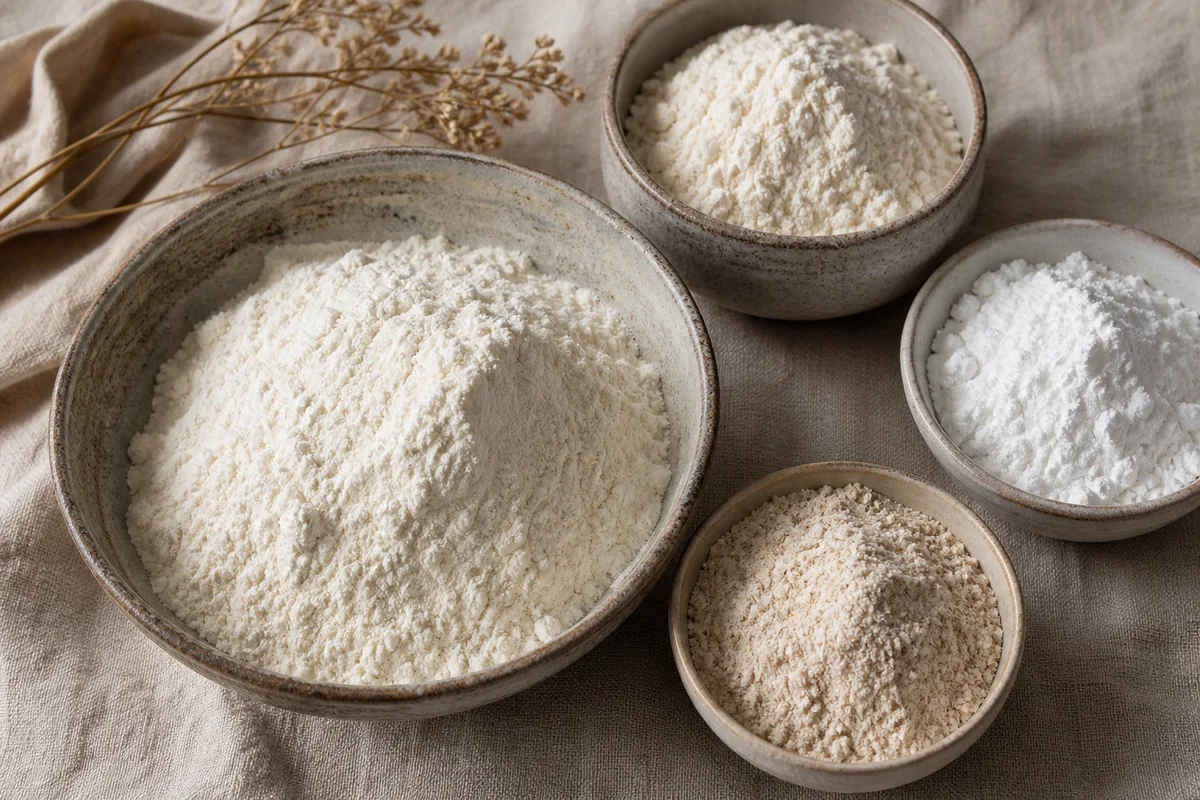
5 Best Pastry Flour Substitutes for Any Recipe
Ingredients
Equipment
Method
- Identify your goal: tender crumb (cakes/cookies) or tender dough (pie crust/biscuits), then choose the closest substitute from the list.
- Use the listed ratio (for blends, measure the total flour weight as the recipe calls for and then mix in the stated starch/protein tweak).
- Adjust handling: if your dough feels elastic, stop mixing sooner; if it feels dry, add 1–2 teaspoon water per cup of total flour.
- If using a starch-added blend, let the batter/dough rest 10–15 minutes before baking to improve tenderness.
- Bake as directed, then check doneness early—starch-tenderized flours can brown slightly faster.
Notes
- For best results, match protein level and keep mixing gentle to prevent toughness.
- Starch-added blends help mimic pastry flour’s tender, low-gluten behavior.
Tried this recipe?
Let us know how it was!
Carrie is a food writer and editor with more than 15 years of experience. She has worked for some of the biggest names in the food industry, including Bon Appétit, Food & Wine, and Martha Stewart Living.
As the Editor in Chief of EpicureDelight, Carrie oversees all of the content on the site. She also manages the team of contributing writers and editors, who help to create delicious recipes, helpful tips, and informative articles that you’ll find on the site.
A native of the Chicago area, Carrie is passionate about all things food. She loves trying new restaurants and experimenting with new recipes in her kitchen. She’s also a graduate of the Culinary Institute of America, so she knows a thing or two about food!



