
That crackle when cornmeal hits a hot pan, or the thick, slow-bubbling pull of polenta on a low flame, those are textures no single swap fully owns. The right cornmeal substitute depends on what that cornmeal is actually doing: adding grit and crumb, thickening a mixture, or giving a crust its crunch.
Match the role first, then the ratio. A fine swap for batter won't work for polenta, and a thickening starch won't give you a crisp crust.
The best cornmeal substitutes are corn flour for fine batters, semolina for polenta-style body, polenta/coarse cornmeal for grit, all-purpose flour for thickening, and rice flour for crisp coatings. Use 1:1 for most swaps; reduce to ¾:1 for all-purpose flour to avoid a heavy bite.
5 Best Cornmeal Substitutes Ranked by Texture
The table below is your first-stop chooser. Each substitute is matched to what cornmeal is doing in your recipe: fine texture for batters and quick breads, coarse body for polenta and grits, or dry crumb for coatings and frying.
Items 1 through 5 below the table expand on how to apply each one.
| # | Substitute | Best For | Ratio | Key Note |
|---|---|---|---|---|
| 1 | Corn Flour | Baking / Batter | 1:1 | Whisk well, very fine |
| 2 | Semolina | Polenta / Grits | 1:1 | Add extra liquid if dry |
| 3 | Polenta / Coarse Cornmeal | Polenta / Grits | 1:1 | Longer simmer needed |
| 4 | All-Purpose Flour | Thickening / Dredge | ¾:1 | Loses cornmeal crunch |
| 5 | Rice Flour | Crisp Coating | 1:1 | Gluten-free, neutral taste |
If your recipe is gluten-free, skip to rice flour or a certified gluten-free blend before considering the others.
1. Corn Flour
Corn flour is milled from the same grain as cornmeal, just ground much finer. It keeps the corn flavor and behaves almost identically in batter-based recipes, like cornbread or pancake mix, where a fine-milled corn base matters for even rise.
- Ratio: 1:1 in all batter and quick bread recipes
- Texture tip: Whisk it thoroughly into wet ingredients to prevent gritty clumps
- Dredging: Works for light coatings on fish; pat dry before dusting
- Storage: Keep in a sealed container, since fine-ground corn flour can absorb moisture faster than coarse cornmeal
Skip if you need coarse grits-style bite. Corn flour is smooth and won't give you polenta's chunky pull.
2. Semolina
Semolina is coarse-ground durum wheat, and it swells and firms up like polenta when cooked low and slow. It holds shape well for sliceable, scoopable dishes, which makes it a strong match when you want that dense, satisfying body.
For a sense of how semolina behaves against other grain-based options, the semolina versus farina comparison covers the key texture differences worth knowing.
- Ratio: 1:1 swap for cornmeal in polenta recipes
- Liquid: Add 2-3 tablespoon extra liquid per cup; semolina absorbs more than fine cornmeal
- Stirring: Stir every 2-3 minutes to prevent it from seizing at the bottom
- Set time: Pour into a dish and cool 20 minutes for clean, sliceable rounds
Semolina vs. All-Purpose Flour for Polenta
Works for: firm, scoopable texture; holds shape after cooling; slices cleanly
Skip if: you need corn flavor, or your recipe must be gluten-free
Skip if you need pure corn flavor. Semolina is firmly wheat-forward with no corn taste at all.
3. Polenta or Coarse Cornmeal
If you have polenta or any coarser-ground cornmeal in the pantry, it is the most direct same-ingredient swap available. The grind is different, but the corn flavor and starchy body are identical.
You can also cool and slice cooked polenta into firm rounds, a technique covered in more detail among these make-ahead polenta options, which is handy for meal prep or pan-frying later.
| Use | Ratio | Notes |
|---|---|---|
| Soft polenta / grits | 1:1 | Coarse grind; simmer 25-30 min, stir often |
| Sliceable polenta | 1:1 | Cool in pan 30 min; firms up for grilling or frying |
| Cornbread batter | 1:1 | Coarser texture; expect a slightly chunkier crumb |
- Simmer time: Budget at least 25 minutes, stirring every few minutes
- Liquid ratio: Use 4 cups liquid per 1 cup coarse polenta for soft, creamy results
- Batter use: In thin batters, pre-soak polenta for 10 minutes to soften the grit
Skip if you need a fast, thin batter. Coarse grinds won't fully hydrate in short mixing and resting times.
4. All-Purpose Flour
Flour is the pantry backup when cornmeal is mostly there to thicken a sauce or provide structure in a dredge, not to add crunch. The neutral soft-wheat base thickens evenly without clumping, but it does absorb liquid differently than cornmeal.
- Ratio: Use ¾ cup flour for every 1 cup cornmeal called for
- Dredging: Season heavily; flour is bland and needs salt and spice to compensate
- Avoiding gummy texture: Don't over-mix; stir just until combined in batters
- Thickening sauces: Whisk into cold liquid first, then add to heat for a lump-free result
Skip if you need cornmeal's signature crunch or corn flavor. Flour produces a soft, slightly doughy result in recipes that rely on cornmeal's coarse bite.
5. Rice Flour
Rice flour fries and bakes into a noticeably crisper crust than wheat flour, and it does so without gluten. For coatings on fish, shrimp, or chicken, the light, crisp coating it forms is one of the best texture payoffs of any swap here.
- Ratio: 1:1 for any coating or dredging application
- Batter use: Mix with cold water or sparkling water for a light tempura-style batter
- Gluten-free: Naturally gluten-free; safe for GF recipes needing a crisp crust
- Flavor: Neutral taste, so season the flour itself before dredging
If you're deciding between rice flour and other grain-based options, choosing a starch-based coating often comes down to whether you want crunch or chew.
Skip if you need corn flavor or a thick polenta-style body. Rice flour won't replicate either.
Making Cornmeal Substitutes Work in Any Recipe
The rule that saves most swaps is simple: match the substitute to the job, then adjust moisture by sight. A fine-grain swap like corn flour or rice flour stays at 1:1 and needs little adjustment, while coarser options like semolina or polenta need a little extra liquid and more time over heat.
Flavor balance matters too, since starch-based thickeners add no corn taste, so you may want a pinch more salt or a small amount of corn extract in savory dishes.
- Moisture rule: Fine swaps (corn flour, rice flour) rarely need extra liquid; coarse swaps (semolina, polenta) need 2-4 tablespoon more per cup
- Timing rule: Coarser substitutes need longer simmer times, usually 20-30 minutes versus 10-15 for fine cornmeal
- Flavor rule: When using a neutral swap (rice flour, all-purpose flour), increase seasoning and salt by about 25% to compensate for the missing corn depth
Frequently Asked Questions
Semolina is the closest non-corn option for polenta texture. It firms up, holds shape after cooling, and slices cleanly, though it won't have corn flavor.
Yes, but the texture changes noticeably. All-purpose flour produces a softer, cakier crumb with no corn flavor or grit.
Rice flour or panko breadcrumbs both work well. Rice flour gives the crispest result; panko adds a coarser, crunchier crust.
Add 2-3 tablespoons of extra liquid per cup of semolina. Semolina absorbs more moisture than fine cornmeal and can seize if the ratio stays the same.
Only for thickening. Corn starch won't replicate cornmeal's grit, crunch, or corn flavor in frying or baking applications.
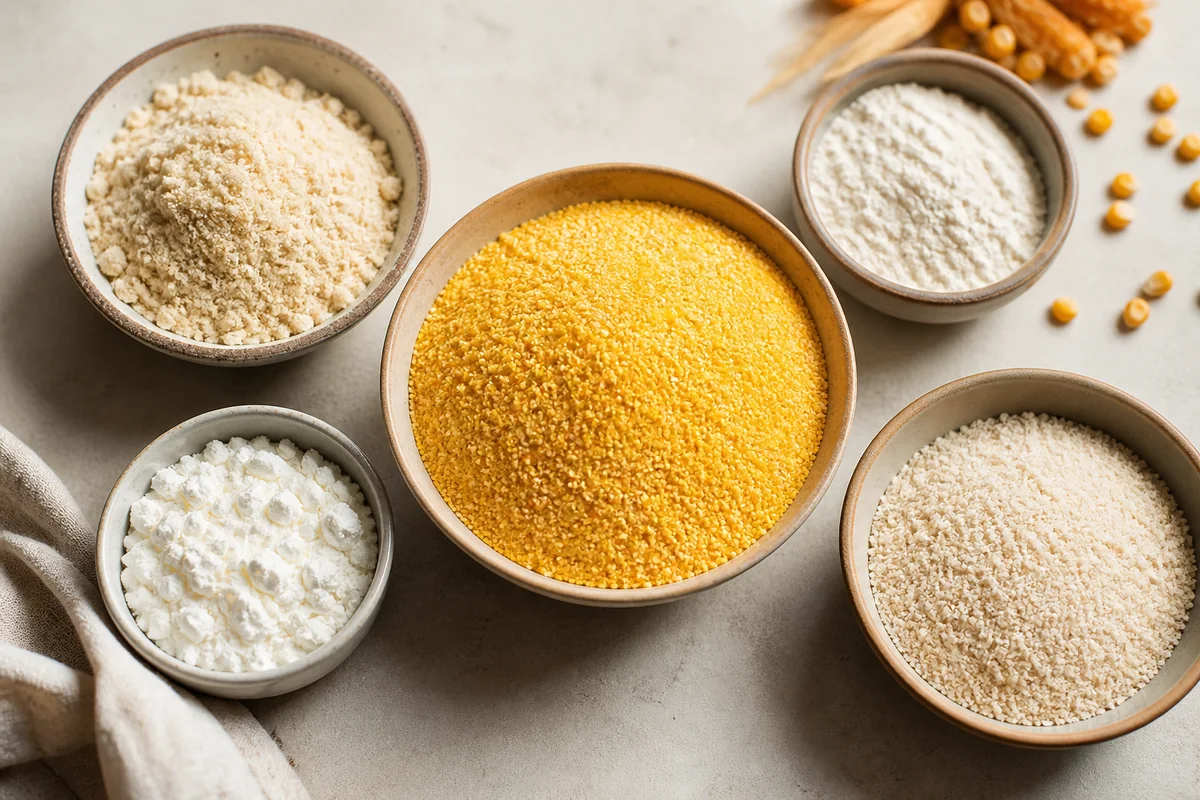
5 Best Cornmeal Substitutes in Every Recipe
Ingredients
Equipment
Method
- Identify what you’re using cornmeal for: polenta/grits texture, batter thickener, or a crumb/crust for frying.
- Pick the closest texture match from the table (fine for batter, semolina for scoopable polenta, crumbs for coatings).
- Apply the ratio from the WPRM list; for wetter batters, whisk longer to prevent clumps.
- Adjust by texture: if it’s too thick, add liquid 1–2 tablespoons at a time; if too loose, add small amounts gradually.
- Taste and re-check after the first cook step (baking/frying simmer/heat) because some substitutes firm up as they cool.
Notes
- If your recipe is for polenta/grits, prioritize semolina or a corn grind you have (fine vs coarse changes texture).
- If your recipe is for dredging/coating, prioritize rice flour or bread crumbs for crisping.
- If your recipe relies on cornmeal for thickening, use flour or corn starch by the listed thickener ratios.
Tried this recipe?
Let us know how it was!
Carrie is a food writer and editor with more than 15 years of experience. She has worked for some of the biggest names in the food industry, including Bon Appétit, Food & Wine, and Martha Stewart Living.
As the Editor in Chief of EpicureDelight, Carrie oversees all of the content on the site. She also manages the team of contributing writers and editors, who help to create delicious recipes, helpful tips, and informative articles that you’ll find on the site.
A native of the Chicago area, Carrie is passionate about all things food. She loves trying new restaurants and experimenting with new recipes in her kitchen. She’s also a graduate of the Culinary Institute of America, so she knows a thing or two about food!



