
That light, papery crunch on a tempura shrimp? It usually comes from rice flour.
When you're mid-prep and the bag is empty, the wrong swap can leave you with a dense, gummy coating or a baked crumb that sticks to the pan. This guide ranks the closest rice flour substitute options by texture and binding performance, so you pick the right one fast.
Rice flour is mainly a fine, neutral starch. It creates crispness in batters, tenderness in gluten-free cakes, and clean thickening in sauces.
The swaps below cover all three roles.
The closest rice flour substitutes are tapioca starch for crisp batters, cornstarch for coatings and thickening, potato starch for light frying, arrowroot for glossy sauces, and all-purpose flour when gluten is allowed. All swap at a 1:1 ratio. Adjust liquids slightly for best texture.
5 Best Rice Flour Substitutes, Ranked by Texture
Swap ratios and texture notes at a glance before the full breakdowns below.
| # | Substitute | Best For | Ratio | Key Note |
|---|---|---|---|---|
| 1 | Tapioca Starch | Batter & Baking | 1:1 | Crisp, slightly chewy coating |
| 2 | Cornstarch | Coating & Sauce | 1:1 | Softer crumb in baking |
| 3 | Potato Starch | Frying & Baking | 1:1 | Light, crisp, slightly earthy |
| 4 | Arrowroot Starch | Sauce & Glaze | 1:1 | Glossy, clean-tasting finish |
| 5 | All-Purpose Flour | Baking & Coating | 1:1 | Not gluten-free; denser bite |
1. Tapioca Starch
Tapioca starch is the closest structural match for rice flour in fried and baked coatings. It sets quickly, forms a thin crisp shell, and brings a slight chew that mimics the way rice-flour batters behave at high heat.
- Fried coatings: Use at a 1:1 ratio. Let the coated item rest 5 minutes before frying so the starch fully hydrates.
- Baked goods: Works well in cookies and flatbreads. Reduce liquid by 1 teaspoon per cup to account for tapioca's faster moisture absorption.
- Thickening: Thickens sauces at lower temperatures than flour. Pull the pan off heat as soon as the sauce clouds and clears.
- Mixing tips: If you're curious about the starch alternative, tapioca outperforms xanthan gum for crispness but loses on binding bread dough.
Skip this if your recipe needs gluten-free baking structure rather than coating crispness. Potato starch or arrowroot will give you gentler, more even thickening.
2. Cornstarch
Cornstarch is the pantry staple most cooks already have, and it handles rice flour's coating and thickening jobs without much fuss. At a 1:1 swap it produces a slightly thinner crust than rice flour, but the difference is minimal in batters and barely noticeable in sauces.
- Crispy coating: Toss chicken or vegetables in straight cornstarch for a light, crackly crust similar to rice-flour fried dishes.
- Sauce thickening: Cornstarch tightens sauces fast, often at lower temperatures than most flour swaps. Stir the slurry in at the end and watch closely.
- Baking: Use it to lighten a heavier gluten-free blend. Replacing just half the rice flour with cornstarch keeps the crumb tender without going full-cakey.
- Gluten-free batters: Works in swapping out wheat-based flours when combined with a binding agent like egg.
Skip this if you want a baked crumb that matches rice flour's slight bite. Cornstarch makes the texture noticeably softer and more cake-like on its own.
3. Potato Starch
Potato starch produces a light, airy crust in fried dishes and a tender crumb in gluten-free baking. It behaves very close to rice flour in high-heat applications, and it thickens sauces quickly with a clean finish.
| Use | Ratio | Notes |
|---|---|---|
| Frying / Coating | 1:1 | Crisp, pale crust; fry at medium-high heat |
| Gluten-Free Baking | 1:1 | Tender crumb; reduce liquid by 1-2 teaspoon per cup |
- Hydration: Potato starch absorbs moisture faster than rice flour. Add liquid gradually, 1 teaspoon at a time, until your batter reaches the right consistency.
- Storage note: this fine white powder clumps in humidity. Store sealed in a cool, dry spot and sift before measuring.
- Sauce use: It thickens quickly and can go slightly gluey if overcooked. Stir in off direct heat and serve promptly.
Skip this if you're sensitive to a mild earthy undertone. In delicate batters like crepes or thin pancakes, potato starch's flavor is more detectable than rice flour's neutrality.
4. Arrowroot Starch
Arrowroot starch thickens with a smooth, translucent gloss that cornstarch can't fully replicate. It works at lower temperatures and leaves no chalky aftertaste, making it a strong pick for delicate sauces, fruit glazes, and light batters where clean flavor matters.
Arrowroot Starch
Works for: glossy sauces, fruit glazes, delicate batters, dairy-free dishes
Skip if: you need oven-stable, reheatable thickening or sturdy baked structure
Cornstarch
Works for: high-heat sauces, crispy coatings, reheated leftovers
Skip if: you need a glossy, dairy-compatible sauce finish or clean flavor
- Heat sensitivity: Arrowroot breaks down if it's kept at high heat too long. Thicken the sauce, then remove it from heat immediately.
- Dairy sauces: Unlike cornstarch, arrowroot stays smooth in cream-based sauces without turning slimy.
Skip this if your goal is strong gluten-free baked structure. Arrowroot is better at glossy thickening than building a crumb that holds together when sliced.
5. All-Purpose Flour
This is the emergency swap when you need structure and binding and gluten is on the table. All-purpose flour adds protein and a bit of bran character, which changes the texture noticeably compared to rice flour's mild, fine starch behavior.
- Baked goods: Swap 1:1 for rice flour in muffins, quick breads, and pancakes. Expect a slightly chewier, denser crumb.
- Coating: Works for pan-frying but produces a thicker, softer crust than rice flour. Add a pinch of cornstarch (about 1 tablespoon per ¼ cup flour) to recover some crispness.
- Flavor shift: The wheat-forward flavor profile is more noticeable than rice flour's neutral starch taste, especially in delicate batters.
- Moisture: All-purpose flour absorbs more liquid than rice flour. Loosen your batter with 1-2 teaspoon extra water if it feels stiff.
Skip this entirely if you need a gluten-free result. Choose tapioca starch, potato starch, or arrowroot instead, depending on whether your priority is crispness or thickening.
Making Rice Flour Substitutes Work
The single biggest variable across all five swaps is hydration. Rice flour absorbs liquid at a moderate rate.
Starches like tapioca and potato absorb faster, so batters can thicken unexpectedly. All-purpose flour absorbs more slowly and holds more liquid overall.
Start every substitution at the 1:1 ratio, then adjust by 1 teaspoon of liquid at a time until the batter or dough matches what your recipe describes. For thickening jobs, the mild, fine-grained starch quality of rice flour means starch swaps come closest when added off heat or at the end of cooking.
- For frying: Let coated pieces rest 5 minutes after dredging. This gives the starch time to hydrate and bond to the surface, which is what creates that clean, crisp shell.
- For baking: Mix less, not more. Starch-heavy batters get gummy when overworked. Stir just until combined, then bake immediately.
- For thickening: Make a slurry first (1 tablespoon starch dissolved in 2 tablespoon cold water per cup of liquid). Add it near the end of cooking and stir constantly until the sauce shifts from cloudy to just clear.
Frequently Asked Questions
Yes, but the result will be softer and more cake-like. Cornstarch lacks rice flour's slight bite, so it works best when combined with another flour rather than used alone.
Tapioca starch is the closest match for crisp frying batter. Potato starch is a strong second, producing a light, pale crust at high heat.
It will, but expect a slightly chewier texture. Reduce liquid by about 1 teaspoon per cup and avoid overmixing, as tapioca starch turns gummy when overworked.
Both absorb moisture faster than rice flour. Start with 1 teaspoon less liquid per cup of starch and add back gradually until your batter reaches the right consistency.
Make sure the starch is fully cooked through. Raw starch tastes chalky. For sauces, keep stirring until the mixture turns from opaque to just translucent before serving.
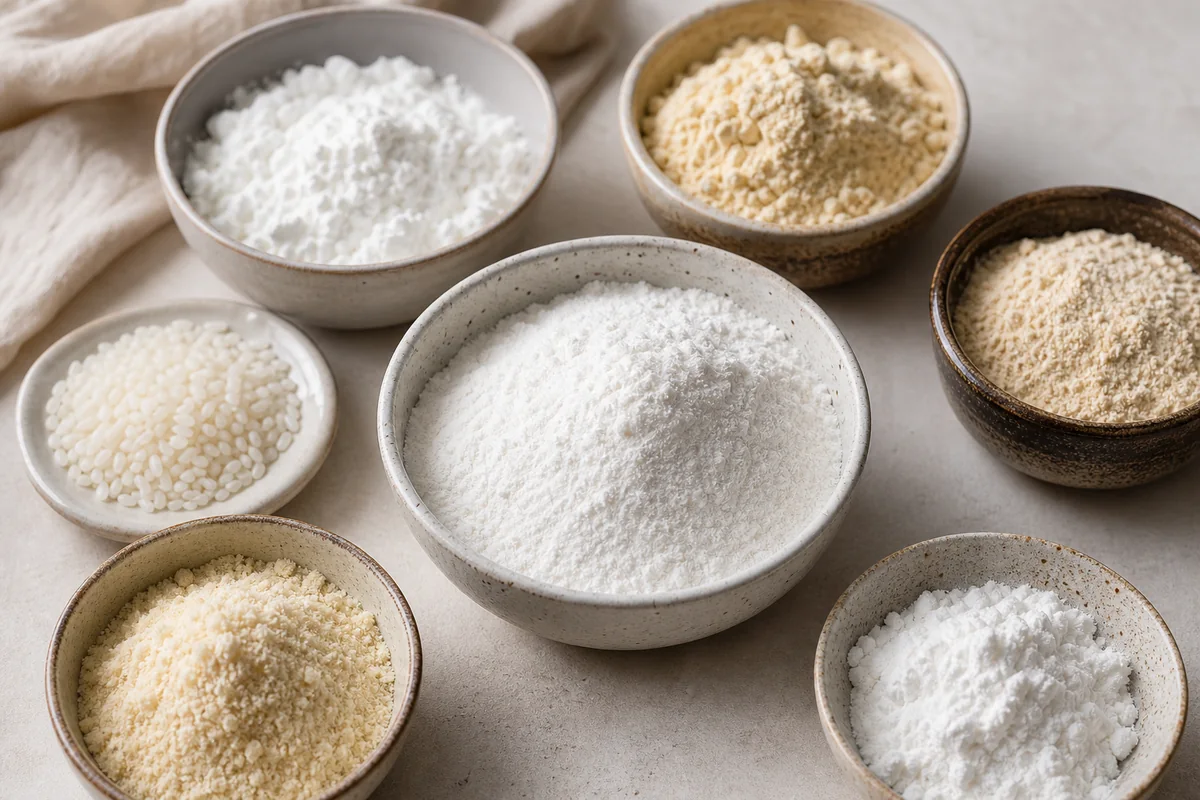
5 Best Rice Flour Substitutes (Closest Match)
Ingredients
Equipment
Method
- Decide your texture goal: crisp coating/batter or binding/thickening or gluten-free baking structure.
- Choose the matching substitute from the list and swap using the listed ratio (start with 1:1).
- If the batter/dough seems thick, loosen gradually with 1–2 teaspoon water per batch; if too thin, add substitute 1 tablespoon at a time.
- For crisping, let coatings rest 5 minutes before cooking so starch hydrates and sets.
- Bake or cook, then adjust next time: rice-flour-like tenderness usually needs less mixing and slightly lower liquid.
Notes
- Ratios are for swapping like-for-like volume; hydration needs can change based on your brand and recipe wetness.
- If your recipe is explicitly gluten-free, avoid all-purpose flour unless you’re intentionally switching the recipe’s dietary profile.
Tried this recipe?
Let us know how it was!
Carrie is a food writer and editor with more than 15 years of experience. She has worked for some of the biggest names in the food industry, including Bon Appétit, Food & Wine, and Martha Stewart Living.
As the Editor in Chief of EpicureDelight, Carrie oversees all of the content on the site. She also manages the team of contributing writers and editors, who help to create delicious recipes, helpful tips, and informative articles that you’ll find on the site.
A native of the Chicago area, Carrie is passionate about all things food. She loves trying new restaurants and experimenting with new recipes in her kitchen. She’s also a graduate of the Culinary Institute of America, so she knows a thing or two about food!



