
Enchiladas need a sauce that does three things at once: deliver chili depth, hold a clean tomato tang, and pour thickly enough to coat every tortilla without soaking it into mush. When you're out of the canned stuff, picking the right enchilada sauce substitute depends on matching those three traits, not just grabbing the nearest red liquid.
The good news is that most kitchens already hold something workable. Tomato sauce, salsa, ketchup, and taco seasoning can each get you close, once you know how to tune them.
The best substitutes for enchilada sauce start with a tomato base and chili seasoning. Match the pourable thickness by simmering thin sauces or loosening thick ones with stock. Adjust heat in small steps and taste as you go.
5 Best Enchilada Sauce Substitutes Ranked by Flavor
A tomato-forward base is always the first choice, because it carries both the acidity and the body that enchilada sauce needs. The table below gives a fast reference before you read the full breakdown on each one.
| # | Substitute | Best For | Ratio | Key Note |
|---|---|---|---|---|
| 1 | Tomato sauce + chili powder | Both | 1:1 | Add chili to taste |
| 2 | Salsa roja (strained) | Both | ¾:1 | Simmer to thicken |
| 3 | Crushed tomatoes + taco seasoning | Both | 1:1 | Simmer 3-5 min |
| 4 | Chipotle in adobo + tomato base | Both | 1:1 | Blend smooth first |
| 5 | Ketchup + chili powder | Both | ½:1 | Counter sweetness |
1. Tomato Sauce + Chili Powder
This is the pantry swap we reach for first. Plain tomato sauce already carries the acidity and smooth body of enchilada sauce, and spice-forward heat alternatives make it easy to fine-tune if you're out of standard chili powder too.
The final flavor is a little milder than canned enchilada sauce, but a short taste-and-add session closes that gap fast. Start with 1 teaspoon of chili powder per cup of tomato sauce, then increase until it matches your usual heat.
- Base ratio: 1 cup tomato sauce to 1 teaspoon chili powder (adjust up from there)
- Add-ons: Pinch of cumin, garlic powder, and a small squeeze of lime for tang
- Thickness fix: If too thin, simmer 3 minutes uncovered; if too thick, stir in 1 tablespoon water
- Flavor tip: Avoid adding more than 1 tablespoon chili powder at once-build in small steps
Skip if: You need a chunky sauce for a filling. This runs smooth and saucy, not textured.
2. Salsa Roja (Strained)
Salsa roja is already built from the same flavor family as enchilada sauce, which is why making salsa roja from scratch can actually double as a sauce base without much adjustment. The gap is texture.
Raw jarred salsa is too chunky and watery to coat tortillas properly.
Straining out excess liquid and simmering for a few minutes fixes both problems. The result is closer to pourable sauce than to salsa.
- Thickness step: Strain through a fine mesh, then simmer over medium heat until it coats a spoon
- Heat check: Taste after simmering-add a pinch of chili powder if the heat fell flat
- Sweetness fix: If the salsa is sweet-style, add a few drops of apple cider vinegar to cut it
Skip if: Your salsa is sweet-forward. The sugar will dominate even after adjustments.
3. Crushed Tomatoes + Taco Seasoning
This is the closest to a "classic" enchilada flavor you can get from two ingredients alone. Crushed tomatoes have more body than tomato sauce, and the spice profile of taco blends already includes cumin, chili, and garlic, which overlap almost completely with enchilada seasoning.
- Starting ratio: 1 cup crushed tomatoes to 1.5 teaspoon taco seasoning
- Simmer time: 3-5 minutes to mellow any powdery edge from the seasoning
- Too salty? Thin with 2 tablespoon of water and simmer 1 more minute
- Too flat? Add a pinch of salt and a drop of lime juice, then taste again
Skip if: You're avoiding packaged seasoning blends with additives. This swap depends on taco seasoning.
4. Chipotle in Adobo + Tomato Base
Chipotle in adobo brings a smokiness that regular enchilada sauce doesn't have, which is a plus in some dishes and a distraction in others. We blend 1 to 2 chipotle peppers with 1 cup of tomato sauce for a sauce that's deeper than the canned kind, without being harsh.
The sauce's characteristic tang still comes through once the tomato base is properly proportioned.
The adobo sauce in the can is sweet, so keep that in mind. Blending rather than chopping keeps the texture consistent and prevents hot pockets of uneven spice.
- Blend ratio: 1-2 chipotle peppers per cup of tomato sauce; start with 1
- Smoke control: Use 1 pepper for mild smokiness; 2 for a pronounced hit
- Sweetness watch: If the adobo sweetens the sauce too much, add 1 teaspoon chili powder to rebalance
Skip if: You're feeding people who are sensitive to smoke or heat. This swap isn't mild-friendly.
5. Ketchup + Chili Powder
Ketchup is a genuine emergency option, not a first choice. It has the tomato body and the right pourable consistency, but the sweetness is a real problem in a savory sauce.
Looking at tomato-based swap options can help if you want something with less sugar but similar body.
That said, ketchup works when you balance it. The goal is to push the sweetness back with acid and heat, then thin it so it pours without going gummy after baking.
Ketchup + Chili Powder
Works for: emergency situations, quick weeknight bakes, dishes with bold spiced fillings that mask sweetness
Skip if: you're making a very savory sauce without sugar, or if you can't balance the sweetness with vinegar and heat
- Starting ratio: ½ cup ketchup thinned with 3-4 tablespoon water to reach pouring consistency
- Heat balance: Add 1 teaspoon chili powder plus a small splash of vinegar or lime juice
- Thickness note: Keep it slightly thin before baking-ketchup tightens quickly under oven heat
Making Any Enchilada Sauce Substitute Work
Most substitutes fail not because of flavor, but because of texture. A sauce that's too thin will make tortillas soggy before the enchiladas finish baking.
One that's too thick won't spread evenly and can crack the tortillas as you roll them.
The fix is always the same: taste and adjust before you pour. When working with swapping tomato-based sauces, keep in mind that baking thickens most substitutes by at least 20 percent, so starting slightly thinner is almost always the right call.
- Thickness: Simmer thin substitutes uncovered for 3-5 minutes; loosen thick ones with water or stock in 1 tablespoon increments
- Heat and tang: Taste after mixing and add chili powder in ¼ teaspoon steps until the heat level matches your preference; a small squeeze of lime lifts any flat base
- Integration: Let spices sit in the warm sauce for at least 2 minutes before tasting final flavor-powdery seasoning needs heat to bloom properly
Frequently Asked Questions
Tomato sauce mixed with chili powder is the closest match. Start with 1 teaspoon chili powder per cup of tomato sauce, then adjust heat and add a pinch of cumin for depth.
Simmer it uncovered over medium heat for 3-5 minutes. Stir occasionally and pull it off the heat once it coats the back of a spoon.
Add a small splash of apple cider vinegar or lime juice, then increase chili powder by ¼ teaspoon at a time. Sweetness needs both acid and heat to rebalance properly.
You can, but the texture will be chunkier and wetter than enchilada sauce. Straining and simmering for 3-5 minutes gives a much better result.
Yes. Choosing a roasted tomatillo base keeps the brightness and tang that green enchiladas need. Simmer briefly to reduce excess water before using.
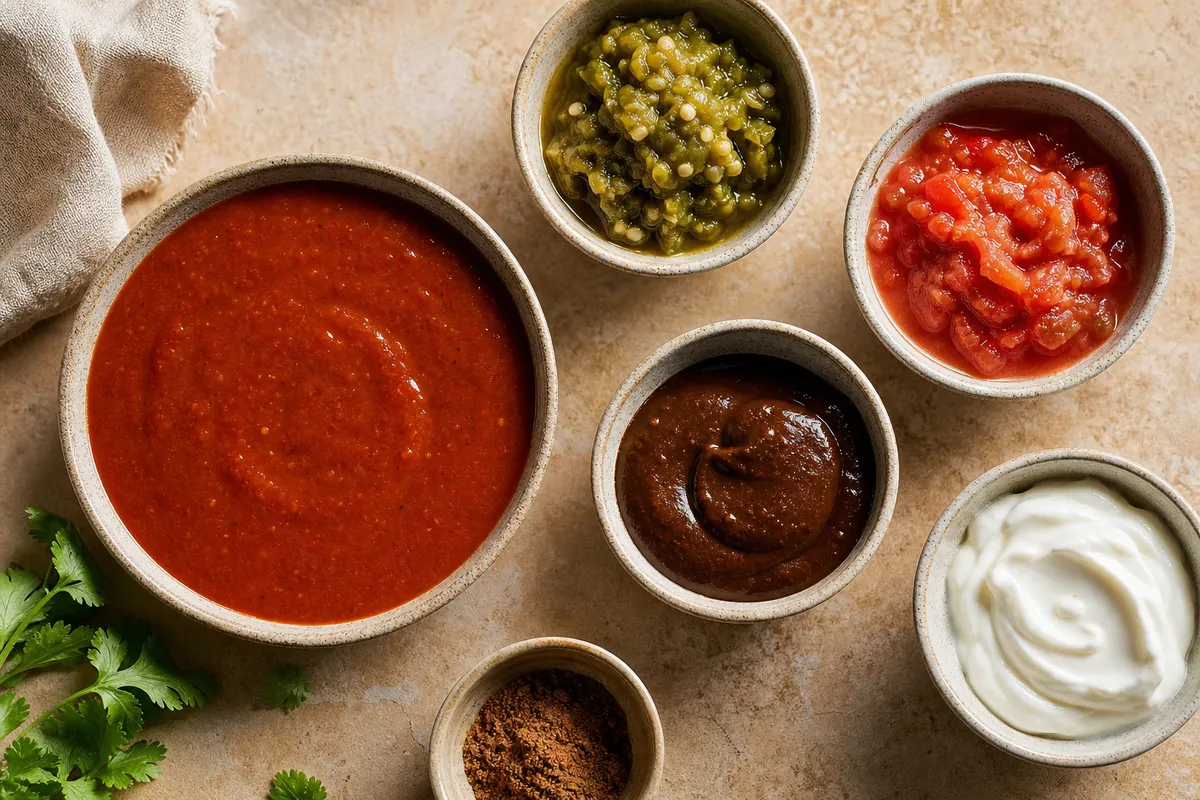
5 Best Enchilada Sauce Substitutes (Honest Picks)
Ingredients
Equipment
Method
- Choose your base: tomato-forward (best) or a chili-forward salsa; start with the ratio that matches your closest pick.
- Match heat and tang: taste your substitute and add chili powder/taco seasoning or a pinch of salt to get the same punch.
- Match thickness for pouring: if it’s too thin, simmer 3–5 minutes; if too thick, thin with a splash of water/stock.
- Let it rest 2–3 minutes so chili spices bloom, then pour over tortillas and fill as usual.
- If baking (or slow-cooking), keep the sauce slightly looser than you want—it thickens as it heats.
Notes
- For best flavor continuity, aim for a sauce that coats a spoon and pours in a ribbon.
- If your tortillas are dry, the sauce needs to be slightly looser so it hydrates during baking.
Tried this recipe?
Let us know how it was!
Carrie is a food writer and editor with more than 15 years of experience. She has worked for some of the biggest names in the food industry, including Bon Appétit, Food & Wine, and Martha Stewart Living.
As the Editor in Chief of EpicureDelight, Carrie oversees all of the content on the site. She also manages the team of contributing writers and editors, who help to create delicious recipes, helpful tips, and informative articles that you’ll find on the site.
A native of the Chicago area, Carrie is passionate about all things food. She loves trying new restaurants and experimenting with new recipes in her kitchen. She’s also a graduate of the Culinary Institute of America, so she knows a thing or two about food!



