
Your chili powder is empty and dinner is already on the stove. That's the situation, and there's no time for a grocery run.
The good news is that a chili powder substitute works better than most people expect, as long as you pick based on what you actually need: smoky depth, earthy warmth, or straight heat. Understanding the full flavor profile of chili powder helps you choose faster, because this spice is a blend, not a single pepper.
A good chili powder substitute depends on your flavor goal. Smoked paprika matches color and mild pepper notes at 1:1. Cayenne gives heat at half the amount. A cumin + cayenne blend comes closest to the earthy chili profile most recipes need.
5 Best Chili Powder Substitutes Ranked by Flavor Goal
Every option below replaces chili powder in a different way. The table gives you a fast starting point; the sections after it explain when each swap is worth it.
| # | Substitute | Best For | Ratio | Key Note |
|---|---|---|---|---|
| 1 | Smoked or Sweet Paprika | Both | 1:1 | Add cumin if flat |
| 2 | Cayenne Pepper | Heat Only | ½:1 | Very hot; go slow |
| 3 | Cumin + Cayenne Blend | Earthy | ¾:1 | Closest to true blend |
| 4 | Chili Seasoning Mix | Convenience | 1:1 | Check salt content first |
| 5 | Red Pepper Flakes | Heat + Texture | ½:1 | Needs simmer time |
If you're also weighing liquid heat options, choosing a sauce swap instead may suit saucier dishes better. For earthy spice blending, the difference between ground versus whole cumin forms matters when you're building from scratch.
1. Smoked or Sweet Paprika
Paprika is the easiest swap for a chili powder replacement because it matches the red color and keeps a mild pepper note. Smoked paprika adds a subtle wood-smoke character that works especially well in stews and slow-cook dishes; sweet paprika stays neutral and lets other spices lead.
If you're ever swapping smoked paprika itself, the logic reverses and chili powder can fill in.
Smoked Paprika
Works for: tacos, chili, stews, marinades, and any dish where chili color matters
Skip if: your recipe needs significant heat; paprika alone won't hit cayenne-level kick
Sweet Paprika
Works for: mild family-friendly dishes, eggs, roasted vegetables, and dry rubs
Skip if: the dish needs smokiness; sweet paprika is flat without added cumin or garlic
- Starting ratio: 1 teaspoon paprika for every 1 teaspoon chili powder
- Add depth: Stir in ¼ teaspoon ground cumin if the dish tastes one-dimensional
- For tacos: Use smoked paprika plus a pinch of garlic powder to rebuild the blend profile
- For chili: Add ⅛ teaspoon cayenne alongside the paprika to restore lost heat
2. Cayenne Pepper (Use Less)
Cayenne is pure heat, and it has almost none of the earthy or smoky notes that chili powder carries. That's what makes the ratio so important: start at half the amount, then nudge upward slowly.
If you want to know what cayenne delivers beyond heat, it has a slightly fruity sharpness that softens after a few minutes of simmering.
- Starting ratio: ½ teaspoon cayenne for every 1 teaspoon chili powder
- Build heat gradually: Add in ¼-teaspoon increments, tasting after 5 minutes of simmer time each round
- Bloom it early: Add cayenne to warm oil at the beginning so the heat mellows and blends
- Balance it: Pair with ½ teaspoon smoked paprika to get some color and pepper character back
- Skip if: Your original recipe relied on the smoky or earthy notes in chili powder; cayenne alone won't replace those
3. Cumin + Cayenne Blend
This is the best option when you need the actual earthy, spiced character of chili powder rather than just color or heat. Cumin supplies the dry, slightly bitter warmth that anchors most chili blends, while cayenne handles the fire.
If you're curious about milder dried pepper swaps, that path leans softer than this blend.
- Mix ratio: 2 parts ground cumin to 1 part cayenne pepper
- Starting amount: Use ¾ teaspoon of the blend per 1 teaspoon of chili powder called for
- Bloom early: Add the blend to hot oil for 30 seconds before adding liquids; this softens the raw cumin edge
- Too bitter? Reduce cumin by ¼ part and increase cayenne slightly for a rounder pepper note
- Too hot? Pull back cayenne by half and add a small pinch of smoked paprika instead
- Skip if: You want pure smoky flavor; smoked paprika does that job better on its own
4. Chili Seasoning Mix
A store-bought chili seasoning mix is a practical chili powder alternative when you have it in the pantry. The catch is that most blends already include salt, garlic powder, and onion powder, so you're not getting a neutral base.
Start at a 1:1 ratio, but reduce the added salt in your recipe by 25 to 50 percent and taste before adding anything else. Some brands lean heavy on cumin; others push oregano or even sugar, so the smoky depth you expect may or may not show up depending on the label.
- Starting ratio: 1:1, then taste and adjust down if the seasoning is very salty
- Salt check: Read the label before measuring; if salt is the first ingredient, use ¾ the amount instead
- Skip if: Your recipe needs a neutral chili-powder base and the seasoning mix is mostly salt or garlic
5. Red Pepper Flakes
Red pepper flakes add heat with visible texture, and that texture is the main thing to manage. They work best in dishes that simmer for at least 10 minutes, because the flakes soften and release their heat gradually into broth or sauce.
For smoother results, crush the flakes between your fingers or in a small mortar before adding them. If you're keeping flakes on hand regularly, knowing how to store dried chili products keeps their heat from fading.
| Amount of Chili Powder | Flakes to Use | Notes |
|---|---|---|
| 1 teaspoon | ½ teaspoon | Crush finer for smoother texture |
| 2 teaspoons | 1 teaspoon | Simmer 10+ min to soften |
| 1 tablespoon | 1.5 teaspoons | Blend with ½ teaspoon smoked paprika |
- Starting ratio: ½ teaspoon red pepper flakes per 1 teaspoon chili powder
- For braises and stews: Add flakes early so they fully hydrate and mellow
- For smoother sauces: Crush flakes before adding, or strain the sauce after simmering
- Skip if: Your recipe is quick-cooking or no-simmer; undercooked flakes stay sharp and uneven
Making Chili Powder Substitutes Work
The difference between a good result and a flat one often comes down to when you add the spice. Blooming any dry substitute in warm oil for 30 seconds before adding liquids opens up the aroma significantly.
If you're using a single-spice swap like paprika or cayenne, consider pairing it with a second spice the same way a real chili powder blend works, because layering two or three simple spices gets you much closer than one alone.
- Bloom first: Add your substitute to oil or butter over medium heat for 30 seconds before adding any wet ingredients
- Adjust salt separately: If your substitute (especially chili seasoning) contains salt, hold back on added salt until the end and taste
- Taste at the midpoint: Check flavor after 5 to 10 minutes of simmering, because spice intensity changes as it cooks into the dish
Frequently Asked Questions
Smoked paprika is the best single swap for smoky chili flavor, used at a 1:1 ratio. Add a pinch of cumin to restore the earthy base note that paprika alone lacks.
Use ½ teaspoon of cayenne for every 1 teaspoon of chili powder. Cayenne is significantly hotter, so start at that amount and add more only after tasting.
Yes, at a 1:1 ratio. You'll need to add ¼ teaspoon cumin and a small pinch of cayenne to get closer to the heat and earthiness chili needs.
No. Chili seasoning is a pre-mixed blend that often includes salt, garlic powder, and onion powder. Chili powder is usually simpler and saltless, so reduce your added salt when swapping in seasoning.
Smoked paprika plus a pinch of cumin and garlic powder works well for tacos at a 1:1 total ratio. Add a small amount of cayenne if you want heat closer to the original.
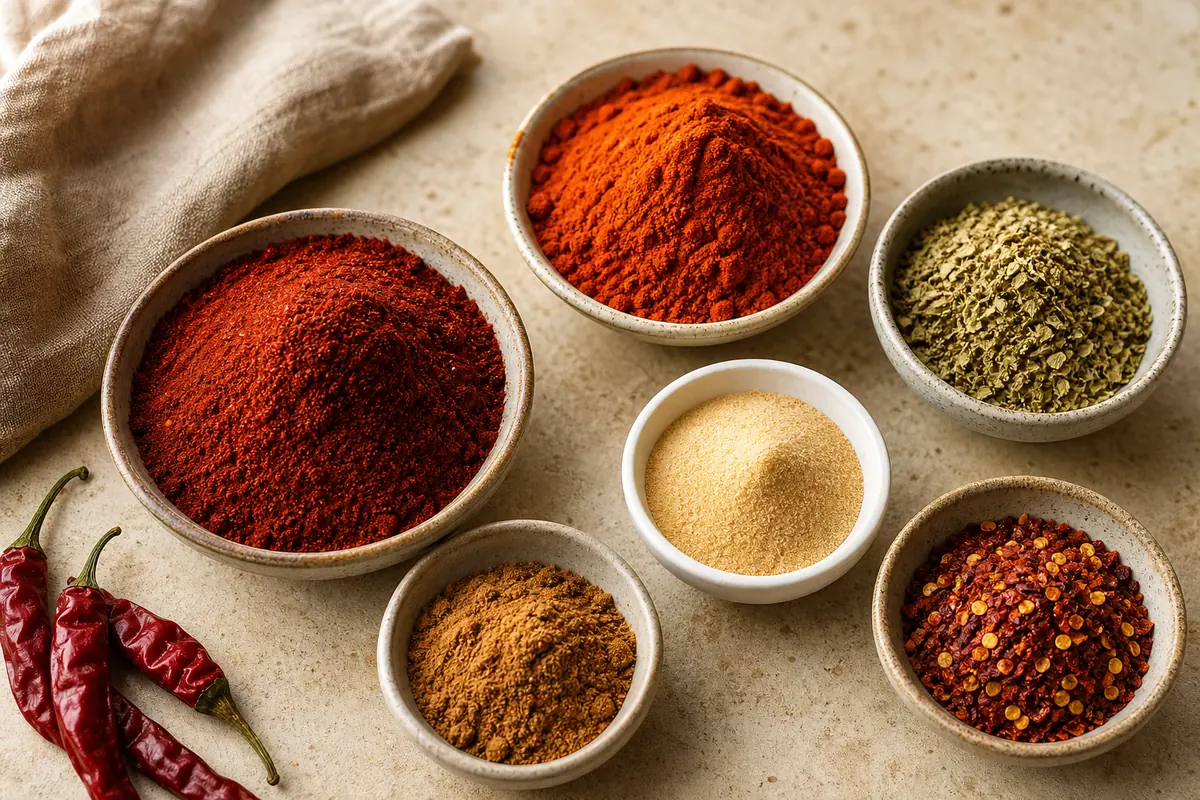
5 Best Chili Powder Substitutes (Easy Swaps)
Ingredients
Equipment
Method
- Decide what you need most: smoky pepper flavor, earthy chili depth, or just heat.
- Start with the ratio for your chosen substitute (e.g., 1:1 for paprika or ½:1 for cayenne).
- Add in small increments, because most substitutions are either hotter (cayenne/flakes) or less complex (paprika).
- If the substitute tastes one-note, fix it by adding a second spice: cumin for earthiness or a pinch of smoked paprika for smokiness.
- Simmer the dish briefly (5–10 minutes) so the new spices bloom and meld with sauce or broth.
Notes
- Always adjust heat last—most recipes tolerate more cumin/pepper for depth but not for overspice heat.
- If your chili powder is for color and mild warmth (not hot heat), paprika is usually the safest starting point.
Tried this recipe?
Let us know how it was!
Carrie is a food writer and editor with more than 15 years of experience. She has worked for some of the biggest names in the food industry, including Bon Appétit, Food & Wine, and Martha Stewart Living.
As the Editor in Chief of EpicureDelight, Carrie oversees all of the content on the site. She also manages the team of contributing writers and editors, who help to create delicious recipes, helpful tips, and informative articles that you’ll find on the site.
A native of the Chicago area, Carrie is passionate about all things food. She loves trying new restaurants and experimenting with new recipes in her kitchen. She’s also a graduate of the Culinary Institute of America, so she knows a thing or two about food!



