
That jar of green curry paste does a lot of heavy lifting. It brings herbs, heat, garlic, and salty-savory depth all in one spoonful.
Finding a good green curry paste substitute takes a bit more thought than swapping one chili sauce for another.
Green curry paste is built from fresh chiles, lemongrass, cilantro, basil, and garlic. The heat and the herb notes are a package deal.
Swap only the chili component and you'll have heat without the brightness that makes green curry taste distinctly green.
Measure your paste amount before you start. Every ratio below is based on your original recipe quantity, so knowing that number makes every swap easier.
Green curry paste combines herbal brightness, chili heat, and savory aromatics. The best swaps are Thai red or yellow curry paste, followed by DIY herb-chili blends. Every substitute needs a small lime or herb correction at the end to recover the signature green, fragrant quality.
5 Best Green Curry Paste Substitutes Ranked by Flavor Match
The table below ranks each substitute from closest overall flavor match to most limited. Use it to pick your swap quickly, then read the full section for exact ratios and adjustments.
| # | Substitute | Best For | Ratio | Key Note |
|---|---|---|---|---|
| 1 | Thai Red Curry Paste | Both | ¾:1 | Add lime and fresh herbs |
| 2 | Green Chili Paste + Herbs | Both | 1:1 | Blend smooth, add coconut milk |
| 3 | Curry Powder + Fresh Herbs | Cooking | 1:1 | Bloom in oil first |
| 4 | Sambal Oelek + Lime | Cooking | ½:1 | Heat-only; add herbs after |
| 5 | Thai Yellow Curry Paste | Both | 1:1 | Add lime, turmeric-forward |
Most substitutes are close in flavor direction. None will be identical, so plan to adjust with lime, fresh herbs, or a pinch of sugar once the curry simmers.
1. Thai Red Curry Paste
Thai red curry paste is the first jar most cooks reach for, and it is a solid call. It has the same garlic-shrimp paste-lemongrass backbone as green, just built around red dried chiles instead of fresh green ones.
The result is deeper, slightly smokier, and less bright. Use marinating with lime as your mental model here: a little citrus at the end pulls the dish back toward that fresh, green direction.
Green vs. Red Curry Paste
Works for: coconut milk curries, noodle soups, stir-fry bases, any recipe where aromatic paste body matters most
Skip if: the dish depends on a distinctly grassy, herby aroma - red paste reads warmer and darker in the final sauce
- Ratio: Use ¾ of your original green paste amount; red is bolder and a touch sweeter.
- Brighten it: Stir in 1 teaspoon lime zest and a handful of chopped cilantro or basil in the last minute of cooking.
- Heat check: Taste before adding coconut milk; some red pastes run hotter than others.
- Integration: Fry the paste in oil 30-45 seconds before adding liquid, same as you would with green.
Skip if: your recipe is specifically herb-forward - a green herb salad curry or fresh herb broth won't recover with lime alone.
2. Green Chili Paste + Fresh Herbs
This is the swap we prefer when there is 10 minutes to spare. A green chili paste base, like a jarred serrano or jalapeño paste, already carries the right color and raw chili edge.
Blending it with picking the right fresh leaf is what tips the result from just-spicy to genuinely curry-like.
- Blend method: Pulse 2 tablespoon green chili paste with a generous handful each of cilantro and basil until smooth.
- Ratio: Use 1:1 by volume relative to the green curry paste your recipe calls for.
- Mellow the heat: Add 1-2 teaspoon coconut milk during blending; it softens the sharp raw chili edge before cooking.
- Simmer time: Cook the blend in oil 3-5 minutes before adding coconut milk to integrate the raw herb notes.
Skip if: you only have dried herbs. Dried cilantro and dried basil will not replicate the aroma that makes green curry smell alive.
3. Curry Powder + Fresh Green Herbs
Curry powder is a spice blend, not a paste, so it behaves differently in the pan. It is drier, earthier, and completely missing the fresh herb character of green curry.
That said, it can anchor a decent curry base if you work with it correctly.
Bloom the powder in warm oil for 30-45 seconds before any liquid goes in. That short step activates the fat-soluble compounds and removes the raw-flour taste that makes powder-based curries fall flat.
The paste-versus-powder differences matter most here: paste disperses into sauce automatically, powder needs help.
Curry Powder vs. Green Paste
Works for: weeknight curries, spiced rice dishes, slow-cooked proteins where deep spice base is more important than herb brightness
Skip if: you need that lemongrass-garlic paste aroma - powder won't replicate the aromatic base without adding fresh garlic, ginger, and lemongrass separately
- Ratio: 1:1 by volume, but taste before committing - some curry powders are significantly spicier.
- Restore green: Finish with chopped cilantro and basil stirred in off the heat.
- Add body: Blend with 1 teaspoon each minced garlic and fresh ginger to get closer to paste-like depth.
Skip if: your recipe simmers for under 10 minutes - powder needs time and heat to bloom properly.
4. Sambal Oelek + Lime
Sambal oelek is a pure chili paste with almost no aromatics. It is the emergency option: fast, widely available, and genuinely spicy.
Understanding its sharp chili profile helps you plan the corrections before the pot even gets hot.
- Ratio: Start at half the green curry paste amount; sambal is hotter and has no herbal buffer.
- Round the edges: Add 1 teaspoon lime zest and a small pinch of sugar to soften the pure chili sharpness.
- Build the green: Stir in chopped cilantro and basil in the last 2 minutes of cooking.
| Heat Level | Sambal Amount (per 1 tablespoon green paste) | Notes |
|---|---|---|
| Mild | 1 tsp | Add extra herbs and lime to compensate for low paste volume |
| Medium | 1.5 tsp | Balanced starting point for most home curries |
| Hot | 1 tbsp | Taste before adding; reduce coconut milk if sauce gets too thin |
Skip if: your recipe needs savory aromatic depth from the paste base. Sambal alone reads as spicy but thin, not curry-like.
5. Thai Yellow Curry Paste
Yellow curry paste shares the same cooking method and sauce-building logic as green. It fries well in oil, disperses evenly in coconut milk, and produces a cohesive, creamy sauce.
The swap is almost seamless from a technique standpoint.
The flavor shift is real, though. Yellow paste is turmeric-forward with a warmer, slightly sweet edge.
It lacks the grassy, herbal lift of green. A little lime juice and fresh cilantro at the end are enough to nudge it back toward the brighter direction.
We suggest storing opened paste properly so you always have both colors on hand going forward.
- Ratio: 1:1 - sauce body and fat dispersion are nearly identical to green paste.
- Simmer longer: Give it 2-3 extra minutes so the turmeric-forward notes mellow and integrate.
- Add brightness: Finish with lime juice and chopped cilantro to recover some green herb character.
- Color note: The dish will turn golden rather than green - adjust expectations for presentation.
Skip if: the green color itself matters to you, like a styled dish for guests. Yellow paste takes the sauce in a completely different visual direction.
Making a Green Curry Paste Substitute Taste Right
Every substitute above needs at least one finishing correction to taste like itself, not just spicy. The order and timing of how you add things matters as much as the swap ratio.
For powder-based swaps, picking a reliable powder is the first decision, because weaker blends produce flat, dusty results even with good technique. If you're working with sambal or a DIY chili blend, the broader chili paste options may give you a better angle than sambal alone.
- Bloom or stir-in: Paste-based swaps (red, yellow) go into hot oil for 30-45 seconds before coconut milk. Powder-based swaps need the same blooming step or they taste raw. Sambal can go in with the aromatics without extended frying.
- Fix heat balance: If your substitute tastes too sharp or too hot, add 1 teaspoon lime juice and a small pinch of sugar. These two together round chili edges without adding sweetness you can actually taste.
- Rebuild missing aromatics: Lemongrass, garlic, and fresh ginger are the three elements most substitutes drop. Add one or all three to the oil before the paste goes in to rebuild the aromatic base your curry needs.
Frequently Asked Questions
Use about ¾ of the original green curry paste amount. Red paste is bolder and smokier, so starting lower prevents the swap from overwhelming the dish before you correct with lime or fresh herbs.
Yes, but bloom it in oil for 30-45 seconds first. Finish with fresh cilantro and basil to recover herb brightness, since powder alone has no green aromatic character.
Add lime zest, a pinch of sugar, and chopped cilantro and basil stirred in at the end. These additions address the two things sambal lacks: aromatics and brightness.
It works well if you fry the blend in oil for 3-5 minutes before adding coconut milk. Skipping that step leaves a raw herb taste that coconut milk won't cook out.
Add coconut milk gradually and taste as you go. A small pinch of sugar and an extra splash of coconut milk both cut bitterness and tame heat without thinning the sauce too much.
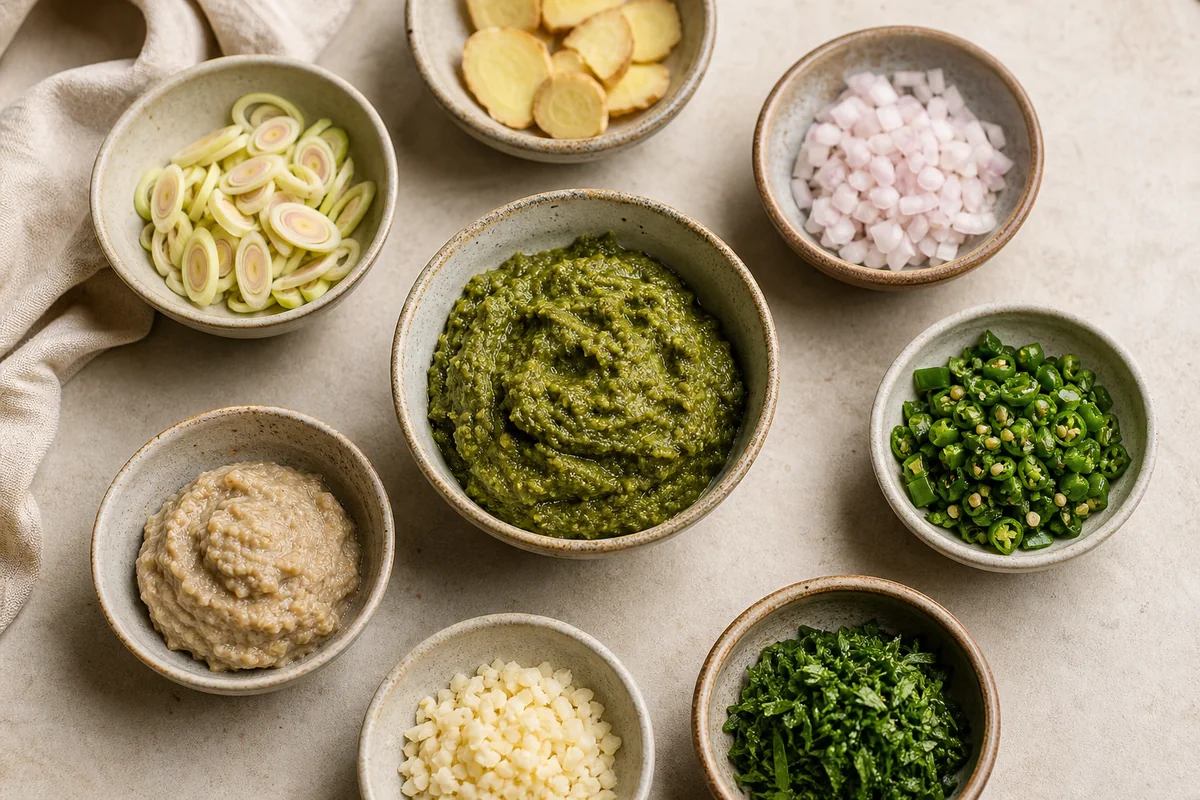
5 Best Green Curry Paste Substitutes (Ranked)
Ingredients
Equipment
Method
- Choose your substitute by goal: closest overall flavor (paste-based) vs fast emergency heat (chili pastes).
- Use the listed ratio relative to your original green curry paste amount, then whisk into a little coconut milk (or water) before adding to the pot.
- For curry powder-based swaps, bloom in warm oil 30–45 seconds to activate spices before mixing with coconut milk.
- Adjust the finish: add lime juice/zest for brightness, a pinch of sugar to round chili edges, and salt to match the original curry’s savory balance.
- Simmer 3–5 minutes so the aromatics integrate; taste and correct heat/herbiness last.
Notes
- Ratios assume you’ll simmer and adjust with coconut milk, lime, salt, and a tiny pinch of sugar to mimic green curry balance.
Tried this recipe?
Let us know how it was!
Carrie is a food writer and editor with more than 15 years of experience. She has worked for some of the biggest names in the food industry, including Bon Appétit, Food & Wine, and Martha Stewart Living.
As the Editor in Chief of EpicureDelight, Carrie oversees all of the content on the site. She also manages the team of contributing writers and editors, who help to create delicious recipes, helpful tips, and informative articles that you’ll find on the site.
A native of the Chicago area, Carrie is passionate about all things food. She loves trying new restaurants and experimenting with new recipes in her kitchen. She’s also a graduate of the Culinary Institute of America, so she knows a thing or two about food!



