
Harissa paste punches harder than most condiments in the fridge. It brings smoky, tomato-forward heat that one-note hot sauces just can't replicate.
Finding the right harissa paste substitute means matching that combination of chili heat, roasted pepper body, and background smoke. Get it right and your dish won't miss a beat.
The best harissa paste substitutes are chili paste blended with roasted red pepper, sriracha mixed with tomato paste, gochujang, a DIY spice-and-oil paste, and chipotle in adobo. Each swap covers heat and body in different ways. Start at a lower ratio and taste as you go.
5 Best Harissa Paste Substitutes for Home Cooks
Each option below targets a different part of harissa's flavor. Use the table to find your starting point, then read the section for the details that matter.
| # | Substitute | Best For | Ratio | Key Note |
|---|---|---|---|---|
| 1 | Chili Paste + Roasted Red Pepper | Both | 1:1 | Add smoked paprika for depth |
| 2 | Sriracha + Tomato Paste | Both | ¾:1 | Splash of lemon balances tang |
| 3 | Gochujang | Both | ¾:1 | Sweeter, add acid to counter |
| 4 | Spice Mix + Olive Oil | Both | 1:1 | Bloom spices first in warm oil |
| 5 | Chipotle in Adobo | Both | 1:1 | Blend smooth; watch the salt |
1. Chili Paste + Roasted Red Pepper
This is the closest thing to a drop-in swap for harissa. Smooth chili paste blended with jarred roasted red pepper gives you the tomato-forward body, gentle sweetness, and paste-like texture that harissa brings to marinades and braises. The roasted pepper is doing more work here than you'd expect.
It replaces the dried Baklouti pepper base that makes this North African condiment thicker and fruitier than plain chili sauce.
Stir in ¼ teaspoon of smoked paprika per tablespoon of the blend. That closes most of the smoke gap.
If your chili paste leans sweet, add a small squeeze of lemon to keep the savory edge.
- Texture: Blend equal parts chili paste and roasted red pepper until smooth for a paste-like consistency.
- Ratio: Use 1:1 in place of harissa; reduce by 1 teaspoon if the chili paste is very hot.
- Smoke fix: Add ¼ teaspoon smoked paprika per tablespoon of the blend.
- Acid balance: If the paste tastes sweet or flat, stir in ½ teaspoon lemon juice or red wine vinegar.
Smooth Chili Paste + Roasted Red Pepper
Works for: marinades, braises, dips, roasted meats
Skip if: your chili paste is very sweet or ketchup-based, which will tip the balance too far toward sugar
2. Sriracha + Tomato Paste
Sriracha is tangy, garlicky, and hot. On its own, it's too thin and lacks the tomato body harissa has.
Mix it with an equal measure of tomato paste and you get a thicker, more savory blend that works in quick weeknight dishes. If you're worried about that open bottle past its prime, this is the moment to use it up while building real flavor.
The combo skips the smokiness entirely, so add a pinch of smoked paprika if the dish calls for that background char.
- Ratio: Mix 1 part sriracha with 1 part tomato paste; use ¾ of this blend per 1 part harissa called for.
- Salt check: Tomato paste is concentrated, so taste before adding extra salt to your dish.
- Smoke boost: Add ¼ teaspoon smoked paprika to the blend if your recipe depends on smoky flavor.
- Tang fix: If the mix tastes flat, add ½ teaspoon lemon juice or a small splash of white vinegar.
- Use it like harissa: Stir the blend into warm oil for 30 seconds before adding other ingredients, just as you would with harissa paste.
Skip if: you need real smoke in the dish and don't have smoked paprika to compensate.
3. Gochujang
This deep fermented paste brings a chili heat that sits lower and longer than harissa's bright spike. Gochujang is earthier, with a fermented funk that adds real complexity to braises, glazes, and roasted vegetables. The trade-off is sweetness. It is measurably sweeter than harissa, and that extra sugar will show up in delicate dishes.
- Ratio: Start at ¾ teaspoon gochujang per 1 teaspoon harissa; adjust up if you want more heat.
- Acid fix: Add 1 teaspoon rice vinegar or lemon juice per tablespoon of gochujang to cut the sweetness.
- Smoke gap: Gochujang has no smoky note; stir in ¼ teaspoon smoked paprika if your dish needs that char.
- Best dishes: Works especially well in roasted cauliflower, grain bowls, and meat glazes where fermented depth is welcome.
Skip if: your recipe is fruit-forward or already sweet, because the extra sugar in gochujang will make it cloying.
4. DIY Harissa-Style Spice Paste
When you have no paste at all, your spice rack is the backup plan. Blooming dry spices in warm olive oil creates a paste with genuine roasted depth. This is the one swap where you control every element of the flavor.
It takes about three minutes.
- Base blend: Combine 1 teaspoon smoked paprika, ½ teaspoon ground cumin, ¼ teaspoon ground coriander, and ¼ teaspoon cayenne.
- Oil ratio: Stir spices into 1 tablespoon olive oil; warm gently for 30-60 seconds until fragrant, then remove from heat.
- Thickness: Add 1 teaspoon tomato paste to bring the body closer to harissa's consistency.
- Acid: A few drops of lemon juice or red wine vinegar lifts the whole blend and prevents it from tasting dusty.
- Yield: This recipe makes roughly 1 tablespoon of paste, which equals 1 tablespoon of harissa in any recipe.
You can find more on what smoked paprika flavor profiles contribute if you want to understand which variety of paprika pulls the most weight here.
Skip if: you don't have smoked paprika, cumin, or coriander. Without those three, the paste won't read as harissa-adjacent.
5. Chipotle in Adobo
Chipotle peppers packed in adobo sauce are the smokiest option on this list. Minced or blended chipotle in adobo delivers a charred, meaty smoke that harissa only hints at. That's the upside.
The downside is salt. Adobo sauce is significantly saltier than harissa, so reduce any added salt in your recipe before you taste.
One chipotle pepper, minced finely, equals roughly one tablespoon of harissa paste in terms of heat. Blend a pepper with a spoonful of adobo sauce for a smoother paste texture.
If smoke is what you're after in a recipe that calls for storing leftovers, chipotle paste keeps well in a sealed container in the fridge for up to two weeks.
| Use | Ratio | Notes |
|---|---|---|
| Marinade | 1:1 | Blend smooth; add 1 teaspoon tomato paste to soften salt |
| Braise or stew | ¾:1 | Start lower; adobo salt concentrates as liquid reduces |
| Roasted vegetables | 1:1 | Mix with olive oil first; apply 20 min before end of cook |
| Dressing or dip | ½:1 | Balance with lemon juice and a little honey to offset salt |
- Salt control: Taste the dish before adding any extra salt; adobo sauce often covers the full sodium need.
- Texture: Blend one pepper plus one teaspoon of adobo sauce for a smooth, paste-like consistency.
- Tomato gap: Add 1 teaspoon tomato paste if your dish needs more red-pepper body alongside the smoke.
Skip if: your dish is light or non-smoky. Chipotle's char can dominate a simple sauce without any tomato base to anchor it.
Making Harissa Paste Substitutes Work
The swap that suits you depends on what your dish needs most. A baked lamb shoulder needs smoke and body, so chipotle or the DIY paste wins.
A quick weeknight dressing needs tang and heat, so sriracha with tomato paste gets there faster. Knowing your best tomato paste options also helps when the substitute you choose runs thin and needs extra body.
Start with the table ratio, then adjust in small increments.
- Match by flavor goal: Pick chipotle or the DIY paste for smoke, chili paste with roasted red pepper for tomato body, and gochujang for fermented depth.
- Adjust salt and sweetness: Taste before adding seasoning; adobo sauce and some chili pastes carry enough salt to cover the dish, and gochujang may need a teaspoon of acid to stay balanced.
- Match texture to the recipe: Thinner substitutes (sriracha blends) work in dressings and quick sauces; paste-thick options (chili paste with roasted pepper, chipotle blended) work better in marinades and slow-cooked dishes.
Frequently Asked Questions
Plain chili paste skips the roasted pepper body. Stir in one teaspoon of tomato paste per tablespoon of chili paste to bring back that tomato-forward base.
Chipotle in adobo is the strongest smoky option on its own. Mince one pepper and blend it smooth for a paste that delivers char without needing any tomato base.
Add one teaspoon of rice vinegar or lemon juice per tablespoon of gochujang. That acid cuts through the fermented sweetness without dulling the chili heat.
Use only the minced pepper and skip the adobo sauce, which holds most of the salt. Reduce any other added salt in the recipe by half and taste before the final bake.
Add it early for braises and roasts so heat and smoke distribute through the dish. For finishing sauces or dressings, stir it in at the end to keep the flavor bright.
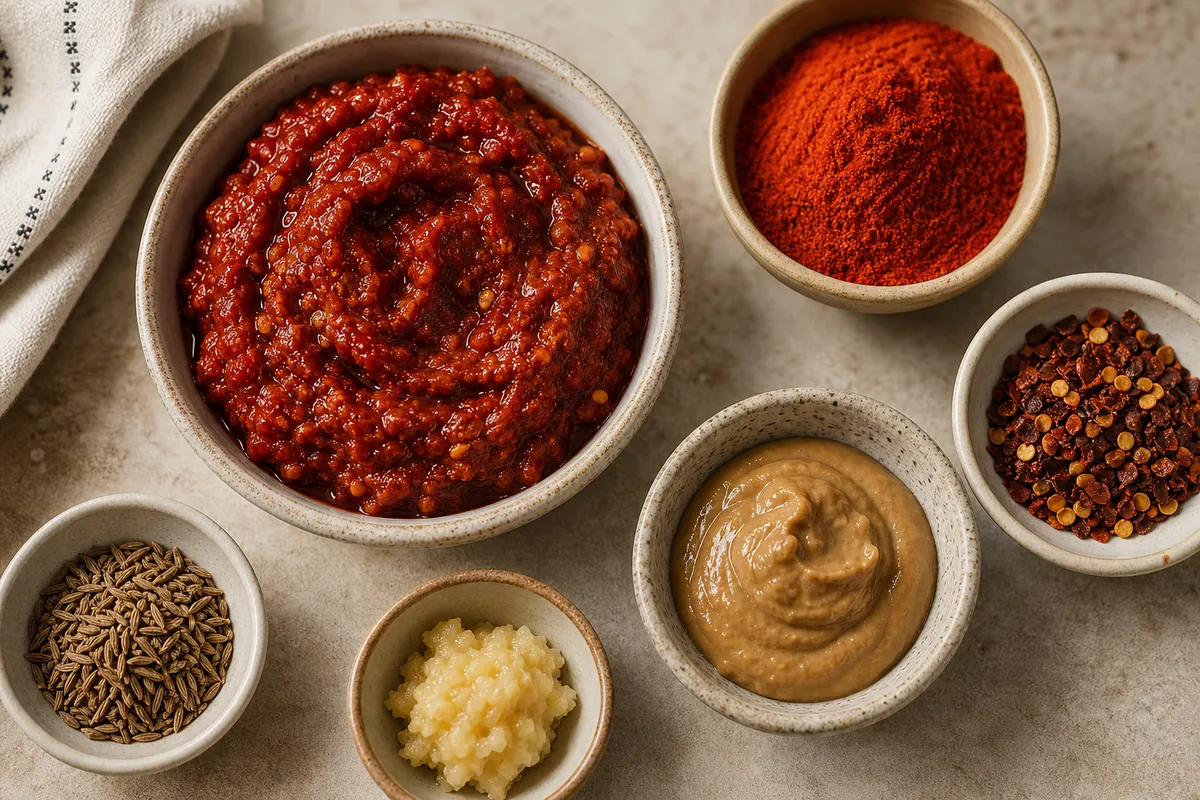
5 Best Harissa Paste Substitutes for Home Cooks
Ingredients
Equipment
Method
- Choose the closest substitute by flavor goal: smoky depth (chipotle), tomatoy heat (chili paste + roasted pepper), or fermented chili warmth (gochujang).
- Start with the table ratio, then adjust: if your dish needs more “tomato body,” add a spoon of tomato paste; if it tastes flat, add a few drops of lemon or vinegar.
- For thickness-sensitive uses (dressings, marinades, spreads), blend or whisk until smooth; for sautéing, stir into warm oil for 30–60 seconds to bloom spices.
- Taste before serving: add salt carefully (adobo and some chili pastes are salty) and control sweetness by using less gochujang or mixing in more acid.
- If baking or roasting, apply early so flavors distribute; for finishing sauces, use near the end so heat stays bright.
Notes
- Harissa varies by brand; if yours is very salty or very sweet, adjust using acid (lemon/vinegar) and salt in small steps.
Tried this recipe?
Let us know how it was!
Carrie is a food writer and editor with more than 15 years of experience. She has worked for some of the biggest names in the food industry, including Bon Appétit, Food & Wine, and Martha Stewart Living.
As the Editor in Chief of EpicureDelight, Carrie oversees all of the content on the site. She also manages the team of contributing writers and editors, who help to create delicious recipes, helpful tips, and informative articles that you’ll find on the site.
A native of the Chicago area, Carrie is passionate about all things food. She loves trying new restaurants and experimenting with new recipes in her kitchen. She’s also a graduate of the Culinary Institute of America, so she knows a thing or two about food!



