
That moment when the recipe is half-built and the olive oil bottle rattles empty is genuinely annoying. The good news is that olive oil does different jobs depending on the dish, and matching your olive oil substitute to that job is the whole trick.
In a salad dressing, you want flavor. In a cake, you want moisture.
In a hot pan, you need smoke point. Pick the substitute that fits the role, not just the one sitting closest in the cupboard.
Olive oil does three jobs: carry flavor, retain moisture in baking, and withstand heat. Avocado oil is the strongest all-purpose match. Canola and vegetable oil cover baking. Grapeseed handles high heat. Butter or ghee add richness when flavor shift is welcome.
Best Olive Oil Substitutes (5 Options Ranked by Role)
Not every oil swap is equal, and the recipe's job for the oil matters more than convenience. The table below maps each substitute to its best use and swap ratio so you can decide at a glance.
For a deeper look at the ghee or oil choice, that comparison covers flavor and cook behavior side by side. If vegetable oil is your only option, picking the right blend makes a real difference in finished flavor.
| # | Substitute | Best For | Ratio | Key Note |
|---|---|---|---|---|
| 1 | Avocado Oil | Both | 1:1 | Neutral, high smoke point |
| 2 | Canola Oil | Baking | 1:1 | Light crumb, no off-flavor |
| 3 | Grapeseed Oil | Cooking | 1:1 | Clean browning, very mild |
| 4 | Butter (melted) | Baking | ¾:1 | Richer crumb, watch browning |
| 5 | Vegetable Oil | Both | 1:1 | Reliable fallback, very neutral |
1. Avocado Oil
Avocado oil is the closest thing to a drop-in replacement because its smoke point sits around 520°F and its flavor stays out of the way. It works in sautéed vegetables, roasted chicken, and most baked goods without pushing any off notes into the dish.
- Where it shines: High-heat roasting, pan searing, vinaigrettes, and everyday cake or muffin recipes
- Flavor impact: Barely detectable once cooked; raw, it has a faint grassy note that disappears with heat
- Ratio and adjustment: Use 1:1 with no other changes; if the batter looks slightly looser than usual, add 1 teaspoon flour and check again
Storing it matters too. A well-stored neutral oil stays fresh longer than most people expect, so buying a larger bottle is fine.
Skip if: you need olive oil's fruity, peppery finish on bruschetta or a finishing drizzle over pasta. Use a small amount of a flavor-forward finishing oil there instead.
2. Canola Oil
For baking, canola oil is the most reliable swap because its fat distributes evenly through batters and it contributes almost no flavor of its own. Cakes, muffins, and quick breads come out with the same light crumb you'd get from olive oil.
- Best baking uses: Chocolate cake, banana bread, muffins, and pancake batter where a light, tender crumb matters
- Flavor profile: Completely neutral; it will not add any detectable taste, which is an asset in sweet bakes
- Texture adjustment: If your batter looks thinner than usual, reduce liquid by 1 tbsp; if it looks stiff, add 1 teaspoon warm water and fold gently
The oil-to-oil performance gap between canola and olive is actually small in most baked recipes. That comparison page breaks it down by fat content and moisture behavior.
Skip if: you're whisking a no-cook vinaigrette or herb dressing where you want the fruitiness of olive oil to lead. Canola will taste flat there.
3. Grapeseed Oil
Grapeseed oil tolerates heat well, with a smoke point around 420°F, and it browns food cleanly without adding any competing flavor. It is a solid choice when the recipe needs good color on the food and nothing else from the oil.
- Best cooking window: Pan-frying, sheet-pan roasting at 400°F, stir-fries, and searing proteins
- Flavor note: Extremely mild with a faint nuttiness that disappears entirely once the pan is hot
- Preventing dryness: For roasted vegetables, toss in an extra ½ teaspoon of oil compared to your usual amount; grapeseed coats surfaces slightly thinner than olive oil
If grapeseed is unavailable, choosing a suitable swap for it follows similar logic to this whole article.
Avocado Oil vs Grapeseed Oil
Works for: Avocado oil is better for longer oven roasts and baking; grapeseed wins for quick high-heat searing and stir-fries
Skip if: Grapeseed is not ideal for baking where moisture retention matters; avocado is less practical for very fast, scorching-hot techniques
Skip if: the dish depends on olive oil's signature taste for the finish. Grapeseed is too neutral to replicate that peppery note.
4. Butter (Melted)
Butter changes what olive oil does in two ways: it adds dairy richness and it colors faster once it hits heat. The crumb it produces is softer and more indulgent, which is a genuine upgrade in cookies and certain quick breads.
Melt the butter first, then let it cool for 3 to 4 minutes before adding it to your batter. Adding it hot can scramble eggs in the mix.
- Ratio: Use ¾ cup melted butter for every 1 cup olive oil called for; butter has slightly more fat solids, so scaling back prevents a greasy result
- Melt-and-cool step: Let melted butter cool until it is warm but not steaming before combining with other ingredients
- Best uses: Chocolate chip cookies, corn bread, some pound cakes, and savory scones where a buttery flavor is welcome
If you often swap butter around, exploring butter alternatives can help when dairy is limited.
Skip if: the recipe is savory roasting or you cannot accommodate a noticeable buttery flavor shift. Stick to avocado or grapeseed for those dishes.
5. Vegetable Oil
Vegetable oil is the backup most kitchens already have, and it works at a straight 1:1 for almost any recipe that calls for olive oil in a structural role. It is not exciting, but it does the job.
- Baking: Reliable for cakes and muffins; texture stays close to olive oil results
- Pan-searing: Adequate smoke point for medium-high heat; avoid pushing it above 400°F for extended periods
- Dressings: Works, but the flavor gap is noticeable in simple vinaigrettes; add a small squeeze of lemon or extra Dijon to compensate
| Use | Ratio | Notes |
|---|---|---|
| Baking | 1:1 | Vegetable oil; no other changes needed |
| Pan-searing | 1:1 | Vegetable oil; keep heat at medium-high maximum |
| Dressings | 1:1 | Vegetable oil; add lemon or vinegar to boost flavor |
Skip if: olive oil's flavor is the point of the dish. Vegetable oil is a function swap, not a flavor one.
Making the Swap Work (Quick How-Tos)
The switch from olive oil to any substitute goes smoothly when you think about three things before you start: heat tolerance, flavor balance, and batter texture. None of them require precision, just a quick check before you pour.
When exploring mild oil options, these same principles apply across the board.
- Heat and smoke point: For anything above 375°F, use avocado or grapeseed oil; butter and vegetable oil can struggle above that range and may produce off flavors
- Adjusting flavor: Neutral oils lose olive oil's pepperiness, so add a small pinch of flaky salt or a squeeze of lemon at the end to restore brightness
- Baking texture checks: If the batter looks wetter than expected, reduce liquid by 1 tbsp; if it looks stiffer, add 1 teaspoon warm water and check again before adding more
Neutral Oils vs Butter-Style Fats
Works for: Neutral oils (canola, grapeseed, vegetable) mimic olive oil's fat function with no flavor intrusion; ideal when the dish's seasoning does the work
Skip if: Butter and ghee change flavor profile and brown faster; avoid them when the recipe needs a clean, neutral backdrop or high sustained heat
Frequently Asked Questions
Canola oil is the top pick for most baked goods because it is mild and distributes evenly through batter. Vegetable oil works almost as well at the same 1:1 ratio.
Yes, vegetable oil swaps in at a straight 1:1 ratio for cooking and baking. The only trade-off is that it adds no flavor, so season the dish a little more carefully.
Avocado oil is the best choice with a smoke point near 520°F. Grapeseed oil is a close second at around 420°F and browns food cleanly.
Use ¾ cup melted butter or ghee for every 1 cup of olive oil. Let it cool slightly before mixing so it does not cook the eggs in your batter.
No, they will not replicate olive oil's fruity, peppery character. A small pinch of salt or a squeeze of lemon at the end can close that flavor gap noticeably.
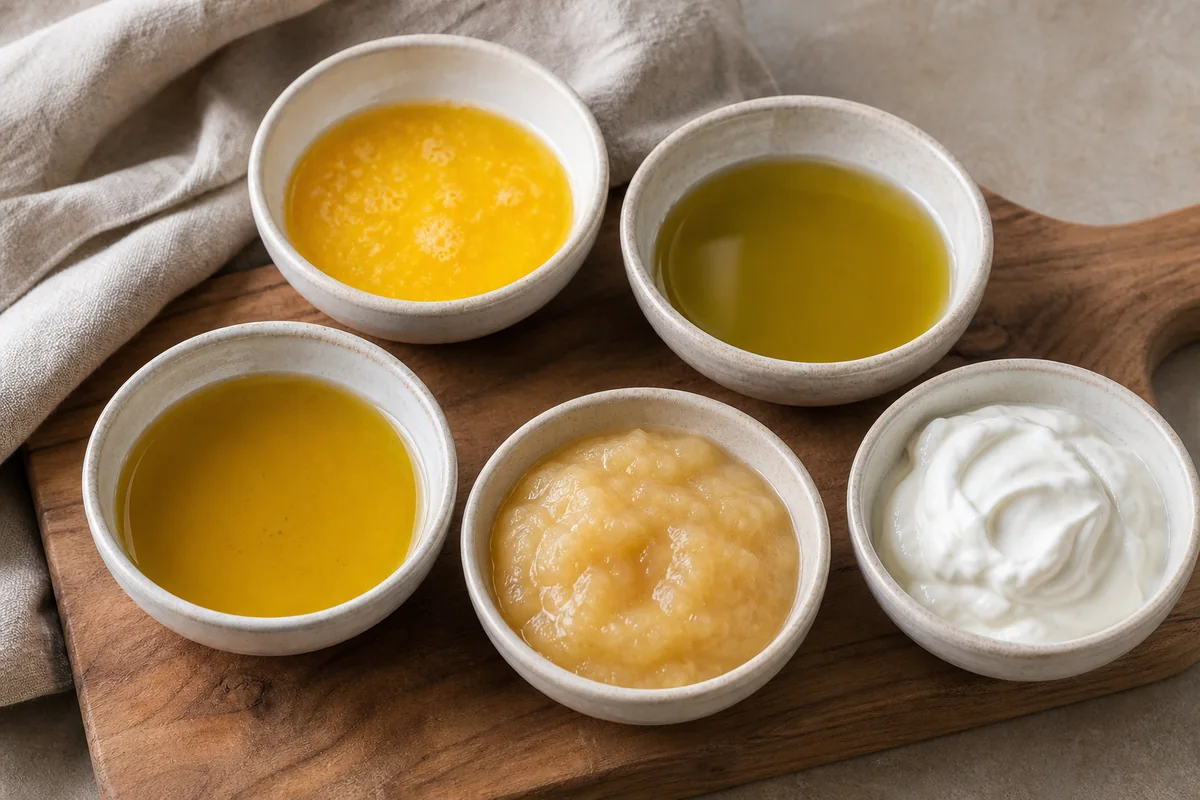
5 Best Olive Oil Substitutes for Any Recipe
Ingredients
Equipment
Method
- Identify what your recipe needs olive oil for: high-heat cooking, baking moisture, or salad/finish flavor.
- Choose the best match from the table by role, then use the listed ratio (1:1 or the butter/ghee ¾:1 swap).
- If your substitute is stronger-flavored (butter/ghee), reduce added salt and taste at the end; if it’s very neutral, consider adding a pinch of salt or a squeeze of lemon.
- For high heat (roasting/pan-frying), prefer avocado or grapeseed; for cakes/muffins, choose canola or vegetable oil.
- Proceed with your recipe, then adjust seasoning after cooking because flavor profiles change once heated.
Notes
- If you’re substituting in salad dressings, neutral oils mimic texture but not olive oil’s fruitiness—add a small amount of lemon and salt to compensate.
- Smoke point matters for frying/roasting; pick a higher-smoke neutral oil to avoid off flavors.
Tried this recipe?
Let us know how it was!
Carrie is a food writer and editor with more than 15 years of experience. She has worked for some of the biggest names in the food industry, including Bon Appétit, Food & Wine, and Martha Stewart Living.
As the Editor in Chief of EpicureDelight, Carrie oversees all of the content on the site. She also manages the team of contributing writers and editors, who help to create delicious recipes, helpful tips, and informative articles that you’ll find on the site.
A native of the Chicago area, Carrie is passionate about all things food. She loves trying new restaurants and experimenting with new recipes in her kitchen. She’s also a graduate of the Culinary Institute of America, so she knows a thing or two about food!



