
You check the cabinet, find one sorry tablespoon of vegetable oil, and your banana bread batter is already in the bowl. It happens.
The good news is that vegetable oil substitutes are almost always sitting right in the same pantry, and most of them swap 1:1 without a single texture problem.
Vegetable oil's main job in baking is moisture and a flavor-neutral background. That means the bar for a solid replacement is actually low: you need something liquid at room temperature, relatively flavorless, and with enough fat content to keep a crumb tender.
Canola, sunflower, and safflower oil are the best 1:1 swaps for vegetable oil in baking - all neutral in flavor and nearly identical in moisture behavior. Light olive oil works when a faint fruitiness is acceptable. Refined coconut oil is a reliable emergency option once it's fully melted.
5 Best Vegetable Oil Substitutes (Easy Swaps)
These five options cover nearly every baking and cooking scenario where vegetable oil would normally appear. Each one uses a straightforward 1:1 ratio unless your batter consistency tells you otherwise.
| # | Substitute | Best For | Ratio | Key Note |
|---|---|---|---|---|
| 1 | Canola Oil | Both | 1:1 | Most neutral flavor match |
| 2 | Sunflower Oil | Baking | 1:1 | Light taste, tender crumb |
| 3 | Safflower Oil | Both | 1:1 | High-heat, clean flavor |
| 4 | Light Olive Oil | Baking | 1:1 | Mild fruitiness possible |
| 5 | Refined Coconut Oil | Baking | 1:1 | Must be fully melted first |
1. Canola Oil
Canola oil is the single closest match to vegetable oil for everyday baking, and most home cooks already have a bottle. Understanding the role canola oil plays in flavor and texture helps you use it confidently as a drop-in replacement.
It handles cookies, muffins, quick breads, and pan-frying without altering the taste of whatever you're making.
- Flavor impact: Nearly tasteless - no detectable shift in cakes or savory batters
- Crumb behavior: Identical moisture retention to vegetable oil; soft, tender crumb
- Heat tolerance: Smoke point around 400°F, suitable for sautéing and shallow frying
Skip if your recipe specifically highlights a seed or pressed-oil flavor - canola keeps things so neutral it can flatten an intentionally flavored bake.
2. Sunflower Oil
Sunflower oil is a very mild, pale-colored oil that behaves almost identically to vegetable oil in batter. It is particularly good when you want a clean crumb with no aftertaste.
For more context on its flavor character, see what makes sunflower oil distinct before deciding whether it fits your specific recipe.
- Best baking uses: Brownies, quick breads, pancake batter, and layer cakes
- Crumb impact: Keeps texture soft and fine-grained, no greasiness
- Minor tradeoff: High-oleic varieties can carry faint nuttiness - check your label
Skip if you've grabbed a high-oleic sunflower oil and your recipe is a very delicate vanilla cake where even a whisper of nuttiness would read as off.
3. Safflower Oil
Safflower oil is arguably the most underrated neutral oil on this list - it has a lighter flavor than even canola, and its smoke point sits well above 440°F, which makes it as comfortable in a frying pan as in a loaf tin. You can treat it as a straight swap for vegetable oil in any context where neutral flavor and clean heat performance matter.
If you ever need to go the other direction, there are solid alternatives to safflower oil worth bookmarking too.
Safflower vs. Vegetable Oil
Works for: high-heat frying, neutral baking, any recipe calling for "flavorless oil"
Skip if: you want the specific grassy or buttery notes that a more characterful oil would add
- Where it shines: Stir-frying, shallow frying, and muffins that need zero flavor competition
- In batter: Produces a smooth, even crumb with no separation
- Not ideal: Specialty recipes calling for a specific oil's character, like some Mediterranean dressings
Skip if you need an oil with personality - safflower will erase any flavor nuance you were counting on.
4. Light Olive Oil
Light olive oil (sometimes labeled "extra-light") is refined enough to lose most of olive oil's peppery bite, leaving only the faintest fruitiness. That makes it a workable 1:1 stand-in for vegetable oil in most baked goods, though you should know it may add a very subtle warmth to your finished product.
If you ever work in reverse - swapping something for olive oil - a full list of replacements for olive oil covers that angle well.
| Use | Ratio | Notes |
|---|---|---|
| Quick breads & muffins | 1:1 | Light olive oil; mild fruitiness blends in |
| Savory baking (focaccia) | 1:1 | Any olive oil grade works here |
| Delicate cakes (vanilla, chiffon) | Avoid | Even light olive oil may shift aroma |
- Best baking items: Zucchini bread, olive oil pound cake, cornbread, savory muffins
- Avoiding bitterness: Always choose "light" or "extra-light" - standard extra-virgin reads bitter in sweet recipes
- When to avoid: Pale, delicately scented cakes where you want zero flavor intrusion
Skip if your recipe is a blond layer cake or anything with white chocolate - even light olive oil can push flavor somewhere unexpected.
5. Refined Coconut Oil
Refined coconut oil is the emergency-cabinet swap: you probably have a jar, but it needs handling. At room temperature in a cool kitchen, it can be solid or semi-solid, and pouring chunky fat into cake batter creates uneven streaks.
Always melt it fully first - 20 to 30 seconds in the microwave usually does it. If you're also curious about going the other way, swapping out coconut oil in recipes covers that side of things too.
Refined vs. Unrefined Coconut Oil
Refined: nearly flavorless, safe for most baked goods, 1:1 swap
Unrefined (virgin): strong coconut aroma; only use when you want that flavor present
- Melting step: Warm to fully liquid before measuring - solidified bits throw off your ratio
- Texture effect: Baked goods may have a slightly denser crumb once cooled; normal and acceptable
- Flavor risk: Even refined coconut oil can carry faint coconut notes in very lightly flavored recipes
Skip if your kitchen is cold enough that the oil re-solidifies before you finish mixing - or use the microwave again, 10 seconds at a time, until batter is smooth.
Making Vegetable Oil Substitutes Work (Every Time)
The clearest rule: use a neutral liquid oil at a 1:1 ratio for baking and you will almost never have a problem. Issues arise when people grab an oil that's solid (coconut) or strongly flavored (extra-virgin olive) without adjusting for those differences.
You can also check information on freezing canola oil if you're wondering whether to stock up on your preferred swap oil.
- Warm thick oils first: Any oil that's solid or cloudy at room temperature must be fully melted and cooled to warm (not hot) before it goes into batter with eggs or dairy
- Fix thick batter: If your swap makes the batter noticeably stiffer, stir in 1 to 2 tablespoons of the same substitute oil, or a small splash of milk, to restore the original consistency
- Taste after cooling: Stronger-flavored oils (olive, unrefined coconut) can read differently once a bake cools - always taste the finished product before deciding the flavor is off
Frequently Asked Questions
Canola oil is the most neutral swap, followed closely by safflower and sunflower oil. All three use a 1:1 ratio and produce no detectable flavor change in cakes, muffins, or cookies.
Yes, but use "light" or "extra-light" olive oil to minimize flavor impact. Standard extra-virgin olive oil can add a grassy, slightly bitter note that clashes with sweet cookie recipes.
Yes, always. Solid coconut oil creates uneven streaks in batter and throws off your measured ratio. Melt it fully and let it cool slightly before adding it to the bowl.
No. Both oils are mild enough that chocolate and sugar completely dominate. You will not notice a flavor difference in the finished brownies.
Stir in 1 to 2 tablespoons of the same substitute oil, or a small splash of milk, until the batter loosens to its original consistency. Do not over-mix once you add the extra liquid.
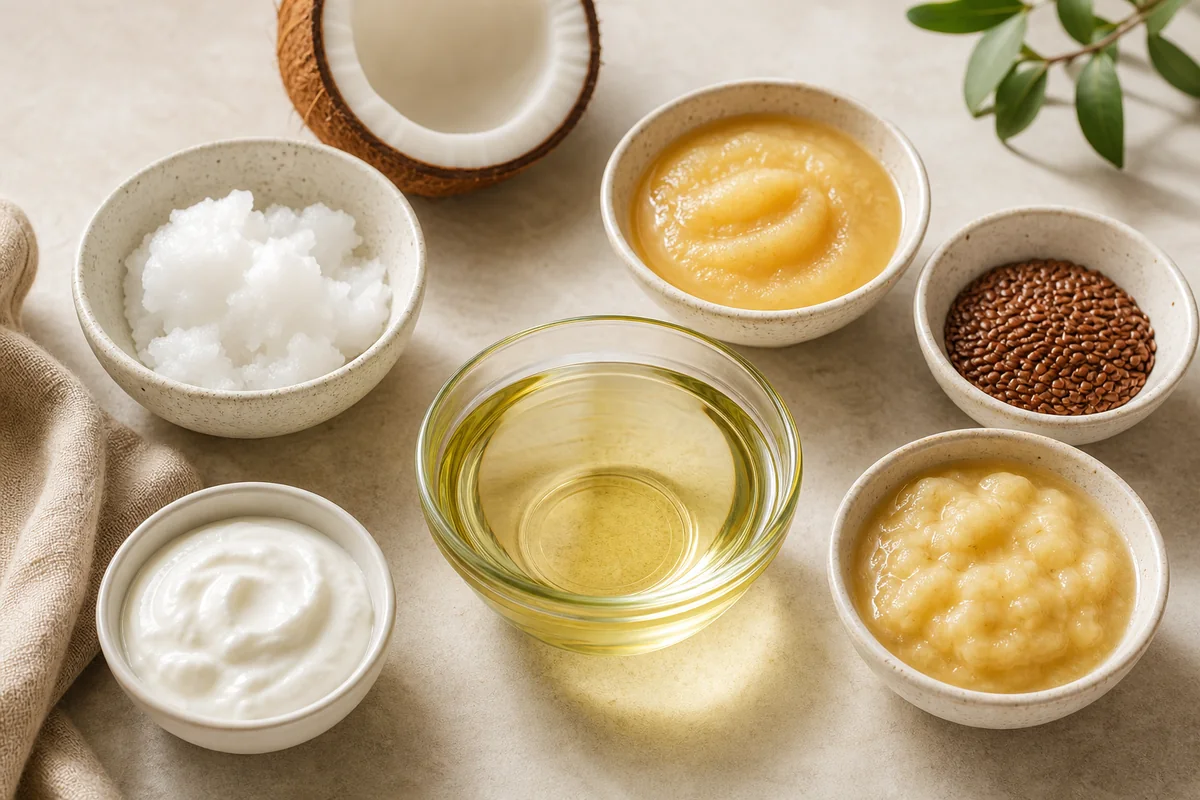
5 Best Vegetable Oil Substitutes (Easy Swaps)
Ingredients
Equipment
Method
- Identify whether your recipe needs neutral flavor (most baking) or higher heat (frying/searing).
- Pick the substitute that matches your goal: canola/sunflower/safflower for neutrality, olive/avocado for mild character, refined coconut for an emergency swap.
- Use the listed 1:1 ratio; for solid or thick oils (like coconut), warm until fully liquid first.
- If your batter feels thicker than expected, mix 1–2 tablespoons of the same substitute per batch or adjust with a splash of water/milk.
- Bake as directed and taste-check after cooling; stronger-flavored oils may slightly shift sweetness or aroma.
Notes
- All swaps listed are designed for a 1:1 replacement by volume in most baking and everyday cooking.
- If a substitute has noticeable flavor (notably some olive oil), expect mild aroma changes in finished baked goods.
Tried this recipe?
Let us know how it was!
Carrie is a food writer and editor with more than 15 years of experience. She has worked for some of the biggest names in the food industry, including Bon Appétit, Food & Wine, and Martha Stewart Living.
As the Editor in Chief of EpicureDelight, Carrie oversees all of the content on the site. She also manages the team of contributing writers and editors, who help to create delicious recipes, helpful tips, and informative articles that you’ll find on the site.
A native of the Chicago area, Carrie is passionate about all things food. She loves trying new restaurants and experimenting with new recipes in her kitchen. She’s also a graduate of the Culinary Institute of America, so she knows a thing or two about food!



