
That thick, bubbling pot of polenta is unforgiving if you run out mid-recipe. The good news: your substitute options are solid, and the right one depends almost entirely on what you need the polenta to *do*.
A polenta substitute for a creamy, spoonable bowl is a very different problem from one for a firm slab you're going to slice and pan-fry. Get that distinction right first, then pick your swap.
The closest match is fine cornmeal (1:1, same method). Quick grits work nearly as well and cook faster. Semolina sets firmer and is better for baked or sliceable layers. Rice flour gives a corn-free cream, and oat flour is your emergency scoop option.
5 Best Polenta Substitute Options (By Texture)
Polenta's texture comes from corn grits simmering slowly until they hydrate and turn cohesive. Before picking a swap, decide your outcome: creamy and spoonable, firm and sliceable, or crispy after a pan-fry.
The table below maps each substitute to its best use.
| # | Substitute | Best For | Ratio | Key Note |
|---|---|---|---|---|
| 1 | Fine Cornmeal | Creamy + Set | 1:1 | Closest grain texture |
| 2 | Quick Grits | Creamy + Spoonable | 1:1 | Faster cook time |
| 3 | Rice Flour | Creamy Only | ¾:1 | No corn flavor |
| 4 | Fine Semolina | Baked + Sliceable | ¾:1 | Sets firm, fast |
| 5 | Oat Flour | Soft Scoop | 1:1 | Emergency only |
Creamy polenta needs steady stirring so the grains hydrate evenly. Whichever substitute you choose, that rule holds.
1. Fine Cornmeal
Fine cornmeal is the most direct swap, and in most dishes nobody will notice the difference. It hydrates into the same grainy-cream texture when stirred consistently over medium heat.
Use it at a 1:1 ratio and expect about the same cook time as traditional polenta. If you want it sliceable, cook it slightly longer and spread it into a pan to chill overnight.
- Best use-case: Creamy stovetop bowls topped with sauce, cheese, or braised meat
- Texture note: Smooth with a slight grain; slightly softer than tube polenta after chilling
- Quick adjustment: For a firmer set, reduce liquid by 2 tablespoon per cup of cornmeal and let it chill for at least 4 hours before slicing
Skip this if you need a perfectly clean, firm slice for pan-frying right away. Fine cornmeal can stay softer than you want unless it's fully chilled and cooked to a stiff consistency.
2. Quick Grits
Quick grits are the speed option. They're prepped for fast hydration, so you get a spoonable polenta-like bowl in roughly half the usual time.
The flavor of grits is milder than traditional polenta, so understanding what grits actually taste like helps you season them correctly from the start.
- Instant vs. quick: Instant grits cook in under 5 minutes; quick grits take 5-10 and have slightly more body
- Stirring method: Whisk constantly for the first 3 minutes to prevent gummy pockets from forming
- Seasoning tip: Grits are bland by nature, so add salt early and finish with butter or parmesan to replicate polenta's depth
Skip this if you want strong, forward corn flavor. Grits process differently and deliver a gentler taste that may read as plain in simple dishes.
3. Rice Flour Slurry
Rice flour makes a surprisingly smooth polenta stand-in when you're avoiding corn altogether. The texture is less grainy than cornmeal and closer to a thick, silky porridge.
To mimic polenta thickness, whisk ¾ cup rice flour into 3 cups of cold broth before heating. That cold-start slurry approach prevents lumps and lets you control the set as it thickens.
If you want to explore how this neutral-tasting grain behaves in other dishes, the flavor profile is similarly mild and adaptable.
Be realistic about sliceability. Rice flour won't firm up the same way after chilling, and it can turn gummy when reheated without extra liquid.
This substitute is strictly for soft, spoonable servings.
Skip this if you need polenta that holds a shape for baking or frying. It simply won't set firmly enough.
4. Fine Semolina
Fine semolina sets faster and firmer than any corn-based option, which makes it the go-to for baked layers and sliceable polenta planks. It's wheat-based, so the flavor leans slightly nutty, but once you add butter, salt, and cheese it disappears into the dish.
Cook it the same way you would polenta: whisk into simmering liquid slowly and stir until it turns glossy and pulls away from the sides of the pan. Understanding how semolina compares to similar grains helps you gauge how quickly it thickens.
Semolina vs. Polenta for Slicing
Works for: baked casserole layers, sliceable planks, grilled portions where firm structure matters
Skip if: you want a loose, spoonable cream-semolina thickens fast and can go stiff before you're ready
- Best dish types: Baked polenta with tomato sauce, polenta fries, layered vegetable gratins
- Cook until: Glossy and pulling from the pan sides; that's your signal it's ready to set
- Heat adjustment: Use slightly more liquid than the package suggests and lower heat by one notch to prevent scorching
5. Oat Flour
When you have nothing else, oat flour delivers a thick, porridge-style base that works reasonably well in a spoonable bowl. It's the emergency option, not the first call.
| Use | Ratio | Notes |
|---|---|---|
| Spoonable bowl | 1:1 | Oat flour + broth; season well with salt, butter, and herbs |
| Topped pan | 1:1 + 2 tablespoon extra | Add extra liquid; spread in pan but expect a soft, not firm, set |
- Stir frequency: Stir every 60-90 seconds; oat flour can catch and scorch on the bottom quickly
- Moisture adjustment: Start with 3½ cups liquid per 1 cup oat flour; add more in small splashes to control thickness
- Seasoning: Oat flour is neutral and slightly sweet, so push salt levels higher and add savory herbs or garlic to anchor the flavor
Skip this if you need a clean slice or a frying crust. Oat-based polenta stays tender after chilling and won't hold a firm edge.
Making the Substitute Taste Like Polenta
The substitute you pick is only half the job. How you cook it determines whether it actually performs the way polenta should.
Start with slightly less liquid than you think you need, then add small splashes as the mixture thickens and you can judge the consistency. If you're working with grain-based flour swaps in general, that conservative-liquid approach applies across the board.
- Liquid and thickness: Aim for a texture that coats the back of a spoon heavily for creamy polenta, or pulls cleanly from the pan sides for a sliceable set-adjust heat and liquid together, not separately
- Seasoning timing: Salt the cooking liquid before adding your substitute; salting at the end under-seasons the grains internally and flattens the flavor
- Set time for slicing: Creamy polenta is ready to serve when glossy; sliceable polenta needs at least 2-4 hours in the fridge, spread to ½-inch depth, before you attempt to cut it
Frequently Asked Questions
Yes, fine cornmeal works at a 1:1 ratio in most baked polenta recipes. Coarser grinds add texture but may need slightly more liquid and longer bake time to hydrate fully.
Fine semolina sets the firmest and holds a clean edge after chilling. Fine cornmeal works too, but it needs a longer cook time and a full overnight chill to slice neatly.
Very close. Quick grits cook faster and taste milder, but the stirring method and liquid ratio are nearly identical. Season grits more aggressively to match polenta's flavor.
Yes. Use a cold-start slurry at a ¾:1 ratio and stir over medium heat until thick. It won't taste like corn but gives a smooth, spoonable texture that works well.
Whisk the substitute into cold or warm liquid before the pot reaches a full simmer. Stirring constantly for the first 3-4 minutes prevents dry pockets from clumping together.
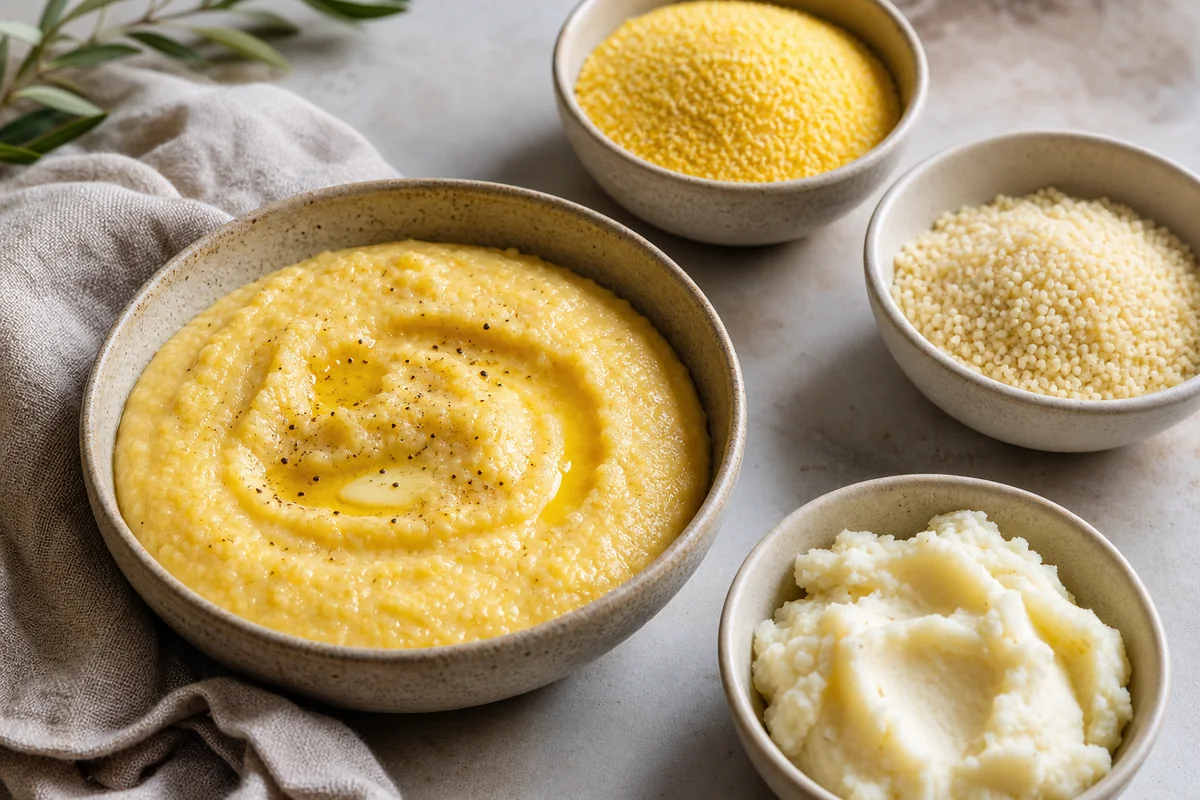
5 Best Polenta Substitutes You Can Trust
Ingredients
Equipment
Method
- Decide your outcome: creamy (stir until thick and spoonable), sliceable (stir to a firmer set), or crispy (set then slice and pan-fry).
- Use the ratio from the table and start with slightly less liquid than you think you need; whisk/stir vigorously to prevent lumps.
- Simmer and adjust: add small splashes of liquid to reach the same thickness as polenta, then cook until the substitute turns glossy and cohesive.
- For sliceable results, spread to a shallow pan and chill until firm before cutting; reheat with a little moisture if needed.
- Taste and season at the end: polenta substitutes are neutral, so add salt (and butter/cheese if your dish uses it) to lock in flavor.
Notes
- Liquid thickness matters more than brand: adjust by small splashes to match the texture you want.
- Instant/quick versions shorten cook time and reduce grainy bite; stone-ground cornmeal can take longer to soften.
Tried this recipe?
Let us know how it was!
Carrie is a food writer and editor with more than 15 years of experience. She has worked for some of the biggest names in the food industry, including Bon Appétit, Food & Wine, and Martha Stewart Living.
As the Editor in Chief of EpicureDelight, Carrie oversees all of the content on the site. She also manages the team of contributing writers and editors, who help to create delicious recipes, helpful tips, and informative articles that you’ll find on the site.
A native of the Chicago area, Carrie is passionate about all things food. She loves trying new restaurants and experimenting with new recipes in her kitchen. She’s also a graduate of the Culinary Institute of America, so she knows a thing or two about food!



