
Sambal oelek is a short ingredient list with a big personality: crushed red chilies, salt, and just enough vinegar to keep every bite sharp and spoonable. That combination is harder to fake than it looks.
Most hot sauces are either thinner, sweeter, or smoother, and swapping one in without adjustment can flatten a dish. A good sambal oelek substitute needs to nail three things: chili texture (bits or paste, not liquid), a vinegar-forward tang, and real heat that doesn't hide behind sugar.
The good news is that five common ingredients or combos get you close. Some need a quick ratio tweak, others need a splash of vinegar added back in.
Chili garlic sauce is the nearest match for texture and heat. Sriracha plus chili flakes works when you need something from the pantry. Gochujang adds fermented depth but may skew sweet. Harissa brings smokiness. A homemade chili paste gives the most control. All swap at roughly 1:1, then adjust vinegar.
5 Best Sambal Oelek Swaps by Heat and Texture
The table below shows all five options at a glance. Each H3 section after it covers how to handle tang and texture for that specific swap.
| # | Substitute | Best For | Ratio | Key Note |
|---|---|---|---|---|
| 1 | Chili Garlic Sauce | Both | 1:1 | Add vinegar if sweet |
| 2 | Sriracha + Chili Flakes | Both | 1:1 | Add flakes for texture |
| 3 | Gochujang (thinned) | Cooked | ¾:1 | Thin with water or vinegar |
| 4 | Harissa (diluted) | Cooked | ¾:1 | Dilute to cut smokiness |
| 5 | Homemade Chili Paste | Both | 1:1 | Crush coarse, add vinegar |
Skip the table and go straight chunky if you need only smooth heat. A thinner swap like sriracha thinned with extra vinegar is better than any paste when a liquid base is all you need.
1. Chili Garlic Sauce
Chili garlic sauce is the most direct swap you can make. It has the same spoonable body, real chili bits, and a savory edge that lands almost identically in stir-fries and noodles.
Check the label before you use it. If your jar has added sugar, start at ¾ of the called-for amount, then picking the right version matters as much as the ratio itself.
- Ratio: 1:1 for unsweetened; ¾:1 if it's sweetened
- Texture fix: Already chunky, no adjustment needed
- Tang fix: Stir in 1 teaspoon white vinegar per tablespoon if it reads flat
- Best uses: Stir-fries, dipping sauces, noodle dressings
Skip this if your sauce is heavily sweetened and you're making a vinegar-forward dipping sauce. The sugar will compete.
2. Sriracha + Chili Flakes
Sriracha alone is too smooth and slightly sweet, but the fix is simple. Add a teaspoon of dried chili flakes per tablespoon of sriracha, and you get a paste that reads closer to sambal's grainy chili texture.
That tangy-hot combination also stays stable in marinades and fried rice alike.
The flakes vs. crushed pepper tradeoff is worth knowing here. Finer flakes dissolve faster and blend smoother; coarser crushed red pepper keeps more texture.
- Ratio: 1 tablespoon sriracha + 1 teaspoon chili flakes = roughly 1 tablespoon sambal oelek
- Texture fix: Stir and let sit 2 minutes so flakes hydrate slightly
- Tang fix: Add 1 teaspoon white vinegar or rice vinegar per batch
- Heat fix: Use more flakes if sriracha feels mild in context
Skip this if you need strong vinegar tang right away. The mix needs a minute to come together, and even then it's milder in acidity than true sambal.
3. Gochujang
Gochujang brings fermented depth that sambal doesn't have, and that's both its strength and its catch. The flavor profile of gochujang leans sweet and earthy rather than sharp and bright, so you'll need to thin it and correct acidity before it reads like sambal.
- Ratio: Use ¾ the amount called for, then thin with 1-2 teaspoon water or vinegar
- Texture fix: Thin until it spreads easily; it should not sit in a stiff lump
- Sweetness fix: Add 1 teaspoon white vinegar to counter the sugar
- Best uses: Marinades, braised dishes, noodle sauces
Gochujang vs. Sambal Oelek
Works for: dishes that need fermented spice body, Korean-style marinades, slow-cooked sauces
Skip if: your recipe needs clean vinegar-forward chili heat, or the dish is already sweet
Skip this if your dish is delicate or already carries fermented notes. The combination can muddy a clean chili flavor quickly.
4. Harissa
Harissa is a bold, roasted chili paste with paprika and cumin underneath the heat. It works as a sambal replacement when you want spice complexity rather than a clean chili punch.
Try it in roasting spicy chicken as a real-world test of how far it carries without adjustment.
- Ratio: Start at ¾:1 and dilute with 1 tablespoon water per tablespoon used
- Tang fix: Add 1 teaspoon white or rice vinegar to brighten the flavor
- Texture: Paste-style harissa is spoonable enough; sauce-style needs no adjustment
- Best uses: Stews, roasted meats, grain bowls
Skip this if your recipe needs clean chili-vinegar brightness. Harissa's smoky paprika base will dominate any light or delicate dish.
5. Homemade Chili Paste
When you want something closest to actual sambal, blend or crush fresh or dried chilies with salt and a splash of vinegar. You control the heat, the texture, and the acidity.
That makes it the most reliable option when you have the time.
Knowing your mild acid options helps here. Rice vinegar keeps the paste bright without sharpness; white vinegar is stronger and needs less volume.
| Use | Ratio | Notes |
|---|---|---|
| Stir-fries | 1:1 | Coarse crush, 1 teaspoon vinegar per tbsp |
| Dipping sauce | 1:1 | Finer blend, add extra salt to finish |
| Marinades | ¾:1 | Looser blend, add water to thin |
- Base: Fresh Thai chilies or dried chili flakes, blitzed or crushed
- Salt: ¼ teaspoon per tablespoon of paste
- Vinegar: 1 teaspoon white or rice vinegar per tablespoon of paste
- Texture: Crush coarsely for sambal-style bits; blend smooth for sauce
Skip this if you have no vinegar at all. Lemon juice works but is brighter and more volatile; start with half the amount and adjust.
Making Your Sambal Oelek Substitute Taste Right
The biggest adjustment issue across all five swaps is not heat. It's brightness.
Sambal oelek is sharper and more vinegar-forward than most Western chili sauces, and losing that edge is what makes a dish fall flat. Start every substitute at the listed ratio, then taste before the dish is finished.
If something reads dull, add 1 teaspoon vinegar. If it reads muddy, a pinch of salt often snaps it back into focus.
Also consider your mild acid swaps if white vinegar would be too harsh in a delicate sauce.
- Too sweet: Add 1-2 teaspoon white vinegar and reduce any other sugar in the recipe by half
- Too smoky: Dilute with water (1 tbsp) and add a squeeze of lemon to reset brightness
- Too thin: Stir in extra chili flakes and let sit 3 minutes before adding to the dish
Flavor Direction: Pick Your Fix
Bright and sharp needed: chili garlic sauce or homemade paste with extra vinegar
Deeper and fermented is okay: gochujang or harissa, diluted and salted to taste
Frequently Asked Questions
Chili garlic sauce is the best stir-fry swap. Use it 1:1 and add 1 teaspoon white vinegar if the sauce reads flat or sweet.
Yes. Mix 1 tablespoon sriracha with 1 teaspoon chili flakes and 1 teaspoon vinegar. That restores the texture and acidity that straight sriracha lacks.
It works well in marinades. Use ¾ of the amount, thin with a little water, and add 1 teaspoon vinegar to offset the sweetness.
For too sweet, add 1-2 teaspoon white vinegar. For too smoky, dilute with water and add lemon juice to pull the flavor brighter.
Start with 1 tablespoon of chili garlic sauce or sriracha mix (1:1 swaps), or ¾ tablespoon for gochujang and harissa. Adjust after tasting.
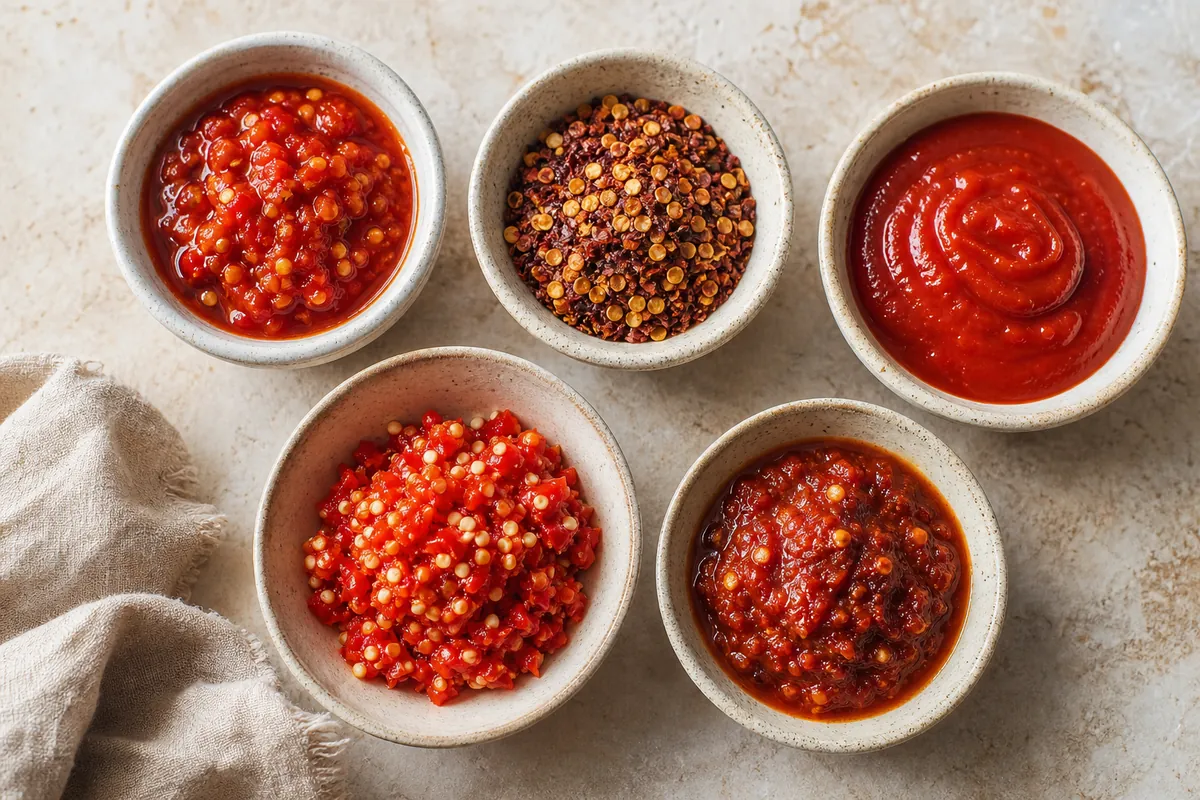
5 Best Sambal Oelek Substitutes for Any Recipe
Ingredients
Method
- Choose the substitute based on what your recipe needs: chunky heat (chili garlic sauce/sriracha+flakes) or deeper fermented spice (gochujang/harissa).
- Start with the listed swap ratio, then adjust tang by adding 1–2 teaspoon vinegar or a squeeze of lemon per batch.
- If the substitute is too thick, loosen with 1–2 tablespoon water; if it’s too mild, mix in extra chili flakes or chili powder.
- Taste and finish: add a pinch of salt to boost chili brightness, and reduce sweetness if the substitute is sweetened.
- Use immediately for best flavor, or let it sit 5 minutes in the sauce so the heat and vinegar mellow together.
Notes
- Sambal oelek is usually chunky chili with a vinegar tang—match texture and acidity first, then heat level.
Tried this recipe?
Let us know how it was!
Carrie is a food writer and editor with more than 15 years of experience. She has worked for some of the biggest names in the food industry, including Bon Appétit, Food & Wine, and Martha Stewart Living.
As the Editor in Chief of EpicureDelight, Carrie oversees all of the content on the site. She also manages the team of contributing writers and editors, who help to create delicious recipes, helpful tips, and informative articles that you’ll find on the site.
A native of the Chicago area, Carrie is passionate about all things food. She loves trying new restaurants and experimenting with new recipes in her kitchen. She’s also a graduate of the Culinary Institute of America, so she knows a thing or two about food!



