
Sunflower oil rarely announces itself. That's the whole point.
It is light, nearly tasteless, and it gets out of the way so your cake or stir-fry can do the talking. When your bottle runs dry mid-recipe, though, you need a sunflower oil substitute that matches that same quiet performance.
The right swap depends on two things: how neutral the flavor needs to be and how much heat the oil must handle. Baking wants neutrality above everything else.
High-heat frying wants smoke point first, flavor second. Keep those two priorities in mind and every substitute below makes sense.
Sunflower oil is neutral, light, and all-purpose. For baking, replace it 1:1 with canola or safflower oil. For frying, reach for grapeseed or corn oil. Shortening works in a pinch but needs melting and a slightly smaller amount.
Best Sunflower Oil Substitutes (Ratio + When to Use)
Use the table below as your first stop. Each ratio is a 1:1 starting point except shortening, which runs a bit thicker.
Pick by use column first, then check the notes before you open the bottle.
| # | Substitute | Best For | Ratio | Key Note |
|---|---|---|---|---|
| 1 | Canola Oil | Both | 1:1 | Closest neutral match |
| 2 | Safflower Oil | Both | 1:1 | Light, nearly tasteless |
| 3 | Extra-Light Olive Oil | Both | 1:1 | Mild olive note stays low |
| 4 | Corn Oil | Both | 1:1 | Faint sweetness possible |
| 5 | Grapeseed Oil | Cooking | 1:1 | High-heat stable, mild |
| 6 | Veg. Shortening | Baking | ¾:1 | Melt before adding |
5 Sunflower Oil Swaps Ranked by Neutrality and Heat
1. Canola Oil
Canola oil is the closest thing to a drop-in replacement. It has almost no detectable flavor in finished dishes, and its smoke point sits around 400°F, making it safe for sautéing, shallow frying, and baking alike.
We use it freely in the neutral oil choice for muffins, quick breads, and vinaigrettes because it simply disappears into the recipe.
- Flavor impact: Virtually none - baked goods taste identical to sunflower-oil versions
- Best recipe types: Cakes, muffins, salad dressings, stir-fries, and pan-frying
- Heat handling: Reliable up to about 400°F; fine for most stovetop tasks
- Ratio: 1:1, no adjustment needed
Skip if: Your recipe needs the lightest possible oil profile and you're very sensitive to any trace flavor. Safflower is marginally cleaner in that specific case.
2. Safflower Oil
Safflower oil is sometimes called the "quieter sibling" of sunflower oil, and that is accurate. Both come from seeds, both press out pale and nearly odorless, and both perform well at similar heat levels.
This pale, flavor-neutral oil works in everything from pound cake to wok cooking without announcing itself.
- Flavor: Completely neutral - no sweetness, no grassy notes, no finish
- Baking texture: Produces the same moist crumb as sunflower oil, cup for cup
- Frying success: High smoke point around 450°F - actually slightly better than sunflower for deep frying
- Ratio: 1:1 in every application
Skip if: You cannot find it locally or it is significantly more expensive. Canola is a perfectly fine alternative in that case.
3. Extra-Light Olive Oil
Regular olive oil carries enough flavor to compete with the other ingredients in your dish. Extra-light olive oil is different.
It is processed to remove most of that character, leaving a much cleaner taste. The label matters here - not all "light" olive oils are equally mild, so check for mild pressing notes on the bottle before buying.
- Safe in baking when: The recipe has bold flavors - banana bread, chocolate cake, spiced muffins - that will cover any remaining olive note
- Best for cooking when: You are sautéing vegetables or building a sauce where a whisper of olive character is welcome
- Minimizing flavor impact: Use it chilled in dressings, and pair it with acidic ingredients like lemon or vinegar to balance the taste
- Ratio: 1:1 with no other changes
Skip if: Your recipe is ultra-delicate - think angel food cake or a very plain white butter cake. In those cases, canola or safflower is the safer call.
4. Corn Oil
Corn oil sits close to sunflower oil on the neutrality scale, but it has a faint sweetness that some people notice and others never do. That trace sweetness can actually work in your favor in cornbread or vanilla cake, where it reads as depth rather than a flaw.
Corn Oil vs. Sunflower Oil
Works for: Roasting, shallow frying, muffins, and anything with bold or sweet flavors that absorb the mild corn note
Skip if: Your recipe is a very plain or savory pastry where any sweetness reads as off - use canola instead
These neutral oil comparisons can help if you are still deciding between corn, canola, or olive for a specific dish.
- Best uses: Cornbread, carrot cake, roasted vegetables, pan-fried fish
- Flavor tip: If the sweetness reads slightly off in a savory dish, add a small pinch of salt to the finished plate
- Heat: Smoke point around 450°F - handles high-heat cooking well
- Ratio: 1:1
5. Grapeseed Oil
Grapeseed oil earns its place at the high-heat end of this list. It is worth choosing first when your recipe involves a wok, a very hot cast iron pan, or deep frying, because its smoke point lands at or above 420°F with good stability.
- Heat use: Excellent for stir-frying, searing, and oven-roasting at 400°F or higher
- Flavor: Subtle and clean - slightly lighter than canola, with no detectable grassy or sweet note
- In baking: Works fine at 1:1 in most cake or muffin recipes; the flavor does not compete
- Storage: Grapeseed oil goes rancid faster than sunflower oil - buy a smaller bottle and keep it away from light and heat
Skip if: You need perfect flavor neutrality in a very delicate pastry. Safflower is the better pick in that situation.
Making Sunflower Oil Substitutes Work
The two-question rule covers most situations: How neutral does the flavor need to be, and how hot will the pan get? Answer those and the right oil from the list above becomes obvious.
For everyday oil swaps in baked goods, canola and safflower are the ones we reach for first.
When you are storing a new bottle after opening, keep it sealed in a cool, dark spot to preserve the neutral profile that made you choose it in the first place.
- For baking: Use canola or safflower at 1:1 - do not change anything else in the recipe
- For high-heat cooking: Grapeseed or corn oil are your safest bets; check the smoke point on the label before you pour
- For shortening swaps: Melt it first, then measure ¾ cup of melted shortening for every 1 cup of sunflower oil called for - and consider adding 1-2 tablespoon of water to keep the batter pourable
Frequently Asked Questions
Canola oil is the best all-around baking swap - use it at a 1:1 ratio with no other changes. Safflower oil is equally good if you need the most neutral flavor possible.
Yes, but choose extra-light olive oil to keep the flavor low. Regular or extra-virgin olive oil can overpower mild recipes like vanilla cake or plain muffins.
Grapeseed oil and corn oil both handle high heat well, with smoke points at or above 420°F. Either works for deep frying or wok cooking without breaking down quickly.
Use ¾ cup of melted shortening for every 1 cup of sunflower oil. Melt it completely and add 1-2 tablespoon of water to restore the batter's pourable consistency.
Canola and safflower oil will not change the flavor at all. Corn oil may add a faint sweetness, and extra-light olive oil may leave a very mild note in plain recipes.
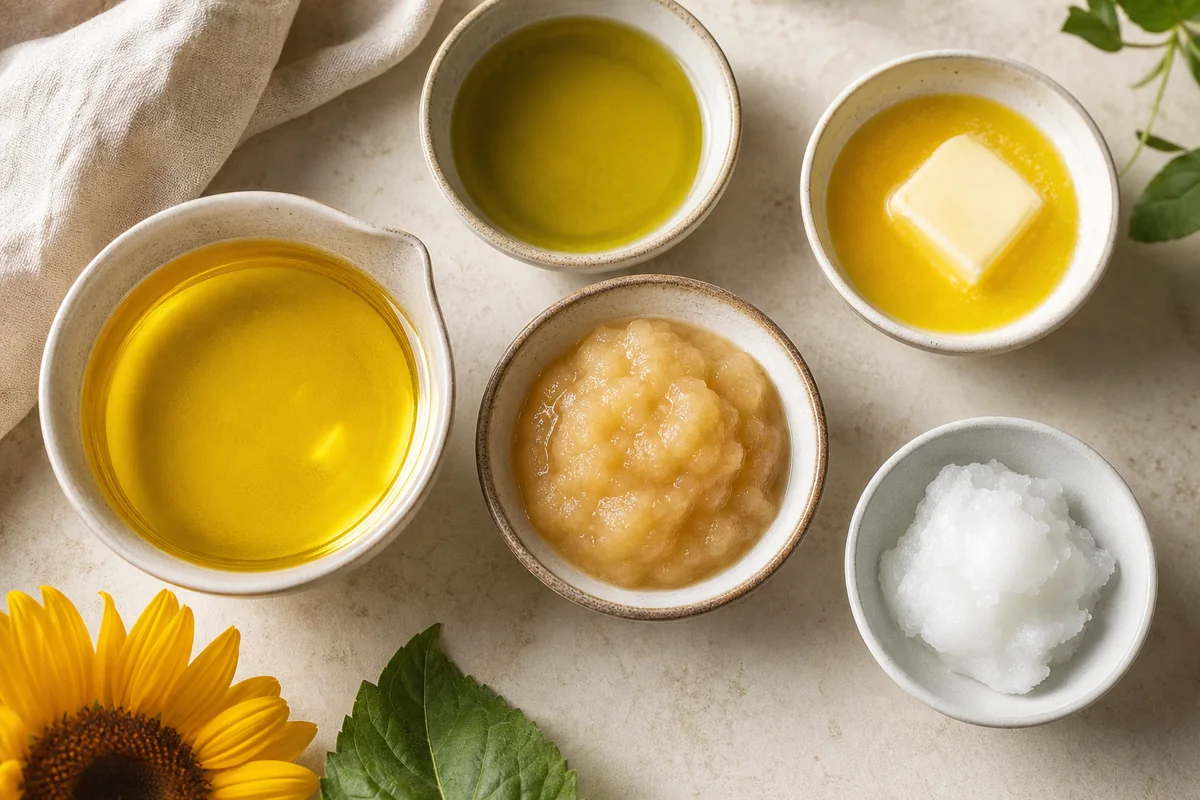
5 Best Sunflower Oil Substitutes You Can Trust
Ingredients
Equipment
Method
- Decide your use: baking/quick breads usually want neutral flavor, while frying benefits from higher heat stability.
- Pick your substitute from the table below and start with the listed substitution ratio.
- If your substitute is thicker (like shortening), melt it or warm it until pourable before mixing into batter.
- If your substitute has noticeable flavor (like olive oil), reduce its impact by using it in recipes where the other flavors are bold (or choose extra-light).
- Taste-test the batter or sauce briefly (uncooked batter where appropriate) and adjust with a tiny splash of water or a pinch of salt if needed for balance.
Notes
- For most baked goods, use a 1:1 swap.
- For frying, prioritize oils known for higher heat stability and avoid strong-flavored options.
Tried this recipe?
Let us know how it was!
Carrie is a food writer and editor with more than 15 years of experience. She has worked for some of the biggest names in the food industry, including Bon Appétit, Food & Wine, and Martha Stewart Living.
As the Editor in Chief of EpicureDelight, Carrie oversees all of the content on the site. She also manages the team of contributing writers and editors, who help to create delicious recipes, helpful tips, and informative articles that you’ll find on the site.
A native of the Chicago area, Carrie is passionate about all things food. She loves trying new restaurants and experimenting with new recipes in her kitchen. She’s also a graduate of the Culinary Institute of America, so she knows a thing or two about food!



