
That sharp, vinegary punch at the back of your throat-that's what makes Tabasco hard to replace. Most hot sauces bring heat.
Tabasco brings heat *and* tang in equal measure, and the right tabasco sauce substitute has to honor both sides of that equation.
The best swap depends on your dish. Cooking a marinade?
You can lean on acidity and fix heat later. Finishing a plate of eggs?
You want something pourable and punchy from the start.
Tabasco's two defining traits are vinegar tang and cayenne heat. Frank's RedHot is the closest drop-in. Sriracha works with a small vinegar splash. Chili-garlic sauce adds depth but needs diluting. A quick cayenne-vinegar blend or red pepper flakes in vinegar cover you when the pantry is bare.
5 Best Tabasco Sauce Substitutes Ranked by Flavor Match
| # | Substitute | Best For | Ratio | Key Note |
|---|---|---|---|---|
| 1 | Frank's RedHot | Both | 1:1 | Closest vinegar-cayenne bite |
| 2 | Sriracha | Cooking | 1:1 | Add splash of vinegar for tang |
| 3 | Chili-Garlic Sauce | Cooking | ¾:1 | Dilute; garlic-forward flavor |
| 4 | Cayenne + Vinegar Blend | Both | 1:1 | Most control over heat and tang |
| 5 | Pepper Flakes + Vinegar | Cooking | ½:1 | Steep and strain before using |
1. Frank's RedHot
Frank's RedHot is the closest thing to Tabasco you'll find on a standard supermarket shelf. Both are cayenne-based and vinegar-forward, so the swap is almost invisible in sauces, marinades, and dressings.
Frank's runs slightly milder on the heat scale, so bump up by an extra quarter teaspoon per tablespoon if your dish needs fire. The vinegar level is well-matched, so you won't need to adjust acidity.
Frank's RedHot
Works for: hot sauces, Buffalo wings, marinades, scrambled eggs, dressings-anything where Tabasco's tangy cayenne bite matters most
Skip if: you're avoiding vinegar-forward heat entirely, since Frank's is just as punchy as Tabasco on that front
- Flavor match: Cayenne-based like Tabasco; slightly less sharp but very close in overall profile
- Heat guidance: Use 1:1, then add a pinch of cayenne if you want to match Tabasco's higher heat
- Acidity: Vinegar levels are similar-no adjustment needed in most recipes
- Best timing: Add during cooking or as a finish; both work well
If you want to understand what separates these two sauces on the palate, the pepper-forward profile of Tabasco is worth knowing before you commit to a swap.
2. Sriracha
Sriracha has garlic and a touch of sweetness that Tabasco doesn't carry. That said, a small vinegar splash-about half a teaspoon per tablespoon of sriracha-closes most of the gap.
If your recipe already has sugar or sweet elements, taste before adding that vinegar.
Sriracha is also noticeably thicker than Tabasco. In thin sauces or dressings, thin it with a few drops of water before measuring.
- Where it shines: Stir-fries, noodle sauces, dipping sauces, egg dishes, and baking batters
- Fixing missing tang: Add ½ teaspoon white vinegar per 1 tablespoon sriracha to get closer to Tabasco's sharpness
- Texture note: Thicker than Tabasco; thin with water for pourable applications
- For baking: Mix into wet ingredients first so it distributes without clumping
If you keep sriracha around regularly, knowing this chili sauce's staying power helps you stock it without waste.
Skip if: your recipe already has strong sweetness. Sriracha can push a dish further toward sweet-spicy than Tabasco ever would.
3. Chili-Garlic Sauce
This sauce has more texture and depth than Tabasco. It works well in pan sauces, noodle toppings, and bold marinades where extra garlic is welcome.
The heat level is comparable, but the flavor profile shifts noticeably toward savory-garlicky.
When you're swapping it in, choosing a milder garlic base first can help you calibrate how much to use before it takes over.
- Ratio direction: Start at ¾ of the Tabasco amount, then taste up from there
- Diluting method: Mix with a splash of white vinegar and a little water to thin it and mellow the garlic
- Best uses: Quick pan sauces, noodle toppings, fried rice, and bold braising liquids
Skip if: garlic would clash with your dish. Delicate seafood or light vinaigrettes are not the right context for this sauce.
4. Cayenne + Vinegar Blend
If you want the closest possible Tabasco replica, mixing your own gives you the most control. The formula is simple: white vinegar as the base, cayenne as the heat source, and a small pinch of salt to round it out.
Start with 1 tablespoon of white vinegar, ¼ teaspoon of cayenne, and a small pinch of salt. That's roughly equivalent to 1 tablespoon of Tabasco.
Taste it, then tune from there.
- Start ratio: 1 tablespoon white vinegar + ¼ teaspoon cayenne + pinch of salt = ~1 tablespoon Tabasco equivalent
- Vinegar tuning: White vinegar is the sharpest and closest; apple cider vinegar adds a slight fruity note but still works
- Heat tuning: Add cayenne in small increments-⅛ teaspoon at a time-until you hit the right level
- Best use: Sauces, marinades, dressings, and anywhere you're cooking from scratch
For context on what pepper heat characteristics look like across varieties, it helps to know how cayenne sits on the spectrum before mixing.
Skip if: you don't have time to mix and taste. This approach is about control, and rushing it leads to an unbalanced result.
5. Red Pepper Flakes + Vinegar
Steep crushed red pepper flakes in hot white vinegar for five minutes and you have a pourable, genuinely spicy swap. The result is looser than Tabasco and slightly coarser, but the heat-vinegar balance is close enough for most cooked dishes.
- Steep time: 5 minutes in hot (not boiling) white vinegar; longer steeps bring more heat
- Straining: Pour through a fine mesh strainer or cheesecloth for a smoother pour; skip straining if a little texture is fine
- Ratio guidance: Use ½ of the Tabasco amount first, then taste up-this liquid runs hotter than you expect
- Best context: Warm sauces, soups, pasta, and stews where the liquid disperses easily into the dish
The dried flake heat profile is worth checking if you're not sure how your flakes compare to fresh cayenne. Skip if: you need a completely smooth, fleck-free sauce. Even a good strain leaves some texture behind.
Making Any Tabasco Sauce Substitute Taste Right
The single best habit with any substitute is tasting in stages. Start with half the amount the recipe calls for, stir it in, and check two things: is the tang sharp enough, and is the heat landing where you want it?
Most adjustments are small. Adjusting common hot sauce flavor notes after adding your swap helps you identify exactly what's off before over-correcting.
- Tang adjustment: If the substitute tastes flat, add white vinegar ½ teaspoon at a time until the sharpness matches what you'd expect from Tabasco
- Heat adjustment: Too spicy? Dilute with the dish's base liquid (broth, oil, water). Not spicy enough? Add a pinch of cayenne directly
- Timing: Add the substitute during cooking for a mellowed, integrated heat; add after cooking for a sharper, more forward punch
Frequently Asked Questions
Frank's RedHot is the closest match. It shares Tabasco's cayenne-vinegar base and works at a 1:1 ratio in almost any recipe that calls for Tabasco.
Yes, at a 1:1 ratio. Mix it into wet ingredients first, and add a small splash of white vinegar if the recipe needs Tabasco's sharper tang.
Steep red pepper flakes in hot white vinegar for 5 minutes, then strain. Use half the amount Tabasco calls for and taste up from there.
Usually yes, but check the thickness. Sriracha and chili-garlic sauce are thicker than Tabasco, so thin them with a little vinegar or water before whisking into a dressing.
Too spicy: dilute with broth, oil, or water. Not tangy enough: add white vinegar in ½ teaspoon increments until the sharpness matches what the dish needs.
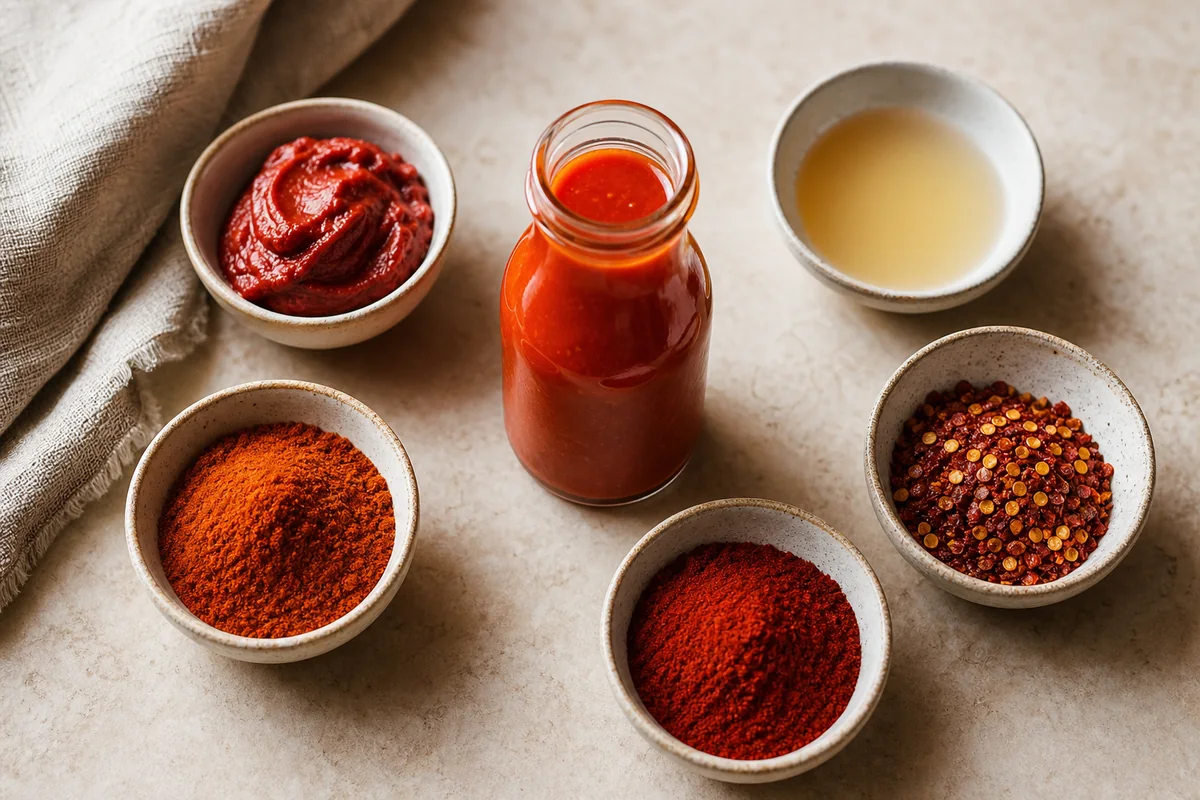
5 Best Tabasco Sauce Substitutes (Honest Picks)
Ingredients
Equipment
Method
- Decide what you’re replacing: use a Tabasco-like vinegar-cayenne option if you need the same tangy heat, or a chili-forward option if you mostly want chili flavor.
- Start with the listed ratio (or a smaller amount for baking), then taste after mixing into your base (sauce, dressing, batter).
- If your substitute tastes flat or too sweet, add a small splash of vinegar (or lemon) to bring the sharpness closer to Tabasco.
- If it’s too spicy, dilute with water, oil, or the dish’s liquid; if it’s not spicy enough, add a pinch of cayenne or chili flakes.
- For baking, mix the substitute into wet ingredients first so the heat and vinegar distribute evenly.
Notes
- Tabasco’s key traits are vinegar tang, cayenne pepper heat, and a thin pourable texture.
- In baking, start low and adjust because vinegar can change perceived tartness and balance.
Tried this recipe?
Let us know how it was!
Carrie is a food writer and editor with more than 15 years of experience. She has worked for some of the biggest names in the food industry, including Bon Appétit, Food & Wine, and Martha Stewart Living.
As the Editor in Chief of EpicureDelight, Carrie oversees all of the content on the site. She also manages the team of contributing writers and editors, who help to create delicious recipes, helpful tips, and informative articles that you’ll find on the site.
A native of the Chicago area, Carrie is passionate about all things food. She loves trying new restaurants and experimenting with new recipes in her kitchen. She’s also a graduate of the Culinary Institute of America, so she knows a thing or two about food!



