
Thickness is everything with tomato puree. Too thin and your sauce won't coat pasta.
Too thick and a stew turns dense and sticky.
A good tomato puree substitute matches two things: body and flavor concentration. Get those right and your dish lands exactly where you intended.
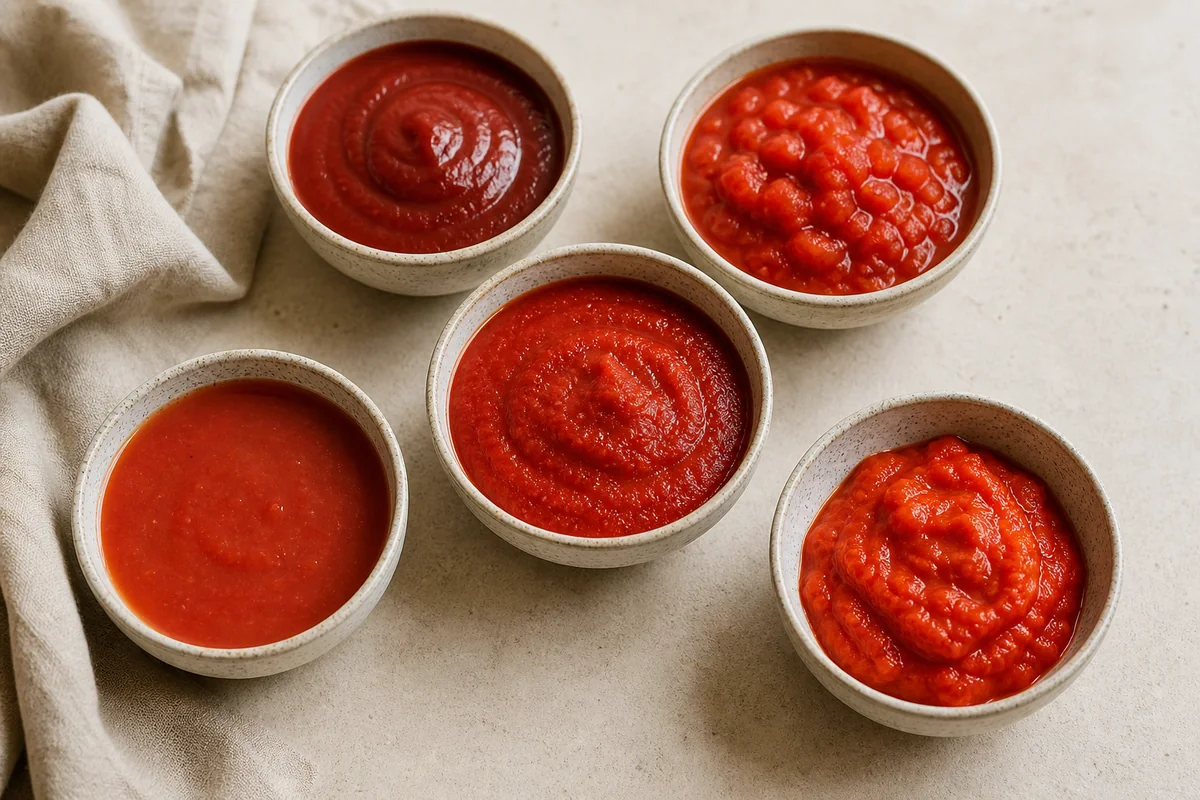
Match thickness first, then flavor strength. Blended crushed tomatoes and passata swap 1:1 with minimal prep. Tomato sauce needs reducing. Tomato paste needs thinning with water. For most stews and sauces, any of these five options works once you adjust consistency.
5 Best Tomato Puree Substitutes Ranked by Thickness
| # | Substitute | Best For | Ratio | Key Note |
|---|---|---|---|---|
| 1 | Crushed Tomatoes (blended) | Both | 1:1 | Blend smooth, simmer briefly |
| 2 | Tomato Sauce (reduced) | Both | 1:1 | Simmer until thickened |
| 3 | Passata | Both | 1:1 | Already smooth, may need reducing |
| 4 | Tomato Paste (thinned) | Both | 1:2 | 1 part paste, 1 part water |
| 5 | Diced Tomatoes (blended) | Both | 1:1 | Blend well, simmer to smooth |
Scan the table first, then read each section below for prep details and exactly when to reach for each one.
1. Canned Crushed Tomatoes
Blended crushed tomatoes are the most reliable swap when you want flavor that stays close to the original.
Run them through a blender for 30 seconds until completely smooth. For dishes that need some body, like pasta sauce, canned tomato swaps often work best with a 5-minute simmer to drive off extra liquid.
- Texture match: Very close to puree once blended; thinner if left unsimmered
- Prep step: Blend, then simmer 5-8 minutes over medium heat to reduce
- Best for: Pasta sauces, pizza bases, braised meats
- Ratio: 1:1 by volume after blending
Skip if: You need a completely no-cook application. Crushed tomatoes stay chunkier than puree unless you at least simmer them briefly.
2. Tomato Sauce (Reduced)
Plain tomato sauce is thinner and often slightly seasoned, but it gets the job done with one extra step. Simmer it uncovered over medium heat until it loses about 20-25% of its volume.
We prefer this swap when swapping jarred sauce in braises or slow cooker recipes, since long cook times do the reducing for you. Keep an eye on salt levels: pre-seasoned sauces can get aggressive once concentrated.
- Consistency target: Simmer until a spoon dragged across leaves a clean line
- Time to reduce: 8-12 minutes uncovered at medium heat for most sauces
- Salt check: Taste after reducing, add salt only at the end
- Ratio: Start with 1:1, then reduce down to puree thickness
Skip if: Your recipe needs the puree for structure and you have no time to simmer. A passata or paste-based swap is faster and more predictable.
3. Passata
Passata is strained, uncooked tomatoes with nothing added. It pours smooth from the bottle and needs zero blending, which makes it one of the easiest swaps here.
The flavor is slightly lighter than tomato puree. If your dish is long-cooked, that difference disappears.
For quick sauces under 20 minutes, consider the passata vs. paste tradeoff before deciding.
Use passata straight at 1:1 in most applications. Here's how to adjust it:
- For thin sauces: Use as-is, no prep needed
- For thicker body: Simmer 5-10 minutes uncovered to concentrate
- For richer flavor: Add a small pinch of tomato paste, about ½ teaspoon per cup
Skip if: You need intense, concentrated tomato flavor. Passata is lighter than puree straight from the bottle.
4. Tomato Paste (Thinned)
Tomato paste is the most concentrated option in this list. It is roughly 3 times thicker than puree, so thinning is non-negotiable.
The good news: concentrated paste flavor actually adds depth to stews and braises. Mix 1 part paste with 1 part warm water, stir until smooth, then taste before adding to the pot.
When to Thin
Works for: soups, braises, stews, pasta sauces where liquid is added anyway
Skip if: recipe has no added liquid and you can't dilute the paste safely
- Basic ratio: 1 part tomato paste + 1 part warm water = approximate puree consistency
- For thinner results: Add a second part water (1:2) and stir well
- Flavor note: Paste is deeper and less bright; add a tiny pinch of sugar to balance
- Shelf note: Check opened paste storage tips if you're using a partial tube
Skip if: You can't adjust liquids in the recipe. Paste-based swaps require dilution to avoid an overpowering, thick result.
5. Diced Tomatoes (Blended)
Canned diced tomatoes work in a pinch, but they need more prep than any other option on this list. Blend them fully, then pass through a sieve if you want a cleaner texture.
The flavor can vary by brand. Some diced tomatoes carry added salt, herbs, or citric acid, so taste before you season your dish.
If you want to understand jarred tomato flavor profiles, that can help you spot when your swap is already seasoned.
- Blend time: At least 45 seconds on high for a smooth result
- Sieve step: Optional, but removes remaining skin or seed bits
- Simmer: 5-8 minutes to reduce and smooth the texture
- Flavor check: Taste for added salt or herbs before seasoning the dish
Skip if: You're avoiding any flavor variation. Diced tomato brands differ more than crushed or passata, so results can be unpredictable.
Making Tomato Puree Substitutes Work in Any Recipe
The single most important step is adjusting consistency before the swap goes into the pot. A substitute that's too thin will water down the entire dish, and catching it early takes 2 minutes.
Start by eyeing the texture next to the original puree if you have a reference, or aim for the thickness of heavy cream as a rough guide.
For long-cooked dishes like thick, concentrated sauces, almost any swap on this list will work because extended cooking evens out differences. For quick-cook recipes, passata or blended crushed tomatoes are safer bets.
- Thin substitutes (sauce, passata): Simmer uncovered 5-10 minutes before adding other ingredients to build body first
- Thick substitutes (paste-based): Thin with warm water in 1 tablespoon increments, stir and check texture after each addition
- Flavor balance: If the swap tastes flat, add a pinch of salt; if it tastes sharp, add ¼ teaspoon sugar and stir well
Frequently Asked Questions
Not straight from the can. Tomato sauce is thinner, so simmer it uncovered for 8-12 minutes first. Once reduced to puree thickness, substitute at 1:1.
Mix 1 part tomato paste with 1 part warm water and stir until smooth. Add a second part water if it still feels too thick after stirring.
Thinned tomato paste is best for stews and braises because its deep flavor holds up during long cooking. Blended crushed tomatoes at 1:1 are a close second.
Yes. Both need blending for at least 30-45 seconds to reach a smooth texture close to puree. A brief simmer after blending improves consistency further.
Simmer it uncovered over medium heat until the extra liquid evaporates. For most swaps, 5-10 minutes is enough to reach a thicker, puree-like consistency.
5 Best Tomato Puree Substitutes (Easy Swaps)
Ingredients
Equipment
Method
- Choose your substitute based on thickness: if your recipe needs thick body, start with tomato paste; if it needs smooth pourability, use passata or blended crushed tomatoes.
- Measure using the ratio in the table (or match 1:1 by volume for crushed tomatoes/sauce/passata blends).
- Adjust consistency: thin with water for paste-based swaps, or simmer 5–10 minutes to reduce if your swap is too watery.
- Taste and balance: add a pinch of salt for muted flavor, or a small splash of water if it tastes overly concentrated.
- Use immediately in the recipe; for long-cooking dishes, let the swap simmer so flavors marry and texture smooths out.
Notes
- Best match is the one closest in thickness: puree-like body usually needs paste thinned or sauce reduced.
- Blending is the main trick to eliminate chunkiness from crushed/diced tomatoes.
Tried this recipe?
Let us know how it was!
Carrie is a food writer and editor with more than 15 years of experience. She has worked for some of the biggest names in the food industry, including Bon Appétit, Food & Wine, and Martha Stewart Living.
As the Editor in Chief of EpicureDelight, Carrie oversees all of the content on the site. She also manages the team of contributing writers and editors, who help to create delicious recipes, helpful tips, and informative articles that you’ll find on the site.
A native of the Chicago area, Carrie is passionate about all things food. She loves trying new restaurants and experimenting with new recipes in her kitchen. She’s also a graduate of the Culinary Institute of America, so she knows a thing or two about food!



