
That mild, tangy squeeze of yellow mustard does more than add flavor. It binds your vinaigrette, softens a marinade, and gives a sandwich spread its smooth, slightly sweet backbone.
When the bottle runs dry mid-recipe, you need a swap that handles all three jobs.
A good yellow mustard substitute matches the tang, the subtle sweetness, and the emulsified texture. Every option below comes with a practical ratio and a "skip if" condition.
That way you pick the right one, not just the closest one.
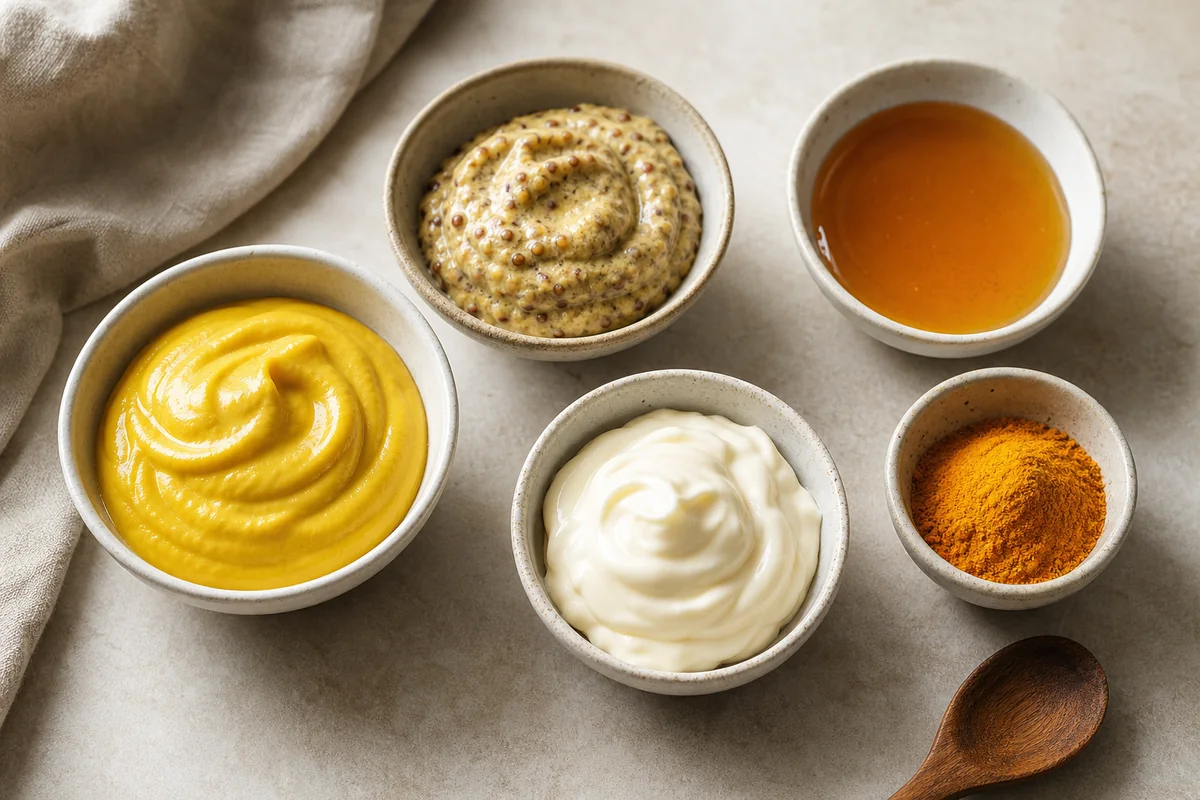
Yellow mustard has a mild, sweet-tangy flavor and a smooth, emulsified texture. Dijon mustard is the closest 1:1 swap. Whole-grain mustard matches the flavor but adds texture. Mustard powder paste, honey mustard, and horseradish sauce all work with small ratio or taste adjustments.
5 Best Yellow Mustard Substitutes, Ranked by Use
Each option below is chosen to match yellow mustard's mild tangy profile in dressings, sauces, and spreads. Start with the listed ratio, taste, then adjust from there.
| # | Substitute | Best For | Ratio | Key Note |
|---|---|---|---|---|
| 1 | Dijon Mustard | Both | 1:1 | Add pinch of sugar |
| 2 | Whole-Grain Mustard | Both | 1:1 | Strain for smoothness |
| 3 | Mustard Powder Paste | Cooking | 1:1 | Whisk with water first |
| 4 | Honey Mustard | Both | 1:1 | Reduce other sweeteners |
| 5 | Horseradish + Sugar | Cooking | ¾:1 | Start low, add slowly |
1. Dijon Mustard
Dijon is the easiest swap on this list. It has the same emulsified body and a similarly sharp tang, though it skips yellow mustard's mild sweetness.
Read more about sharp mustard flavor notes before deciding whether the difference matters in your recipe.
Dijon Mustard
Works for: sandwich spreads, creamy dressings, glazes, cooked pan sauces
Skip if: your recipe needs yellow mustard's mild sweetness and you can't add any sugar
- Why it works: Same smooth texture and strong mustard bite; emulsifies dressings just as well
- Ratio: Use 1:1
- Taste fix: Add 1 pinch of sugar per tablespoon of Dijon to round the sharpness
- Color note: Dijon is paler than yellow mustard; the yellow hue will be less vivid
2. Whole-Grain Mustard
Whole-grain mustard carries the same mustard backbone as yellow, with a slightly earthier edge. The big difference is texture: those visible seeds make it coarser.
If you want to know what you're working with, the seedy mustard flavor profile is worth a look before using it in a delicate dressing.
- Ratio: Use 1:1
- Texture note: Whisk vigorously before measuring; strain through a fine mesh strainer if you need a smoother result
- Taste note: Flavor is close but earthier; add a tiny pinch of sugar if you want yellow mustard's sweeter edge
Skip this if your recipe needs a perfectly smooth, emulsified spread and you don't have a strainer to hand.
3. Mustard Powder + Water Paste
Mixing mustard powder with water is the best DIY option when you have no prepared mustard at all. If you're unsure whether to reach for powder or ground flour, comparing these two dry forms first will save you a mistake.
| Use | Ratio | Notes |
|---|---|---|
| Cooked sauces | 1:1 | Mustard powder paste; whisk in with warm liquid |
| Dressings | 1:1 | Thin paste with 1 teaspoon extra water for pourable texture |
| Marinades | 1:1 | Mix paste ahead; let sit 5 min before adding to marinade |
- Paste method: Combine 1 teaspoon mustard powder with 1 teaspoon cold water; whisk until smooth, then thin gradually until you reach a spreadable consistency
- Avoid the powdery taste: Let the paste rest 5 minutes before using; the flavor develops as it sits
- Tang control: Add a few drops of white vinegar to punch up the acid if it tastes flat
Skip this if you need a ready-made, shelf-stable texture and don't have time to mix and rest the paste.
4. Honey Mustard
Honey mustard leans sweeter than yellow mustard, so it fits best where that extra sweetness won't tip the balance. It works well in dressings and sandwich spreads, and it's a natural fit for a one-pan honey-mustard dinner where the sweet note is already part of the plan.
- Ratio: Use 1:1
- Sweetness adjustment: Reduce any other sugar or sweet ingredients in the recipe by half
- Best uses: Salad dressings, sandwich spreads, roasted vegetable glazes
- Balance tweak: If it tastes too sweet, add 3-4 drops of white vinegar or a small squeeze of lemon
Honey Mustard
Works for: sweet-forward dressings, glazes, sandwiches, roasted dishes
Skip if: your recipe needs yellow mustard's tang without extra sweetness and you can't add acid to compensate
5. Horseradish Sauce + Sugar
Horseradish sauce is sharp and pungent in a way that this root-based condiment always is, so you need a lighter hand with the ratio. Start at ¾ of what the recipe calls for, taste, and add more only if needed.
- Ratio: Start at ¾:1; increase slowly after tasting
- Heat fix: Stir in 1 pinch of sugar per tablespoon to soften the bite
- Best uses: Quick dipping sauces, stir-ins for warm dishes, bold sandwich condiments
- Color note: Horseradish sauce is white or cream-colored; it won't mimic yellow mustard's color at all
Skip this if your dish is heat-sensitive or you need yellow mustard's gentle tang rather than horseradish's pungent kick.
Making Yellow Mustard Substitutes Work
Getting the flavor right takes two adjustments: sweetness and texture. A pinch of sugar rounds any sharp mustard substitute.
A few drops of vinegar or lemon brightens a swap that tastes flat. If you're making a dressing and need it to keep, check how homemade dressing storage works before storing a batch.
For Dijon-based swaps, storing Dijon properly matters if you open a new jar just for one recipe.
- Matching sweetness and tang: Add sugar in small pinches (not teaspoons) to avoid over-sweetening; use white vinegar rather than lemon when you want tang without fruit flavor
- Matching texture: For smooth results, whisk your substitute vigorously before measuring; if using whole-grain mustard, a 30-second pass through a fine mesh strainer gets you close to yellow mustard's body
- Taste-and-adjust timing: Always taste the finished dish before serving; if using a substitute in a dressing, let it sit 5 minutes so the flavors emulsify and settle before making final tweaks
Frequently Asked Questions
Dijon mustard is the closest match at a 1:1 ratio. Add a pinch of sugar per tablespoon if your recipe depends on yellow mustard's mild sweetness.
Yes, use Dijon at 1:1. It emulsifies just as well, though it's sharper; balance that with a small pinch of sugar or a drop less vinegar.
Mix 1 teaspoon of mustard powder with 1 teaspoon of cold water, whisk smooth, and let it rest 5 minutes before using at a 1:1 ratio.
It works at 1:1, but reduce other sweet ingredients by half to keep the marinade balanced. Add a splash of vinegar if it still tastes too sweet.
Stir in one pinch of sugar per tablespoon and wait 2 minutes before tasting again. The heat softens as the sugar incorporates.
5 Best Yellow Mustard Substitutes (with Ratios)
Ingredients
Equipment
Method
- Match your use-case: for sandwich spread or creamy dressing, pick Dijon or whole-grain; for cooked sauces, use mustard powder paste or Dijon.
- Start with the listed ratio (e.g., 1:1), then adjust after a quick taste: add a pinch of sugar to round sharpness, or a splash of water/vinegar to loosen.
- If your substitute looks too coarse, whisk it smooth or strain briefly for a yellow-mustard-like texture.
- If it tastes “flat,” boost tang with a tiny squeeze of lemon or a few drops of vinegar—then re-check sweetness.
- Let dressings sit 5 minutes so the mustard flavor emulsifies before final tasting.
Notes
- Yellow mustard is typically milder and slightly sweet compared with sharper mustards—use sugar pinches to match balance.
- For dressings, texture matters: choose swaps that emulsify easily (Dijon, honey mustard, mustard powder paste).
Tried this recipe?
Let us know how it was!
Carrie is a food writer and editor with more than 15 years of experience. She has worked for some of the biggest names in the food industry, including Bon Appétit, Food & Wine, and Martha Stewart Living.
As the Editor in Chief of EpicureDelight, Carrie oversees all of the content on the site. She also manages the team of contributing writers and editors, who help to create delicious recipes, helpful tips, and informative articles that you’ll find on the site.
A native of the Chicago area, Carrie is passionate about all things food. She loves trying new restaurants and experimenting with new recipes in her kitchen. She’s also a graduate of the Culinary Institute of America, so she knows a thing or two about food!



