
That glossy candy finish you get from almond bark is harder to fake than it looks. The coating melts smooth, sets firm, and doesn't require tempering.
When you're out of it, the right almond bark substitute depends on one thing: what you're actually making.
Dipping needs a firm snap. Drizzling needs a loose, glossy flow.
Baking needs something that blends without seizing. Each swap below is matched to one of those jobs, so you're not guessing.
Vanilla candy coating is the closest match: it melts smoothly, sets firm, and needs no tempering. White chocolate chips work well for drizzling with a drop of neutral oil. For baking, compound chocolate is a reliable drop-in that behaves predictably.
5 Best Almond Bark Substitutes Ranked by Use
Every swap below is rated by how closely it copies almond bark's behavior, not just its flavor. A candy-coating style substitute wins nearly every time for gloss and snap.
The table below is a fast reference before you read the full breakdown.
| # | Substitute | Best For | Ratio | Key Note |
|---|---|---|---|---|
| 1 | Vanilla Candy Coating | Dipping & Drizzle | 1:1 | Firmest, glossiest set |
| 2 | White Chocolate Chips | Drizzle & Baking | 1:1 | Add oil if too thick |
| 3 | Compound Chocolate | Coating & Baking | 1:1 | No tempering needed |
| 4 | Cocoa Butter + Sugar | Drizzle | 1:1 | Warm gently; stir well |
| 5 | Chopped Chocolate Bar | Emergency Only | 1:0.85 | Keep moisture away |
1. Vanilla Candy Coating
Vanilla candy coating is the closest thing to almond bark you'll find in a grocery store. It's made with the same type of vegetable-fat base, so it melts at a similar temperature and sets with that hard, glossy finish almond bark is known for.
- Melt method: Microwave in 30-second bursts, stirring between each, until fully smooth
- Ratio: Use 1:1 by weight for any almond bark recipe
- Set time: Firms up at room temperature in 10-15 minutes with a clean snap
- Flavor note: Sweeter and more candy-like than almond bark, but almost identical in texture
If you want to understand what separates almond bark's flavor profile from candy coating before you swap, it's mostly a question of sweetness level and vanilla intensity.
Skip if: You need real chocolate flavor. Candy coating is sweet and flat compared to cocoa-based coatings.
2. White Chocolate Chips
White chocolate chips are a pantry-friendly option that most bakers already have on hand. They melt well on low heat and work best for drizzling or folding into a baked recipe.
- Melt method: Double boiler or microwave on 50% power in 20-second bursts; stir constantly
- Too thick? Add 1 teaspoon of neutral oil per cup of chips and stir until the coating turns glossy
- Set expectations: Sets softer than almond bark, so it won't give you a firm candy snap
- Best use: Drizzling over cookies, bark-style slabs, or folding into batter
If you find yourself frequently reaching for chips as a coating base, it helps to know the full range of chip swap options so you're never stuck mid-recipe.
Skip if: You need a firm-shell dip. White chocolate chips often set too soft for that job.
3. Compound Chocolate
Compound chocolate is made with vegetable fat instead of cocoa butter, which means it behaves a lot like almond bark in the pan. It melts cleanly, flows well, and sets without any tempering step.
- White vs milk: White compound is the closest visual match; milk compound adds a light cocoa note
- Set speed: Faster than real chocolate, similar to almond bark
- Gloss: Slightly less glossy than candy coating but still clean-looking on dipped items
Compound Chocolate vs Almond Bark
Works for: coating, dipping, baking, and quick-set decorating projects
Skip if: you want a pure cocoa-butter flavor; compound chocolate uses vegetable fat instead
White compound chocolate is worth knowing about if you regularly swap out cocoa-butter-free options in candy work.
4. Cocoa Butter + Powdered Sugar
This is the DIY path, and it works well when you want control over sweetness or you have cocoa butter on hand already. The mix creates a candy-coating style shell that melts and sets in a way that's close to almond bark.
Knowing the difference between cocoa butter versus cacao butter matters here, because the fat source affects how smoothly your coating sets. Use refined cocoa butter for a neutral flavor.
- Basic ratio: Melt ½ cup cocoa butter and whisk in ½ cup sifted powdered sugar until smooth
- Graininess risk: Stir constantly and keep heat below 115°F; sugar can clump if overheated
- Moisture warning: Even a drop of water can cause the mix to seize; keep all tools dry
When storing powdered sugar for this use, keeping it dry is the main concern, since clumped sugar creates texture problems in the final coating.
This swap is best for drizzling and molded pieces. It's less reliable for a full dip because the set is softer and harder to predict without practice. Skip if you don't have cocoa butter.
There's no easy substitute for it in this formula.
5. Chopped Chocolate Bar
A plain white or milk chocolate bar, chopped finely, is the emergency option most people already have. It melts with more effort and is less forgiving than a candy coating.
Real chocolate contains cocoa butter, which means it can seize with any moisture contact and may need a light tempering step for a glossy finish. For a quick fix where appearance matters less, it still gets the job done.
- Prep: Chop the bar into small, even pieces so it melts at the same rate
- Melt method: Double boiler only; keep the bowl away from any steam
- Seized texture rescue: Stir in 1 teaspoon of neutral oil and gentle heat to loosen a grainy melt
- Set note: May set softer than almond bark and with less gloss; chill briefly to firm it up
For a wider look at white chocolate's flavor behavior before committing to this swap, the difference in sweetness and fat content is worth noting.
Skip if: You need a crisp, snappy shell. Real chocolate is less forgiving and often sets too soft at room temperature.
Making Almond Bark Substitutes Work
The biggest failures happen at the melt stage, not the set stage. Most substitutes behave well if you control the heat and keep moisture out of the bowl entirely.
A good neutral fat on hand is useful for thinning a coating that's gone too stiff mid-project.
- Melt slowly: Use a double boiler or microwave at 50% power in short bursts; high heat scorches quickly and ruins the texture
- Fix thick coatings: Add neutral oil 1 teaspoon at a time, stirring fully between each addition, until the coating flows smoothly off a spoon
- Setting and storage: Let coated pieces sit at room temperature on parchment; refrigerating while still wet can cause condensation bloom on the surface
Frequently Asked Questions
Yes, with one adjustment. White chocolate chips melt well but tend to be thicker, so stir in 1 teaspoon of neutral oil per cup to get a smoother, pourable coating.
Vanilla candy coating sets the hardest and glossiest of all the options here. It's the closest in structure to almond bark and needs no tempering.
Graininess usually means moisture got in or the heat was too high. Stir in a teaspoon of neutral oil over low heat to smooth it out.
Add neutral oil in 1 teaspoon increments and stir fully after each addition. Avoid water or milk, which can cause the coating to seize.
Candy-coating style substitutes like vanilla coating or compound chocolate set comparably. Real chocolate bars and white chocolate chips may set softer and need brief refrigeration.
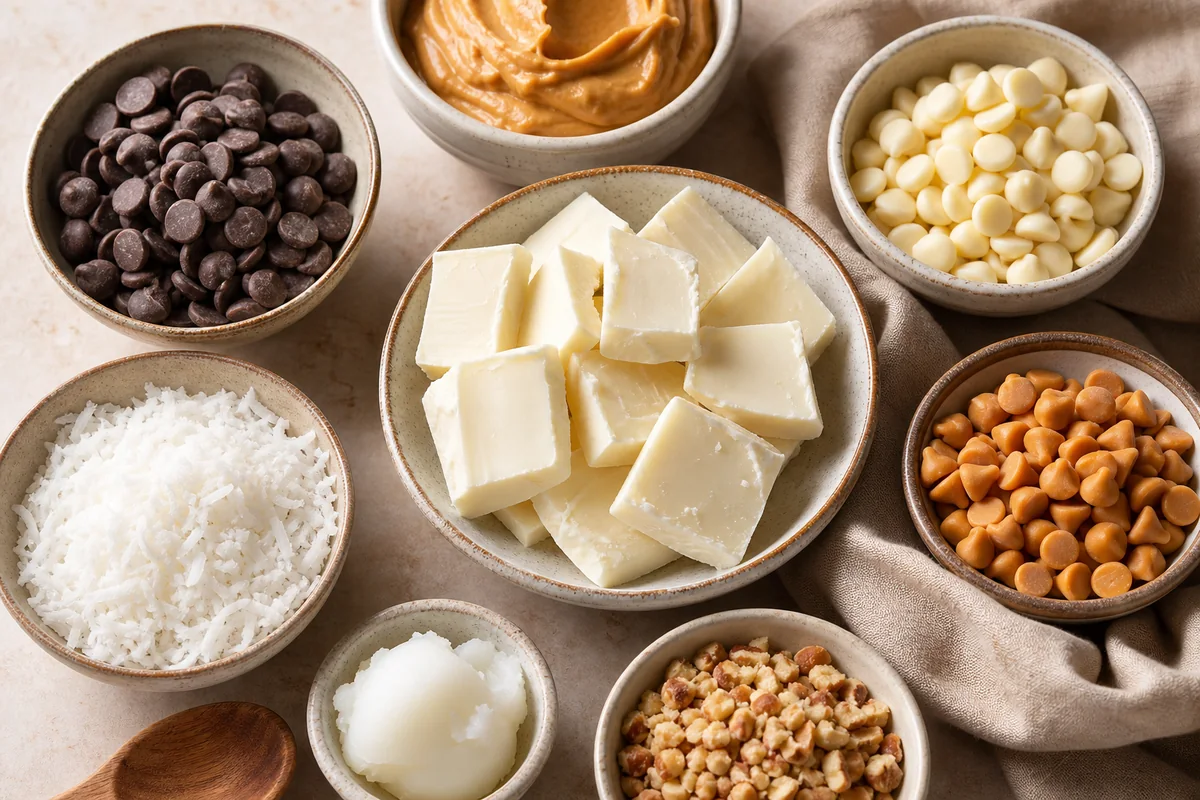
5 Best Almond Bark Substitutes (Easy Swaps)
Ingredients
Equipment
Method
- Identify what you’re making: dipping/coating (needs firm set) vs drizzling vs baking mixture (needs foldable melt).
- Choose the closest substitute from the list and use the ratio exactly (use weight if your recipe is weight-based).
- Melt slowly on low heat (microwave in short bursts or double boiler) and stir until smooth.
- If the coating is too thick, loosen with a small drizzle of neutral oil and re-stir until glossy.
- Let it set at room temperature; for faster setting, cool briefly but avoid adding moisture.
Notes
- Almond bark is usually a candy-coating style product; substitutes that set firm and glossy will perform closest.
- Avoid water or steam near melted chocolate/candy coating—both can cause graininess or seize.
Tried this recipe?
Let us know how it was!
Carrie is a food writer and editor with more than 15 years of experience. She has worked for some of the biggest names in the food industry, including Bon Appétit, Food & Wine, and Martha Stewart Living.
As the Editor in Chief of EpicureDelight, Carrie oversees all of the content on the site. She also manages the team of contributing writers and editors, who help to create delicious recipes, helpful tips, and informative articles that you’ll find on the site.
A native of the Chicago area, Carrie is passionate about all things food. She loves trying new restaurants and experimenting with new recipes in her kitchen. She’s also a graduate of the Culinary Institute of America, so she knows a thing or two about food!



