That light, slightly nutty scent almond oil adds to a cake batter or a finishing drizzle is easy to miss until it's gone. The good news: a few pantry oils come close enough that most people won't notice the difference.
The best almond oil substitute depends on what the oil is doing. Need nutty aroma? Reach for walnut or hazelnut oil at a 1:1 ratio. Need moisture and fat without flavor? Avocado or canola oil work cleanly. For baking richness, melted butter holds the crumb well.
The key question isn't just "what oil do I have?" It's "what is almond oil doing in this recipe?"
Aroma, moisture, and heat stability are three separate jobs, and not every swap handles all three equally well.
5 Almond Oil Substitutes That Actually Work
Before jumping into each one, this table gives you a fast side-by-side. The sections below show exactly how to apply each swap so your dish doesn't taste off.
| # | Substitute | Best For | Ratio | Key Note |
|---|---|---|---|---|
| 1 | Walnut Oil | Baking + Finishing | 1:1 | Nutty, slightly deeper |
| 2 | Hazelnut Oil | Baking | 1:1 | Toasty, aromatic |
| 3 | Avocado Oil | Baking + Cooking | 1:1 | Mild, high smoke point |
| 4 | Canola Oil | Baking | 1:1 | Very neutral flavor |
| 5 | Refined Olive Oil | Savory Cooking | 1:1 | Grassy in light desserts |
1. Walnut Oil
Walnut oil is the closest flavor-for-flavor stand-in for almond oil. It carries a genuine nut aroma, works at a 1:1 ratio, and handles both baking and finishing drizzles without adjusting much else in the recipe.
The flavor is nut-forward and reads a touch deeper than almond oil, so you'll notice it more in very delicate batters. If you're worried about it overpowering a subtle recipe, try pulling back to ¾ the stated amount.
- Ratio: 1:1 for most baking and finishing; reduce to ¾ in very light pastries
- Flavor impact: Noticeably nutty - slightly richer and earthier than almond oil
- Best uses: Quick breads, muffins, banana bread, salad dressings, finishing drizzles
- Skip if: Your recipe needs a neutral oil - walnut aroma will dominate
If you're thinking about going in the other direction and swapping out walnut oil in a recipe that calls for it, the guide on swapping out walnut oil covers that side of the equation.
2. Hazelnut Oil
Hazelnut oil is warmer and more toasty than almond oil, and it tends to round out baked goods in a way that almond oil only hints at. It's a great pick when your recipe is chocolate-based, spiced, or coffee-forward - flavors that welcome that kind of depth.
If you want to understand exactly what you're working with before you use it, the piece on hazelnut oil and its flavor is worth a quick read.
- Ratio: 1:1 in cakes and cookies; start at ¾ in very light pastries and adjust up
- Flavor impact: More aromatic than almond oil - toasty and almost caramel-adjacent
- Best uses: Chocolate cakes, spiced cookies, hazelnut tortes, banana muffins
- Skip if: You want almond oil's fragrance to stay subtle or you're baking something very delicate and lightly flavored
3. Avocado Oil
When nut aroma doesn't matter and you just need the fat to do its job, avocado oil is the cleanest swap available. It's mild enough to disappear into a batter and has a smoke point high enough to handle most cooking situations where almond oil would be used.
Watch your bottle's condition before using it - checking for avocado oil spoilage signs is a quick step that saves a recipe.
- Ratio: 1:1 across baking and sautéing
- Flavor impact: Minimal - preserves moisture without any detectable aroma
- Best uses: Cakes, muffins, pancakes, sautéed vegetables, marinades
- Skip if: Your recipe is counting on nut fragrance to carry the main flavor
4. Canola Oil
Canola oil is the most accessible neutral option in most kitchens. It won't add anything to the flavor, which is exactly what you want when a cake recipe calls for almond oil purely for softness and moisture.
Understanding the role canola oil plays in baking helps you decide whether it fits - it keeps crumb tender without influencing taste at all.
- Ratio: 1:1 in nearly all baking recipes
- Flavor impact: Essentially zero - very clean and blank
- Best uses: Cakes, quick breads, cookies, waffles, light sautéing
Canola Oil
Works for: any baked good where almond oil is used for fat and moisture; budget-friendly and stable under moderate heat
Skip if: your recipe needs nut aroma - canola adds none and cannot replicate fragrance at any ratio
5. Refined Olive Oil
Refined or "light" olive oil is the right call when you're cooking savory dishes and ran out of almond oil mid-prep. It handles heat well, blends into marinades and dressings cleanly, and doesn't fight with garlic, herbs, or spices.
For recipes where you're already comfortable swapping out olive oil in other directions, the full guide on swapping out olive oil covers those scenarios too.
- Ratio: 1:1 in savory cooking; reduce to ¾ in baked sweets to limit any detectable olive flavor
- Best use (savory): Sautéing, marinades, roasted vegetables, flatbreads
- Best use (baking): Olive oil cakes, savory muffins, bread - not light or delicate pastries
- Skip if: Your recipe is a light dessert - even refined olive oil can show through thin batters
Making Almond Oil Substitutes Work (So They Taste Right)
Getting the swap right is mostly about deciding what the oil was doing before you removed it. If it was carrying nut aroma, a neutral oil won't cover that gap - you'd need to add ¼ teaspoon of almond extract to compensate.
If it was there for fat and softness, almost any oil on this list handles that job cleanly at a 1:1 ratio. Knowing how long almond oil keeps is also worth checking, because a rancid bottle is often the real reason a sub is needed in the first place.
- Match the role first: Aroma substitutes (walnut, hazelnut) go in where flavor matters; neutral substitutes (avocado, canola) go in where texture matters
- Adjust strong oils down: With hazelnut oil especially, start at ¾ of the stated amount the first time and taste-test before committing
- Mind the timing for finishing oils: Walnut and hazelnut oil lose their aroma under prolonged heat - add them last, off heat, to keep the fragrance intact
Frequently Asked Questions
Walnut oil is closer in intensity and won't overpower delicate recipes. Hazelnut oil is more aromatic and works best when paired with bold flavors like chocolate or spice.
Only use refined or light olive oil, and reduce to ¾ of the amount. Extra-virgin olive oil reads noticeably grassy in light, sweet batters.
Yes, especially with hazelnut oil. Start at ¾ of the stated amount and adjust up if the flavor reads too faint after your first test batch.
Avocado oil handles the highest heat cleanly. Canola oil is also stable and neutral, making both solid choices for sautéing and roasting.
Texture stays almost identical - both are liquid fats with similar viscosity. The only real difference is the absence of almond's nutty aroma.
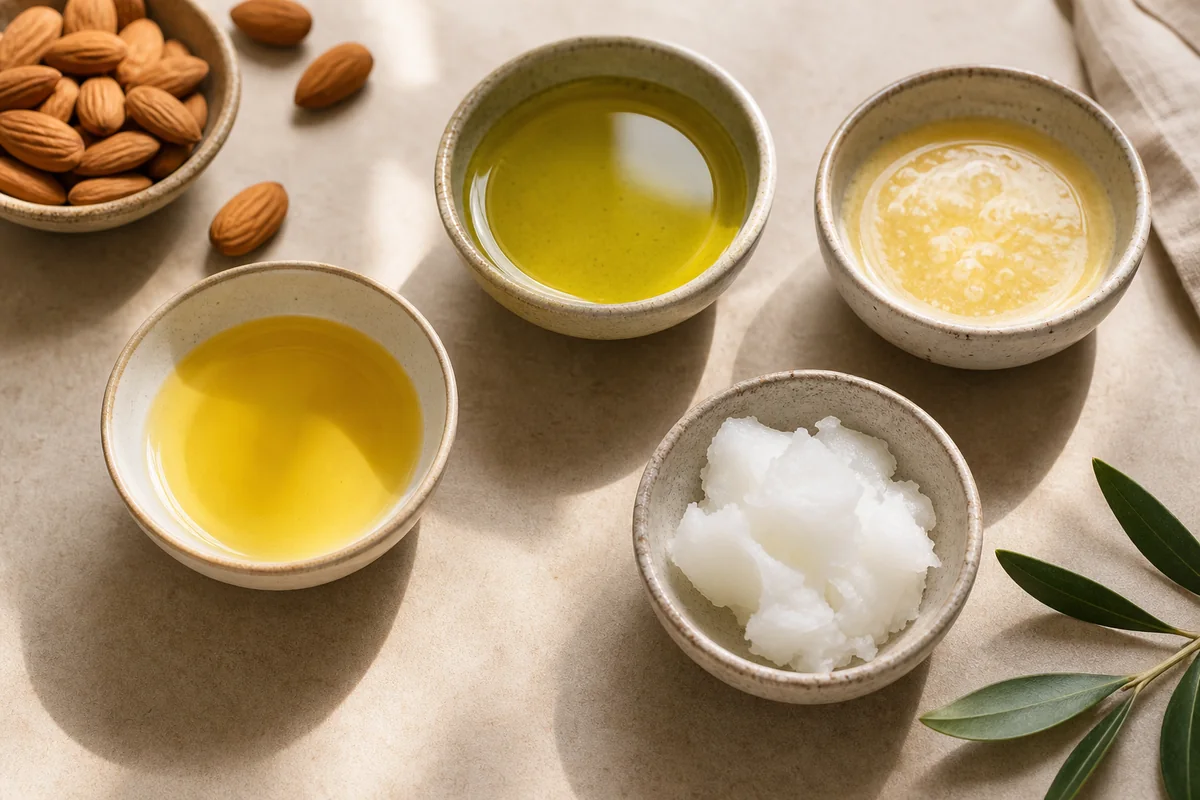
5 Best Almond Oil Substitutes You Can Trust
Ingredients
Equipment
Method
- Decide what you need almond oil for: aroma (nutty fragrance), texture (soft crumb/moistness), or cooking stability (higher-heat).
- Match the substitute to that role using the table items below, then swap using the 1:1 ratio unless the section notes say otherwise.
- For baking, pour in after mixing dry ingredients (or during the final blend) to keep the crumb even.
- For no-cook/finishing, use walnut or hazelnut oil last so the nut aroma doesn’t dull.
- Taste-test once: if flavor is too strong, shift next time to a more neutral option (avocado or canola).
Notes
- If your recipe specifically relies on almond flavor/aroma, choose walnut or hazelnut oil over neutral oils.
- If you’re only using almond oil to add fat and moisture, a neutral oil (avocado or canola) is usually the safest swap.
Tried this recipe?
Let us know how it was!
Carrie is a food writer and editor with more than 15 years of experience. She has worked for some of the biggest names in the food industry, including Bon Appétit, Food & Wine, and Martha Stewart Living.
As the Editor in Chief of EpicureDelight, Carrie oversees all of the content on the site. She also manages the team of contributing writers and editors, who help to create delicious recipes, helpful tips, and informative articles that you’ll find on the site.
A native of the Chicago area, Carrie is passionate about all things food. She loves trying new restaurants and experimenting with new recipes in her kitchen. She’s also a graduate of the Culinary Institute of America, so she knows a thing or two about food!