
That sharp, cherry-adjacent aroma hitting a bowl of cookie dough is unmistakably almond extract. When the bottle is empty, your best almond extract substitute depends on one thing: how loud almond needs to be in the finished dish.
Some recipes want a whisper of nuttiness. Others are built around it.
Get that wrong and the whole dessert shifts.
Almond extract is intensely aromatic, so substitutes range from amaretto (closest aroma match) to almond oil (powerful, use sparingly) to marzipan (adds sweetness and body). Match your swap to intensity first, then adjust ratio and sweetness before baking.
5 Best Almond Extract Substitutes Ranked by Flavor Match
Each option below behaves differently in batter. One adds liquid, one adds fat, one adds sweetness.
The table shows the fast reference, and the sections after it walk through exactly how to apply each one.
| # | Substitute | Best For | Ratio | Key Note |
|---|---|---|---|---|
| 1 | Amaretto | Both | 1:1 | Reduce first to concentrate |
| 2 | Almond Oil | Both | ⅛:1 | Start low, builds bitter fast |
| 3 | Vanilla + Almond Essence | Both | 1:1 | Gentle, alcohol-free option |
| 4 | Marzipan | Baking | ½:1 | Adds sweetness, reduce sugar |
| 5 | Almond Butter / Paste | Both | ½:1 | Thin before adding to batter |
If you need guidance on choosing the right paste option, that covers the full range when almond paste itself is also unavailable. For recipes where you want to skip nut products entirely, swapping out almond oil has its own set of considerations worth checking first.
1. Amaretto
Amaretto is the closest swap for true almond aroma. It carries the same benzaldehyde compound that gives almond extract its sharp, sweet nuttiness.
The catch is alcohol and dilution. A quick 2-3 minute reduction in a small saucepan concentrates the flavor and drives off most of the liquid, so your batter does not thin out.
- Best for: Cookies, layer cakes, and buttercream where almond aroma is the main event
- Ratio: 1:1 after reducing; do not swap unreduced amaretto at full volume into dry-heavy batters
- Sweetness note: Amaretto is sweet, so taste your batter before adding other sweeteners
- Fillings tip: In ganache or cream fillings, add it unreduced but cut the amount by ¼ to control moisture
For times when amaretto itself is also missing, liqueur-based flavor swaps offers solid alternatives worth bookmarking.
*Skip if:* You need an alcohol-free result. Use almond oil or marzipan instead.
2. Almond Oil
Almond oil delivers pure almond aroma without any sweetness or alcohol. It is food-grade and cold-pressed, so the flavor is clean and direct.
The problem is strength. Almond oil is far more concentrated than extract, and going even slightly over makes the result taste medicinal.
- Ratio: Start at ⅛ the extract amount; for frostings, begin even lower (a single drop per cup)
- Mixing tip: Whisk almond oil into a warm base (melted butter, cream, or a tablespoon of milk) before adding to batter so it disperses instead of pooling
- Building flavor: Add, mix, taste, and build in single-drop increments rather than measuring by eye
- Label check: Only use oil marked food-grade or culinary; cosmetic almond oil is not safe for baking
Before storing almond oil long-term, check the bottle for freshness. Rancid oil makes the bitterness problem much worse.
*Skip if:* Your bottle says "for external use" or does not specify culinary grade.
3. Vanilla Extract + Almond Essence
This is the best alcohol-free route for recipes where almond is a supporting note, not the star. Vanilla holds the flavor base while a tiny drop of almond essence nudges it in the right direction.
The key word is tiny. Almond essence is often more concentrated than standard extract, so you are adding aroma, not volume.
- Target feel: Soft, rounded almond warmth rather than a sharp hit, which suits sponge cakes, muffins, and mild buttercreams well
- Ratio: Use vanilla at 1:1 for the extract amount, then add almond essence in drops, starting at 1-2 drops per teaspoon of vanilla
- Avoid the vanilla-only trap: Without the essence addition, the swap just tastes like vanilla; the aroma difference is noticeable in almond-leaning recipes
- Essence sourcing: Look for pure almond essence, not artificial almond flavoring, which can skew synthetic
Keep an eye on your vanilla stock too. A well-aged vanilla extract brings more depth to this blend than a fresh, thin bottle.
*Skip if:* Your recipe is built around a bold almond flavor. Use amaretto or almond oil instead.
4. Marzipan
Marzipan changes more than just aroma. It adds sweetness, body, and a slight chew, so the adjustment goes beyond a simple swap.
Think of it as contributing both flavor and structure. That makes it great for cookies and filling layers, but a variable to manage in delicate cakes.
Marzipan vs. Extract
Works for: Cookies, pound cakes, and filling layers where extra sweetness and a soft, dense texture are acceptable
Skip if: Your recipe is already dessert-sweet or the texture needs to stay light and airy
For a deeper look at what marzipan actually tastes like before committing to it, marzipan flavor notes breaks it down clearly.
- Ratio: Use about ½ the extract amount; blend marzipan completely smooth before adding to batter
- Blending method: Warm it slightly and work it into softened butter or a wet ingredient before incorporating, so no lumps form
- Sugar adjustment: Reduce the recipe's added sugar by 1-2 teaspoons per tablespoon of marzipan to keep sweetness balanced
*Skip if:* Your recipe needs aroma without sweetness. Amaretto or almond oil is the better call.
5. Almond Butter or Almond Paste
Both almond butter and almond paste bring fat, nuttiness, and body. They are pantry standbys that work well in quick breads, no-bake bars, and drop cookies.
Neither one replicates the clean aroma of extract. They taste roasted and heavier, so they shift the flavor profile rather than matching it directly.
| Use | Ratio | Notes |
|---|---|---|
| Cookies / quick breads | ½:1 | Almond butter; thin with 1 teaspoon milk if batter tightens |
| Frosting / buttercream | ¼:1 | Almond paste; soften first, blend into fat base smoothly |
| No-bake bases | ½:1 | Either; stir with warm coconut oil or cream to disperse |
- Ratio: Start at ½ the extract amount for either product
- Thinning: Add 1 teaspoon of milk, cream, or water per tablespoon of almond butter to prevent greasy streaks in batter
- Paste tip: Soften almond paste at room temperature for 10 minutes, then mash it into butter before adding to the mix
- Fat adjustment: Both add fat, so reduce butter or oil by 1 teaspoon if your recipe is already rich
Check how long you can keep storing almond butter before it goes rancid, especially if the jar has been open for a while.
*Skip if:* You need a clean, extract-like aroma. Almond butter reads roasted and can overpower delicate bakes.
Making Almond Extract Substitutes Work (Without Flavor Surprises)
Getting the swap right is mostly about managing three variables: intensity, moisture, and sweetness. Each substitute shifts at least one of them, and a small taste test mid-mix catches most problems before the oven does.
- Alcohol reduction: Always reduce amaretto in a pan for 2-3 minutes before adding it to batter; skipping this step thins the dough and dilutes other flavors
- Bitterness fix for almond oil: If the batter tastes sharp or medicinal, stir in ½ teaspoon of honey or a pinch of sugar to soften the edge, then taste again before adding more oil
- Sweetness and texture tuning for pastes: When using marzipan or almond butter, reduce the recipe's sugar by 1-2 teaspoons and add 1 teaspoon of extra flour if the batter feels too loose from the added fat
One more thing worth checking: storing almond extract properly means you may not need a substitute as often as you think. Extract lasts longer than most people expect when kept away from heat and light.
Frequently Asked Questions
Amaretto is the closest match. Reduce it for 2-3 minutes first, then use it at the same amount your recipe calls for in extract.
No. Almond oil is far more concentrated. Start at ⅛ the extract amount and add more in single drops after tasting.
Yes, but reduce the amount by ¼ and skip the stovetop reduction step. Add it to the fat base and taste before adding more.
Use half the extract amount in marzipan and cut the recipe's added sugar by 1-2 teaspoons to compensate for marzipan's natural sweetness.
Food-grade almond oil works well, starting at ⅛ the extract amount. Marzipan and almond butter are also solid alcohol-free options for baking.
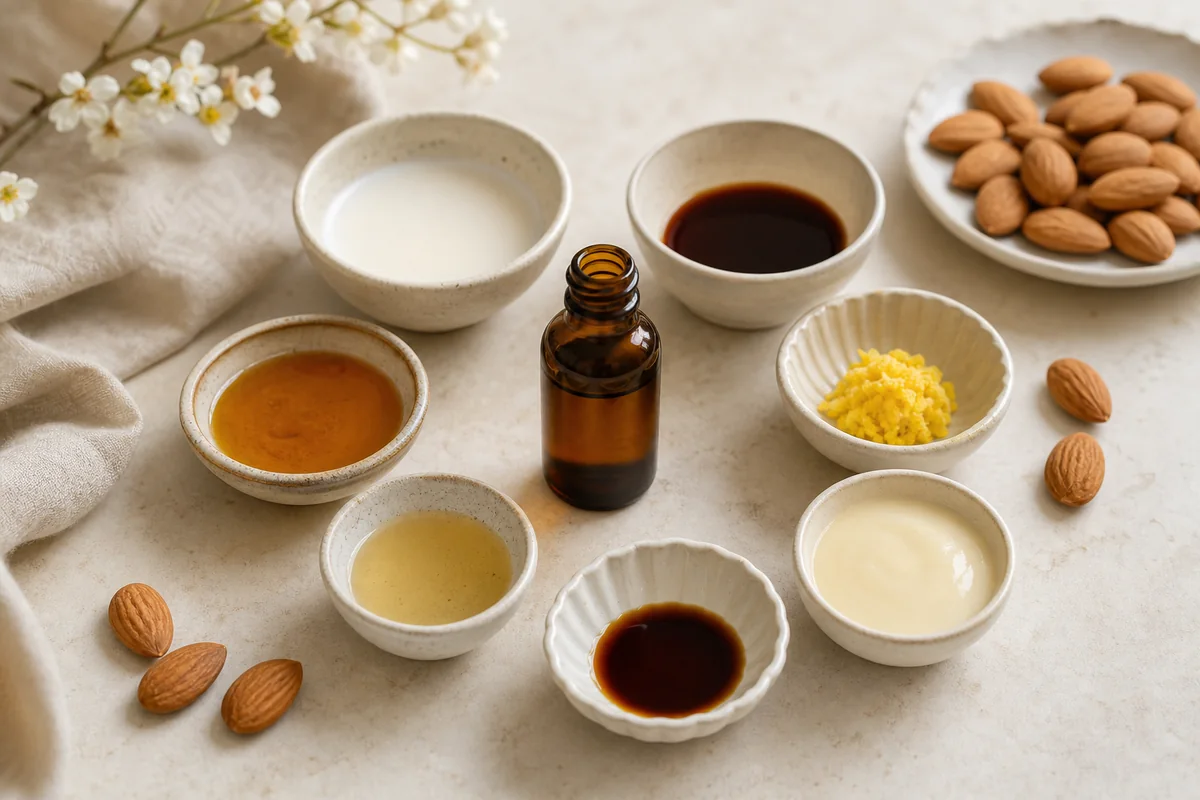
5 Best Almond Extract Substitutes Worth Trying
Ingredients
Equipment
Method
- Match intensity first: if you want the same bold almond aroma, choose amaretto or almond oil; for a gentler effect, use vanilla plus a tiny almond essence amount.
- Use the listed ratio and mix substitute in with the wet ingredients so it distributes before baking.
- If your substitute is wetter (amaretto) or thicker (marzipan/almond butter), adjust batter consistency with 1–2 teaspoons of liquid or a small flour increase.
- After baking (or if making a no-bake base), taste and fine-tune: add a few drops more if mild, or dilute with a bit more base if too strong.
- For almond oil, start tiny and build—its flavor can become bitter fast if you overshoot.
Notes
- For baking, distribute substitutes in the wet stage for even aroma.
- Almond oil is potent—use fraction ratios to avoid bitter notes.
Tried this recipe?
Let us know how it was!
Carrie is a food writer and editor with more than 15 years of experience. She has worked for some of the biggest names in the food industry, including Bon Appétit, Food & Wine, and Martha Stewart Living.
As the Editor in Chief of EpicureDelight, Carrie oversees all of the content on the site. She also manages the team of contributing writers and editors, who help to create delicious recipes, helpful tips, and informative articles that you’ll find on the site.
A native of the Chicago area, Carrie is passionate about all things food. She loves trying new restaurants and experimenting with new recipes in her kitchen. She’s also a graduate of the Culinary Institute of America, so she knows a thing or two about food!



