Lettuce tastes mild, fresh, watery, and faintly sweet or bitter. Its texture often makes a bigger impression than its flavor, from the juicy snap of iceberg to the soft fold of butter lettuce.
Dark outer leaves usually taste greener and more bitter than pale hearts. Variety, growing heat, age, dressing, and cooking can all shift a quiet lettuce flavor into something sweeter, sharper, or more earthy.

Lettuce has a clean, watery green taste with mild sweetness and occasional bitterness. Iceberg gives the most watery crunch, romaine tastes greener, and butter lettuce has the softest, sweetest leaves.
What Does Lettuce Taste Like?
A fresh lettuce leaf starts with water and a crisp green aroma. The flavor stays quiet, with a little sweetness in pale ribs and a soft bitter finish in darker leaf tissue.
Thick ribs release more water when you bite them. Tender leaf edges carry more aroma because they collapse quickly and spread over the tongue.
Inner leaves receive less light and often taste mild and sweet. Outer leaves grow firmer, darker, and more strongly green, so they can handle a heavier dressing.
Normal bitterness should feel clean and brief. A sharp sour taste, fermented smell, or rotten flavor points away from cultivar bitterness and toward decay.
Lettuce does not taste like spinach or kale. Those leaves have denser mineral and earthy flavors, while most lettuce gives a cooler, lighter bite.
Texture changes the flavor impression. A crisp leaf seems fresher and sweeter because it releases water, while a limp leaf can seem dull even before its flavor has changed much.
Salt and acid make the green taste clearer. Oil carries aroma and softens bitterness, which explains why plain lettuce can seem weak but a balanced salad tastes complete.
How Do the Main Lettuce Types Differ?
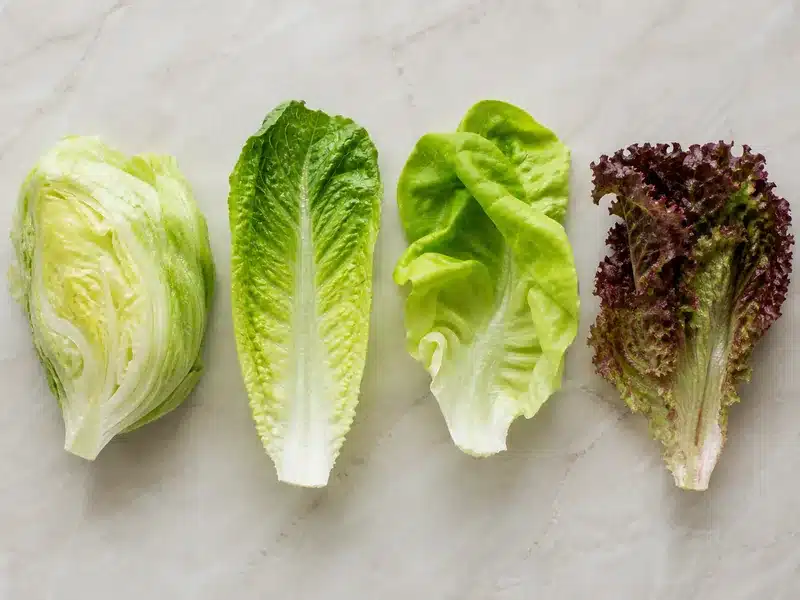
The name lettuce covers many cultivars with different leaf shapes and textures. Choosing by type gives you more control than trying to fix the wrong leaf with dressing.
| Type | Flavor | Texture | Strongest use |
|---|---|---|---|
| Iceberg | Very mild and watery | Hard juicy crunch | Wedges, burgers, and wraps |
| Romaine | Fresh, green, faintly bitter | Firm rib and sturdy leaf | Caesar salad and grilling |
| Butterhead | Gentle, sweet, slightly nutty | Soft and flexible | Delicate salads and cups |
| Leaf lettuce | Mild to earthy and bitter | Tender with ruffled edges | Mixed salads and sandwiches |
Iceberg is the best choice when cold crunch matters more than leaf flavor. Its tight head protects pale leaves that hold plenty of water.
Romaine gives you both textures in one leaf. The rib snaps, while the darker top tastes greener and catches dressing along its folded surface.
Butterhead varieties such as Bibb and Boston lettuce feel silky and tender. Their gentle sweetness suits light vinaigrettes because a thick creamy dressing can flatten the leaves.
Green and red leaf lettuces vary more by cultivar. Red leaves often bring an earthy or slightly bitter edge, while pale green leaves can taste softer.
Why Does Lettuce Sometimes Taste Bitter?
A cut lettuce stem may release a milky white sap. That latex contains bitter compounds, and a small amount near the core is a normal plant trait.
Different cultivars carry different balances of bitter sesquiterpene lactones and sugars. Breeding made modern lettuce less bitter than many wild relatives, but it did not remove the compounds completely.
Growing heat can push a lettuce plant toward flowering, a process called bolting. The stem lengthens, the leaves toughen, and bitterness often rises as the plant changes from leaf growth to seed production.
Mature outer leaves can also taste stronger because they have more developed tissue and more exposure to light. Removing one damaged outer layer may reveal a milder heart.
Water stress can add toughness and intensity before harvest. After harvest, dehydration concentrates the taste of a limp leaf because it no longer releases as much clean water.
Rinsing removes soil and surface debris, but it cannot reverse bolting. Cold water may improve the texture of a clean wilted leaf, which can make the existing bitterness feel less harsh.
Use bitter but sound lettuce with fat, acid, salt, and a sweet element such as fruit. Discard it when bitterness comes with slime, sour odor, mold, or wet brown decay.
What Happens When You Cook Lettuce?
Heat collapses the air and water structure that makes raw lettuce crisp. The leaf becomes softer and sweeter, while browning or char can add roasted bitterness.
Fast Wilting Keeps the Freshest Flavor
A brief toss in a hot pan softens loose leaves in seconds. Garlic, oil, and salt coat the surface, while the center keeps a little green freshness.
Leaf lettuce and romaine tops suit this method. Stop when the leaves bend and brighten because long cooking can release enough water to make the pan soupy.
Grilling Adds Smoke and Brown Edges
Halved romaine hearts hold together over direct heat. The cut face picks up dark marks and a toasted taste, while the thick ribs remain juicy.
Dry the cut side before grilling so it browns instead of steaming. Heavy blackening can make the natural bitterness feel much stronger.
Braising Turns Firm Ribs Tender
Gentle covered cooking suits firm lettuce heads and large ribs. Broth, peas, onions, or butter give the released leaf water a savory direction.
The result resembles a tender cooked green more than a salad. Iceberg can also be quickly stir-fried, though its high water content needs strong heat and a short time.
Cooking does not rescue spoiled lettuce. Heat can change texture and aroma, but it does not make slimy or moldy leaves suitable for the pan.
How Do Dressing, Temperature, and Cut Change Each Bite?
Dry leaves hold dressing better than wet leaves. Surface water blocks oil from coating the leaf and dilutes salt, acid, and herbs at the same time.
Oil softens the sense of bitterness and carries aroma. Vinegar or lemon adds brightness, while salt draws water from damaged cells and can make dressed lettuce wilt.
A very cold salad tastes less aromatic. Let sturdy lettuce lose the refrigerator chill for a few minutes when you want to notice its green flavor, but keep cut greens under safe cold control.
Torn leaves have irregular edges that catch dressing without crushing every cell. Fine shreds expose much more cut surface, so they take on sauce quickly and lose crispness sooner.
Large wedges protect watery inner layers. They need a concentrated dressing that can reach between leaves, while tender butter lettuce needs a lighter coating.
Dress tender lettuce just before serving. Salt and acid pull moisture from cut cells, so a long rest turns soft leaves limp.
When Is Lettuce Wilted, and When Is It Spoiled?
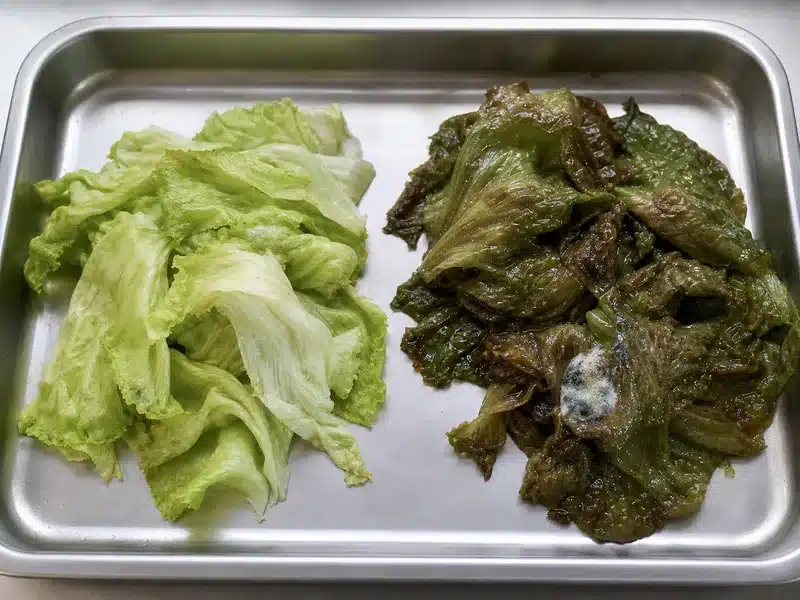
Wilting means the leaf lost water and cell pressure. A limp leaf can remain usable when it smells fresh, feels clean, and has no slime or decay.
Wilted but Clean
The leaf bends and looks tired, yet it stays dry or only naturally moist. A short soak in ice water can restore some crispness before you dry it well.
Spoiled and Ready to Discard
The leaf feels slippery, smells sour or rotten, or carries fuzzy mold and wet dark patches. Remove the affected product rather than mixing it into fresh greens.
Cut leafy greens need refrigeration because cutting exposes moisture and nutrients at damaged edges. The FDA treats cut lettuce and other cut leafy greens as foods that require time and temperature control for safety.
- Keep cut lettuce cold. Return opened bags and prepared salad to the refrigerator promptly.
- Use clean tools. Keep raw meat and its cutting board away from salad greens.
- Wash whole heads under running water. Remove damaged outer leaves before cutting.
- Follow package directions. Ready-to-eat greens may already be washed and should not be handled more than needed.
Sources
- U.S. Food and Drug Administration, temperature control for cut leafy greens
- University of Kentucky Cooperative Extension, lettuce types, heat, bolting, and bitter flavor
- Foods journal research review, sugars, sesquiterpene lactones, and lettuce bitterness
Restaurants often keep lettuce cold, dry it well, and dress it close to service. Those steps preserve cell pressure and prevent surface water from thinning the dressing.
Red leaf cultivars can taste more earthy or bitter, though variety and age matter more than color alone. Their tender texture stays close to green leaf lettuce.
The firm core is edible when it is clean and sound, though it can taste more bitter and feel tougher. Trim brown cut surfaces before using it.
Strong vinegar, reactive metal bowls, or a very bitter cultivar can create a sharp mineral impression. Mix acidic dressing in glass or stainless steel and taste the leaf plain first.
Young leaves are often tender and mild because the plant has not matured or bolted. The exact sweetness still depends on cultivar and growing conditions.

Carrie is a food writer and editor with more than 15 years of experience. She has worked for some of the biggest names in the food industry, including Bon Appétit, Food & Wine, and Martha Stewart Living.
As the Editor in Chief of EpicureDelight, Carrie oversees all of the content on the site. She also manages the team of contributing writers and editors, who help to create delicious recipes, helpful tips, and informative articles that you’ll find on the site.
A native of the Chicago area, Carrie is passionate about all things food. She loves trying new restaurants and experimenting with new recipes in her kitchen. She’s also a graduate of the Culinary Institute of America, so she knows a thing or two about food!