Lentils taste earthy, gently nutty, and savory. Brown and green lentils stay firm and can taste peppery, while red and yellow lentils turn softer, milder, and slightly sweeter as they cook.
The cooking liquid and final texture shape the result as much as the variety. Stock, browned onion, herbs, spices, salt, acid, and fat can turn a plain pot into a deep savory dish without hiding the lentils.

Choose the lentil by the texture your dish needs. Brown and green types give an earthy, firm bite, black lentils feel nutty and polished, and split red or yellow lentils cook into a mild creamy base.
One Word Covers Several Different Bites
Lentils share a family flavor, but their seed coats, size, and split form change the way they taste and feel. A salad lentil should stay distinct, while a soup thickener may need to dissolve into the liquid.
| Type | Flavor | Cooked texture | Best direction |
|---|---|---|---|
| Brown | Earthy and mild | Tender, holds loosely | Soups, patties, and everyday sides |
| Green | Earthy and peppery | Firm with a fuller bite | Warm salads and stews |
| French green | Peppery and mineral | Small, firm, and distinct | Composed salads and roasted vegetables |
| Black beluga | Nutty and deep | Glossy and firm | Plated sides and grain bowls |
| Red split | Mild, nutty, and slightly sweet | Soft and creamy | Dal, soup, sauce, and puree |
| Yellow split | Mild and warm | Soft and thick | Spiced soups and stews |
USDA WIC guidance describes brown lentils as earthy, green lentils as peppery, and red or yellow lentils as nutty, with red lentils tasting sweeter. It also notes that brown and green types hold up well while split types break down faster.
Color alone does not identify every bag. Read the variety and cooking direction because regional names can group different lentils under one color.
Canned lentils usually taste saltier and softer than home-cooked whole lentils. Draining and rinsing them removes surface liquid and some sodium, which gives you more control over the final dish.
What Earthy and Nutty Mean in the Bowl
Earthy lentils carry a mild aroma that can remind you of mushrooms, peas, or damp soil after rain. The word describes a deep plant note, not a dirty flavor.
The nutty side is gentle. Brown, green, and black lentils can suggest raw walnuts or sunflower seeds, but they do not taste roasted unless you add browned fat or toasted spices.
Savory flavor grows as lentils absorb stock, onions, garlic, herbs, and spices. Plain water leaves their own flavor exposed, which can be useful for tasting but quiet in a finished meal.
Warm lentils release more aroma than cold ones. A chilled salad often needs a little more acid, salt, and herbs than a hot bowl made from the same batch.
Bitterness is not the expected main flavor. Burned spices, scorched onions, old lentils, too much turmeric, or a pot caught on the bottom can create a bitter edge.
A muddy result often comes from weak seasoning and overcooked brown lentils. The mixture loses shape, yet it lacks enough acid or aromatic contrast to make the soft texture feel intentional.
Build Flavor into the Cooking Liquid
Lentils absorb flavor as they soften, so season the pot in stages. One heavy correction at the end can make the surface salty while the center still tastes plain.
- Rinse and sort. Remove dust, damaged seeds, and small stones before they enter the pot.
- Brown the aromatics. Onion, carrot, celery, garlic, or ginger adds sweetness and a savory base.
- Choose the liquid. Water keeps the lentil flavor clear, while unsalted stock adds depth.
- Simmer with restrained spices. Bay, cumin, coriander, thyme, or chile should support the variety.
- Salt with control. Start lightly when stock or cured ingredients will add more sodium.
- Finish with acid and fat. Lemon, vinegar, olive oil, yogurt, or butter sharpens and carries the aroma.
Strong stock can make the pot taste processed or too salty. Dilute it with water rather than adding a full-strength carton by habit.
Tomato, wine, and vinegar add brightness, but a large amount of acid early in cooking can slow softening in some lentils. Add the main acid after the lentils reach the texture you want.
Browned onion brings sweetness that suits earthy brown lentils. Ginger, cumin, and chile work well with red lentils because the soft base carries their aroma through every spoonful.
A spoon of olive oil or butter rounds a lean pot and helps spices smell fuller. Add it near the end when you want a fresh aroma instead of using extra fat to fry every ingredient.
Whole Lentils Hold; Split Lentils Melt
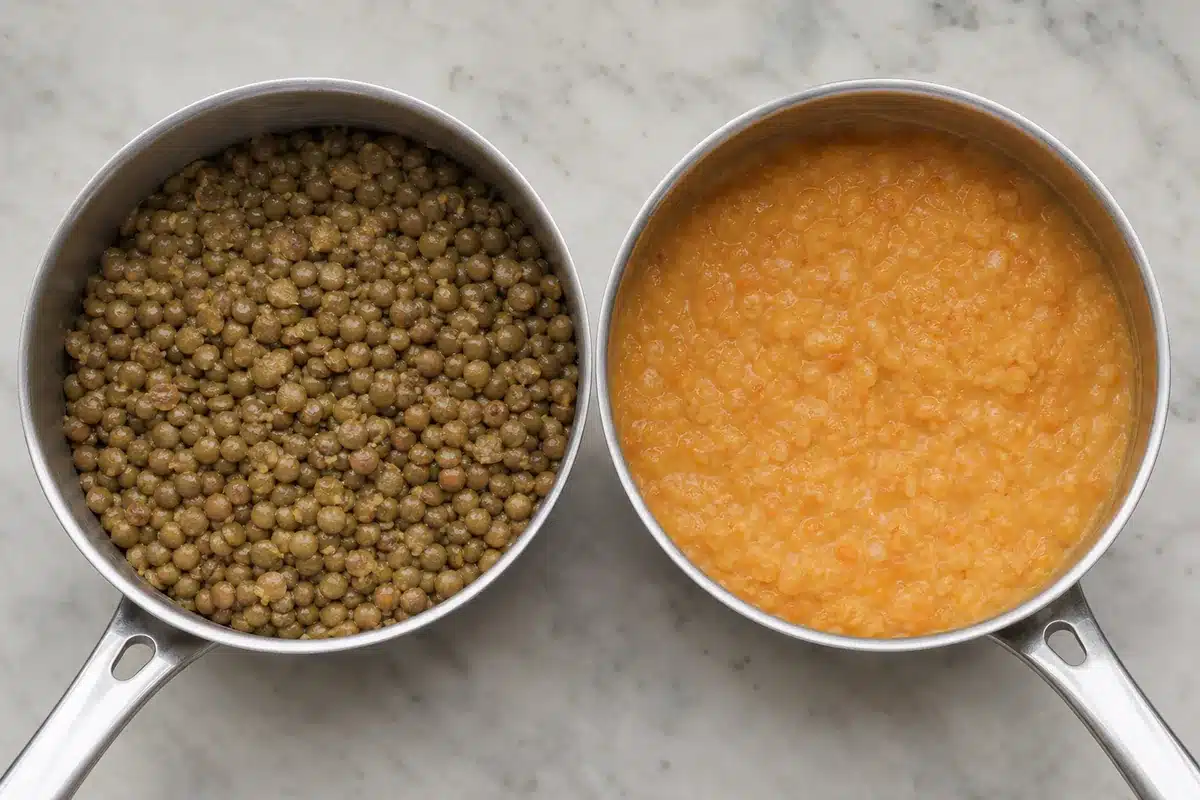
Whole lentils keep a seed coat around their starchy center. Split red and yellow lentils expose more starch to water, so they soften and thicken the pot much faster.
Keep Whole Lentils Separate
Use a gentle simmer rather than a hard boil. Strong bubbling knocks softened seeds together, breaks skins, and clouds the cooking liquid.
Start checking before the package's longest time. Drain whole lentils when the center is tender but still offers a small bite, since they continue softening while hot.
Spread salad lentils on a tray after draining when you need to stop carryover cooking. Dress them while warm so the surface absorbs salt, acid, and oil.
Let Split Lentils Become Creamy
Red and yellow lentils suit soup, dal, sauce, and puree because their breakdown creates body. Stir them when you want a smoother pot and add liquid as the exposed starch thickens.
The mixture continues to set as it cools. Stop with a slightly looser texture than you want at the table, then adjust with hot water or stock before serving.
Soft red lentils are not failed green lentils. They deliver a different job, so judge them by creaminess and seasoning rather than by intact shape.
Match the Lentil to the Dish
Choose structure first and seasoning second. A firm lentil can carry vinaigrette and roasted vegetables, while a split lentil can bind spices into a spoonable sauce.
- Composed salad. Use French green or black lentils with herbs, roasted vegetables, and a sharp dressing.
- Hearty soup. Use brown lentils when you want some seeds to hold and others to thicken the broth.
- Curry or dal. Use red or yellow split lentils for a creamy base that carries ginger, cumin, and chile.
- Patty or loaf. Use brown lentils and cook them tender enough to bind without turning wet.
- Simple side. Use green or black lentils with lemon, olive oil, parsley, and a mild grain.
Firm lentils work beside crisp vegetables because both keep their shape. Creamy lentils pair well with rice or flatbread, which carries the sauce and softens strong spice.
If a pot tastes muddy, add a small amount of lemon or vinegar, fresh herbs, and enough salt to reveal the lentils. A crunchy topping such as toasted seeds or crisp onion can restore contrast.
If the finish tastes bitter, check for scorched material on the bottom and move the unburned portion to a clean pot without scraping. Add liquid and a little fat, then taste before adding more spice.
For a bland canned batch, rinse well and warm it with browned onion and unsalted stock. Finish with acid after the lentils heat through.
Store cooked lentils in their own container when the final dish includes crisp vegetables or herbs. Mixing everything before refrigeration can soften the contrasts that made the meal work.
Sources
- USDA WIC guide to lentil varieties, flavors, and cooking
- USDA WIC stewed lentil method
- USDA Agricultural Research Service note on black beluga lentils
Lentils share an earthy legume flavor with beans, but they are smaller and usually taste less creamy. Whole lentils also have a firmer seed-to-skin contrast.
Most lentils cook without soaking because they are small. Rinsing and sorting still matter, and an optional soak can shorten cooking for some whole varieties.
The red-orange outer color fades as split lentils soften, revealing a yellow or golden cooked interior. That color change is normal.
Cooked green, French green, black, and brown lentils work well cold. Dress them more brightly because chilling reduces aroma and softens perceived salt.
Old lentils, hard water, or a strongly acidic cooking liquid can slow softening. Continue with fresh hot water and add the main acid after tenderness develops.

Carrie is a food writer and editor with more than 15 years of experience. She has worked for some of the biggest names in the food industry, including Bon Appétit, Food & Wine, and Martha Stewart Living.
As the Editor in Chief of EpicureDelight, Carrie oversees all of the content on the site. She also manages the team of contributing writers and editors, who help to create delicious recipes, helpful tips, and informative articles that you’ll find on the site.
A native of the Chicago area, Carrie is passionate about all things food. She loves trying new restaurants and experimenting with new recipes in her kitchen. She’s also a graduate of the Culinary Institute of America, so she knows a thing or two about food!