
Tahini tastes nutty and savoury with a real bitter edge underneath. It is much closer to a ground seed paste than to a sweet nut butter, and it is not sweet at all on its own.
That bitterness is normal. What surprises most people is how far it swings between jars, because the hull, the roast, and the age of the oil all push it in different directions.
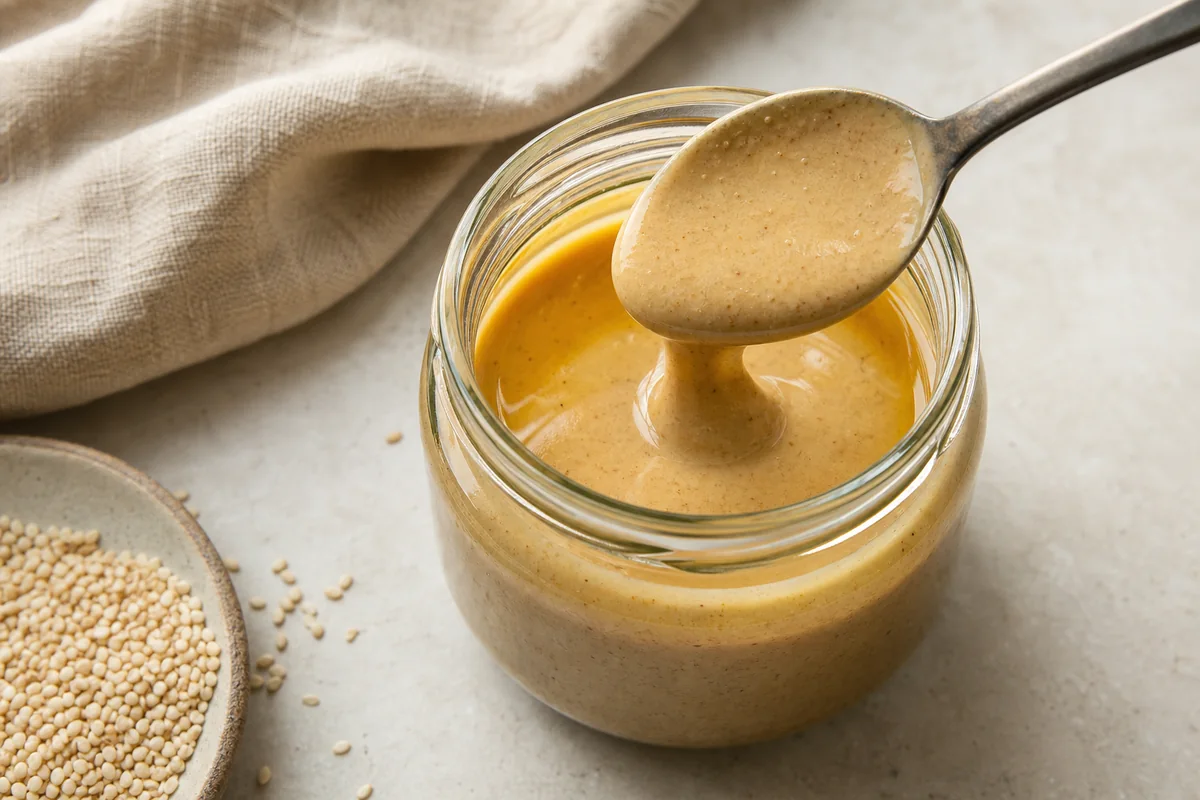
Tahini is a savoury sesame paste with a deliberate bitter edge. Hull and roast decide how strong that edge lands, and a separated oil layer is normal.
Below is what each of those variables actually does to the flavour. The last section covers the one check worth running before you decide a jar has gone off.
What Does Tahini Taste Like?
Sesame seeds carry naturally bitter compounds, and grinding them into a paste concentrates everything at once. A jar with no bitterness at all has usually been blended with a neutral oil.
The useful distinction is where the bitterness sits. A correct jar gives you a bitter note that arrives behind the nuttiness and then clears.
A problem jar does something different. The bitterness coats the tongue, stays after you swallow, and grows on the second spoonful instead of fading.
Salt and acid change how much of it you notice. They push the bitterness into the background without removing it, which is why a tahini that seems harsh alone can work perfectly in a dressing.
Does Hulled Tahini Taste Different from Unhulled?
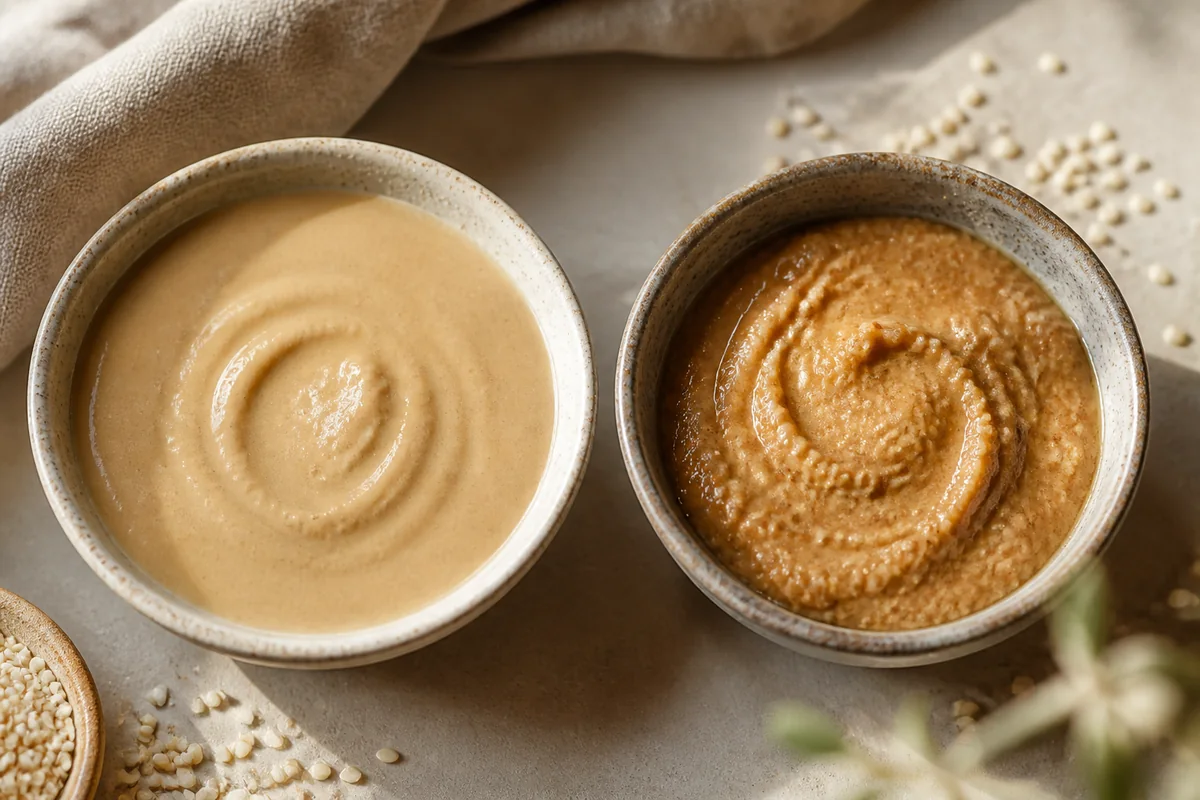
This is the variable most people never see on the label, and it explains more jar-to-jar difference than brand does.
Hulled tahini tastes milder and smoother
Hulled tahini is made from seeds with the outer coat removed. It grinds paler, pours smoother, and carries a gentler bitterness.
Most jars sold in general supermarkets are hulled, which is why the hulled version is what most people mean by tahini. If a jar tasted far sharper than you expected, checking for the word unhulled usually explains it.
Unhulled tahini tastes earthier and sharper
Unhulled keeps the coat on. The result is darker, slightly gritty, distinctly earthier, and noticeably more bitter in a straight spoonful.
The label does not always use the word unhulled. Some jars say whole seed, whole sesame, or simply brown tahini, and colour through the glass is the quickest confirmation.
Neither one is better. Unhulled stands up in strong savoury food, while hulled is easier to balance in a delicate sauce.
How Does Roasting Change the Taste of Tahini?
Two hulled jars can still taste nothing alike because the roast level changes the seed. A light roast keeps the paste pale and almost milky, with quiet toasted notes behind the usual bitterness.
A dark roast pushes the opposite way. The colour deepens, the aroma turns properly toasted, and at the far end you get a note that reads faintly burnt.
Brands sit at different points deliberately, and each region has its own house style. That is why switching to an unfamiliar jar can change a dressing you have made for years without changing anything else.
Why Does Tahini Separate in the Jar?
Tahini is ground sesame and nothing else in most jars, with no emulsifier holding it together. Left alone, the oil floats up and the solids pack down hard at the bottom.
That layer is not a fault and it is not a sign of age by itself. It is simply what a single-ingredient seed paste does on a shelf.
The two failure modes point in opposite directions. A scoop taken off the top runs oily and tastes weak and flat.
A scoop dug from the packed bottom does the reverse. It comes out dry and dense, and it tastes far harsher than the jar actually is.
How Can You Tell Whether Tahini Has Gone Bad?
These two sensations get confused constantly, and the difference is easier to judge by smell than by taste.
Good tahini smells nutty and toasted first, with the bitterness showing up only when you taste it. Rancid tahini announces itself at the jar, with a smell closer to old paint, crayon, or stale oil.
- Smell the jar before stirring. A paint-like or waxy smell settles it on its own.
- Stir fully, then taste a small amount from the middle rather than the top or bottom.
- Wait after swallowing. Correct bitterness fades, while rancid flavour keeps building.
- Check where the jar has been living. Warmth and light speed the oil going off, so a cupboard above the stove shortens its good window.
An open jar that has sat warm for months is the usual culprit. The bitterness in that case is not the seed talking, it is the oil.
How Does Tahini Taste in Sauces and Desserts?
Tahini does not have one fixed flavour in a dish. What you add changes it more than most pantry ingredients.
Water does something counterintuitive first. Add a splash and the paste seizes up and turns stiff and chalky, and only with more water and steady stirring does it loosen into a smooth cream.
Past that point the flavour softens noticeably. Thinned tahini tastes milder and creamier than the same paste straight from the jar, because the fat is no longer coating your palate all at once.
Lemon and garlic turn it into something sharper. The acid cuts the fat and the bitterness moves to the background, which is the whole basis of tahini sauce.
Sugar goes the other way and uses the bitterness rather than hiding it. In halva and sesame desserts that bitter edge reads as depth against the sweetness, which is why those sweets taste grown-up rather than cloying.
Frequently Asked Questions
Is tahini supposed to be bitter?
Yes, a bitter edge behind the nuttiness is correct and comes from the sesame seed. Bitterness that coats your tongue and keeps building is not.
Does tahini taste like peanut butter?
No. It is savoury rather than sweet, thinner in body, and it carries a bitterness that peanut butter does not have.
Why is the oil separated in my jar?
Most tahini has no emulsifier, so the oil rises on its own. Stir it back through to the bottom and the texture returns to normal.
Why did my tahini get thick when I added water?
A small amount of water makes the paste seize before it loosens. Keep adding water slowly and stirring, and it turns smooth.
Is unhulled tahini more bitter?
Noticeably, yes. The seed coat adds earthiness and a sharper bitter edge, and it also makes the paste darker and slightly gritty.

Carrie is a food writer and editor with more than 15 years of experience. She has worked for some of the biggest names in the food industry, including Bon Appétit, Food & Wine, and Martha Stewart Living.
As the Editor in Chief of EpicureDelight, Carrie oversees all of the content on the site. She also manages the team of contributing writers and editors, who help to create delicious recipes, helpful tips, and informative articles that you’ll find on the site.
A native of the Chicago area, Carrie is passionate about all things food. She loves trying new restaurants and experimenting with new recipes in her kitchen. She’s also a graduate of the Culinary Institute of America, so she knows a thing or two about food!


