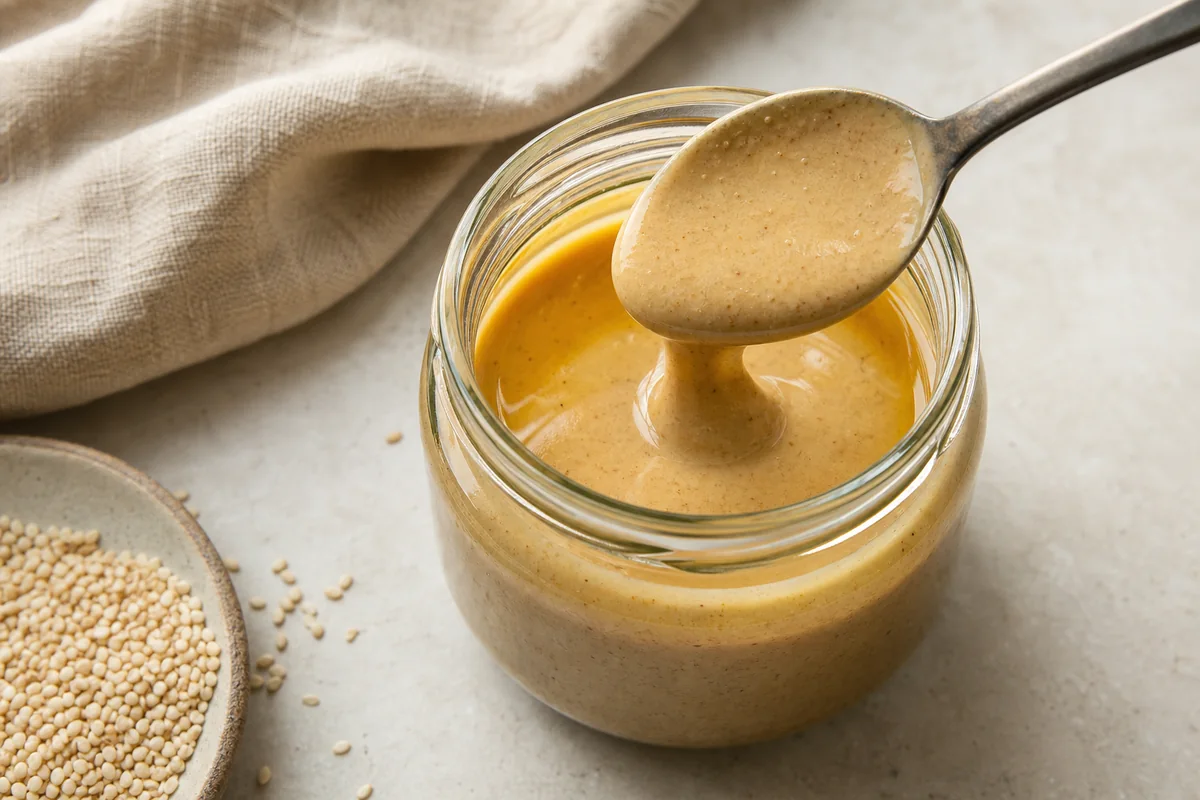
Squirrel tastes savory, lean, and mildly gamey. People often compare it with dark chicken or rabbit, though squirrel has a firmer bite and a light earthy or nutty finish of its own.
Young, slowly cooked meat can feel tender and delicate. Mature legs contain more connective tissue, so they need moist heat and time before they lose their chew.

Squirrel meat tastes mild, savory, and lightly gamey, with a lean texture closer to rabbit or dark chicken than to fatty red meat. Age, cut, handling, and cooking method strongly affect tenderness.
What Does Squirrel Taste Like?
A tender piece of squirrel starts with a clean roasted-meat aroma. The flavor is savory and slightly sweet, with a mild woodland note that can suggest nuts, browned mushrooms, or dry leaves.
It usually tastes less intense than venison and less rich than duck. The closest familiar comparison is rabbit with some of the darker savor of a chicken thigh.
Squirrel carries little visible fat, so it lacks the buttery coating of pork or well-marbled beef. Broth, butter, bacon, or gravy often supplies the richness that the meat cannot provide by itself.
The legs have a deeper flavor and firmer fibers because the animal uses them constantly. Saddle and back pieces can feel more delicate, though their small size makes them easy to dry.
Properly handled meat should smell clean and mild before cooking. A sour, rotten, chemical, or strongly rancid odor does not describe normal game flavor.
The word gamey can mean several things. In sound squirrel meat, it means a small earthy or wild note, while strong liver-like or spoiled flavors often come from poor field handling, age, blood, or freezer damage.
Browning creates toast and meat aromas that make the flavor seem deeper. Long moist cooking then spreads those browned notes into broth while softening the firm tissue.
How Do Age, Diet, and Species Change the Flavor?
Age changes texture more reliably than it changes flavor. A young squirrel has smaller, more tender muscles, while a mature animal carries stronger connective tissue in its legs and shoulders.
| Factor | Likely effect | Cooking response |
|---|---|---|
| Young animal | Milder and more tender | Can suit faster cooking after safe doneness |
| Mature animal | Firmer with deeper savor | Benefits from braising or stewing |
| Seasonal diet | May shift aroma slightly | Use simple seasoning to taste the meat |
| Larger species | Larger cuts and more working tissue | Judge each cut rather than using one timing |
| Poor chilling | Strong off odor and quality loss | Discard questionable meat |
Diet can shape a subtle background aroma because wild squirrels eat nuts, seeds, buds, fruit, bark, and other seasonal foods. It does not create a guaranteed acorn or walnut flavor in every animal.
Field handling can overwhelm every natural difference. Meat that stays warm too long or contacts digestive contents can develop off odors that no seasoning should cover.
Freezer air also changes flavor. Dry pale patches, stale fat odors, and a cardboard-like taste point to freezer burn or oxidation rather than a normal wild taste.
Why Is Squirrel Meat Firm?
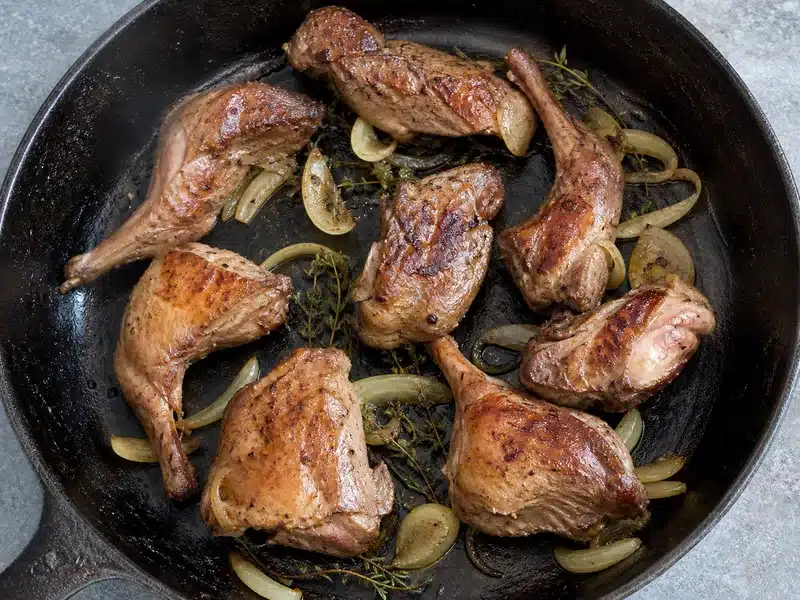
Squirrels spend much of their lives climbing, jumping, and gripping. Their working leg muscles develop firm fibers and connective tissue that support constant movement.
Low fat makes that firmness easier to notice. Fat normally lubricates a bite, so very lean meat can seem dry even when its internal temperature has reached a safe point.
Fast dry heat tightens the fibers before connective tissue has time to soften. That is why a mature leg can become chewy in a frying pan even when a younger saddle piece stays tender.
Browning still helps flavor. Sear the surface briefly, then add liquid and cover the pan so the center cooks in a moist environment.
Time lets collagen soften and enrich the cooking liquid. The meat should release from the bone with gentle pressure instead of snapping back like a rubber band.
Give mature leg meat covered time with liquid. More uncovered heat dries the lean fibers before the connective tissue softens.
Which Cooking Method Fits Each Cut?
Start with the animal's size and the cut in front of you. A method that suits a small tender back piece may leave a mature leg tough.
- Check the cut. Separate firm legs from small saddle or back portions when their thickness differs.
- Estimate tenderness. Young small pieces can take quicker cooking, while large mature legs need moisture and time.
- Brown for flavor. Use a short sear and avoid drying the center before the covered stage.
- Add the right moisture. Broth, tomato, cider, or gravy protects lean meat during braising or stewing.
- Check temperature and texture. Reach at least 165°F and continue moist cooking when connective tissue remains firm.
Braising works well for jointed legs because a shallow amount of liquid keeps the sauce concentrated. Turn the pieces during cooking so exposed surfaces do not dry.
Stew gives irregular small cuts more protection. Vegetables and broth absorb the meat flavor, which helps a limited amount of squirrel serve several people.
Young tender pieces can be fried after a simmer or covered pre-cook. The first stage softens the tissue, while the final coating and hot oil create a crisp surface.
Do not use pink color or clear juice as your only safety check. A food thermometer gives a real internal reading, while visual cues vary with browning, bone, and sauce.
What Flavors Pair Well With Squirrel?
Squirrel needs enough fat to carry aroma and protect its lean texture. Butter, bacon, cream, or a well-made gravy can fill that role without turning the meat greasy.
Onion and garlic build a familiar savory base. Thyme and sage suit the woodland note, while black pepper adds warmth without a heavy smoke flavor.
Cider adds fruit and acid to browned meat. Tomato creates a stronger tang and works well in a stew where long cooking needs enough liquid.
Mushrooms echo the earthy side of the meat. Root vegetables absorb broth and add sweetness, while beans or cornmeal make a small portion feel like a full meal.
A flour gravy captures browned bits and turns the lean cooking juices into sauce. Keep the seasoning balanced because a salty thick gravy can make every meat taste the same.
Heavy smoke, very hot chiles, or large amounts of sweet barbecue sauce can bury the mild flavor. Use those when you want the sauce to lead, rather than when you want to understand the meat.
How Should You Handle and Cook Wild Squirrel Safely?
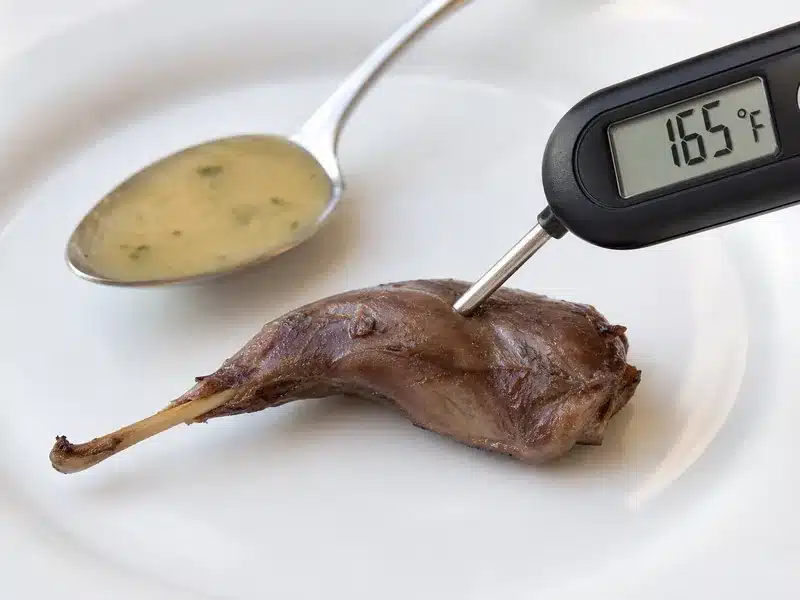
Cook wild squirrel to an internal temperature of at least 165°F. Washington and Massachusetts wildlife guidance applies that conservative minimum to wild game meat.
Insert the thermometer into the thickest part without pressing against bone. Check more than one large piece when portions differ in size.
- Follow local law. Buy or harvest squirrel only through legal sources and seasons.
- Reject sick animals. Do not handle or eat wildlife that behaves strangely or shows obvious disease.
- Wear gloves during cleaning. Cover cuts and keep body fluids away from your face.
- Chill the meat promptly. Trapped body heat raises spoilage risk.
- Prevent cross-contact. Keep raw game, knives, and boards away from cooked food and produce.
- Clean tools well. Wash and sanitize equipment after raw meat contact.
Freezing, smoking, curing, or microwaving alone may not kill every pathogen or parasite found in wild game. The CDC also warns that some wild-game parasites resist normal freezing.
Do not taste raw meat or feed raw scraps to pets. When the carcass smelled rotten, stayed warm for an unknown period, or came from an animal that appeared sick, discard it and follow local wildlife guidance.
Sources
- Massachusetts Division of Fisheries and Wildlife, squirrel preparation and cooking
- Massachusetts public health guidance, wild-game handling and 165°F cooking
- Washington Department of Fish and Wildlife, field handling, chilling, sanitation, and cooking
- U.S. Centers for Disease Control and Prevention, cooking and freezing limits for wild game
It shares some dark-chicken savor, but squirrel is leaner, firmer, and slightly earthier. Rabbit remains another useful comparison for its delicate game flavor.
Squirrel is wild game with darker active muscles, and everyday color labels do not set its cooking rule. Use wild-game safety guidance and a thermometer.
Age, field handling, freezer exposure, and blood left in tissue can strengthen the flavor. A rotten or sour odor calls for disposal rather than stronger seasoning.
A slow cooker can suit mature jointed pieces when the appliance reaches safe heat and contains enough liquid. Brown the meat first when you want a deeper roasted taste.
Serve only legally sourced, properly handled, fully cooked meat with every small bone removed. Caregivers should follow local health advice for wild game.

Carrie is a food writer and editor with more than 15 years of experience. She has worked for some of the biggest names in the food industry, including Bon Appétit, Food & Wine, and Martha Stewart Living.
As the Editor in Chief of EpicureDelight, Carrie oversees all of the content on the site. She also manages the team of contributing writers and editors, who help to create delicious recipes, helpful tips, and informative articles that you’ll find on the site.
A native of the Chicago area, Carrie is passionate about all things food. She loves trying new restaurants and experimenting with new recipes in her kitchen. She’s also a graduate of the Culinary Institute of America, so she knows a thing or two about food!