
That deep red-orange color in cochinita pibil or arroz con pollo doesn't come from thin air. It comes from achiote paste, and if your kitchen doesn't have it, the dish can look and taste noticeably flat.
The good news: several pantry staples can fill the gap, some more closely than others.
The best achiote paste substitute uses annatto in some form, whether as powder or steeped seeds. When annatto isn't available, a combination of smoked paprika, tomato paste, or roasted red pepper can give you the red base and some earthy warmth, though not the exact flavor.
Knowing the taste of achiote paste helps you decide how much to push each swap before the flavor drifts too far.
The closest achiote paste substitutes are annatto-based (powder paste or steeped seeds). When those aren't available, a blend of smoked paprika + tomato paste, roasted red pepper + paprika + vinegar, or diluted harissa can handle the color and earthy base in cooked dishes.
Reference Table: 5 Achiote Paste Substitutes Best by Result
Not all swaps behave the same way in the pan. Annatto-based options win on color accuracy, while pepper and tomato combos give you body and redness without the exact earthy note.
Choose by what the recipe needs most: color payoff first, then spice level, then thickness. If your dish is a wet marinade or braise, any of these blends in well.
For drier applications like rubs, stick to the powder paste option.
- Maximum color accuracy: Annatto powder paste or steeped seeds are the only swaps that match the orange-red hue precisely.
- Earthy spice without annatto: Smoked paprika + tomato paste gets close in cooked sauces, but reads slightly smokier.
- Body and thickness: Roasted red pepper blended with paprika gives good viscosity for sauces and braises.
- Emergency heat-friendly swap: Diluted harissa works visually but adds spice; reduce by half and taste before committing.
- Skip if: You need a completely flavor-identical result in a delicate dish. No non-annatto substitute will match perfectly.
| # | Substitute | Best For | Ratio | Key Note |
|---|---|---|---|---|
| 1 | Annatto powder paste | Both | 1:1 | Closest color and flavor |
| 2 | Blended annatto seeds + oil | Both | 1:1 | Blend longer for smoothness |
| 3 | Smoked paprika + tomato paste | Cooking | 1:1 | Smokier, tangier profile |
| 4 | Roasted red pepper + paprika | Cooking | ¾:1 | Balance sweetness with vinegar |
| 5 | Harissa (diluted) | Cooking | ½:1 | Heat-forward; dilute first |
1. Annatto Powder Paste
Annatto powder paste is the fastest way to land on something that genuinely tastes like achiote. You mix the powder with a neutral oil, a squeeze of lime or a splash of vinegar, and a pinch of salt until it forms a spreadable paste.
The color is almost identical, and the earthy note carries through.
If you're unsure about lime juice swaps that work in case lime isn't handy, white wine vinegar or apple cider vinegar both work at the same amount. Start with 1 tablespoon of annatto powder per tablespoon of achiote paste called for, then adjust acid and oil from there.
- Flavor direction: Earthy, mildly nutty, slightly bitter at high quantities; stays close to the original.
- Color payoff: Strong orange-red, nearly identical to store-bought achiote paste.
- Thickness: Adjustable based on oil-to-powder ratio; add less oil for a stiffer paste.
- Best dishes: Marinades, rice dishes, slow-cooked meats, and tamale doughs.
- Skip if: Your recipe is baking-sensitive to bitterness; start with ¾ of the amount and adjust up.
2. Blended Annatto Seeds + Oil
Steeping whole annatto seeds in warm oil is the traditional method, and it produces a paste-like result that feels closest to something you'd make from scratch. Heat your oil gently, add the seeds, let them steep for 10 minutes off the heat, then blend the whole mixture until smooth.
The color that comes out is deep and saturated.
Understanding the role annatto seed plays in flavor helps you decide how long to steep for more intensity versus lighter color.
- How to blend: Use a small blender or immersion blender; blend for at least 60 seconds to break down seed grit.
- Preventing grit: Strain through a fine mesh after blending if your dish is texture-sensitive.
- Adjusting strength: More seeds and longer steeping = deeper color and slightly more bitter note.
- Best dishes: Thick marinades, slow braises, enchilada sauces, and tamale masa.
- Skip if: You can't blend at all; whole seeds won't behave like paste in any dish.
3. Smoked Paprika + Tomato Paste + Oil
When annatto isn't in the house, smoked paprika and tomato paste together are the most practical pantry rescue. The paprika handles the redness and some earthy warmth, while the tomato paste adds body and a slight tang that keeps the mixture from feeling thin.
The result reads smokier than achiote, but in a braise or stew you'd have to be looking for the difference.
The main risk is the mixture tilting tomato-forward, which can happen if you use too much tomato paste. Balance it with a little extra oil and skip any added acid if your recipe already has citrus or vinegar.
If you want smoked paprika swaps that work when even paprika is low, that's a separate angle worth knowing.
Smoked Paprika + Tomato Paste
Works for: stews, braises, slow-cooked meats, rice dishes, and thick sauces
Skip if: your dish relies on subtle annatto flavor or delicate baking-this reads smokier and tangier
- Starting ratio: 1 teaspoon smoked paprika + 1 teaspoon tomato paste + 1 teaspoon oil = roughly 1 teaspoon achiote paste.
- Acid adjustment: If your recipe is already acidic, reduce or skip any additional lime or vinegar.
- Boosting earthiness: Add a small pinch of cumin and garlic powder if your original recipe calls for them.
- Preventing tomato-forward flavor: Use a 1:1 ratio of paprika to tomato paste; don't go heavy on tomato.
- Skip if: The recipe is baking where tomato tang would be noticeable and unwanted.
4. Roasted Red Pepper + Paprika + Vinegar
Blended roasted red pepper brings something the powder swaps don't: real body. It thickens a sauce naturally once blended, and its natural sweetness with added paprika gives a warm red base that works in slow-cooked dishes.
A splash of red wine vinegar is what keeps the flavor from drifting into sweet pepper territory.
For annatto seed swaps that work when you need a different approach entirely, that guide covers angles this blend can't replicate.
- Starting ratio: Use ¾ of the amount of achiote paste the recipe calls for, then adjust up after tasting.
- Balancing sweetness: Start with ½ teaspoon red wine vinegar per tablespoon of blended pepper mixture.
- Adding paprika: ½ teaspoon smoked or sweet paprika per tablespoon of pepper base helps close the earthy gap.
- Best dishes: Braised meats, tomato-based sauces, chicken marinades, and slow-cooked bean dishes.
- Skip if: You're making a low-sugar baking application; the natural pepper sweetness can show through.
5. Harissa (Diluted)
Harissa is a spice-forward paste with a red color that resembles achiote visually, but the heat level is a different story. Undiluted, it will overwhelm any dish that achiote paste would normally keep mild and earthy.
The fix is simple: cut it with a spoonful of neutral oil or tomato paste before it goes into the recipe.
If you're ever working backward and need to think about swapping out harissa paste in another context, the flavor logic flips but the dilution principle stays the same.
| Use | Ratio | Notes |
|---|---|---|
| Marinades | ½:1 | Dilute with 1 teaspoon oil per ½ teaspoon harissa; taste before adding more |
| Braises / stews | ½:1 | Add diluted harissa early; heat dissipates with long cooking |
| Sauces | ¼:1 | Mix with tomato paste to stretch volume and soften heat |
- Dilution approach: Mix 1 part harissa with 1 part neutral oil or tomato paste before measuring.
- Heat control: Start at half the amount your recipe calls for and add more after a taste test.
- Dish fit: Works best in robust, spiced dishes like stews, bean braises, and grilled meat marinades.
- Color note: The red-orange payoff is solid, especially after a few minutes of heat.
- Skip if: You're feeding guests sensitive to spice-this swap can spike the heat unexpectedly.
Making Achiote Paste Substitutes Work (Speed Tips)
The most common mistake is dropping a dry or chunky substitute straight into a recipe without blending it into a fat or wet base first. Color compounds in annatto (and to a lesser extent paprika) are fat-soluble, which means blending your substitute into oil or warm liquid first gives you even dispersion and better color throughout the dish.
For cooked sauces, add the substitute early and let it simmer for at least 2 to 5 minutes before adjusting the seasoning. For olive oil stand-ins when even your blending fat is limited, any neutral oil like avocado or grapeseed works the same way here.
- Start with the listed ratio then taste after 2 minutes of cooking; most substitutes deepen in color and flavor as they heat.
- Taste before seasoning the whole dish; some swaps (especially harissa and tomato paste) add salt and acid, so hold back extra seasoning until after the substitute is fully incorporated.
- Adjust texture last: if your substitute blend is thinner than paste, reduce the liquid in your recipe by 1 to 2 tablespoons, or add a small pinch of extra powder to stiffen it.
Frequently Asked Questions
Annatto powder paste is the closest match for color. Mix annatto powder with a neutral oil and a small amount of acid to get the same orange-red hue.
Not straight from the jar; annatto powder needs oil and acid added to behave like paste. Once blended, use it at a 1:1 ratio.
Add red wine vinegar, starting at ½ teaspoon per tablespoon of blended pepper. A pinch of smoked paprika also helps shift the flavor toward earthy.
Dilute it with equal parts neutral oil or tomato paste before measuring. Start at half the amount achiote paste requires and taste before adding more.
Annatto powder paste works best for baking; avoid harissa and tomato paste blends, which add unwanted tang. Reduce the quantity by 25% and blend fully into the fat or liquid before mixing into the batter.
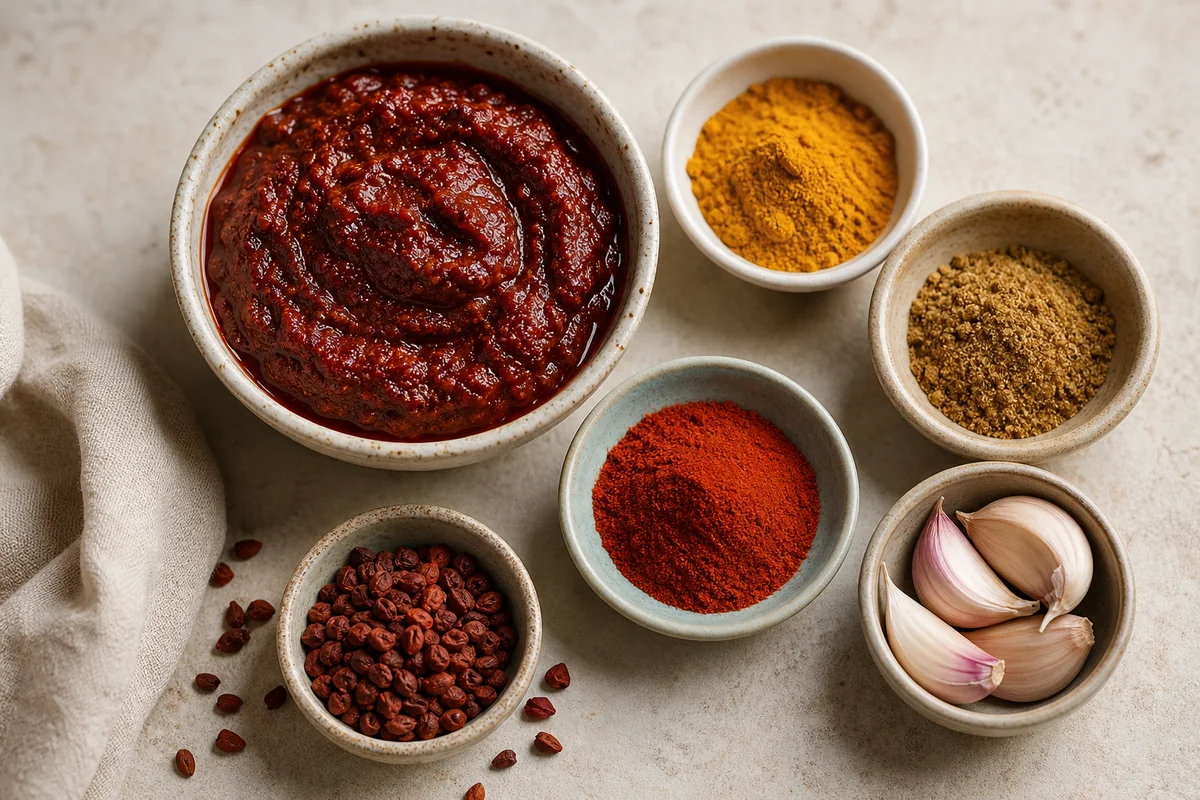
5 Best Achiote Paste Substitutes Worth Trying
Ingredients
Equipment
Method
- Identify your use case (marinade/sauce vs baking) and the role achiote paste plays: color, earthy spice, and thickness.
- Choose the closest match from the substitute list: annatto-based for the most accurate flavor; red pepper/tomato/paprika for body and color; harissa only if you can handle extra heat.
- Use the listed ratio for the amount of achiote paste your recipe calls for, then blend in oil (or with the recipe’s existing wet ingredients) until smooth.
- If your substitute is bitter/too sharp (common with peppers or strong harissa), reduce it with a spoonful of oil or tomato paste; if it’s too mild, add a pinch of paprika or extra acid.
- Taste and fine-tune after 2–5 minutes of simmering (for cooked sauces) or after the substitute hydrates in wet ingredients (for marinades and batters).
Notes
- Achiote paste is usually valued for both color and an earthy-spice profile—annatto-based swaps match best.
- Start with the ratio shown; adjust with acid (lime/vinegar) or oil to reach the same thickness and punch.
Tried this recipe?
Let us know how it was!
Carrie is a food writer and editor with more than 15 years of experience. She has worked for some of the biggest names in the food industry, including Bon Appétit, Food & Wine, and Martha Stewart Living.
As the Editor in Chief of EpicureDelight, Carrie oversees all of the content on the site. She also manages the team of contributing writers and editors, who help to create delicious recipes, helpful tips, and informative articles that you’ll find on the site.
A native of the Chicago area, Carrie is passionate about all things food. She loves trying new restaurants and experimenting with new recipes in her kitchen. She’s also a graduate of the Culinary Institute of America, so she knows a thing or two about food!



