
Flour is the quiet backbone of most baked goods, and its absence is only obvious once you've already preheated the oven. The right all purpose flour substitute depends on one thing above all: what your recipe needs structurally.
A chewy cookie wants protein. A delicate cake wants tenderness.
A quick bread wants somewhere in between.
Protein content is the key variable. Higher-protein flours build more gluten, which means more chew and structure.
Lower-protein flours keep things soft and fine-crumbed. Hydration matters too.
Some swaps drink up liquid faster, and your batter will tell you when that's happening.
The ratios below are bake-tested starting points. Adjust by feel once you see the batter or dough consistency.
The best all purpose flour substitute in baking depends on your recipe's structure needs. Bread flour adds chew, cake flour softens crumb, whole wheat adds flavor at a reduced ratio, and gluten-free 1:1 flour is the most reliable all-around swap. Oat flour and pastry flour work well for softer bakes.
5 Best All Purpose Flour Substitutes Ranked by Texture
Every substitute below behaves differently in the bowl. Use this table as your ratio and behavior cheatsheet before you start mixing.
| # | Substitute | Best For | Ratio | Key Note |
|---|---|---|---|---|
| 1 | Bread Flour | Cookies/Breads | 1:1 | More chew, drier dough |
| 2 | Cake Flour | Cakes/Muffins | 1:1 | Softer, finer crumb |
| 3 | Whole Wheat Flour | Quick Breads | ¾:1 | Nutty flavor, absorbs more |
| 4 | Gluten-Free 1:1 Flour | Most Bakes | 1:1 | Brand-dependent; check binders |
| 5 | Oat Flour | Soft Cookies | 1:1 | Rest batter 5-10 min |
Skip this section if your recipe is yeast-based and needs proofing. For that, bread flour is the only real option here worth considering.
1. Bread Flour
Bread flour has a protein content around 12-14%, compared to all-purpose at 10-12%. That extra protein builds stronger gluten, giving cookies a chewier bite and loaves a more defined crumb.
For this chewy quality, it works well in drop cookies, pizza dough, and hearty quick breads. It absorbs slightly more liquid, so if your dough feels stiff, add 1-2 teaspoons of water and reassess before adding more flour.
Bread Flour
Works for: Chewy cookies, pizza dough, rustic loaves, bagels
Skip if: Recipe needs a tender, fine crumb like sponge cake or delicate muffins
- Ratio: 1:1 by weight or volume
- Best bakes: Chewy chocolate chip cookies, focaccia, sandwich bread
- Adjustment tip: Reduce liquid by 1 tablespoon per cup to start, then loosen if dough feels tight
Skip if: You want a soft, cakey crumb. Bread flour will make sponge cake dense and muffins rubbery.
2. Cake Flour
Cake flour sits at around 7-9% protein, which is noticeably lower than all-purpose. That gap means less gluten, a finer crumb, and a noticeably softer bite in anything you bake.
If you want to know how it compares at a deeper level, this fine-milled flour comparison breaks down the differences against 00 flour. In practice, cake flour swaps 1:1 in most cake and muffin recipes without any other changes.
- Ratio: 1:1 by volume
- Best bakes: Layer cakes, cupcakes, chiffon cake, light muffins
- Hydration tip: Cake flour batters may look slightly thicker at first. Don't add extra liquid until you've folded everything together.
Skip if: You're making pie crust or biscuits. Cake flour is too soft to give you the flaky, crisp layers those recipes need.
3. Whole Wheat Flour
Whole wheat flour includes the bran and germ, which means it absorbs more liquid and produces a denser, earthier result. The nutty, hearty flavor it adds is great in banana bread or oat-studded muffins but can feel heavy in a vanilla layer cake.
Use it at a ¾:1 ratio - meaning ¾ cup whole wheat for every 1 cup of all-purpose flour called for. If the batter looks stiff or dry at that point, add liquid 1 teaspoon at a time until it loosens to the right consistency.
- Ratio: ¾ cup whole wheat per 1 cup all-purpose
- Best bakes: Banana bread, zucchini bread, hearty muffins, pancakes
- Fix-it tip: Rest the batter for 5 minutes after mixing. Bran needs time to hydrate, and your batter will loosen slightly on its own.
- Liquid adjustment: Add 1-2 teaspoons extra per cup of flour if the batter still looks dry after resting
Skip if: The recipe calls for a neutral, pale crumb. Whole wheat changes both the color and the flavor noticeably. If you still want to swap out whole wheat from a recipe, check these swapping whole wheat options for ideas.
4. Gluten-Free 1:1 Baking Flour
Gluten-free 1:1 baking flour is the most forgiving all-around swap on this list, but it is not a single ingredient. Most blends combine rice flour, tapioca starch, and xanthan gum to mimic gluten's binding role.
Results vary by brand, so test a small batch first when trying a new one.
Gluten-Free 1:1 vs Wheat Flour
Works for: Cookies, quick breads, pancakes, and most muffin recipes
Skip if: Recipe needs gluten development for chew or rise, like chewy bagels or yeast breads
- Ratio: 1:1 by volume
- Best bakes: Drop cookies, banana bread, brownies, coffee cake
- Binder warning: If your blend doesn't include xanthan gum, add ¼ teaspoon per cup of flour to prevent crumbling
- Gummy result fix: If bakes turn gummy, reduce flour by 2 tablespoons and check that your oven is fully preheated
For a broader look at how different flour flavor profiles compare, that breakdown explains what all-purpose flour actually contributes before you swap it out.
5. Oat Flour
Oat flour is naturally gluten-free (when certified) and has a mildly sweet, slightly grassy flavor that pairs well with chocolate, banana, and spice-forward recipes. It works at a 1:1 ratio but benefits from a short rest after mixing.
That 5-10 minute pause lets the oat flour fully absorb liquid so the batter thickens to its real consistency before you bake.
If you're working on a recipe that calls for a mix of grains, the grain-based flour swaps page covers how rice flour compares in similar soft-bake applications.
- Ratio: 1:1 by volume
- Best bakes: Soft cookies, quick breads, muffins, pancakes
- Technique tip: Use finely ground oat flour. Coarse grinds produce a grittier crumb that doesn't bind well.
- Watch out: Oat flour bakes can crumble easily. Add 1 tablespoon of cornstarch per cup to improve cohesion if needed.
Skip if: You need a very light, airy result. Oat flour adds density, and without a binder it can make bakes fragile.
Making Your All Purpose Flour Substitute Work (Quick Tweaks)
Swapping flour is rarely a straight measurement exercise. Protein level changes how much gluten forms, which affects rise and chew.
Absorption rate changes how wet or dry your batter feels. If you want reliable results, understanding high-protein flour options alongside low-protein ones helps you make faster decisions mid-recipe.
The best approach is to mix your substitute, then pause and assess consistency before adding anything else.
- Dense or heavy result: Reduce the substitute flour by 2 tablespoons per cup and check that your leavening (baking powder or soda) is fresh
- Crumbly or fragile result: Add 1 tablespoon of cornstarch or one extra egg yolk to improve binding before your next bake
- Dry or stiff batter: Add liquid 1 teaspoon at a time - never dump in extra flour or liquid without checking consistency first
If your batter already looks and feels right, stop adjusting. Over-correcting after a successful swap is how bakes go wrong.
Frequently Asked Questions
Yes, bread flour swaps 1:1 by volume. Expect a chewier texture and slightly denser crumb, since its higher protein content builds more gluten than all-purpose flour does.
It can. Cake flour's low protein means less gluten, so cookies may spread more and feel softer. It works best in cakey-style cookies, not crisp or chewy ones.
Use ¾ cup of whole wheat flour for every 1 cup of all-purpose. Add 1-2 teaspoons of extra liquid per cup if the batter looks dry after resting.
Bob's Red Mill 1-to-1 and King Arthur Measure for Measure are the most consistent options. Both include xanthan gum, which provides structure in place of gluten.
Rice flour has no gluten and very little binding power on its own. Add ¼ teaspoon of xanthan gum or an extra egg yolk per cup to improve cohesion.
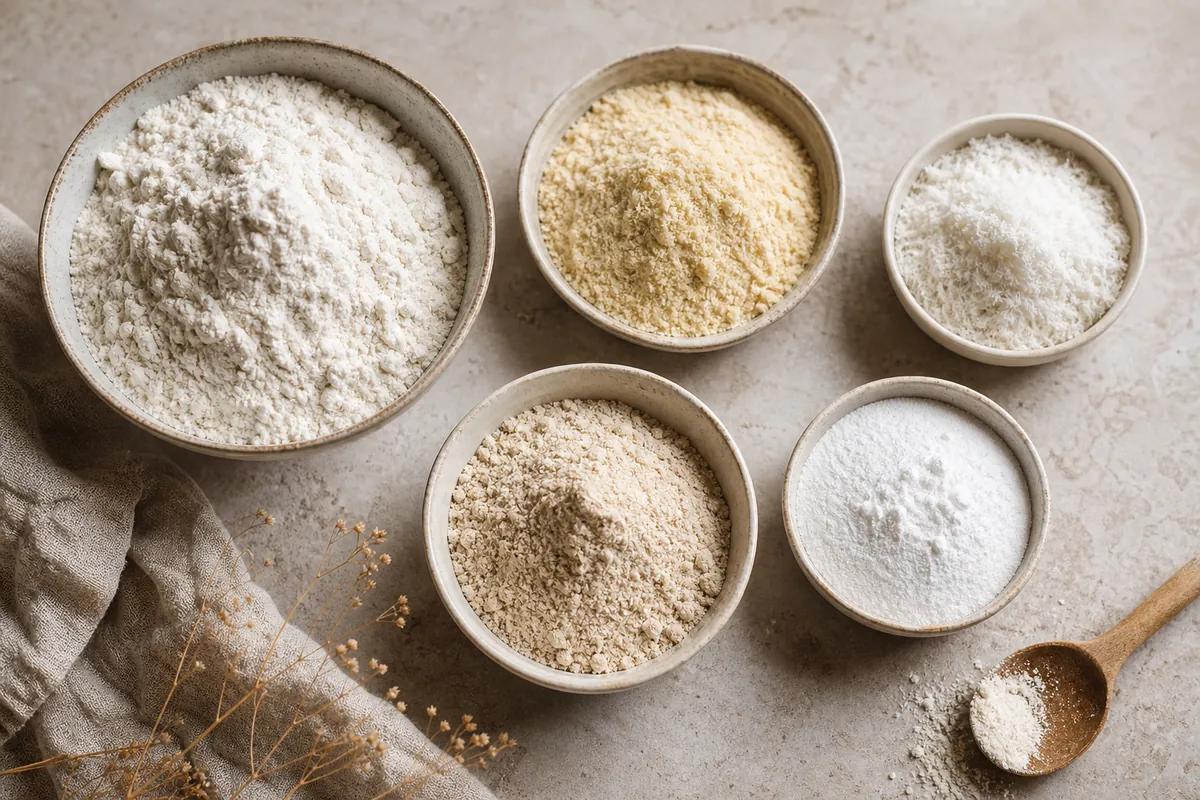
5 Best All Purpose Flour Substitutes Worth Trying
Ingredients
Equipment
Method
- Start by identifying your bake type (cookies/quick breads vs. cakes vs. crusts) and choose the substitute that matches desired crumb (structure vs tenderness).
- Measure by the listed ratio (1:1 or the reduced amount). For reduced-amount flours (like whole wheat), expect batter to be drier at first.
- Adjust hydration: if batter looks stiff, add 1–2 teaspoons liquid at a time; if it looks too loose, add 1 tablespoon flour and reassess.
- Rest when possible (especially with whole wheat and oat flour) for 5–10 minutes so the flour hydrates evenly.
- Bake and evaluate: dense or gummy bakes often need slightly less flour, while crumbly bakes often need a binder or a touch more liquid.
Notes
- For best results, weigh flour when you can; volume scoops can vary widely.
- Protein differences affect browning and chew—high-protein flours may need slightly less liquid.
Tried this recipe?
Let us know how it was!
Carrie is a food writer and editor with more than 15 years of experience. She has worked for some of the biggest names in the food industry, including Bon Appétit, Food & Wine, and Martha Stewart Living.
As the Editor in Chief of EpicureDelight, Carrie oversees all of the content on the site. She also manages the team of contributing writers and editors, who help to create delicious recipes, helpful tips, and informative articles that you’ll find on the site.
A native of the Chicago area, Carrie is passionate about all things food. She loves trying new restaurants and experimenting with new recipes in her kitchen. She’s also a graduate of the Culinary Institute of America, so she knows a thing or two about food!



