
Almonds are one of those ingredients that do three completely different jobs depending on the recipe. Ground fine, they build structure in cakes and cookies.
Slivered and toasted, they add crunch to salads and toppings. Blended smooth, they create the creamy base behind marzipan and almond fillings.
Finding the right almonds substitute means matching the job first, not just swapping one nut for another.
Fat content matters here. Almonds carry around 50% fat, and that fat keeps baked goods tender and moist.
A substitute with similar fat levels will behave closer to almonds than one that's mostly starch or fiber.
The best almonds substitute depends on the form. Use almond meal, pistachios, or hazelnuts for baking structure. Choose cashews for creamy fillings. Pick walnuts for darker, spiced baked goods. All work 1:1 by weight when ground to the same particle size as the original.
5 Best Almonds Substitutes in Every Recipe
Each substitute below is matched to a specific almond form. The table gives you a fast overview.
The sections that follow explain ratios, flavor adjustments, and when to skip each option.
| # | Substitute | Best For | Ratio | Key Note |
|---|---|---|---|---|
| 1 | Almond Meal | * Both | 1:1 | Match grind fineness |
| 2 | Pistachios (ground) | Baking | 1:1 | Reduce sugar by 1-2 tbsp |
| 3 | Hazelnuts (ground) | Baking | 1:1 | Warmer, toastier aroma |
| 4 | Cashews (ground) | Fillings | 1:1 | Creamier, less crunch |
| 5 | Walnuts (ground) | Baking | 1:1 | Use with cocoa or spice |
1. Almond Meal
Almond meal is the same nut in a different form, so it preserves both the fat level and the mild, slightly sweet aroma that almonds bring. When you need the nutty baked crumb from whole almonds but only have meal on hand, this is the most reliable path.
- Cookies and bars: Substitute at 1:1 by weight; expect a slightly denser crumb that holds moisture longer.
- Cakes: Match the grind to almond flour fineness-coarser meal can sink in lighter batters.
- Toppings: Toast lightly at 325°F for 4-5 minutes to restore the roasted aroma you'd get from whole slivered almonds.
Skip if: you are avoiding almonds for an allergy. Almond meal is still almonds, just ground.
2. Pistachios (Ground)
Ground pistachios carry similar fat and moisture-retention to almond meal, so they bake with nearly the same tenderness in cookies, bars, and quick breads. The flavor is brighter and slightly greener, which works beautifully in citrus or chocolate recipes.
For a wider look at green nut alternatives, there are more options worth knowing.
- Cookies: Substitute 1:1 by weight; the batter may smell sweeter before baking-that's normal.
- Sugar adjustment: Reduce added sugar by 1-2 tablespoon per cup if the batter tastes too sweet or bright.
- Chocolate recipes: Increase cocoa by 1 teaspoon per cup to balance pistachio's distinct flavor.
- Grind size: Pulse until fine and powdery; stop before the oils release and it turns into paste.
Skip if: your recipe needs a neutral nut flavor. Pistachios are more assertive than almonds and will be noticeable in vanilla or delicate pastries.
3. Hazelnuts (Ground)
Hazelnuts are a strong swap for baking structure and carry more fragrance than almonds. They are especially good in brownies, chocolate cakes, and nut-based crusts.
When picking a toastier nut feels right for your recipe, hazelnuts are the obvious answer.
The flavor is warmer and slightly sweeter than almonds, so vanilla and cocoa work with it naturally. You don't need to adjust sugar unless the recipe is already very sweet.
Hazelnuts vs. Almonds in Baking
Works for: brownies, chocolate cakes, nut crusts, spiced pastries where a toasty aroma adds depth
Skip if: the recipe is almond-extract-forward or needs a very mild, background nut flavor
- Baking ratio: Use 1:1 by weight, ground to the same fineness as almond meal.
- Skin removal: Rub roasted hazelnuts in a towel to remove bitter skins before grinding.
- Aroma note: Hazelnut flavor deepens during baking, so start with slightly less if unsure.
4. Cashews (Ground)
Blanched cashews, ground smooth, are the best option when almonds are doing a creamy job. Think marzipan-style fillings, nut-based frostings, or any batter where a soft texture matters more than crunch.
If you want to see how swapping in cashews plays out across other recipes, the options expand further than baking.
Cashews create a creamier crumb than almonds and reduce the "nutty crunch" factor. The flavor is milder and slightly buttery, which blends well in most sweet applications.
- Fillings and frostings: Substitute 1:1 by weight; blend until completely smooth to avoid grainy patches.
- Loose batter fix: If the batter feels too soft, add 1-2 tablespoon flour per cup cashew-equivalent.
- Dry batter fix: Toast ground cashews for 3-4 minutes first; this firms them slightly and helps binding.
- Marzipan substitute: Blend with powdered sugar and a drop of rosewater for a passable cashew marzipan.
Skip if: you need a crunchy topping or the visual of nut slices on a finished dish.
5. Walnuts (Ground)
Walnuts have a deeper, earthier flavor than almonds, and that gap shows up clearly in delicate recipes. Use them when cocoa, cinnamon, or espresso is already in the mix, because those flavors absorb walnut's intensity without conflict.
If you're already making something like a classic walnut salad, you already know how well walnuts hold their own.
- Baking ratio: Pulse to almond-meal fineness at 1:1 by weight; chunky walnuts won't bind the same way.
- Flavor pairing: Works best with chocolate, banana bread, spiced muffins, or coffee cake.
- Moisture note: Ground walnuts release more oil than almonds; reduce added fat by 1 teaspoon per cup if the batter looks greasy.
Skip if: you need a mild, light nut flavor in something like an almond shortbread or pale butter cake.
Making Almond Substitutes Work in Any Recipe
The form your recipe uses is the first decision. Meal and flour need fine grinding and a 1:1 weight swap.
Slivered or whole almonds for crunch need a substitute that holds shape after baking, like toasted hazelnut pieces. Creamy fillings need a higher-fat, lower-fiber nut that blends smooth.
Once you match the form, most texture problems come down to particle size and moisture.
- Gritty crumb: The substitute grind is too coarse. Pulse more or pass through a fine-mesh sieve before adding to the batter.
- Dry or crumbly result: The substitute is absorbing more moisture than almonds. Add 1 extra egg or 1-2 tablespoon liquid and rest the batter 5 minutes before baking.
- Flat or spreading cookies: The substitute may have released more oil. Chill the dough for 15-20 minutes and reduce butter or oil by 1 tsp.
Frequently Asked Questions
Yes, for most ground-nut swaps a 1:1 ratio by weight works. Check moisture after mixing; drier substitutes like coconut flour may need an extra tablespoon of liquid.
No nut substitute replicates almond extract's benzaldehyde aroma. Use a small drop of actual almond extract or vanilla extract alongside your chosen nut swap.
Pulse the nuts until they reach a fine, powdery consistency close to commercial almond flour. Sifting once removes coarse bits that cause grittiness in the final bake.
Coconut flour is naturally gluten-free, so it works structurally. Verify the packaging for cross-contamination warnings if the recipe also requires certified allergen-free ingredients.
Finely ground sunflower seeds are the most practical nut-free option for baking structure. Roast them briefly first to reduce any raw seed flavor before grinding.
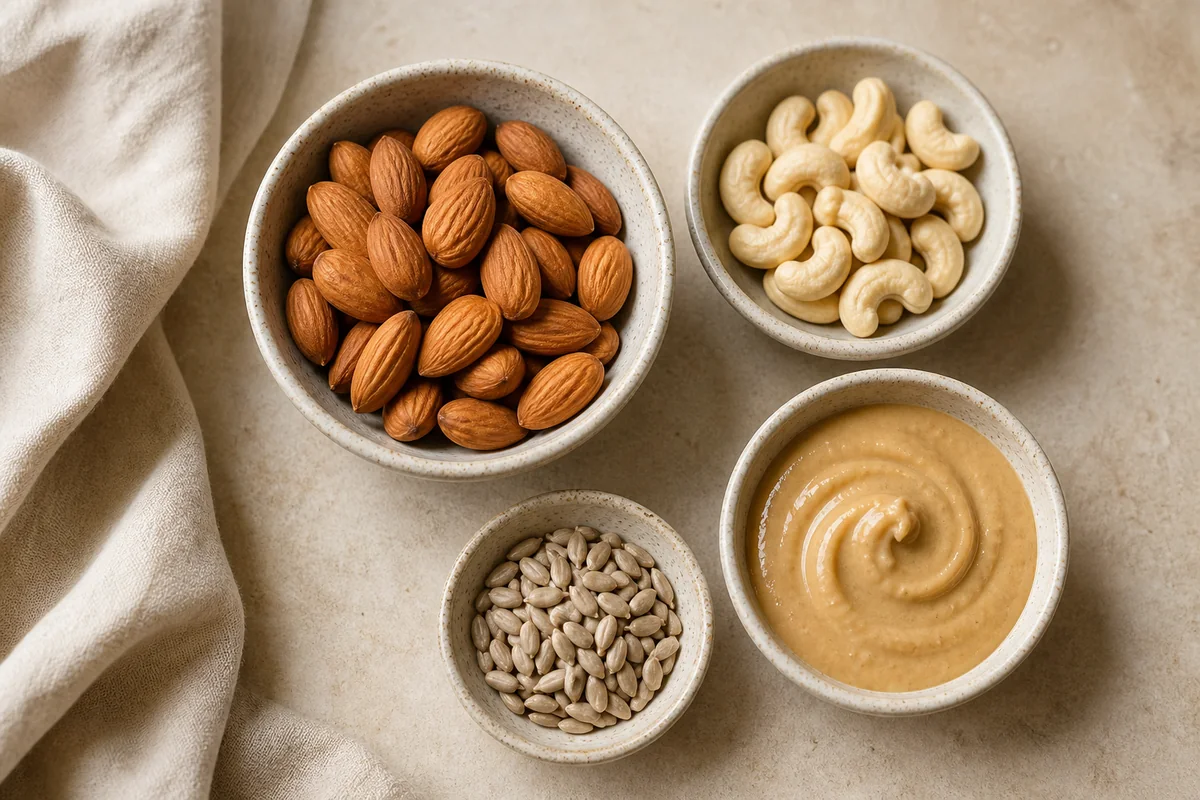
5 Best Almonds Substitutes in Every Recipe
Ingredients
Equipment
Method
- Identify your use: ground/meal for baking structure, slivered/roasted for crunch, or blended for creamy fillings.
- Choose the closest match from the reference table: use 1:1 for most recipes unless your substitute is notably drier or creamier.
- If the substitute is ground from whole nuts/seeds, pulse to a similar particle size to avoid gritty batter.
- Adjust texture: if the batter feels dry, blend in 1–2 teaspoon neutral oil or a splash of milk per cup of almond-equivalent; if too wet, add an extra 1–2 tablespoon flour or powdered sugar.
- Roast briefly (3–6 minutes at 325°F/165°C) to re-create the toasty almond aroma before baking or topping.
Notes
- Texture matters most: match particle size for baking, and match fat richness for fillings.
- If substituting for slivered almonds, keep pieces larger than nut flour to preserve crunch.
Tried this recipe?
Let us know how it was!
Carrie is a food writer and editor with more than 15 years of experience. She has worked for some of the biggest names in the food industry, including Bon Appétit, Food & Wine, and Martha Stewart Living.
As the Editor in Chief of EpicureDelight, Carrie oversees all of the content on the site. She also manages the team of contributing writers and editors, who help to create delicious recipes, helpful tips, and informative articles that you’ll find on the site.
A native of the Chicago area, Carrie is passionate about all things food. She loves trying new restaurants and experimenting with new recipes in her kitchen. She’s also a graduate of the Culinary Institute of America, so she knows a thing or two about food!



