When you need an amaranth substitute, the best choice depends on what amaranth is actually doing in the dish. Is it providing a chewy grain base?
Thickening a porridge? Binding a baked good?
Those are three different jobs, and the wrong swap in the wrong role will change your texture completely.
Whole-grain swaps like quinoa and millet work when you want bite and chew. Ground options like rice flour or rolled oats work when you need a binder or thickener.
Pick by role first, then ratio.
The best amaranth substitutes fall into two groups: cooked grains (quinoa, millet, buckwheat groats) for chewy texture, and ground flours (rice flour, ground oats, fine cornmeal) for thickening and baking. Match your swap to amaranth's job in the recipe, then adjust liquid by 1-2 tablespoons as needed.
5 Best Amaranth Substitutes, Ranked by Texture
Knowing which substitute handles which texture job saves a lot of trial and error. This table gives you a fast reference before you start cooking.
| # | Substitute | Best For | Ratio | Key Note |
|---|---|---|---|---|
| 1 | Quinoa (cooked, rinsed) | Grain base / bowls | 1:1 | Rinse to cut bitterness |
| 2 | Millet (cooked) | Grain base / porridge | 1:1 | Simmer longer if firm |
| 3 | Buckwheat groats (cooked) | Hearty bowls | 1:1 | Toast for nuttiness |
| 4 | Ground oats | Baking / thickening | 1:1 | Grind fine for baking |
| 5 | Cornmeal (fine grind) | Porridge / crunch | ¾:1 | Whisk to avoid lumps |
| 6 | Rice flour | Baking / sauces | 1:1 | Neutral flavor binder |
1. Quinoa
Quinoa is the closest match when amaranth is playing a grain role: salads, bowls, or a warm grain base. You can find information on grain-based swaps if quinoa itself is hard to track down.
Use it at a 1:1 volume swap with cooked amaranth, and keep a splash of extra liquid nearby.
- Rinse first: Always rinse quinoa before cooking to remove saponins, which turn bitter fast.
- Liquid adjustment: Add 1-2 tablespoons extra liquid if your dish feels dry after combining.
- Texture check: Cook until the grain is tender but still springy, not mushy, for the best chew.
Skip if: Your recipe uses amaranth as a flour or binder. Ground oats or rice flour are better in that role.
2. Millet
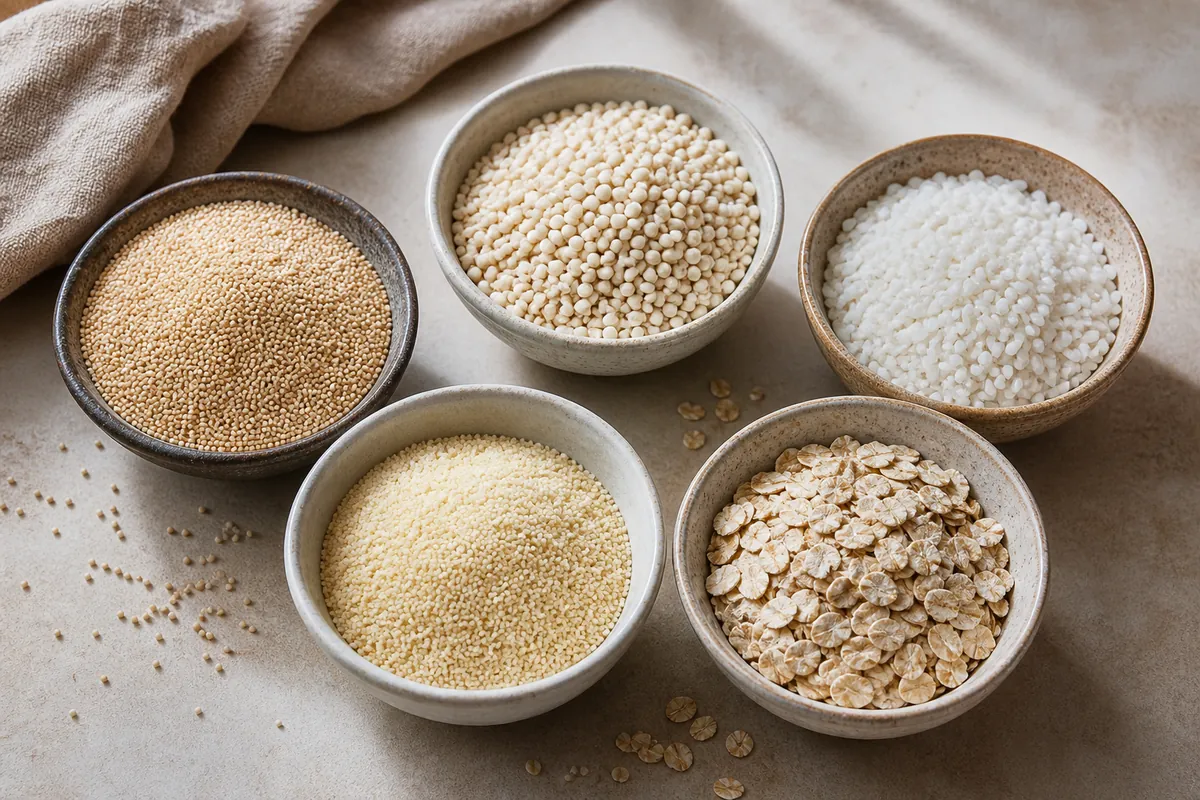
Millet has a small, springy bite that sits very close to amaranth's cooked texture. It is mild in flavor, which makes it an easy swap in dishes where you don't want a competing taste.
If you are still deciding, choosing a milder grain might help you narrow your options further.
- Ratio: Use cooked millet at 1:1; simmer 2-3 minutes longer than the package suggests if it still feels firm.
- Clumping: Stir near the end of cooking and loosen with a small splash of warm water if it bunches.
- Texture goal: You want each grain separate and tender, not a solid mass.
Skip if: You need a smooth thickener for baking. Switch to ground oats or rice flour in that case.
3. Buckwheat Groats
Buckwheat groats bring a noticeably earthy flavor, so they work best in hearty, savory bowls where a mild grain isn't the point. If the earthiness worries you, quinoa's flavor profile might be a more neutral fit for your recipe.
Light toasting before cooking brings out nuttiness and reduces the raw, grassy edge.
- Ratio: Start at 1:1 with cooked groats. For delicate dishes, begin with ¾ of the amount and taste before adding more.
- Toast option: Dry-toast groats in a pan for 2 minutes before simmering for better flavor.
- Texture: Buckwheat softens quickly, so check it early to avoid mushiness.
Buckwheat Groats
Works for: Hearty bowls, warm salads, savory grain dishes that can handle bold flavor
Skip if: Your recipe needs a neutral flavor grain - use quinoa or millet instead
4. Ground Oats
When amaranth is acting as a flour or binder in baking, ground oats are your most straightforward swap. Blitz rolled oats in a blender until fine.
The resulting oat flour absorbs moisture well and gives cookies and bars a mild grain structure without the gummy result that some flours produce. For the smoothest thickening, grind them finer than you think you need.
- Ratio: Use ground oats at 1:1 for amaranth flour in any baked recipe.
- Moisture check: If the batter looks too thick after mixing, loosen it with 1-2 tablespoons of liquid before baking.
- Porridge use: For thickening a porridge, grind slightly finer and whisk in gradually to prevent lumps.
Skip if: You need a whole-grain chew. Ground oats won't give you that texture. Use cooked quinoa or millet instead.
5. Cornmeal
Fine-grind cornmeal is the go-to when amaranth's job is to produce a thick, spoonable porridge. This coarse-ground pantry staple sets quickly and gives a satisfying body to warm dishes.
Always whisk it into warm liquid gradually; adding it all at once creates lumps that are hard to beat out.
- Ratio: Use ¾ cup cornmeal for every 1 cup of amaranth called for.
- Grind matters: Fine grind gives the smoothest result; coarse grind produces a noticeably grainier texture.
- Whisk technique: Stream it slowly into the warm liquid while stirring constantly.
| Use | Ratio | Notes |
|---|---|---|
| Porridge | ¾:1 | Fine grind only; whisk in warm liquid |
| Crumb topping | 1:1 | Medium grind works; adds crunch |
| Baking binder | Skip cornmeal | Use ground oats or rice flour instead |
Skip if: You need a light baked texture. Cornmeal is too gritty for that job. Ground oats or rice flour are the better calls.
Making Amaranth Substitutes Work
The most common problem with any amaranth swap is a texture that goes too thick or too loose during cooking. When you're working with swapping baking flours or adjusting a simmered grain, the fix is almost always about liquid timing.
Keep the heat low when the substitute first goes in, and don't walk away from the pot.
- Too thick: Add warm liquid 1 tablespoon at a time and simmer for 30-60 seconds after each addition until the consistency is right.
- Too loose: Extend the simmer and add 1-2 teaspoons of your dry substitute, whisking well and giving it a full minute to tighten.
- Baking structure: Let the batter rest 5-10 minutes before baking so the substitute fully absorbs moisture and gives better structure.
Frequently Asked Questions
Cooked quinoa is the closest match at a 1:1 swap by volume. Rinse it before cooking to cut bitterness, and add 1-2 tablespoons of extra liquid if the dish feels dry.
Use rice flour at 1:1 and heat gently while whisking. Stop simmering as soon as the mixture turns glossy; cooking it longer makes the texture gummy.
Yes. Blitz rolled oats until fine and use them at 1:1. Let the batter rest 5-10 minutes before baking so the oat flour absorbs moisture fully.
Bitterness usually comes from unrinsed quinoa. Rinse quinoa under cold water for 30 seconds before cooking, and the bitterness drops significantly.
Add warm liquid 1 tablespoon at a time, stirring after each addition. Usually 2-3 tablespoons is enough to recover the right consistency.
5 Best Amaranth Substitutes (Quick Swaps)
Ingredients
Equipment
Method
- Identify what amaranth is doing in your recipe: grain base (chew), porridge/thickener, or baking structure (binder/flour).
- Use the matching substitute from the table: choose the closest texture (cooked grain vs. ground flour) first.
- Apply the ratio from the reference table; if your substitute is coarser or drier, add a small splash of liquid during cooking.
- Adjust at the end: taste for bitterness/earthiness, then fine-tune thickness by adding 1–2 tablespoons more liquid or letting it simmer 1–2 minutes longer.
- If substituting in baking, let the batter/rest time absorb moisture (about 5–10 minutes) before baking for better structure.
Notes
- Rinse quinoa or millet if they taste bitter.
- For thickening roles, grind oats finer or use rice flour for a smoother set.
- Texture shifts are normal; adjust liquid and simmer time to recover chew or creaminess.
Tried this recipe?
Let us know how it was!
Carrie is a food writer and editor with more than 15 years of experience. She has worked for some of the biggest names in the food industry, including Bon Appétit, Food & Wine, and Martha Stewart Living.
As the Editor in Chief of EpicureDelight, Carrie oversees all of the content on the site. She also manages the team of contributing writers and editors, who help to create delicious recipes, helpful tips, and informative articles that you’ll find on the site.
A native of the Chicago area, Carrie is passionate about all things food. She loves trying new restaurants and experimenting with new recipes in her kitchen. She’s also a graduate of the Culinary Institute of America, so she knows a thing or two about food!