Ancho chili powder has a flavor that's hard to pin down in a single word. It's mild, slightly sweet, faintly chocolatey, and carries just enough dried-chile depth to make a mole or rub feel complete.
When the jar is empty and the recipe is waiting, the right swap depends on which part of that flavor you actually need.
The ancho chili powder substitute that works best for you isn't always the most obvious one. A smoky-forward recipe needs a different fix than a sauce where color and mild heat matter most.
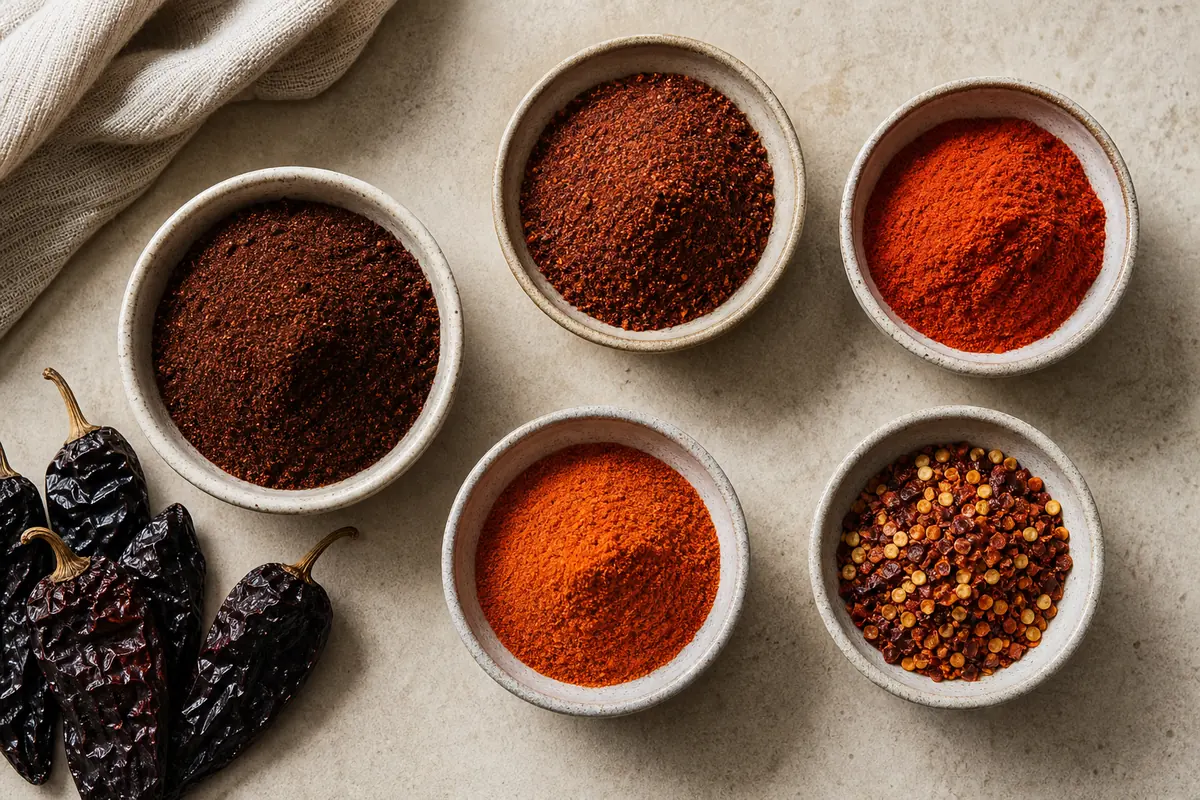
Pasilla chili powder is the closest 1:1 swap for ancho's dried-chile sweetness. For smoky depth, use chipotle at ¾ the amount. For color with gentle heat, kashmiri chili powder at 1:1 works well. Smoked paprika and regular chili powder cover the remaining use cases.
Ancho Chili Powder Substitute Reference (Quick Match by Flavor)
The table below maps each substitute to its main strength. Start with the ratio listed, bloom the spice in a little oil, then taste before adding more.
Always go slightly low first with smoky or hotter options.
| # | Substitute | Best For | Ratio | Key Note |
|---|---|---|---|---|
| 1 | Pasilla Chili Powder | Sweetness + Depth | 1:1 | Add smoke if needed |
| 2 | Chipotle Chili Powder | Smoky Heat | ¾:1 | Hotter than ancho |
| 3 | Kashmiri Chili Powder | Color + Mild Heat | 1:1 | Flat on dried-chile depth |
| 4 | Smoked Paprika | Smoke + Color | ⅔:1 | No dried-chile sweetness |
| 5 | Regular Chili Powder | General Heat | ¾:1 | Variable blend; adjust |
5 Best Ancho Chili Powder Substitutes, Ranked by Flavor Match
1. Pasilla Chili Powder
Pasilla and ancho come from the same dried-chile family, so pasilla powder lands closer to ancho's flavor than any other store-bought option. It's earthy, mildly fruity, and carries that same low-heat dried-chile sweetness without much smoke.
- Flavor match: Earthy and mildly sweet - nearly identical to ancho's baseline character
- Heat level: Slightly milder than ancho; expect 1,000-1,500 Scoville range
- Best uses: Mole sauces, enchilada sauce, red chile braises, dry rubs
- Smoke gap: Pasilla is not smoky - add a small pinch of smoked paprika if your recipe needs that note
If you want to understand how pasilla compares to other dried-chile options, it helps to know what a chili powder blend actually contains before mixing.
Skip if: your dish demands a pronounced smoky character - pasilla is mellow and earthy, and the smoke gap is real.
2. Chipotle Chili Powder
Chipotle is the smokiest option on this list. It's made from dried, smoked jalapeños, so it brings strong heat alongside that campfire-style smokiness ancho only hints at.
Start at ¾ teaspoon for every 1 teaspoon of ancho and taste before adding more.
- Ratio: ¾:1 - chipotle runs significantly hotter than ancho
- Best uses: Chili, smoky BBQ sauces, meat rubs, bean soups
- Adjustment: If it gets too smoky, balance with a tiny pinch of brown sugar
- Heat note: Chipotle sits around 2,500-8,000 Scoville; ancho tops out near 1,500
Good options for seasoning with smoked paprika also apply here if you want to dial the smokiness back.
Skip if: you're making a mild sauce or cooking for heat-sensitive eaters - chipotle will outrun ancho's heat in almost every recipe.
3. Kashmiri Chili Powder
Kashmiri chili powder is the go-to when color is the main thing ancho brings to your dish. It's known for producing a brilliant, deep red without stacking on heat.
- Color: Excellent - delivers vivid red-orange hue comparable to ancho
- Heat: Very mild, around 1,000-2,000 Scoville; won't spike the dish
- Sweetness gap: Low - kashmiri doesn't carry ancho's roasty-sweet dried-chile depth
- Fix: Add a tiny pinch of unsweetened cocoa (⅛ teaspoon per tablespoon of kashmiri) to approximate ancho's character
Skip if: your recipe depends on ancho's dried-chile sweetness as a flavor anchor - kashmiri will look right but taste flatter without that cocoa-boost trick.
4. Smoked Paprika
Smoked paprika covers two of ancho's roles well: smoke and deep red-brown color. What it won't replicate is dried-chile sweetness.
Smoke & Color
Works for: BBQ rubs, stews, braises, tomato-based sauces needing color and smoke at ⅔ the ancho amount
Skip if: the dish relies on ancho's roasty-sweet dried-chile note - paprika reads as smoky-savory, not sweet
- Ratio: ⅔ teaspoon smoked paprika per 1 teaspoon ancho called for
- Sweetness fix: Stir in a small pinch of regular chili powder to round out heat and body
- Best uses: Spiced rice, roasted vegetables, shakshuka, pulled pork
- Avoid in: Mole-style sauces where dried-chile complexity is the whole point
Skip if: the recipe is a mole or dark chile sauce - paprika alone won't get you to the right depth without additional dried-chile support.
5. Regular Chili Powder
Standard store-bought chili powder is a blended mix - usually ancho or guajillo, cumin, garlic powder, and sometimes oregano. It's not a mirror of pure ancho, but it's usually in the pantry.
Most commercial blends vary quite a bit. Some lead with cumin, others with garlic, so the result shifts recipe to recipe.
Start at ¾ of the ancho amount and correct from there. If you need more options in this category, check out other replacements for chili powder that cover specific blend types.
- Bloom first: Cook the powder in 1 tablespoon of oil for 20-30 seconds before adding liquid - it reduces harshness
- Sweetness fix: Add a tiny pinch of unsweetened cocoa (⅛ tsp) if the blend tastes flat
- Salt watch: Some blends are pre-salted; reduce added salt in the recipe by ¼ teaspoon and taste
Skip if: your blend has an aggressive cumin or garlic note and the recipe is delicate - start at ½ the amount and build up slowly.
Making the Substitute Taste Like Ancho (Tune Sweetness, Smoke, and Heat)
Any substitute benefits from a quick adjustment pass. The key is blooming the spice and then tasting before the dish is fully built - that's the window where corrections actually work.
For tips on keeping chili powder fresh so you don't end up in this situation again, store whole dried chiles or powders in sealed glass jars away from light.
- Bloom the spice: Heat 1 tablespoon of neutral oil in the pan, add the substitute powder, and stir for 20-30 seconds over medium before adding any liquid - this cuts raw harshness and integrates the flavor
- Sweetness boost: If the substitute reads flat or bitter, add ⅛ teaspoon of unsweetened cocoa per tablespoon of substitute powder; stir it into a warm sauce and taste after 2 minutes
- Heat correction: If the dish is too hot, stir in a pinch of brown sugar and a squeeze of fresh lime - acid and sugar both suppress perceived heat without diluting the chili flavor
Frequently Asked Questions
No - chipotle runs much hotter and smokier than ancho. Start at ¾ teaspoon of chipotle for every 1 teaspoon of ancho, then taste and adjust.
Pasilla chili powder is the nearest match - same dried-chile family, mild heat, and a similar earthy-sweet undertone. Use it 1:1.
Add a pinch of brown sugar and a small squeeze of lime juice. Both reduce the perception of smokiness without thinning the sauce.
Partially - smoked paprika covers smoke and color but lacks dried-chile sweetness. Pair it with a pinch of regular chili powder and a tiny bit of cocoa for better depth.
Bitterness usually means the spice wasn't bloomed long enough. Stir it into warm oil for 20 seconds, then add ⅛ teaspoon of unsweetened cocoa and a small pinch of sugar.
5 Best Ancho Chili Powder Substitutes in Every Recipe
Ingredients
Equipment
Method
- Choose a substitute that matches your goal: pasilla for closest dried-chili flavor, chipotle for smokier heat, or cocoa/chili blend for ancho-like sweetness.
- Measure using the listed ratio (start slightly low for smoky/hot options like chipotle).
- Bloom the spice in a tablespoon of oil for 20–30 seconds (or stir into a warm sauce) to reduce harshness and improve integration.
- Taste, then adjust: add small pinches for heat, and add a pinch more cocoa or a tiny pinch of sugar to mimic ancho’s dried-chili sweetness if needed.
Notes
- Ancho chili powder is usually mild-to-medium heat with dried-chili sweetness and a gentle roast/smoke profile—match sweetness first, then heat.
- For best results, bloom the substitute briefly in oil or stir into a hot base so it tastes less “powdery.”
Tried this recipe?
Let us know how it was!
Carrie is a food writer and editor with more than 15 years of experience. She has worked for some of the biggest names in the food industry, including Bon Appétit, Food & Wine, and Martha Stewart Living.
As the Editor in Chief of EpicureDelight, Carrie oversees all of the content on the site. She also manages the team of contributing writers and editors, who help to create delicious recipes, helpful tips, and informative articles that you’ll find on the site.
A native of the Chicago area, Carrie is passionate about all things food. She loves trying new restaurants and experimenting with new recipes in her kitchen. She’s also a graduate of the Culinary Institute of America, so she knows a thing or two about food!