
That smoky-salty sizzle you get from a spoonful of bacon grease is almost impossible to fake entirely. But the right bacon grease substitute gets you close enough that the dish still works, and sometimes nobody notices the difference.
Bacon grease is two things at once: a heat-stable cooking fat and a flavor carrier packed with smoke and savory pork compounds. We pick substitutes by matching fat behavior first, then patching in smoke or umami if the flavor gap is noticeable.
Every section below includes a "Skip if" line so you know exactly when a swap will fail you.
Bacon grease replacements work best when you choose by cooking job first. Lard and rendered pork fat handle high-heat frying with minimal flavor loss. Butter with smoked paprika is the best flavor swap for sautéing and finishing. Neutral oils need an umami or smoke boost to come close.
5 Bacon Grease Substitutes Matched to Your Cooking Job
Here's the fastest reference for choosing your swap by method, heat tolerance, and whether you need to add a flavor boost.
| # | Substitute | Best For | Ratio | Key Note |
|---|---|---|---|---|
| 1 | Rendered Pork Fat | Frying + Sautéing | 1:1 | Add smoke if mild |
| 2 | Lard | Frying + Roasting | 1:1 | Neutral; add paprika |
| 3 | Butter + Smoked Paprika | Sautéing + Finishing | 1:1 | Low-heat only |
| 4 | Olive Oil + Seasoning | Roasting + Coating | 1:1 | Needs smoke boost |
| 5 | Vegetable Oil + Soy Sauce | Quick Sautéing | 1:1 | Risk of over-salting |
1. Rendered Pork Fat
Unflavored pork drippings are the most structurally identical swap available. The fat behaves exactly like bacon grease in a pan, crisps the same way, and carries a mild pork savor that needs almost no adjustment.
Knowing how long your drippings stay usable matters too-brush up on bacon grease storage before you rely on a jar that's been sitting around.
- Best uses: Shallow frying, sautéing vegetables, pan drippings for sauces
- Flavor note: Milder than true bacon grease; skip smoke-heavy additions unless the recipe specifically calls for them
- Key tip: If the drippings came from unseasoned pork (not cured bacon), add a small pinch of smoked salt to close the flavor gap
Skip if: the recipe depends on a clearly smoky flavor and you have no way to add a seasoning boost-the drippings alone may taste more like plain pork fat than bacon.
2. Lard
Lard is the go-to when you need high-heat performance above almost anything else. It has one of the highest smoke points among cooking fats and produces a crispier exterior on fried or roasted foods than butter ever will.
The flavor of lard on its own is quite neutral, which is its only real drawback compared to bacon grease. To understand what you're working with before you cook, read about lard flavor so you can calibrate the seasoning adjustment in advance.
A half-teaspoon of smoked paprika per tablespoon of lard gets you into bacon-grease territory.
- Best uses: Deep frying, roasting potatoes, pan-frying chicken, seasoning cast iron
- Flavor note: Neutral pork fat base-needs smoke or umami added for bacon-like flavor
- Seasoning tip: Mix in ¼ teaspoon smoked paprika and a tiny drop of Worcestershire per tablespoon if the dish needs that specific smoky depth
If you ever need to replace lard itself in a recipe, there are solid replacements for lard worth knowing.
Skip if: you want a smoky flavor but can't or won't add any seasoning-plain lard will taste flat where bacon grease would have depth.
3. Butter + Smoked Paprika
Butter brings richness and a browning quality that works surprisingly well for short-cook applications. The catch is heat: butter starts burning around 300°F, so this swap is firmly in the low-to-medium heat lane.
Butter + Smoked Paprika
Works for: sautéing vegetables, finishing sauces, flavoring cornbread batter, scrambling eggs
Skip if: deep frying, long oven roasting above 375°F, or any cooking where the fat stays in direct heat for more than a few minutes
If you're relying on smoked paprika for the bacon illusion, it helps to understand the flavor of smoked paprika before you go heavy-handed-it can tip into bitterness. And if butter isn't an option either, there are good butter alternatives that keep similar richness.
- Best uses: Sautéed greens, finishing pan sauces, adding to mashed potatoes, flavoring soups
- Flavor strength: Noticeably smoky if you use ½ teaspoon paprika per tablespoon of butter-go lighter for subtle results
- Adjustment tip: Balance the smokiness with a small pinch of salt and one drop of Worcestershire to round out the savory note
Skip if: you're doing any high-heat frying or extended roasting-butter will scorch and turn bitter before the food is done.
4. Olive Oil + Bacon-Seasoning Shortcut
Olive oil handles the fat role cleanly, with a medium-high smoke point that covers most roasting and pan-cooking needs. The issue is that it brings no pork character on its own, so the seasoning shortcut is not optional here.
If olive oil doesn't work for your dish either, check the best olive oil alternatives for options that stay neutral.
- Best uses: Roasting vegetables, coating sheet pan proteins, pan-starting soups and stews
- Seasoning direction: Combine 1 tablespoon olive oil with ¼ teaspoon smoked paprika, a small pinch of salt, and ½ teaspoon soy sauce-this hits smoke, salt, and umami at once
- Application tip: Add the seasoning to the cold oil before heating so the paprika blooms slightly and the flavor distributes evenly through the dish
- What it won't do: Replicate the mouthfeel of pork fat; the finish will be lighter and less coating than real bacon grease
Skip if: you're trying to match the richness and mouthfeel of bacon grease in something like refried beans or a Southern-style pot of greens-olive oil is too light for that job.
5. Vegetable Oil + Soy Sauce
This is the pantry emergency option, and it's more honest than people expect. Vegetable oil provides a neutral, high-heat-stable fat base, and soy sauce drops in umami and saltiness that gesture toward bacon's savory quality.
If soy sauce isn't available either, knowing about swapping soy sauce keeps you covered.
- Best uses: Quick vegetable sautés, coating potatoes before roasting, flavoring fried rice
- What it won't replicate: The smoky compound in bacon grease and the thick pork-fat mouthfeel
- Key ratio: Use 1 tablespoon vegetable oil to ½ teaspoon soy sauce-go above that and the dish goes salty and dark fast
- Darkness warning: Soy sauce caramelizes quickly; don't use this combo in recipes with white sauces or light-colored dishes
Skip if: the sauce or dish needs to stay pale in color, or if you're sodium-sensitive-soy sauce concentrates heavily as liquids reduce.
Making Bacon Grease Substitutes Work
The first question to ask is always: what is this fat actually doing in the recipe? Crisping and frying need heat stability above all else. Finishing and flavoring need smoke and savor, where even a weaker fat can succeed.
- Match the cooking method first: High-heat jobs (frying, roasting) need lard or rendered pork fat; lower-heat flavor jobs can use butter or oil with seasonings added
- Add the smoke/umami boost after the fat is chosen: A small amount of smoked paprika, Worcestershire, or soy sauce brings a neutral fat into bacon-grease territory without overwhelming the dish
- Taste-test within the first 2 minutes: Fat swaps often need minor salt or smoke corrections early-adjust before the food absorbs the seasoning and the window closes
For most recipes, fat replacement is 1:1 by volume. You're adjusting flavor, not quantity.
If you're also rethinking the recipe around a different base fat, keep in mind that smoked paprika alternatives can shift the whole flavor profile when the primary smoky element changes.
Frequently Asked Questions
Rendered pork fat (unflavored drippings) is the closest match in both flavor and behavior. If it tastes too mild, add a pinch of smoked salt to bring it nearer to true bacon grease.
Yes, lard replaces bacon grease 1:1 in any cooking method. The fat behavior is nearly identical; just add a small smoke or umami seasoning if the recipe needs that bacon-specific flavor.
Only for light, short-cook frying at medium heat. Butter burns around 300°F, so it is not suitable for deep frying or extended high-heat cooking.
Combine smoked paprika for smoke, soy sauce or Worcestershire for umami, and a small pinch of salt. Use these in small amounts-¼ teaspoon paprika per tablespoon of fat is a safe starting point.
Soy sauce alone does not replace bacon grease-it has no fat. Combined with a neutral oil, it adds savory depth but won't replicate smoke or pork-fat richness.
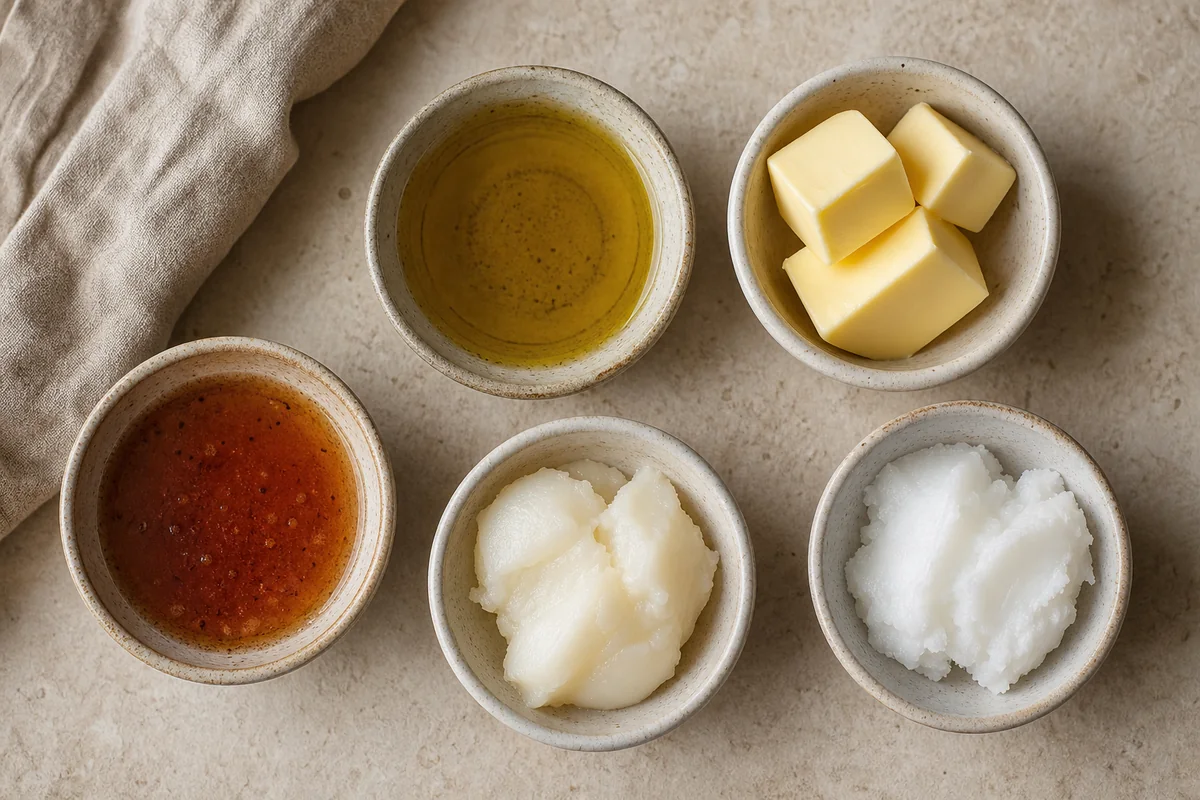
5 Best Bacon Grease Substitutes That Taste Right
Ingredients
Equipment
Method
- Identify the job: crisping/frying (needs higher heat), roasting (needs coating fat), or flavoring (needs smoky-savory notes).
- Choose the substitute that matches behavior first (fat/crisping), then add the smallest boost needed for bacon-like flavor (smoke/umami).
- Use the 1:1 ratio for fat replacement; if your substitute is flavored (butter+paprika), use the listed mix as-is.
- Adjust after the first 1–2 minutes: if it tastes flat, add a small pinch of salt or a smoky-savory seasoning; if it’s too smoky, balance with a tiny splash of fat like butter.
- Store leftovers: keep in a sealed container in the fridge and re-warm gently before using for best pour/spread.
Notes
- For high-heat frying, avoid substitutes that burn quickly (especially dairy-based blends) unless your dish cooks quickly.
- If you’re replacing bacon grease in a recipe that needs the smoky note, treat the flavor boost as essential—not just optional.
Tried this recipe?
Let us know how it was!
Carrie is a food writer and editor with more than 15 years of experience. She has worked for some of the biggest names in the food industry, including Bon Appétit, Food & Wine, and Martha Stewart Living.
As the Editor in Chief of EpicureDelight, Carrie oversees all of the content on the site. She also manages the team of contributing writers and editors, who help to create delicious recipes, helpful tips, and informative articles that you’ll find on the site.
A native of the Chicago area, Carrie is passionate about all things food. She loves trying new restaurants and experimenting with new recipes in her kitchen. She’s also a graduate of the Culinary Institute of America, so she knows a thing or two about food!



