
Pie crust that shatters at a fork. Fried potatoes with a crackling edge.
Both depend on fat behavior, and lard gets there through its unique plastic consistency. When you need a lard substitute, the goal isn't just replacing calories.
It's matching how that fat coats flour, resists heat, or firms up cold.
Lard is a neutral, solid fat with a high smoke point and almost no water content. Those three traits explain most of what makes swapping it tricky.
Shortening is the closest texture match for flaky baking. Butter delivers similar layers with more flavor. Coconut oil (refined, chilled) works as a solid plant fat. Ghee suits savory cooking. Duck fat is the best frying match. All swap at roughly 1:1 by weight.
Best Lard Substitutes for Baking and Frying
The five fats below cover every major job lard does, from layering a pie shell to crisping chicken skin. Each one behaves differently at different temperatures, so matching the fat to the recipe step matters more than picking the most popular option.
| # | Substitute | Best For | Ratio | Key Note |
|---|---|---|---|---|
| 1 | Shortening | ★ Baking | 1:1 | Closest flake match |
| 2 | Unsalted Butter | ★ Baking | 1:1 | Keep very cold |
| 3 | Coconut Oil (refined) | ★ Both | 1:1 | Must stay solid |
| 4 | Ghee | ★ Cooking | 1:1 | Nutty, low water |
| 5 | Duck / Chicken Fat | ★ Frying | 1:1 | Rich, savory flavor |
For flaky layers, reach for a solid fat. Liquid oils and warm fats skip this list for good reason.
The oil versus solid fat choice is not subtle in a pastry dough.
- If your recipe calls for flaky layers, pick a fat that stays solid at room temperature until the oven does its job.
- If your recipe is about browning or crisping, prioritize smoke point over texture, and duck fat or ghee wins that round.
- For stored rendered poultry fat, check that it's fresh before swapping into hot applications.
1. Shortening
All-vegetable shortening is the most direct lard substitute in baking. It stays solid at room temperature, has no water content, and works in pie crust, biscuits, and tamale dough without changing flavor.
The texture it produces is soft and short, leaning slightly more tender than lard's result but rarely noticeably different.
- Swap ratio: 1:1 by weight. Do not measure by volume alone; the density is close but not identical.
- Texture impact: Slightly more tender than lard, a touch less crackle-crisp on the edges of fried dough.
- Handling tip: Chill your bowl and shortening for 15 minutes before cutting it into flour. This keeps the fat from softening too fast and flattening the layers.
- Flavor note: Fully neutral. If you want a flavor note, add a small knob of butter alongside it. Many bakers use solid fat swaps combining both fats.
Skip if: your recipe specifically relies on lard's pork undertone, or if you are avoiding hydrogenated vegetable fats.
2. Butter (Unsalted, Chilled)
Butter is probably the most common lard replacement people reach for first, and it does work. The real issue is water.
Butter is roughly 15-18% water, and that moisture can create steam in the oven, which paradoxically adds some flakiness but also risks making the crust tough if the dough warms up too much during mixing.
Keep it cold. That's the whole technique here.
- Swap ratio: 1:1 by weight. No adjustment needed if your butter stays cold.
- Texture impact: Similar flake, but slightly denser crumb than lard. The crust will taste richer and more noticeably buttery.
- Handling tip: Cut butter into small cubes and freeze them for 10 minutes before mixing. Work quickly and rest the dough 30 minutes in the fridge before rolling.
- Water content adjustment: If your recipe is very delicate, reduce liquid in the recipe by 1 tablespoon per ½ cup of butter you use to compensate for the added moisture. You can also browse choosing a butter swap if you later need to go further.
Skip if: you need a truly neutral fat for a sweet pastry where butter's flavor would compete with delicate fillings.
3. Coconut Oil (Refined, Chilled)
Refined coconut oil is a solid fat at temperatures below 76°F (24°C), which makes it one of the few plant-based fats that actually behaves like lard when cold. The key word is refined.
Unrefined coconut oil carries a distinct tropical note. Refined has almost no flavor of its own, so it's a reasonable neutral oil option for baking applications where you want no detectable flavor shift.
Its melting point is also its vulnerability. If your kitchen runs warm, it can soften before the dough even gets to the oven.
Coconut Oil (Refined)
Works for: cold-kitchen pie dough, biscuits, and any dough you can chill before baking; dairy-free and vegan recipes needing a solid fat
Skip if: your kitchen stays above 75°F during prep, or if the dough needs to hold shape for a long time before going into the oven
- Swap ratio: 1:1 when the oil is solid at mixing time. If it has softened, firm it up in the freezer for 10 minutes first.
- Best use cases: Vegan pie shells, gluten-free biscuits, and savory tart doughs.
- Handling tip: Scoop it into rough chunks before adding to flour. Do not melt it first. Also, keep tabs on this solid fat's freshness, since old coconut oil can turn slightly rancid and affect flavor.
4. Ghee
Ghee is butter with the milk solids and most of the water removed. What's left is nearly pure butterfat, and that changes how it behaves compared to regular butter.
It handles higher heat without burning and adds a nutty, slightly browned note to whatever you cook. As a lard substitute in cooking, it's especially good in savory bakes, sautéed vegetables, and shallow-fry applications.
It isn't perfect for sweet, neutral pastry work. The flavor is pleasant but present.
- Swap ratio: 1:1 in cooking and savory baking. In frying, treat it like a high-smoke-point fat.
- Flavor notes: Mild nuttiness and a faint browned-butter aroma. It deepens during high-heat cooking.
- Best uses: Tamales, empanada dough, pan-frying meats, roasting vegetables, and any dish where a slight browned-butter note is welcome.
- Baking note: For pastry dough, ghee can work if the recipe is robust (thick dough, short bake), but it won't produce the same clean cold-fat flake that solid shortening gives you.
Skip if: you're making a delicately flavored sweet crust or you need a completely neutral background fat.
5. Duck Fat (or Chicken Fat)
Duck fat is the closest animal fat to lard in terms of cooking behavior. It browns beautifully, crisps well at high heat, and has a relatively high smoke point for a rendered fat.
The difference is flavor. This savory rendered fat carries a distinctly rich, meaty character that lard largely keeps quiet.
In savory frying and roasting applications, that's not a flaw. It's a feature.
- Swap ratio: 1:1 for frying and savory cooking. No adjustment needed on heat settings.
- Browning performance: Excellent. Produces deep, even browning on potatoes, poultry skin, and fried dough.
- Flavor threshold: Works well in potato dishes, confit, tamales, and savory hand pies. Becomes dominant in mild or sweet dishes.
- Chicken fat note: Schmaltz (rendered chicken fat) is a good budget alternative to duck fat. It's slightly less rich but works in nearly all the same applications.
Skip if: you're making any sweet pastry or a dish where neutral fat is part of the recipe's balance.
Making Lard Substitutes Work (No Surprises)
The core swap rule is simple: match the fat's job first, then match its state. For baking, that means keeping the fat cold and solid until the oven takes over.
For cooking, it means picking a fat that can handle the heat without burning or adding competing flavor. A quick review of how solid fats behave under heat helps you decide before you start cutting fat into flour.
- Chill everything: For any baking swap, chill your fat, your bowl, and your liquid. Mix quickly and rest the dough 20-30 minutes in the refrigerator before rolling or shaping.
- Weigh, don't scoop: Lard is denser than shortening and different from butter in mass-to-volume ratios. Use a kitchen scale when precision matters, especially in pastry.
- Adjust for flavor, not just texture: If your substitute tastes noticeably different (like ghee or duck fat), reduce salt or seasoning slightly in the recipe to avoid doubling up on savory notes.
Frequently Asked Questions
All-vegetable shortening is the closest match. It stays solid at room temperature, produces a tender, flaky crumb, and has no competing flavor. Swap it 1:1 by weight.
Yes, at a 1:1 ratio by weight, but keep butter very cold throughout mixing. Its water content can make dough slightly tougher if it warms up before baking.
Duck fat or chicken fat (schmaltz) matches lard's high-heat browning most closely. Ghee is a good second option, especially for savory dishes needing a cleaner fat.
Refined coconut oil has almost no coconut flavor. Unrefined (virgin) coconut oil does. Always use refined when you want a neutral result in baking or cooking.
Greasiness usually means the fat warmed up and melted into the flour instead of staying in distinct pieces. Chill the dough for 20-30 minutes and reduce fat by 1 tablespoon next time.
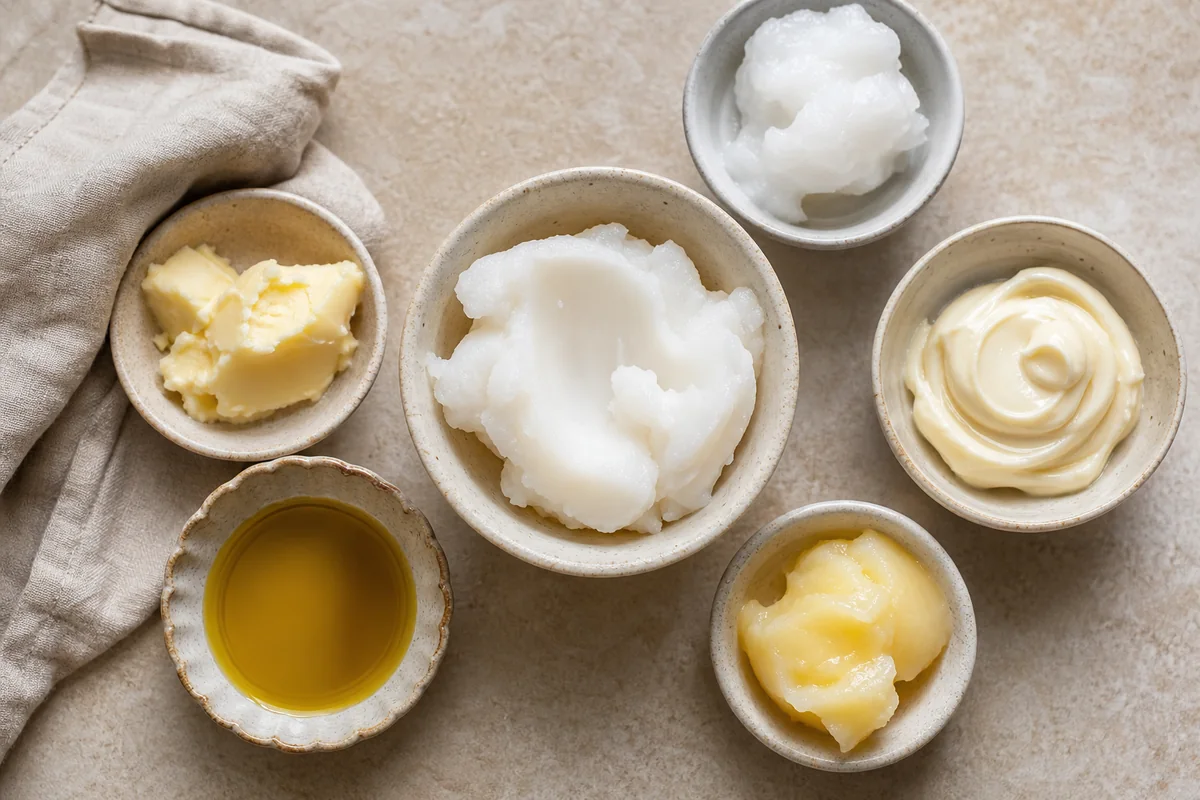
5 Best Lard Substitutes That Taste Right
Ingredients
Equipment
Method
- Identify your use case: flaky baking (pie crust/biscuits) vs. cooking/frying (browning and crisping).
- Choose the closest match from the table: shortening for texture, butter or ghee for flavor, coconut oil for a solid swap, and duck/chicken fat for savory frying.
- Apply the listed ratio (use weight for best consistency in baking).
- If your substitute is softer than lard (like butter-ghee blends), chill the dough 20–30 minutes before baking for cleaner layers.
- Taste and adjust: if flavor turns too rich or nutty, reduce the amount slightly next time or balance with salt/acid in the dough.
Notes
- For baking, keep fat cold to preserve flake; for frying, choose a substitute that tolerates heat and browns well.
- If the substitute contains more water than lard (notably butter), expect slightly less flake unless dough is handled cold.
Tried this recipe?
Let us know how it was!
Carrie is a food writer and editor with more than 15 years of experience. She has worked for some of the biggest names in the food industry, including Bon Appétit, Food & Wine, and Martha Stewart Living.
As the Editor in Chief of EpicureDelight, Carrie oversees all of the content on the site. She also manages the team of contributing writers and editors, who help to create delicious recipes, helpful tips, and informative articles that you’ll find on the site.
A native of the Chicago area, Carrie is passionate about all things food. She loves trying new restaurants and experimenting with new recipes in her kitchen. She’s also a graduate of the Culinary Institute of America, so she knows a thing or two about food!



