
That faint, earthy fragrance that rises from a long-simmering stew? It usually comes from a single bay leaf dropped in at the start.
When you don't have one, knowing what to reach for makes all the difference, and the good news is several common herbs and spices can cover that aromatic gap without any noticeable loss.
Bay leaf substitutes work best when you match the flavor job: woody-herbal for soups and braises, a warmer spiced note for rice and slow-cooked proteins. Understanding bay leaf's actual flavor profile helps you choose rather than guess.
When you're out of bay leaf, Turkish bay leaf (laurel) is the closest match. For dried herbs you already own, dried oregano (crushed) covers the woody-herbal base reliably. Thyme is the gentlest option for delicate broths where other herbs would dominate.
Bay Leaf Substitutes Reference (Pick by Flavor Job)
The table below lets you scan all five options before committing to one. Each row covers the flavor angle, ideal dish, ratio versus one standard bay leaf, and the one thing most people get wrong.
| # | Substitute | Best For | Ratio | Key Note |
|---|---|---|---|---|
| 1 | Turkish Bay Leaf | Both | 1:1 | Remove whole after simmering |
| 2 | Dried Oregano (crushed) | Both | ½ teaspoon per leaf | Crush before adding to pot |
| 3 | Thyme (fresh or dried) | Both | ¼ teaspoon dried | Strain stems before serving |
| 4 | Rosemary (dried) | Braise/Roast | ⅛ teaspoon dried | Remove early to avoid bitterness |
| 5 | Cumin Seed (toasted) | Soups/Stews | Pinch (¼ tsp) | Strain if texture is unwanted |
Bay leaf is almost always removed before eating, so substitutes that are small (seeds, crushed herbs) may need straining. Knowing how long bay leaf keeps is worth checking too - a well-stored leaf beats any substitute.
5 Flavor-Matched Bay Leaf Substitutes
1. Turkish Bay Leaf
Turkish bay leaf - sold as laurel leaf in some stores - is the most direct swap available. It delivers the same woody, faintly herbal aroma that classic bay leaf provides, and you use it exactly the same way: drop it in whole and pull it out before serving.
- Ratio: 1 Turkish bay leaf per 1 standard bay leaf the recipe calls for
- Simmer time: At least 20 minutes for full aroma release - longer is fine
- Removal: Always remove the whole leaf before serving; it won't soften enough to eat
- Fresh vs. dried: Dried Turkish bay leaves are the most common; fresh are milder, so use 2 if fresh
Turkish Bay Leaf
Works for: Any recipe that calls for a standard bay leaf - soups, stocks, stews, rice, marinades
Skip if: You only have ground dried bay leaf powder - use ⅛ teaspoon maximum or it will over-perfume the dish
Skip if: The recipe uses ground bay leaf - that's a different product and the intensity is much higher per gram.
2. Dried Oregano (Crushed)
Crushed dried oregano is the most reliable pantry substitute for bay leaf's woody-herbal quality. It won't taste like pizza if you use a measured amount and let it simmer long enough to mellow, rather than sprinkling it in at the end.
Crushing the leaves before adding them matters. It breaks the cell structure and releases oils faster, so the aroma infuses into your broth within the first 10 minutes of simmering instead of staying locked in the leaf.
If you're unsure whether to use the dried or ground form, check out dried oregano vs ground oregano - ground is stronger and needs even less.
- Ratio: ½ teaspoon crushed dried oregano per 1 bay leaf
- When to add: Early in cooking, with aromatics like onion and garlic
- Simmer time: 10-15 minutes is enough; longer won't hurt in most stews
- Straining: Not required, but you can strain if the flecks bother you
Skip if: Your dish is a clear or very delicate broth. Oregano's flavor is assertive enough to show up visually and in taste - use thyme instead.
3. Thyme (Fresh or Dried)
Thyme is the gentlest bay leaf replacement on this list. It brings a warm, earthy herbal note that fits long-simmer dishes without taking over any single flavor direction.
If the dish is already balanced and you just need background aroma, thyme is the safest choice.
Fresh thyme and dried thyme both work, though dried is more concentrated. Use about ¼ teaspoon of dried thyme, or 2-3 fresh sprigs, per bay leaf the recipe calls for.
The honey roasted carrots with thyme recipe shows how well thyme carries a dish without overpowering other flavors.
- Ratio: ¼ teaspoon dried thyme or 2-3 fresh sprigs per 1 bay leaf
- Simmer time: 15-25 minutes; flavor mellows and integrates well with longer cooking
- Removal: Remove fresh sprigs and stems before serving - they stay fibrous
Skip if: You're using only thyme stems and won't strain the pot - those woody stems add very little flavor and create texture issues.
4. Rosemary
Rosemary is a capable bay leaf substitute in braises, roasts, and tomato-based stews, but it needs a measured hand. Its rosemary flavor is more piney and assertive than bay leaf's quiet background note, which means too much tips your dish into medicinal territory.
Use dried rosemary over fresh when substituting. Fresh rosemary is even stronger by volume, so the dried version is easier to control.
Add it early and check the aroma after 10 minutes - you can always remove it sooner than planned.
- Ratio: ⅛ teaspoon dried rosemary per 1 bay leaf (a small pinch)
- Simmer time: 10-15 minutes maximum for background flavor; remove before it dominates
- Best applications: Lamb, beef braise, tomato sauce, roasted vegetable soups
- Avoid: Delicate chicken or fish-based broths - rosemary's pine note clashes
Rosemary vs Bay Leaf
Works for: Hearty braises, slow-roasted meats, root vegetable soups, rich tomato bases
Skip if: You want a clean, neutral background note - rosemary will assert itself even in small amounts
5. Cumin Seed (Toasted)
Cumin seed is an unconventional bay leaf substitute, but a small toasted pinch adds warm earthiness to soups and stews when nothing else is available. It won't replicate the herbal element of bay leaf, but it fills the aromatic depth role reasonably well.
If you're ever in the reverse situation, a guide on swapping cumin seed covers what to use in its place.
Toast the seeds in a dry pan for 60-90 seconds before adding them to the pot. That brief heat activates the volatile oils and smooths out any harsh raw-cumin edge.
| Pot Size | Amount of Cumin Seed | Notes |
|---|---|---|
| Small (1-2 qt) | ⅛ teaspoon (tiny pinch) | Toast first; strain after 10 min if desired |
| Medium (3-4 qt) | ¼ tsp | Toast first; works well in lentil or bean soups |
| Large (6+ qt) | ⅓ tsp | Add early; simmer 15-20 min then taste and adjust |
- Simmer time: 10-20 minutes; longer simmering softens the edge
- Straining: Strain if you prefer a smooth texture, especially in clear soups
- Pairing: Works best in lentil soups, bean stews, or spiced braises - not in creamy or delicate dishes
Skip if: Your recipe already calls for cumin or chili powder - adding more will push the dish into cumin-forward territory rather than background depth.
Making Bay Leaf Substitutes Work (Without Overpowering)
The five substitutes above cover most scenarios, but how you apply them matters as much as which one you pick.
The universal rules are: use less than you think, add early so the substitute has time to bloom in hot liquid, and remove or strain anything whole before serving.
- Start at half the ratio for stronger substitutes like rosemary and cumin - you can always extend simmer time to deepen the flavor, but you can't pull it back once it's in.
- Bloom in hot fat or liquid first when using crushed herbs or seeds - 60 seconds in oil or hot broth before adding other ingredients unlocks aroma faster than adding them mid-cook.
- Taste after 10 minutes of simmering and again at the end - bay leaf's contribution is subtle, and substitutes that taste too strong early usually settle down with longer cooking.
Frequently Asked Questions
Only if the substitute is also a bay leaf variety (Turkish/laurel). For dried herbs like oregano or thyme, use less - roughly ¼ to ½ teaspoon per bay leaf - since they're more concentrated per unit.
Dried oregano (crushed) or thyme are the most reliable for soups and stews. Both infuse a woody-herbal note during simmering and don't overpower other ingredients at the right ratios.
Aim for at least 10-15 minutes for crushed herbs and 20+ minutes for whole-leaf or whole-seed substitutes. Longer is fine for slow braises - the flavor mellows rather than intensifies.
Not if you use the right amount and add it early. At ½ teaspoon simmered for 15+ minutes, oregano's sharper notes mellow into a background herb note rather than a distinct pizza flavor.
It depends on texture preference. Whole seeds and berries are edible but firm - strain them for smooth soups or leave them in heartier stews where the texture won't bother most people.
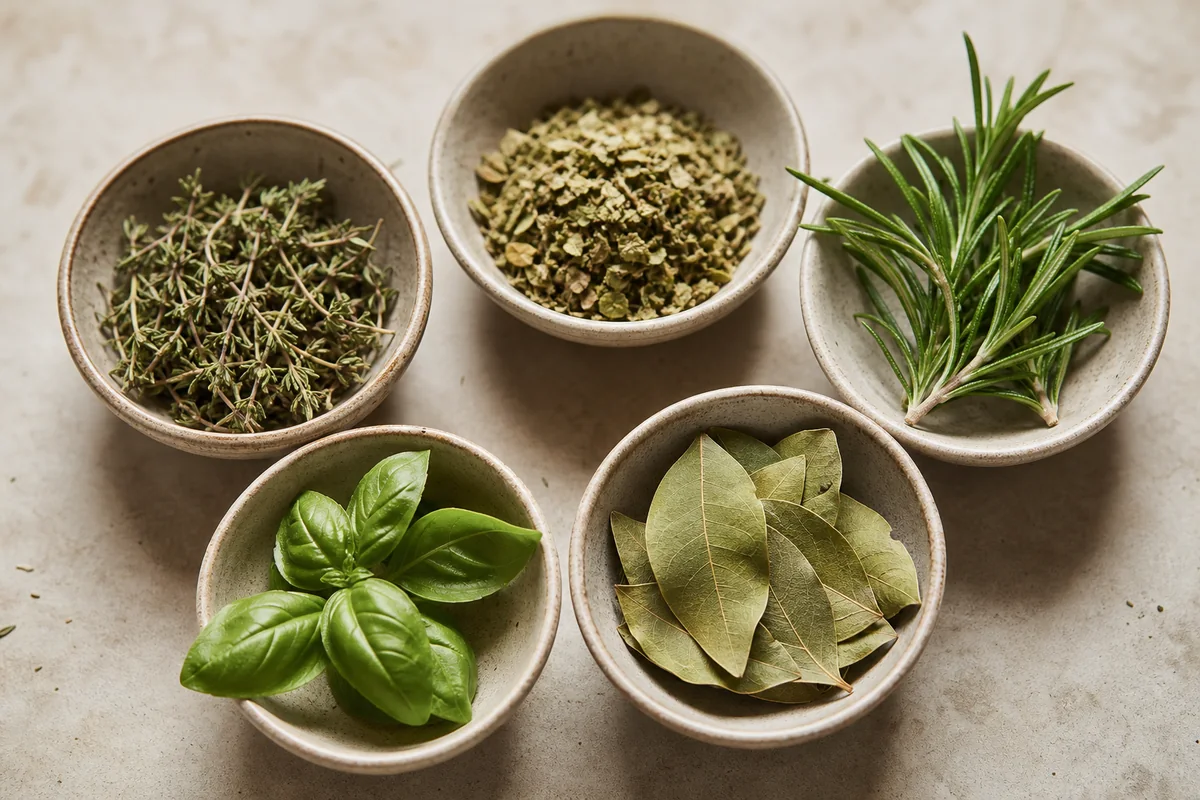
5 Best Bay Leaf Substitutes (Flavor-Matched)
Ingredients
Equipment
Method
- Identify your dish style (soups/stews/braises vs rice) and decide whether you need mostly woody-herbal aroma or a slightly spiced depth.
- Choose the closest match from the table: start with Turkish bay leaf; if unavailable, use oregano for a bay-leaf-like herbal background.
- Apply the ratio by substituting the listed amount for each bay leaf you would have used.
- If your substitute is smaller/granular (oregano, thyme, cumin), crush or toast briefly, then simmer 5-10 minutes so it blooms.
- Taste after simmering: if the flavor is too strong, reduce by steeping for less time next batch; if bland, extend simmering.
Notes
- Simmering time matters: bay leaf and bay-leaf-like herbs need a few minutes in hot liquid to release aroma.
- For strong substitutes (rosemary, cumin), start low-bay leaf is meant to be a background fragrance, not a headline flavor.
Tried this recipe?
Let us know how it was!
Carrie is a food writer and editor with more than 15 years of experience. She has worked for some of the biggest names in the food industry, including Bon Appétit, Food & Wine, and Martha Stewart Living.
As the Editor in Chief of EpicureDelight, Carrie oversees all of the content on the site. She also manages the team of contributing writers and editors, who help to create delicious recipes, helpful tips, and informative articles that you’ll find on the site.
A native of the Chicago area, Carrie is passionate about all things food. She loves trying new restaurants and experimenting with new recipes in her kitchen. She’s also a graduate of the Culinary Institute of America, so she knows a thing or two about food!



