
Benedictine liqueur has a personality that's hard to fake: sweet honey up front, a flicker of orange, then that dry herbal-bitters finish that lingers.
Most substitutes nail one of those layers but miss the others, so knowing which layer matters most in your recipe is the real starting point.
Benedictine liqueur substitute choices fall into three flavor directions: honey-sweet and spiced (Drambuie), herbal and bitter (Chartreuse, amaro), or orange-forward (Cointreau, Triple Sec with honey).
If you know which direction your recipe leans, the swap becomes obvious. For more on orange liqueur options, see cointreau alternatives and replacements for yellow chartreuse if your recipe wants something lighter and less boozy.
The closest benedictine liqueur substitutes are Drambuie (honey-spiced, 1:1), Green Chartreuse (herbal-bitter, ¾:1), orange liqueur + honey (citrus-sweet, 1:1), amaro + orange zest (herbal backbone), and a DIY honey-orange-bitters mix for baking from scratch.
5 Best Benedictine Liqueur Substitutes, Ranked by Flavor Match
Before reading the deep dives, scan this table to find your swap fast.
| # | Substitute | Best For | Ratio | Key Note |
|---|---|---|---|---|
| 1 | Drambuie | Both | 1:1 | Can run too sweet |
| 2 | Green Chartreuse | Both | ¾:1 | Bitter; soften with honey |
| 3 | Orange Liqueur + Honey | Both | 1:1 | Lacks herbal depth |
| 4 | Amaro + Orange Zest | Both | 1:1 | Can taste medicinal |
| 5 | DIY Honey-Orange-Herb Mix | Baking | 1:1 | Needs taste-testing |
1. Drambuie
Drambuie is the single closest all-around swap. It shares Benedictine's honey-spiced sweetness and has enough complexity from Scotch whisky and herb infusion to feel like it belongs in the same recipe.
For cocktails, use it 1:1 with no adjustments. For baking, if your recipe already calls for honey or brown sugar, pull the Drambuie back by about 2 tablespoons per cup to avoid an oversweet finish.
You can read more about how it behaves across different recipes in our guide to drambuie substitutes.
Drambuie vs Benedictine
Works for: glazes, cake soaks, whisky-based cocktails, spiced fruit cakes, dark ganache sauces
Skip if: your recipe already uses a lot of honey or maple and can't handle added sweetness
- Glazes and cake soaks: Use 1:1; brush warm so it absorbs instead of pooling on top.
- Cocktails: Drop straight in at 1:1; the Scotch base adds warmth without sharpness.
- Very sweet batters: Reduce Drambuie by 10-20% and add a small pinch of dried thyme to restore herbal lift.
Skip if: Your batter or glaze is already saturated with sweeteners and you want the herb character, not more honey.
2. Green Chartreuse
Green Chartreuse is intensely herbal and dry, which makes it useful when you want Benedictine's bitters dimension without added sweetness. The problem is volume: at 1:1, it can steamroll every other flavor in the dish.
When replacing green chartreuse in other recipes is something you've navigated before, you'll recognize how assertive this spirit is.
Use ¾ of the Chartreuse for every 1 part Benedictine the recipe calls for. Add a teaspoon of honey per quarter cup to recover sweetness without drowning the herbal notes.
- Spice cakes and dark glazes: Use ¾:1 and stir in 1 teaspoon honey to soften the edge.
- Cocktails: Start with ¾ measure; taste and add more if the herbal bite isn't strong enough.
- Aroma boost: A drop of vanilla extract rounds out Chartreuse's sharper notes in baking applications.
Skip if: You want a sweeter, gentler swap and your recipe is delicate enough to be overwhelmed by herbal bitterness.
3. Orange Liqueur + Honey
When your recipe is pulling on Benedictine's orange-forward sweetness rather than its herbal depth, a combination of Cointreau or Triple Sec plus a small measure of honey lands surprisingly close.
Understanding the flavor of triple sec helps here-it's bright and slightly bitter on its own, so the honey does double duty: it adds body and tones down the citrus sharpness.
Combine 1 part orange liqueur with ½ teaspoon of honey per tablespoon of liqueur before adding to the recipe.
- Ratio: Start at 1:1 total volume (liqueur + honey blended), then adjust up or down by 1 tsp.
- Best uses: Citrus pound cake soaks, cream cheese glazes, orange-scented shortbread batters.
- Avoid: Recipes with heavy vanilla or almond flavor-the orange will fight those profiles.
- Tip: Triple Sec works fine; Cointreau is smoother and needs slightly less honey to balance.
Skip if: Your recipe needs Benedictine's herbal-bitters depth. Orange liqueur alone won't provide it, even with honey.
4. Amaro + Orange Zest
Amaro gives you the herbal-bitter spine of Benedictine without the honey sweetness, which is useful in recipes where you're adding your own sugar anyway. Averna is the most accessible style: not too medicinal, with a gentle caramel undercurrent that plays well in baked goods.
The orange zest is the non-negotiable part of this swap. Without it, amaro alone reads flat or faintly pharmaceutical.
For tips on getting the most aroma from your citrus, see our comparison of dried orange zest vs fresh.
- Ratio: Use 1:1 amaro, then add the zest of half an orange per 2 tablespoons of liquid.
- Baking fit: Brown butter cookies, spiced fruit cakes, dark chocolate loaves.
- Too bitter? Add ½ teaspoon honey per 2 tablespoons of the swap and stir before measuring into the batter.
- Cocktails: Works well in stirred drinks; less suited to bright, citrus-forward shaken cocktails.
Skip if: You need a purely sweet substitute with zero bitterness.
5. DIY Honey-Orange-Herb Mix
This is for when the pantry has no specialty bottles at all. The goal is to layer honey (sweetness + body), fresh orange zest (citrus lift), a small measure of Angostura bitters (the herbal edge), and a drop of vanilla into a cohesive mix that approximates Benedictine's profile.
| Use | Ratio | Notes |
|---|---|---|
| Glaze | 1 tablespoon honey + 1 tablespoon orange juice + 2 dashes bitters | Warm before brushing; use immediately |
| Cake soak | 2 tablespoon honey + 2 tablespoon orange juice + 3 dashes bitters + ¼ teaspoon vanilla | Let soak absorb 10 min before slicing |
| Batter | 1:1 volume vs Benedictine called for | Steep zest 5-10 min first; strain before adding |
Once the mix is made, taste it before adding it to the recipe. If it's too sharp, add another ½ teaspoon of honey.
If it's flat, add one more dash of bitters and a small pinch of dried thyme. This DIY base also works in a simple cocktail-try stirring it into a honey mustard chicken and veggies marinade if you want a savory application for any leftovers.
- Scale up: Multiply all quantities by the number of tablespoons the recipe needs; the ratios hold.
- For glazes: Warm the mix slightly so honey dissolves fully before brushing.
- For cocktails: Shake well with ice; the honey needs agitation to incorporate.
Skip if: You don't want any bittering agents in your baking and prefer a purely sweet shortcut.
Making Benedictine Liqueur Substitutes Work
The simplest decision rule: if your recipe is sweet-focused, go Drambuie; if it's herbal-bitter, go Chartreuse or amaro; if it's citrus-forward, go orange liqueur with honey. For triple sec users who find their swap too sharp, a small honey addition fixes that in seconds.
- Too sweet: Pull the substitute back by 1-2 tablespoons and replace lost volume with a neutral spirit or extra liquid the recipe already uses.
- Too bitter: Stir in ½ teaspoon of honey per 2 tablespoons of substitute before adding to batter; taste again before committing.
- Too flat (no herbal aroma): Add 1-2 dashes of Angostura bitters and a pinch of dried thyme to restore the herbal lift Benedictine normally provides.
Frequently Asked Questions
Yes for most substitutes, with one exception: use Green Chartreuse at ¾:1 since it's significantly more bitter and herbal than Benedictine at equal volumes.
Drambuie is the closest match for honey-spiced warmth, using a straight 1:1 swap. Reduce slightly if your recipe already includes other sweeteners.
Stir in ½ teaspoon of honey per 2 tablespoons of the substitute before adding it to the batter. A tiny pinch of salt also helps lift sweetness perception.
Orange liqueur (Cointreau or Triple Sec) combined with honey is the best fit. It matches the citrus-sweet layer without adding bitter or smoky undertones.
Yes: combine 1 tablespoon honey, 1 tablespoon orange juice, and 2 dashes Angostura bitters. Shake well with ice before using; the honey must fully dissolve.
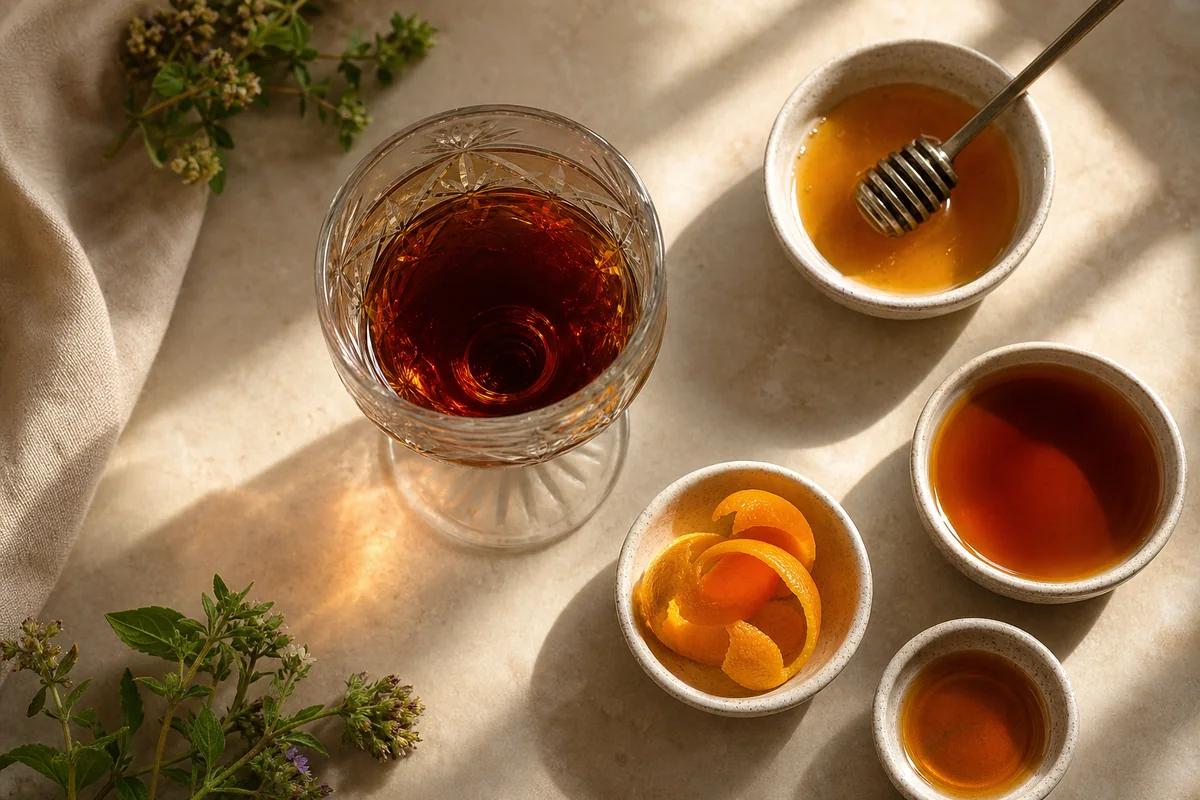
5 Best Benedictine Liqueur Substitutes (Ranked)
Ingredients
Equipment
Method
- Choose your match: pick Drambuie for honey-sweet closest flavor, Chartreuse for herbal bite, or orange liqueur + honey for the citrus profile.
- Swap using the listed ratio; if your recipe is already sweet, start slightly low (about 10-20%) and add only if the flavor needs depth.
- For herbal-bitter swaps (Chartreuse/amaro), keep other bittering agents modest so you don't overshoot on bitterness.
- For DIY mixes in baking, steep orange zest briefly (5-10 minutes) for stronger aroma, then mix into the batter/glaze.
- Taste after combining with other ingredients-adjust with a tiny pinch of salt (to lift) or a small honey drizzle (to round).
Notes
- If you're swapping in a cooked/baked recipe, strongly flavored herbal liqueurs can read louder-reduce slightly and then adjust.
- If your recipe is very citrus-heavy, favor honeyed swaps (Drambuie or orange liqueur + honey) over bitters-forward amaro.
Tried this recipe?
Let us know how it was!
Carrie is a food writer and editor with more than 15 years of experience. She has worked for some of the biggest names in the food industry, including Bon Appétit, Food & Wine, and Martha Stewart Living.
As the Editor in Chief of EpicureDelight, Carrie oversees all of the content on the site. She also manages the team of contributing writers and editors, who help to create delicious recipes, helpful tips, and informative articles that you’ll find on the site.
A native of the Chicago area, Carrie is passionate about all things food. She loves trying new restaurants and experimenting with new recipes in her kitchen. She’s also a graduate of the Culinary Institute of America, so she knows a thing or two about food!



