
Drambuie pulls off something specific: honeyed sweetness, a warming Scotch base, and a faint orange-citrus lift that makes it taste more layered than most liqueurs. That combination is what recipes actually need when they call for it.
Understanding those three elements separately makes substitution much easier.
The honey note matters most. It is what gives Drambuie its body in glazes and its lingering sweetness in baked goods.
A spirit alone will not replicate that viscosity. You need something that carries both alcohol warmth and a thick, floral sweetness.
The good news is that several pantry liquids can approximate this. A few DIY blends come remarkably close, and some single-bottle swaps work well enough that most diners would never notice.
Here is what you need.
The best drambuie substitute matches three things: a spirit base, honey-like sweetness, and a hint of citrus warmth. Scotch + honey is the closest DIY blend. For single-bottle swaps, amaretto or sweet vermouth with whisky both work in baking and glazes with minor adjustments.
5 Best Drambuie Substitutes, Ranked by Dish Type
Use this table for a fast ratio check before choosing your substitute. All ratios are measured against the amount of Drambuie your recipe calls for.
| # | Substitute | Best For | Ratio | Key Note |
|---|---|---|---|---|
| 1 | Scotch whisky + honey | Both | 1:1 | Closest flavor structure match |
| 2 | Cognac + honey + orange zest | Baking | 1:1 | Brighter citrus top note |
| 3 | Oloroso sherry + honey | Sauce | 1:1 | Nutty caramel depth |
| 4 | Sweet vermouth + whisky | Glaze | 1:1 | Herbal sweetness, easy to find |
| 5 | Amaretto + honey | Baking | ¾:1 | Use less; very sweet |
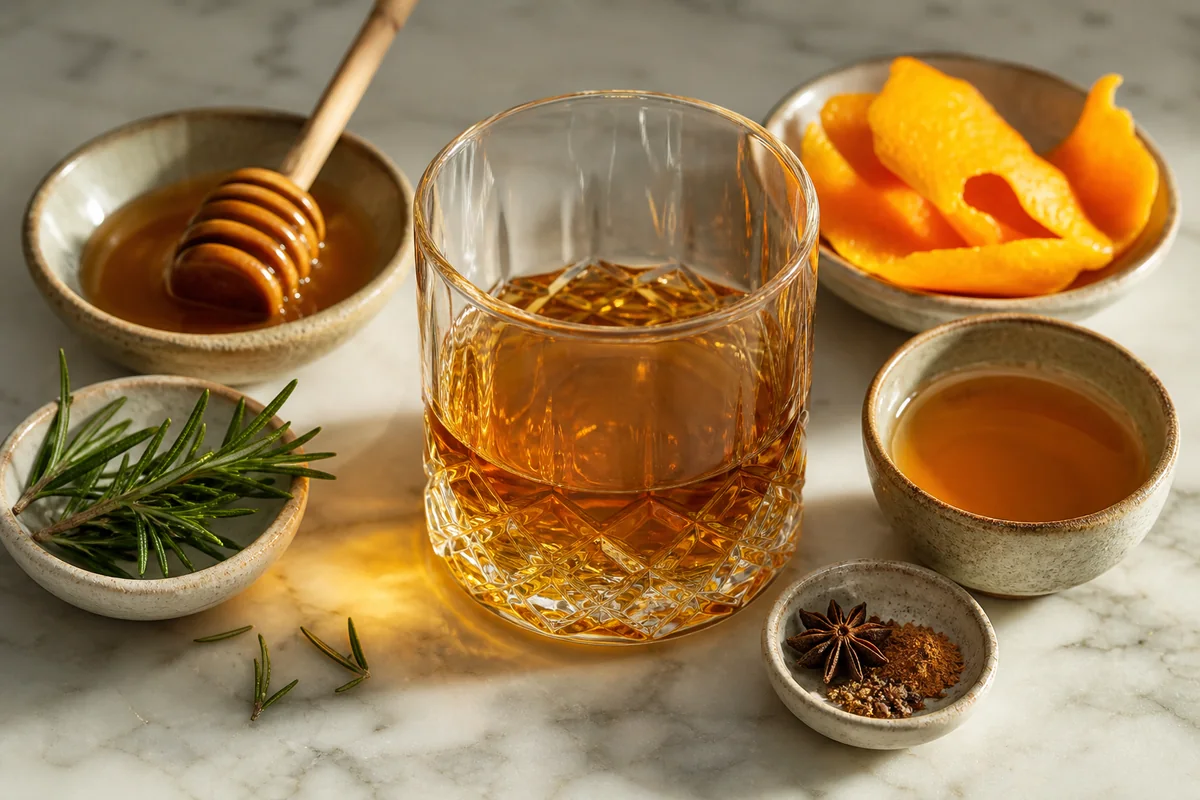
1. Scotch Whisky + Honey
This is the most structurally honest swap. You are rebuilding Drambuie from its two core ingredients, which means the flavor direction stays accurate.
The Scotch provides warmth and a faint smokiness. The honey gives body and that lingering floral sweetness.
Mix 2 parts Scotch to 1 part honey and stir until the honey fully dissolves. This blend performs best in glazes, dessert sauces, and anything where the whisky-versus-Irish spirit distinction actually shapes the final taste.
Scotch Whisky + Honey
Works for: glazes, pound cake soaks, caramel sauces, spiced desserts
Skip if: your recipe leans almond, vanilla, or dairy-forward (this adds none of those notes)
- Ratio: 2 parts Scotch to 1 part honey, then use the blend at 1:1 with the Drambuie amount
- Citrus boost: Add a small strip of orange peel while warming if your recipe needs that aromatic lift
- Best timing: Stir in during the last few minutes of cooking or drizzle over baked goods warm from the oven
2. Cognac + Honey + Orange Zest
Cognac reads fruitier and slightly brighter than Scotch. That is not a flaw here.
It is actually useful in recipes where you want Drambuie's citrus top note to come through more clearly, like in pound cake glazes or spiced loaves.
The key is using zest, not juice. Fresh dried versus fresh zest is a real difference in intensity, and fresh zest here adds aroma without adding water.
Mix cognac and honey at 2:1, then stir in about half a teaspoon of zest per quarter cup of liquid.
- Ratio: 2 parts cognac to 1 part honey, plus ½ teaspoon fresh orange zest per ¼ cup blend
- Zest tip: Stir zest in after combining the liquids so it does not clump in the honey
- Best uses: Pound cakes, spiced bundt glazes, fruit tarts, and honey-cream sauces
- Skip if: You want a smoky, Scotch-forward finish (cognac reads fruity and clean by comparison)
3. Oloroso Sherry + Honey
Oloroso sherry is dry, nutty, and carries a natural caramel-toffee depth that pairs well with honey. Alone it is too dry and wine-forward for most Drambuie recipes.
But add honey and the combination shifts into a genuine fortified-liqueur territory.
This swap is one of the better options for honey flavor profiles in baking because it layers two sources of sweetness, one from the sherry's oxidative nuttiness and one from the honey itself.
- Ratio: 1:1 with Drambuie; stir 1 tablespoon honey into every 3 tablespoon sherry before using
- Taste check: Sherry varies by producer, so taste the blend before adding. Adjust honey by half a teaspoon at a time
- Best uses: Brown butter cakes, caramel sauces, toffee puddings, and pan sauces for pork or duck
- Skip if: Your recipe needs a light, golden-colored finish. Oloroso can push batter or sauce toward a darker amber.
4. Sweet Vermouth + Whisky
Sweet vermouth is already a fortified, slightly herbal wine with its own sugary backbone. Blended with a whisky, it approximates Drambuie's general character well enough for glazes and spiced bakes where the herbal edge is welcome rather than intrusive.
Use equal parts sweet vermouth and bourbon or Scotch. The vermouth covers sweetness and complexity; the whisky restores the spirit warmth Drambuie carries.
For anyone working with vermouth in glazes, the combination is more balanced than either liquid alone. If the herbal note feels sharp after mixing, add a small drizzle of honey and stir again to round it out.
Skip this if you dislike bittersweet or botanical flavors. Vermouth is honest about its herbal character and it will come through in the finished dish.
5. Amaretto + Honey
Amaretto is an emergency option, not a true match. It does not have Scotch warmth or heather notes.
What it does have is strong liqueur intensity, a deep almond sweetness, and enough alcohol presence to behave correctly in cakes and cookie batters.
If you are choosing almond liqueur baking swaps in a pinch, a small honey addition pulls the flavor a little closer to Drambuie's honey-forward profile without overwhelming the batter.
- Ratio: Use ¾ the Drambuie amount, then stir in 1 teaspoon honey per 2 tablespoon amaretto
- Why it works: Almond sweetness and liqueur viscosity hold up well in baked goods that need body and moisture
- Best pairings: Recipes with chocolate, stone fruit, or vanilla already in them (the almond integrates well)
- Skip if: The recipe depends on Scotch warmth or a smoky finish (amaretto will shift the whole flavor direction toward almond)
Making a Drambuie Substitute Work (Ratios + Adjustments)
The adjustment order matters. Match sweetness and body first, then citrus aroma, then spice intensity last.
Adding honey late in the process is easier to control than trying to correct a syrupy batter that has already gone too thick. For fortified wine swaps, start with the lower end of the honey range because sherry and port already carry natural sweetness.
If the substitute uses cognac-forward flavors, the fruitiness will integrate better with a light hand on the honey.
- Fine-tuning sweetness: Reduce honey by half a teaspoon at a time if the blend feels sticky or overpowering; add more after tasting, not before
- Baking vs. finishing: In baked goods, add the substitute with the wet ingredients; for sauces or glazes, stir it in off-heat to keep the aroma from cooking off
- Managing color: Port and Oloroso sherry can darken pale batters; if color matters, use the Scotch-honey or cognac blend instead
Frequently Asked Questions
Plain whisky works but lacks Drambuie's sweetness and body. You need to add at least one teaspoon of honey per two tablespoons of whisky, or the baked result will taste too sharp.
Mix 2 parts Scotch to 1 part honey and use the blend at a true 1:1 ratio. This is the closest match available without buying a specialty liqueur.
Oloroso sherry is amber-colored and can tint pale batters slightly. It is most noticeable in lighter cakes. Use the Scotch-honey blend instead if color matters to your recipe.
Add a teaspoon of honey to round the botanical edge. Using bourbon instead of Scotch also softens vermouth's herbal sharpness with a milder, vanilla-forward warmth.
It works if you reduce the amount to three-quarters of the Drambuie called for. The almond note will be present, but honey-forward recipes absorb it well without tasting off.
5 Best Drambuie Substitutes (Honest Picks)
Ingredients
Equipment
Method
- Identify your use: baking (cake/cookie), glaze/sauce, or a finishing drizzle; choose the substitute closest to that behavior.
- Match sweetness first: start with the 1:1 ratio, then reduce honey/liqueur base if the batter or sauce turns overly sticky.
- Add citrus aroma if needed: mix in a small amount of orange zest for DIY whisky/cognac swaps to mimic drambuie’s lift.
- Adjust thickness: if the substitute is thinner than drambuie, let the sauce simmer briefly (or bake longer) to concentrate.
- Taste after cooking: for baking, check near the end of bake time; for sauces, taste off-heat and fine-tune with a tiny pinch of salt or more honey.
Notes
- For any DIY whisky/cognac swap, honey is the key driver of drambuie’s body and sweetness.
- Orange zest (not orange juice) gives aromatic lift without adding excess water.
Tried this recipe?
Let us know how it was!
Carrie is a food writer and editor with more than 15 years of experience. She has worked for some of the biggest names in the food industry, including Bon Appétit, Food & Wine, and Martha Stewart Living.
As the Editor in Chief of EpicureDelight, Carrie oversees all of the content on the site. She also manages the team of contributing writers and editors, who help to create delicious recipes, helpful tips, and informative articles that you’ll find on the site.
A native of the Chicago area, Carrie is passionate about all things food. She loves trying new restaurants and experimenting with new recipes in her kitchen. She’s also a graduate of the Culinary Institute of America, so she knows a thing or two about food!



