
Black pepper sits at the center of nearly every spice rack, and black pepper's flavor profile is harder to replicate than most cooks expect.
The piney heat comes from piperine, a compound with a slow, building bite, and the volatile aromatics fade quickly once ground, meaning even a "fresh" jar can fall flat if stored exposed to air.
Finding a true one-to-one replacement isn't realistic.
What we can do is match the job black pepper is doing in a specific dish, whether that's background heat in a béchamel, visible speckle on a steak, or warmth in a spice cookie.
Ground white pepper is the best overall swap for cooked dishes at a 1:1 ratio, though its aroma is milder and slightly earthier than black pepper. For baking, finely ground pink peppercorns work well at 1:1 when a light pink tint is acceptable. In an emergency, ground cumin fills the heat gap at ½ teaspoon per 1 teaspoon black pepper.
5 Best Substitutes for Black Pepper to Try
Here are the five most practical replacements ranked by kitchen application, with exact ratios and the sensory trade-offs you'll notice right away.
| # | Substitute | Best For | Ratio | Key Note |
|---|---|---|---|---|
| 1 | Ground White Pepper | 🍳 Cooking | 1:1 | Milder, no visible specks |
| 2 | Pink Peppercorns (ground) | 🧁 Baking | 1:1 | Fruity, slight pink tint |
| 3 | Crushed Red Pepper | 🍳 Cooking | ⅓-1/2 teaspoon per 1 tsp | Hotter, no piney aroma |
| 4 | Ground Coriander | ✨ Both | 1:1 | Citrusy, zero heat |
| 5 | Ground Cumin | 🍳 Cooking | ½ teaspoon per 1 tsp | Earthy, emergency use only |
Common Mistakes When Swapping Black Pepper
Most substitution errors come down to mismatched heat levels or ignoring how a swap looks in the finished dish.
- Too much heat: Using crushed red pepper at 1:1 can double perceived heat; start at ⅓ teaspoon per 1 teaspoon black pepper and taste after two minutes of simmering.
- Whole spices in batter: Whole peppercorns or coarsely cracked pink peppercorns create hard, unpleasant bits in cakes; grind them fine before adding to any batter.
- White pepper as a raw finish: White pepper's fermented processing gives it a musty edge when used raw; it belongs in cooked or covered dishes, not cracked over a salad.
1 - Ground White Pepper
Ground white pepper is black pepper's closest functional cousin. Both come from the same plant, but white pepper is fermented and hulled, which strips away some top-note aromatics while keeping the piperine heat.
Use a 1:1 ratio in cooked dishes like soups, cream sauces, and mashed potatoes.
For raw applications, pull back to ¾ teaspoon per 1 teaspoon black pepper to avoid the musty fermented edge.
It's the go-to for béchamel and other light-colored sauces where black specks are visually unwanted, and you can read more about white pepper's flavor profile before committing to the swap.
- Ratio: 1:1 in cooked dishes; reduce to ¾ for raw use.
- Best applications: Béchamel, cream soups, mashed potatoes, pale gravies.
- Aroma gap: Expect less top-note brightness; the heat stays but the piney lift fades.
- Avoid raw: The earthier fermented note is noticeable without heat to mellow it.
Ground White Pepper
Works for: Cooked sauces, soups, pale dishes where black specks are unwanted
Skip if: You need a fresh-cracked finish or a bright aromatic top note
2 - Pink Peppercorns (ground)
Pink peppercorns aren't true pepper. They come from the Schinus molle and Schinus terebinthifolius family and carry citrusy, floral, resinous notes rather than piperine heat. That distinction matters when you choose where to use them.
For baking and finishing, the 1:1 ratio works well as long as a light pink tint in your dish is acceptable. They're noticeably milder and slightly sweet in savory sauces, so they won't replicate the sharp bite of black pepper.
If you want to understand what pink peppercorn brings to a dish before swapping, that context helps set expectations.
- Ratio: 1:1 for baking and finishing applications.
- Flavor gap: Milder, fruity, and slightly sweet; no piperine punch.
- Color note: Adds a faint pink tint to batters and light sauces.
- Best uses: Spice cookies, compound butter, finishing a pan sauce.
3 - Crushed Red Pepper (chili flakes)
Crushed red pepper delivers heat, but it's capsaicin heat, not piperine heat. The two compounds feel different: capsaicin hits the front of the mouth and fades faster, while piperine builds slowly at the back of the throat.
Start at ⅓ teaspoon crushed red pepper per 1 teaspoon black pepper and increase cautiously. It works well in stews, tomato sauces, and stir-fries where a chili note is welcome, but it completely lacks the piney aromatics of black pepper.
If you need guidance on common white pepper swaps for comparison, that article shows how different heat profiles stack up.
- Ratio: Start at ⅓ tsp; move to ½ teaspoon only after tasting.
- Heat type: Capsaicin, not piperine; faster fade, different mouthfeel.
- Best dishes: Tomato sauce, chili, stir-fry, braised meats.
- Avoid in: Cream sauces, delicate baking, or any dish where chili flavor clashes.
Crushed Red Pepper
Works for: Cooked savory dishes, tomato-based sauces, spice blends needing heat
Skip if: The recipe needs piney aromatics or a mild, even heat without chili character
4 - Ground Coriander
Ground coriander won't replicate heat, but it adds warmth and complexity through linalool, a floral-citrus aromatic compound. Think of it as black pepper's mellow stand-in when the dish needs spice character without bite.
Use a 1:1 starting ratio for general cooking, braised chicken, pork, and cumin-heavy spice blends where coriander fits naturally.
In cookies or pastries, reduce to ¾ teaspoon per 1 teaspoon black pepper; the citrus notes can read as sharp in delicate baked goods.
For a side-by-side look at how coriander and cumin relate, the key differences between them are worth reviewing before building a spice blend.
- Ratio: 1:1 for savory cooking; ¾ teaspoon per 1 teaspoon in pastries.
- Flavor gap: Zero heat; gains floral-citrus top notes from linalool.
- Best pairings: Cumin-based blends, braised pork, roasted chicken.
- Caution in baking: Citrus edge can overpower delicate cookie or cake batters.
By Cooking Application
| Use | Ratio | Notes |
|---|---|---|
| Baking | 1:1 | Pink peppercorns (finely ground); watch for pink tint in pale batters |
| Cooked Savory | 1:1 | White pepper; best in sauces, soups, and mashed dishes |
| Emergency / Spicy | ⅓-1/2 teaspoon per 1 tsp | Crushed red pepper; start low and adjust after 2 minutes of cooking |
5 - Ground Cumin
Ground cumin is an emergency swap, not a flavor match. It brings earthy warmth, but none of black pepper's sharp, piney bite. Use ½ teaspoon cumin for every 1 teaspoon black pepper in savory dishes to avoid the earthiness taking over.
Toast cumin in a dry pan for 30 to 60 seconds before adding liquids. This blooms the volatile oils and makes the swap more aromatic rather than flat and dusty.
Avoid it in cream sauces or baking entirely since cumin's oils can turn bitter above roughly 350°F with prolonged heat.
- Ratio: ½ teaspoon ground cumin per 1 teaspoon black pepper.
- Toast first: 30-60 seconds in a dry pan to bloom aroma before adding to the dish.
- Best in: Chili, tagine, bean dishes, and robust braised recipes.
- Avoid in: Cream sauces, baked goods, or any delicate dish where earthiness clashes.
Flavor and Texture Differences at a Glance
Each substitute leaves a different gap. Knowing what you'll lose helps you compensate.
White pepper keeps most of the heat and blends invisibly into light dishes, but you lose the visible black specks and the bright top-note aromatics. Pink peppercorns trade sharp piperine heat for fruity, resinous notes and add a faint pink color, so they work better as a flavor accent than a heat source.
Crushed red pepper ramps up heat past black pepper's level per volume, and the piney aroma disappears entirely. Ground coriander removes heat completely and replaces it with floral-citrus warmth from linalool, making it the gentlest swap. Ground cumin loses the sharp heat and can add bitterness if overcooked, which is why it stays in the emergency column.
Frequently Asked Questions
Use white pepper at a ¾ ratio rather than 1:1 for raw applications, and mix it with a small amount of lemon zest to add the brightness that fermented white pepper lacks. White pepper's musty edge is most noticeable uncooked, so reducing the amount and adding acid helps balance the finish. Avoid using it as a straight drop-in replacement on salads or crudo dishes.
Finely ground pink peppercorns at 1:1 are the top pick for spiced cookies when a slight pink tint is acceptable. For a more neutral flavor, use ¾ teaspoon ground coriander per 1 teaspoon black pepper; it adds warmth without the citrus note overpowering a delicate dough. Grind any whole spices to a fine powder before adding to batter to avoid hard bits.
Start at ⅓ teaspoon crushed red pepper for every 1 teaspoon black pepper, then taste after two minutes of simmering before adding more. Capsaicin heat builds more aggressively than piperine and is harder to dial back once it's in the pot. Increase in small increments, no more than ⅛ teaspoon at a time, until you reach the heat level you want.
No, the cooking time stays the same, but a brief 30 to 60 second toasting step before adding liquids is worth the extra effort. Toasting blooms cumin's volatile oils and gives the swap a more rounded, aromatic result rather than a flat, raw-spice taste. Add the toasted cumin at the same point in the recipe where you would have added black pepper.
Pink peppercorns from the Schinus family can cross-react with tree-nut and cashew allergies in some individuals because both belong to related plant families. Anyone with a known tree-nut or cashew allergy should check allergen labels carefully and consult a doctor or allergist before using pink peppercorns. If you need working without pink peppercorn as an option, that article covers safe alternatives.
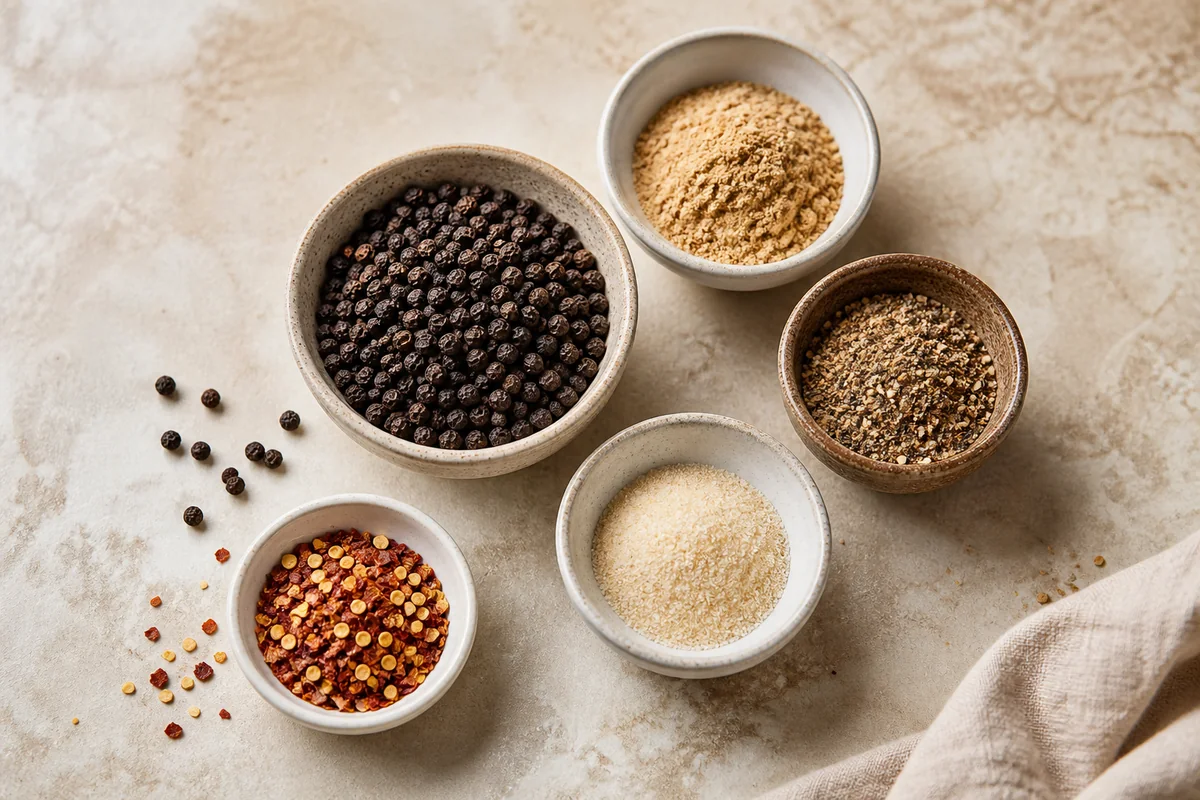
5 Best Black Pepper Substitutes for Any Recipe
Ingredients
Equipment
Method
- Choose the substitute by application (baking vs cooked vs raw). Follow the ratio noted in the ingredient note for initial measurement.
- If the substitute is a whole spice (pink peppercorns, crushed red pepper), grind or crush finely to match black pepper’s mouthfeel.
- After adding the substitute at the stated ratio, taste after a short cook (2–5 minutes) and adjust: add ¼ increments of the substitute or compensating acid/salt.
- For emergency swaps (cumin or coriander), compensate flavor by adding ¼ teaspoon lemon zest or ⅛ teaspoon sugar as needed to mimic brightness lost from black pepper.
Notes
- All ratios are starting points—taste and adjust.
- When swapping into raw dishes, reduce pungent substitutes by ~25% to avoid off-notes.
Tried this recipe?
Let us know how it was!
Carrie is a food writer and editor with more than 15 years of experience. She has worked for some of the biggest names in the food industry, including Bon Appétit, Food & Wine, and Martha Stewart Living.
As the Editor in Chief of EpicureDelight, Carrie oversees all of the content on the site. She also manages the team of contributing writers and editors, who help to create delicious recipes, helpful tips, and informative articles that you’ll find on the site.
A native of the Chicago area, Carrie is passionate about all things food. She loves trying new restaurants and experimenting with new recipes in her kitchen. She’s also a graduate of the Culinary Institute of America, so she knows a thing or two about food!



