
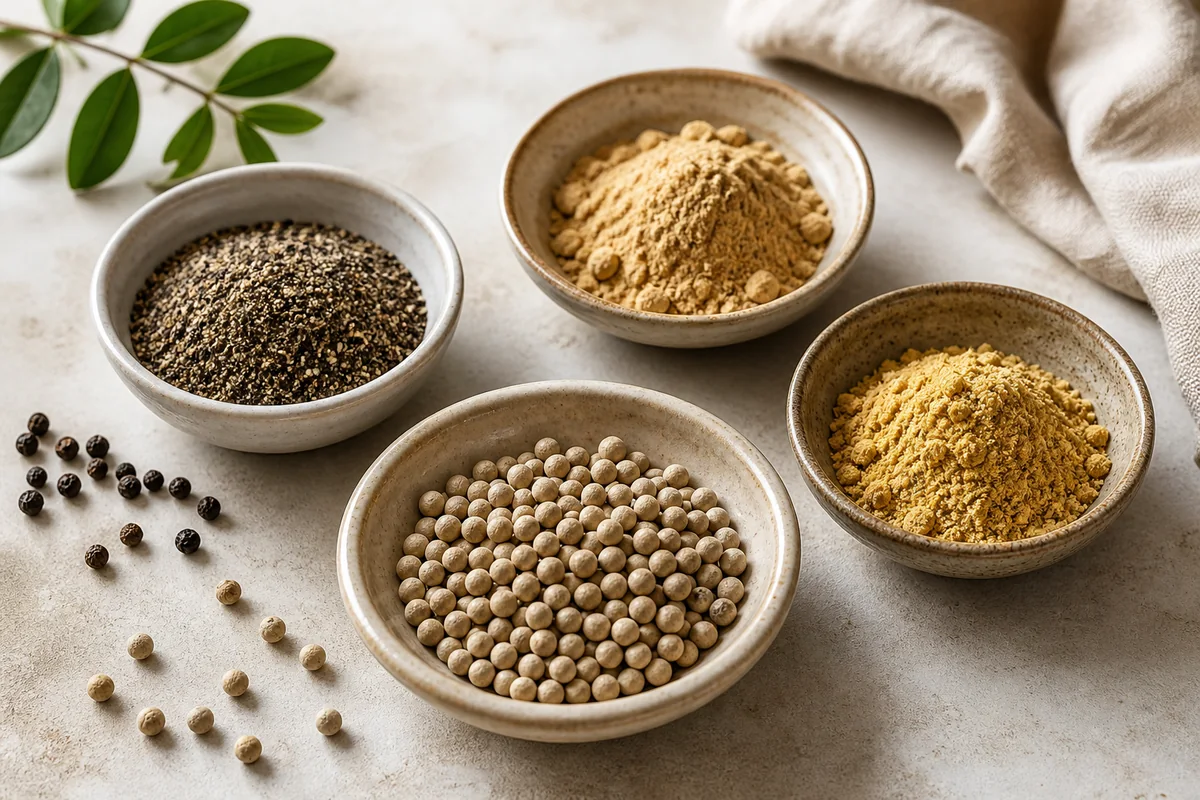
White pepper has a quieter heat than black pepper. It's earthy, slightly musty, and it blends into pale sauces without leaving dark specks behind.
A good white pepper substitute keeps that heat level and earthy backbone intact, because just swapping in "any spice" will shift the whole flavor profile.
The biggest decision is color. Black pepper is the closest flavor match, but it will darken a cream sauce or white gravy.
If your dish is light-colored and that matters, you'll need to weigh flavor against appearance.
All ratios below assume ground form. If your white pepper is whole peppercorns, grind them first before comparing amounts.
Black pepper is the closest match at a 1:1 ratio, but it darkens pale dishes. Sichuan pepper adds numbing citrus heat at half the amount. Allspice works in baked goods. Cayenne gives heat only-start at ¼ the amount. Ground ginger adds warm background spice at half the amount.
5 Best White Pepper Substitutes Ranked
The table below gives a fast reference before you read each item in detail. Choose by goal: if you need peppery earthiness, stay in the top two rows.
If you only need background heat, the bottom two rows work.
| # | Substitute | Best For | Ratio | Key Note |
|---|---|---|---|---|
| 1 | Black Pepper (ground) | Both | 1:1 | May darken pale dishes |
| 2 | Sichuan Pepper (ground) | Savory | ½:1 | Numbing citrus edge |
| 3 | Allspice (ground) | Baking | 1:1 | Rounder, warmer spice |
| 4 | Cayenne Pepper | Savory | ¼:1 | Heat only, not earthy |
| 5 | Ground Ginger | Both | ½:1 | Adds sweet-warm spice |
If you're wondering how long your ground pepper keeps before it loses heat, stale spice aging is often the real reason a dish tastes flat. Freshness matters before ratios do.
1. Black Pepper
Ground black pepper is the most direct swap for white pepper. The heat level and peppery earthiness are close enough that most tasters won't notice the difference in a seasoned dish.
The one real trade-off is visual. Black pepper leaves small dark flecks, which can affect the darker pepper flavor profile as well as color in cream soups or white sauces.
Use it freely in stews, marinades, and darker dishes where specks are invisible.
Black Pepper (Ground)
Works for: stews, gravies, meat rubs, stir-fries, any dish where color is not critical
Skip if: your recipe requires a visually clean white or pale sauce
- Ratio: 1:1 - use the same amount you'd use for white pepper
- When to add: Same stage as white pepper; works early in a simmer or as a finisher
- Color tip: In soups, stir in just before serving to minimize darkening from long heat exposure
- Grind matters: Use fine-ground, not coarse - coarse black pepper has a sharper bite that can feel unbalanced
2. Sichuan Pepper
Sichuan pepper shares white pepper's earthy quality, but it adds something extra: a mild numbing sensation and a faint citrus note. Start at half the amount and taste as you go.
- Ratio: ½:1 - use half the amount of white pepper called for, then adjust
- When to add: Add early so the numbing compound (hydroxy-alpha-sanshool) mellows slightly with heat
- Grind tip: Lightly toast whole Sichuan peppercorns before grinding for a more controlled, less sharp result
- Pairs well with: Ginger, garlic, soy-based sauces - it fits savory Asian dishes especially well
If you find Sichuan pepper overpowers your dish, checking better fitting black pepper swaps may point you toward a milder alternative.
Skip if: the dish needs purely earthy pepper heat without any numbing or citrus character.
3. Allspice (Ground)
Allspice isn't a pepper at all, but it has a warm spiced heat that works well when white pepper is playing a background role in baked goods. Think spice cakes, cookies, and spiced breads.
The flavor is rounder and sweeter than white pepper. It won't replicate the sharp peppery bite, but in a batter with cinnamon or nutmeg already present, it blends in well.
If you need a swap for choosing allspice alternatives down the line, that's worth bookmarking too.
- Ratio: 1:1 for most baked recipes; drop to ¾:1 in very delicate or lightly spiced batters
- Best uses: Spiced cakes, meatloaf, ham glazes, pumpkin dishes, mulled baked goods
- Avoid overloading: Allspice is assertive - don't add extra to compensate if you can't detect it right away
Skip if: the recipe relies on white pepper for a sharp, savory pepper bite. Allspice will push the flavor toward dessert-spice territory.
4. Cayenne Pepper
Cayenne delivers heat fast, but it's not earthy. White pepper's profile has a dry, musty pepper aroma that cayenne simply doesn't carry.
This is a heat-only swap, not a flavor match.
That said, cayenne works when the goal is warmth in the background of a dish. It's useful in soups, sauces, or marinades where you just need the dish to have some kick.
For context on swapping hot spices, the heat scale difference is significant.
Cayenne Pepper
Works for: dishes where heat is the only goal - soups, spiced oils, marinades, chili bases
Skip if: you need the earthy pepper aroma that white pepper provides
- Ratio: ¼:1 - use just one quarter of the white pepper amount to start
- Build slowly: Add a small pinch, stir, taste after 1 minute, then add more if needed
- When to add: Add during cooking rather than at the end - raw cayenne can taste sharp and unpleasant
- Color note: Cayenne adds a red-orange tint; avoid in cream sauces where appearance matters
5. Ground Ginger
Ground ginger works as a white pepper substitute when white pepper is acting as a background warmth rather than a dominant flavor. It adds its own sweetness and spice, so the dish will shift slightly, but in sauces and marinades that shift is usually pleasant.
For dishes where you're uncertain whether ginger paste or ground works better, the paste vs. powder tradeoff is worth checking before you decide which form to reach for.
| Use | Ratio | Notes |
|---|---|---|
| Savory sauce or broth | ½:1 | Ground ginger; add during cooking, not at finish |
| Marinade | ½:1 | Ground ginger; pairs well with garlic and soy |
| Baked goods | ¾:1 | Ground ginger; reduce if cinnamon is already present |
- Ratio: ½:1 for savory dishes; up to ¾:1 in baking where warmth is welcome
- When to add: Mix into sauces early so the ginger integrates; raw ginger powder added at the end can taste sharp
- Best pairings: Soy sauce, garlic, sesame oil, citrus-based marinades
Skip if: the dish flavor should stay strictly pepper-forward. Ginger's sweet warmth will nudge the flavor in a different direction.
Making White Pepper Substitutes Work
The order of decisions matters. First, check whether your dish is light-colored - if it is, black pepper is off the table visually and you'll want allspice, ginger, or a small amount of cayenne instead.
Second, match heat level: white pepper has a medium, steady heat, so check that your substitute won't spike the dish. The earthy pale spice character is what most substitutes struggle to replicate exactly, which is why starting low and tasting is the best method.
- Start at 80%: Use slightly less than the recipe calls for, taste at the end of cooking, and top up if needed
- Simmer after adding: For soups and sauces, give the substitute 1-2 minutes of heat to round out any raw sharpness before tasting
- Adjust in stages: If using cayenne or Sichuan pepper, add in two rounds - half at the start, the rest only if the heat isn't registering after simmering
Frequently Asked Questions
Ground ginger or a very small amount of cayenne are the best color-safe options. Both add warmth without the dark specks that black pepper leaves in pale broths or cream soups.
Yes, 1:1 is the right ratio for heat and flavor. The only issue is color - black pepper will darken light sauces and pale dishes.
It can in small amounts, but it only adds heat, not the earthy pepper character. Use ¼ the amount and consider pairing it with a pinch of allspice for a rounder result.
Start below the listed ratio and simmer for 1-2 minutes before tasting. A small amount of butter or cream can soften harshness if you've added too much.
Add them during cooking for most dishes so the heat integrates. Only add at the end if the recipe specifically calls for white pepper as a finishing spice.
5 Best White Pepper Substitutes That Taste Right
Ingredients
Equipment
Method
- Identify whether you need white pepper for color-neutral savory flavor or for baked-spice warmth (color matters less in baking).
- Pick the substitute from the table: use 1:1 for the closest peppery heat (or ½:1 / ¼:1 for spices that run hotter).
- Add the substitute gradually—start with about 80% of the amount you’d use for white pepper, then top up.
- For sauces/soups, simmer 1–2 minutes after adding to round out harsh edge; for baking, mix into dry ingredients first.
- Taste and adjust: increase for heat, or add a pinch of salt/butter to balance dryness or harshness.
Notes
- Color is the biggest practical difference: black pepper usually darkens.
- For recipes where white pepper is noticeable, start with closest ratios and adjust after cooking/simmering.
Tried this recipe?
Let us know how it was!
Carrie is a food writer and editor with more than 15 years of experience. She has worked for some of the biggest names in the food industry, including Bon Appétit, Food & Wine, and Martha Stewart Living.
As the Editor in Chief of EpicureDelight, Carrie oversees all of the content on the site. She also manages the team of contributing writers and editors, who help to create delicious recipes, helpful tips, and informative articles that you’ll find on the site.
A native of the Chicago area, Carrie is passionate about all things food. She loves trying new restaurants and experimenting with new recipes in her kitchen. She’s also a graduate of the Culinary Institute of America, so she knows a thing or two about food!



