
Broccoli rabe has a flavor that no other green quite copies on its own. It's bitter, a little grassy, and it softens fast in a hot pan with garlic and oil.
The reason swapping it is tricky is that most green vegetables land on the mild side. Spinach wilts but doesn't bite.
Kale bites but doesn't soften the same way. The right broccoli rabe substitute depends on whether you need the bitterness, the soft-stem texture, or both.
This guide ranks five options by how closely they match. Each one comes with a ratio and a clear note on when to skip it.
Broccoli rabe brings bitterness, tender stems, and a garlicky finish that most greens can't fully match alone. Broccolini is the closest swap at a 1:1 ratio. Turnip greens and mustard greens come next for bitterness. Kale works with trimming. Spinach is an emergency-only option.
5 Best Broccoli Rabe Substitutes Ranked by Bitterness and Texture
Use this table to pick your swap before reading the full breakdown below. Ratios are based on raw volume before cooking.
| # | Substitute | Best For | Ratio | Key Note |
|---|---|---|---|---|
| 1 | Broccolini | Both | 1:1 | Mildest, fastest cook |
| 2 | Turnip Greens | Both | 1:1 | Use young leaves only |
| 3 | Kale (Lacinato) | Both | ¾:1 | Remove ribs, chop small |
| 4 | Mustard Greens | Both | 1:1 | Blanch to cut pepper bite |
| 5 | Baby Spinach | Cooked | 2:1 | Low bitter, add lemon |
Spinach is the weakest bitterness match, so avoid it when the whole dish is built around those sharp green notes. A squeeze of lemon and extra garlic help, but they won't fully replace what broccoli rabe brings.
1. Broccolini
Broccolini is the easiest swap. Its stems are slender and cook fast, and its flavor has a gentle bitterness that sits just below broccoli rabe without tasting flat.
Use a 1:1 ratio and treat it exactly like you would broccoli rabe: hot pan, olive oil, garlic, and a couple of minutes until the stems are just tender. If the stems feel thick, blanch them for 60 seconds first.
- Cook time: 3-4 minutes in a hot oiled pan; no blanching needed for thin stems
- Finishing move: A squeeze of lemon at the end sharpens the flavor slightly
- Ratio: 1:1 by raw volume
- Skip if: You need a sharp, assertive bitterness; broccolini reads milder, so add red pepper flakes or a touch of lemon to compensate
If broccolini isn't available either, browsing similar stem-green options can turn up a few more workable picks.
2. Turnip Greens
Young turnip greens land closer to broccoli rabe bitterness than most people expect. The key word is young.
Mature leaves are tough and much more pungent, and they need longer cooking than this dish allows.
Use a 1:1 ratio, and handle stems separately. They're denser than the leaves, so give them 2 extra minutes in the pan before adding the leaves.
Knowing how to store leafy greens properly helps keep them fresh until you're ready to cook.
- Prep note: Strip stems from leaves; cook stems first, then add leaves
- Bitterness level: Close to broccoli rabe when leaves are young and tender
- Ratio: 1:1 by raw volume
- Skip if: Your turnip greens are large and dark; blanch 1 minute to soften the bite or switch to broccolini
3. Kale (Tuscan/Lacinato)
Lacinato kale has more body than broccoli rabe. It's earthier and takes longer to soften, which means a little more prep but a solid result when you trim it right.
Use a ¾:1 ratio because kale compresses more than broccoli rabe during cooking. Remove every thick rib before chopping so the leaves cook evenly.
This is also one of the longest-lasting sturdy greens in your fridge, which is handy when you're shopping ahead.
Lacinato Kale
Works for: pasta sides, white bean dishes, any recipe where a heartier leaf is fine
Skip if: you're short on prep time or need a very tender leaf; rib removal is non-negotiable
- Ratio: ¾:1 by raw volume (use slightly less kale than broccoli rabe called for)
- Rib removal: Pull or cut out the center rib; chop leaves into 1-inch pieces
- Cook time: 5-6 minutes on medium-high; taste a piece to check tenderness
- Skip if: You don't have time to trim; swap to broccolini or turnip greens for easier prep
4. Mustard Greens
Mustard greens can actually out-bitter broccoli rabe. That peppery punch is useful when you want the dish to have presence, but it needs managing so the heat doesn't take over the whole pan.
Blanching is the fix. Drop chopped mustard greens into boiling water for 30 to 60 seconds, drain, then sauté with garlic.
That step pulls the sharpest edge off without making them taste dull. If you're curious how they compare to other peppery leaves, the peppery bite of raw mustard is worth understanding before you cook.
- Ratio: 1:1 by raw volume after blanching
- Blanch time: 30-60 seconds; longer for very mature leaves
- Sauté: Finish with garlic, oil, and a pinch of red pepper flakes to keep flavor balanced
- Skip if: Your greens taste extremely sharp and you can't blanch; use turnip greens instead
5. Baby Spinach
Spinach is the emergency swap. It's mild, widely available, and cooks down fast.
None of those things sound like broccoli rabe, which is exactly why you need to lean on seasoning here.
Use a 2:1 ratio because spinach shrinks dramatically. Add this soft tender leaf to the pan at the very end, right when the garlic is golden.
A squeeze of lemon juice and extra garlic pull its flavor closer to what you need.
- Ratio: 2:1 by raw volume (use twice as much spinach)
- Cook time: 60-90 seconds maximum; pull it off heat the moment it wilts
- Flavor boost: Add lemon juice, extra garlic, and a pinch of chili flakes to mimic bitter notes
- Skip if: Your recipe's whole identity is broccoli rabe bitterness; spinach won't get you there
Making Your Broccoli Rabe Substitute Taste Right
Whatever green you pick, the finishing steps matter more than the vegetable itself. Most substitutes need a bitterness adjustment after cooking, and that adjustment usually takes less than 30 seconds.
Understanding those sharp, grassy notes in the original makes it easier to know how far your swap is from the target. When choosing between peppery options, finding the right bitter green for your dish saves a lot of last-minute guessing.
- Bitterness too low: Add a squeeze of lemon juice and half a teaspoon of red wine vinegar at the end of cooking to sharpen the flavor
- Texture too soft: Reduce total cook time by 1-2 minutes and pull the pan off heat while the greens still have a little resistance
- Flavor too flat: Double the garlic and finish with a pinch of red pepper flakes; broccoli rabe always has heat in the background
Frequently Asked Questions
Turnip greens and mustard greens are the closest in bitterness. Blanch mustard greens for 30-60 seconds first to bring the bite in line with broccoli rabe.
Yes, but use twice the volume and add lemon juice plus extra garlic. Spinach has almost no bitterness, so seasoning does the heavy lifting.
Mustard greens benefit from a 30-60 second blanch to cut their peppery sharpness. Young turnip greens are usually fine going straight into the pan.
Remove every thick rib and chop the leaves into small pieces before sautéing. Cook on medium-high for 5-6 minutes and taste for doneness.
Use 1:1 for broccolini, turnip greens, and mustard greens. Use ¾:1 for kale and 2:1 for baby spinach, which cooks down the most.
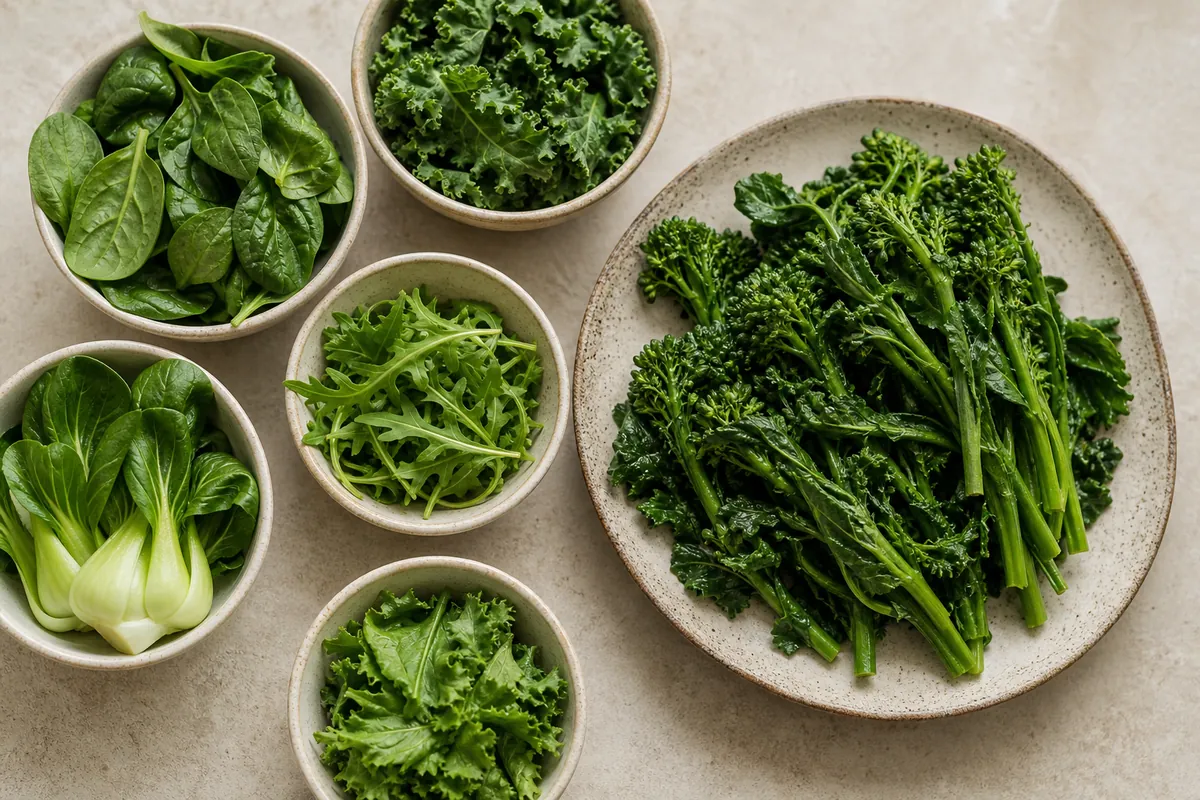
5 Best Broccoli Rabe Substitutes (with Ratios)
Ingredients
Equipment
Method
- Decide your target: broccoli rabe bitterness (closest), mild green (broccolini), or “no-bite but garlicky” (spinach).
- Use the ratio in the table: match 1:1 for greens with similar bitterness, or scale to 2:1 for spinach to replace lost bite/volume.
- Match cooking time to leaf toughness: quick-sauté broccolini; simmer stems on kale/turnip greens briefly before adding leaves.
- Finish the same way broccoli rabe is usually finished: lemon juice (or vinegar) + lots of garlic and a pinch of red pepper flakes.
- Taste and adjust bitterness: if the substitute is too sharp, blanch briefly; if it’s too mild, increase lemon and garlic rather than salt.
Notes
- Blanching is the fastest way to dial down harsh bitterness in mustard greens and very tough kale stems.
- If using spinach, add at the end (or sauté very briefly) to avoid a watery texture.
Tried this recipe?
Let us know how it was!
Carrie is a food writer and editor with more than 15 years of experience. She has worked for some of the biggest names in the food industry, including Bon Appétit, Food & Wine, and Martha Stewart Living.
As the Editor in Chief of EpicureDelight, Carrie oversees all of the content on the site. She also manages the team of contributing writers and editors, who help to create delicious recipes, helpful tips, and informative articles that you’ll find on the site.
A native of the Chicago area, Carrie is passionate about all things food. She loves trying new restaurants and experimenting with new recipes in her kitchen. She’s also a graduate of the Culinary Institute of America, so she knows a thing or two about food!



