Butterfly pea tea tastes mild, earthy, woody, and faintly floral. Its bright blue color creates a stronger expectation than the plain infusion delivers, and the flowers add little natural sweetness.
A short, balanced steep stays gentle. More flowers or a long hot steep deepen the color and can pull the flavor toward dry wood, while lemon adds tartness and shifts the cup toward purple or pink.

Butterfly pea tea has a quiet earthy and woody flavor beneath its vivid blue color. Plain flowers are not sweet, and pure flower tea has no tea-leaf caffeine, although blends may add sugar or caffeinated tea.
What Does Butterfly Pea Tea Taste Like?
The aroma is light
Dried butterfly pea flowers give a soft plant aroma rather than the perfume of jasmine tea. A fresh cup may smell faintly floral, but earth and dry hay can sit underneath.
The first sip feels mild and clean
The infusion has a thin to light body when brewed plain. It does not carry the tannic grip described in the tea taste range or the bright fruit acid of hibiscus tea.
A gentle earthy note appears in the middle of the sip. Some products lean toward green beans or peas, while others feel almost neutral.
The finish can turn woody
A well-balanced cup ends with a faint floral or dry wood note. Too many flowers, very hot water, or long contact can make that finish rougher.
Plain butterfly pea tea is not naturally sugary. Sweet cafe drinks get their sweetness from syrup, honey, fruit, or milk.
How Does Steep Strength Change Butterfly Pea Tea?
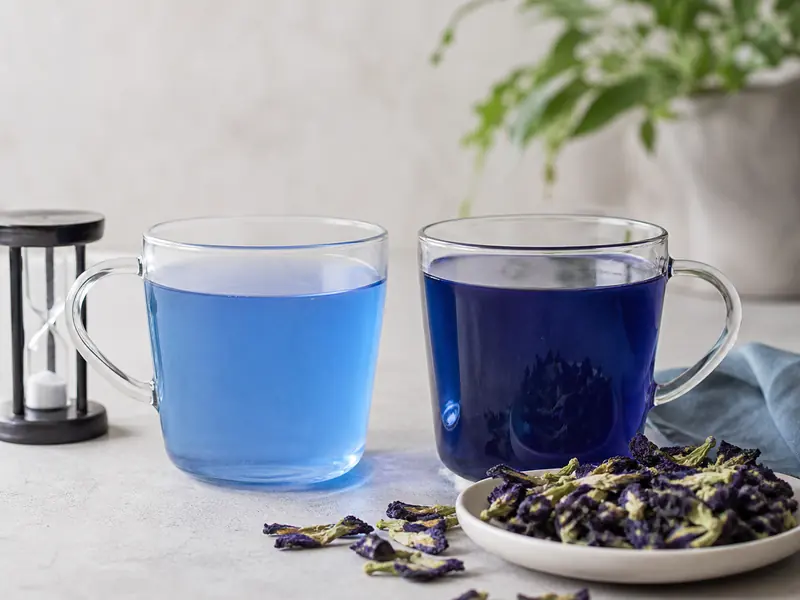
Start with the package dose because whole flowers, cut flowers, and powder release color at different speeds. Sample the cup during steeping instead of waiting for the darkest blue possible.
| Cup condition | Likely cause | Taste result | Next adjustment |
|---|---|---|---|
| Pale blue and almost neutral | Light dose or short steep | Very mild and clean | Add a few flowers next time |
| Clear deep blue | Balanced dose and time | Earthy with a light floral finish | Stop and taste before adding acid |
| Dark blue with dry finish | Long hot steep | Woody or slightly bitter | Shorten time before adding sweetener |
| Cloudy or gritty | Powder or fine particles | Heavier plant flavor | Strain through a finer filter |
Extra time never creates natural sugar. It extracts more plant material, so a thin cup can become woody before it becomes full-bodied.
If the flavor is already rough, dilute it with hot water or pour it over ice. Adding a large amount of syrup can cover the problem but does not correct the steep.
Why Does Lemon Change Butterfly Pea Tea from Blue to Purple or Pink?
Butterfly pea flowers contain anthocyanin pigments that respond to pH. The infusion appears blue near neutral and shifts toward purple or pink as acid increases.
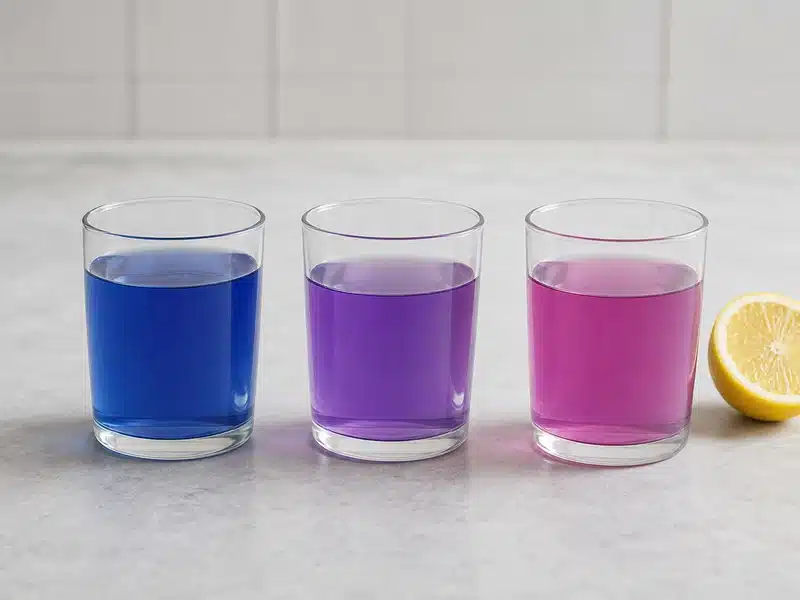
Blue shows the lower-acid starting cup
The plain infusion keeps its earthy, woody baseline. Its blue shade can vary with the water and flower product, so one exact color is not a quality rule.
Purple shows that acid has entered
A small squeeze of lemon can move the color quickly. The lemon also adds fresh tartness, which may become more noticeable than the tea itself.
Pink shows more acid, not stronger flowers
More acid pushes the pigment farther while raising sourness. Pink does not mean the tea steeped longer, became safer, or gained more floral flavor.
Use lemon in drops if you want to watch the reaction without turning the drink into lemonade. When lemon is unavailable, choose from the lemon juice alternatives by acidity rather than color.
Your starting water can shift the first shade because tap and filtered water do not always share one pH. Compare color in the same clear cup when you test flower dose or acid.
What Can You Add to Butterfly Pea Tea?
A plain cup offers color and a quiet plant base. Add one ingredient by the job it needs to perform, then taste before layering another strong flavor.
| Addition | Main job | Flavor effect | Watch for |
|---|---|---|---|
| Honey | Sweetness and aroma | Rounds earthiness | Strong honey can cover the flowers |
| Simple syrup | Neutral sweetness | Raises sweetness without new aroma | Easy to overuse in a mild cup |
| Coconut milk | Body and fragrance | Makes the drink creamy and tropical | Opaque milk hides color clarity |
| Dairy milk | Soft body | Mutes woody edges | Acid can affect the milk |
| Black or green tea | Tannin and caffeine | Adds a clear tea-leaf taste | Can dominate the flowers |
| Lemon or lime | Acid and color shift | Adds tartness | Changes taste faster than expected |
For a light cup, dissolve a small amount of honey while the infusion is warm. For a dessert drink, coconut milk supplies the body that the flowers lack.
A strong blend can turn butterfly pea into a color ingredient rather than the main flavor. Mild chamomile tea leaves more room, while earthy mugwort tea can deepen the plant note.
How Do Pure Flowers, Tea Blends, and Sweet Mixes Differ?
Turn the package over before deciding whether the drink is naturally caffeine-free or unsweetened. Product names can emphasize the blue color while the ingredient list carries the real flavor.
Pure dried flowers
They provide the mild earthy base and contain no tea-leaf caffeine. Storage moisture and age can weaken both aroma and color.
Tea blends
Black, green, white tea, or oolong can add caffeine, tannin, and a much stronger flavor. The blue flowers may mainly change appearance.
Sweet powders and bottled drinks
Sugar, flavoring, fruit acid, and color stabilizers can reshape the cup. Do not use them as the baseline for plain flowers.
Check blends for dairy, coconut, and other added ingredients as well. A blue drink is not proof that butterfly pea is the only plant inside.
A sweet milk format may resemble Thai tea in richness, but butterfly pea does not supply the same black-tea spice or condensed-milk flavor by itself.
Natural and added flavor labels matter when the product smells much stronger than dried flowers. Vanilla, berry, or citrus flavor can create the aroma people later attribute to butterfly pea.
Should You Drink Butterfly Pea Tea Hot or Cold?
Hot tea gives the clearest aroma
Warm steam carries the faint floral and earthy notes toward the nose. It also exposes oversteeping, so a woody batch may feel strongest while hot.
Room-temperature tea makes comparison easy
A cooler cup reduces heat while keeping more aroma than an iced glass. Use this stage to compare the plain infusion with a few drops of lemon.
Iced tea feels gentler
Cold lowers aroma and softens the dry edge, but melting ice can make an already mild cup disappear. Brew slightly stronger for ice without pushing the hot steep into bitterness.
Store unused flowers dry, dark, and tightly sealed. Discard a damp or musty batch because sweetness and citrus cannot repair poor storage.
Light can weaken the pigment before the flowers look spoiled. An opaque pouch or dark cabinet protects the color better than a clear jar beside a window.
Sources
These sources support the mild sensory description and pH-driven color change.
- McGill University Office for Science and Society
- IPB University sensory analysis of butterfly pea flower tea
- Royal Botanic Gardens, Kew butterfly pea profile
Frequently Asked Questions
No. It lacks the same grassy tannin and can taste milder, earthier, and more woody than green tea.
A strong acid can push the pigment toward pink or reddish-purple. The exact shade depends on pH, concentration, water, and lighting.
A second steep may produce lighter color and much weaker flavor. Reuse them promptly rather than leaving wet flowers at room temperature.
Water chemistry, old flowers, light exposure, weak concentration, or a mixed ingredient can dull the color. Check the aroma and package condition before adding more flowers.
The strong pigment can mark light cloth and porous surfaces. Wipe spills quickly and test delicate materials before serving.

Carrie is a food writer and editor with more than 15 years of experience. She has worked for some of the biggest names in the food industry, including Bon Appétit, Food & Wine, and Martha Stewart Living.
As the Editor in Chief of EpicureDelight, Carrie oversees all of the content on the site. She also manages the team of contributing writers and editors, who help to create delicious recipes, helpful tips, and informative articles that you’ll find on the site.
A native of the Chicago area, Carrie is passionate about all things food. She loves trying new restaurants and experimenting with new recipes in her kitchen. She’s also a graduate of the Culinary Institute of America, so she knows a thing or two about food!