
Button mushrooms have a way of disappearing into a dish without calling attention to themselves. That mildness is exactly why they're in so many weeknight recipes, and it's also why finding a good button mushroom substitute in cooking matters more than people expect.
The right swap depends on two things: your cooking method and how much mushroom flavor you actually want in the final dish. Understanding what button mushroom tastes like tells you which replacements will stay invisible and which will take over.
The best button mushroom substitute depends on your cooking method. Cremini is the closest match. Baby portobello adds body. Shiitake goes bolder. Oyster mushrooms cook faster. Canned mushrooms work in soups with proper draining.
Button Mushroom Substitutes: Quick Reference Table
Every substitute below maps to a specific cooking style. If you're replacing oyster mushroom elsewhere in your recipe, the logic is similar: match texture first, then manage flavor intensity.
| # | Substitute | Best For | Ratio | Key Note |
|---|---|---|---|---|
| 1 | Cremini | Sauté / Roast / Simmer | 1:1 | Slice same thickness |
| 2 | Baby Portobello | Sauté / Simmer | 1:1 | Slice thin for tenderness |
| 3 | Shiitake | Sauté / Simmer | ¾:1 | Remove stems always |
| 4 | Oyster Mushrooms | Sauté / Stir-fry | 1:1 | Add later in cook |
| 5 | Canned Mushrooms | Simmer / Stew | 1:1 | Drain and simmer first |
5 Button Mushroom Substitutes Worth Using
1. Cremini Mushrooms
Cremini is the most practical swap you can make. It shares nearly the same shape, cook time, and moisture level as button mushrooms, so no timing adjustment is needed.
For anyone wondering how cremini mushroom substitutes compare in the other direction, the logic flips cleanly here: cremini steps in for button with almost no detectable difference in texture.
- Flavor: Slightly earthier than button mushrooms, but still mild enough to stay background
- Texture: Firm when raw, tender after sautéing, very close bite to button mushrooms
- Prep: Wipe clean, trim stems, slice to the same thickness as your original recipe calls for
- Best uses: Pasta sauces, stir-fry, creamed mushrooms, soups, omelets
Skip if: your recipe specifically needs a very mild, almost neutral mushroom background. Cremini will add a noticeably deeper note that some delicate dishes don't want.
2. Baby Portobello (Sliced)
Baby portobello is essentially a more mature cremini, and that extra age gives the cap a meatier, denser bite. It holds its shape well in pan sauces and braises where button mushrooms can soften into the background.
Those needing best portobello mushroom alternatives in a separate recipe will find similar guidance: slice thickness controls everything here.
- Flavor level: Mild to medium, slightly more savory than button mushrooms
- When to slice: Always slice thin; whole caps are too thick and won't soften at the same rate
- Best dish types: Pasta, risotto, pan sauces, grain bowls, braised dishes
Skip if: you're adding mushrooms at the very end of cooking and need them to stay delicate. Baby portobellos keep more firmness and can seem undercooked if added too late.
3. Shiitake Mushrooms (Stemmed and Sliced)
Shiitake mushrooms carry noticeably more umami than button mushrooms. The stems are woody and tough, so they need to come off before anything else. Use about ¾ of the amount your recipe asks for and slice them thin so the flavor mellows slightly during cooking.
You can find a full set of shiitake mushroom substitutes if you're going the other direction, but as a button mushroom stand-in, shiitake works well in soups and slow-simmered sauces where a richer base is welcome. The intensity is an asset in those contexts, not a problem.
Skip if: the mushroom flavor is meant to stay subtle. Shiitake will push forward in the dish, which can overwhelm lighter preparations like cream soups or egg dishes.
4. Oyster Mushrooms (Torn or Sliced)
Oyster mushrooms are tender and cook quickly, which makes them behave very differently from button mushrooms in a hot pan. They need less time, and if you add them too early, they'll go soft before everything else is ready.
Add Oyster Mushrooms Early
Works for: quick stir-fry where you want slight browning and some texture contrast
Skip if: dish has a long simmer ahead-they'll collapse into mush
Add Oyster Mushrooms Late
Works for: soups, braises, pasta where you want them tender but intact
Skip if: you need the mushrooms fully browned before serving-they won't have enough time
Understanding tasting oyster mushroom makes it easier to predict how they'll land in your dish once the timing is right.
- Prep: Tear into pieces roughly the size of a button mushroom cap, or slice into strips
- Cook timing: Add 3 to 4 minutes later than you would add button mushrooms
- Flavor pairings: Garlic, ginger, light cream sauces, soy-based stir-fry
Skip if: you need mushrooms with a firm bite after simmering. Oyster mushrooms soften faster than button mushrooms, and long cooking will make them disappear.
5. Canned Mushrooms (Drained and Chopped)
Canned mushrooms are the pantry backup most people overlook. They're already cooked, which means they're softer than fresh, and they carry a faint brine flavor that needs to be dealt with before they go into a dish.
Drain them well and give them a quick 2-minute simmer in a dry pan before adding to anything.
- Best uses: Stews, slow-cooked pasta sauces, casseroles, pot pies
- Draining step: Rinse under cold water after draining to remove brine residue
- Quick simmer: 2 minutes in a dry skillet over medium heat drives off excess moisture and reduces the tinny flavor
- Ratio: Use 1:1, but expect a softer final texture than fresh button mushrooms
Skip if: you're making a dry sauté or a roasted mushroom side. Canned mushrooms lack the surface moisture and cell structure needed to brown properly.
Cook Times and Ratios That Actually Match
Matching slice thickness is the single most useful thing you can do when switching mushrooms. A thick cremini slice cooks differently from a thin one, and if you're used to button mushrooms at a specific cut, your substitute needs to match it.
The cremini mushroom profile is close enough that a like-for-like thickness swap produces almost identical results.
- Sauté: Match thickness to your original recipe; medium-high heat for 4 to 6 minutes works for cremini, baby portobello, and sliced shiitake
- Simmer: Add firm substitutes (cremini, baby portobello) at the same stage as button mushrooms; add oyster mushrooms 3 minutes later
- Moisture control: If your substitute releases excess liquid, let it cook uncovered for an extra 2 minutes to evaporate before adding other ingredients
Frequently Asked Questions
Cremini mushrooms are the closest match. They share the same shape, moisture level, and cook time, making them a true 1:1 swap in any sautéed dish.
Yes, but use about ¾ of the amount and remove the stems. Shiitake adds a bolder umami note that works well in heartier soups.
They're already cooked, but a 2-minute dry simmer removes brine flavor and excess moisture before they go into your recipe.
Oyster mushrooms have a more delicate cell structure that breaks down faster under heat. Add them later than you would button mushrooms to keep some texture.
Start at a 1:2 ratio-one part porcini for every two parts button mushrooms called for. Porcini is much more intense and a full swap will overpower most dishes.
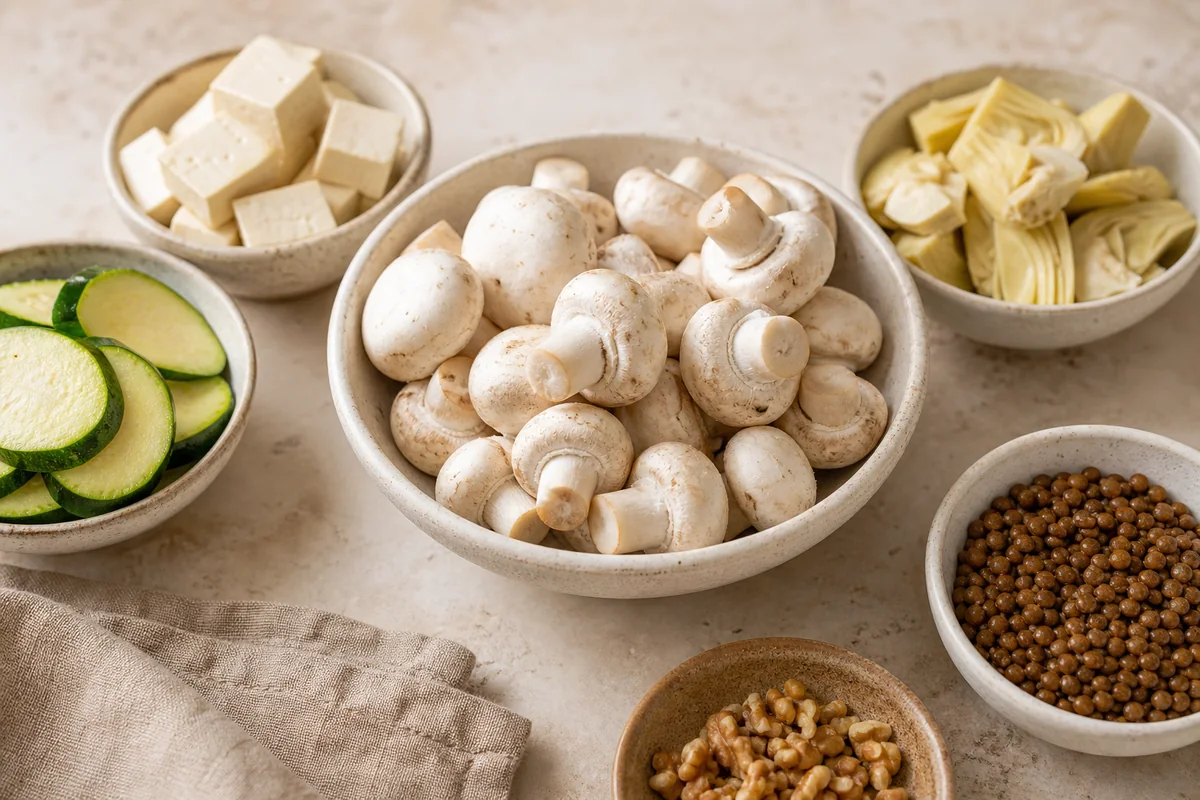
5 Best Button Mushroom Substitutes in Every Recipe
Ingredients
Equipment
Method
- Decide your cooking method (sauté, roast, simmer) and whether you need a mild flavor or a deeper one.
- Pick the substitute from the WPRM list that matches your texture goal: closest bite, meaty bite, tender fast-cook, or canned for stews.
- Use the listed ratio: start with the same amount as button mushrooms, then adjust for intensity (shiitake) or moisture (canned).
- Cook in the same time window as button mushrooms, but add tender mushrooms (like oyster) a little later.
- Taste at the end and adjust seasoning: add a pinch of salt for muted brands or a small splash of broth for dryness.
Notes
- For best results, slice substitutes to a similar thickness to match cooking time.
- If your substitute releases lots of liquid (some canned or tender mushrooms), simmer uncovered to reduce before finishing.
Tried this recipe?
Let us know how it was!
Carrie is a food writer and editor with more than 15 years of experience. She has worked for some of the biggest names in the food industry, including Bon Appétit, Food & Wine, and Martha Stewart Living.
As the Editor in Chief of EpicureDelight, Carrie oversees all of the content on the site. She also manages the team of contributing writers and editors, who help to create delicious recipes, helpful tips, and informative articles that you’ll find on the site.
A native of the Chicago area, Carrie is passionate about all things food. She loves trying new restaurants and experimenting with new recipes in her kitchen. She’s also a graduate of the Culinary Institute of America, so she knows a thing or two about food!



