
Caerphilly has a quality that most cheeses don't: it's both crumbly and mild at the same time. That combination is harder to replace than you'd think, because most crumbly cheeses are sharp, and most mild cheeses melt.
Knowing which property your recipe actually needs is the real first step to finding a good caerphilly cheese substitute.
For sprinkling or mixing cold into fillings, you want a cheese that holds its shape when crumbled. For baking or melted toppings, melt behavior matters more than crumb structure.
Caerphilly is mild, slightly tangy, and crumbly-soft. For crumbling: Wensleydale or Lancashire. For melting: mild white cheddar or Monterey Jack. For textured sprinkling in cooked dishes: blotted feta at a reduced ratio. Cream cheese works as a stir-in swap for sauces and dips.
5 Best Caerphilly Cheese Substitutes (Quick Pick Guide)
The table below maps each substitute to its best use. Scan it first, then read the item sections for skip-if guidance and ratio notes that will prevent the most common mistakes.
| # | Substitute | Best For | Ratio | Key Note |
|---|---|---|---|---|
| 1 | Wensleydale | Crumble | 1:1 | Mild, won't overpower fillings |
| 2 | Lancashire | Both | 1:1 | Buttery notes, smooth in bakes |
| 3 | White Cheddar | Melt | 1:1 | Reduce salt if dish is seasoned |
| 4 | Feta | Crumble | ¾:1 | Blot brine before using |
| 5 | Monterey Jack | Melt | 1:1 | Flat flavor; use in saucy dishes |
1. Wensleydale
Wensleydale is the most texture-accurate swap on this list. It has the same crumbly-soft structure that makes caerphilly hold its shape when you break it into a filling or scatter it over a salad.
The flavor is mild and milky, which means it won't push forward in a dish where caerphilly would sit quietly in the background. Both cheeses have that slight lactic freshness without any real sharpness.
- Best use: Crumbling into pastry fillings, cold salads, or cheese boards where texture is the point
- Flavor impact: Nearly neutral - adds body and mild dairy notes, not tang
- Texture in baking: Softens and integrates rather than fully melting; works in scones or mixed-in bakes
- Ratio: Start at 1:1 and adjust by texture, not volume
- Melt behavior: Does not produce a smooth melt or browned top - it softens in patches
If you want to understand the specific mild, lactic notes you're trying to replicate, that detail matters when choosing between Wensleydale and anything sharper.
Skip if: your recipe needs a fully melted, spreadable top - Wensleydale will not deliver that.
2. Lancashire
Lancashire is the most balanced substitute when your dish needs to perform in both worlds: mild enough for a cheese board and cooperative enough in a warm bake. It has a buttery quality that is close to caerphilly's gentleness without being sweet.
In heat, Lancashire integrates smoothly into baked mixtures. It shreds and crumbles cleanly before cooking, then blends into the dish rather than pooling or separating.
- When to use: Baked fillings, Welsh-style dishes, quiche, and cheese toasts
- Heat behavior: Softens and binds well; won't produce a stringy or greasy layer
- Salt check: Lancashire reads slightly fuller than caerphilly - pull back on added salt by about a pinch per 100g
- Board use: Holds up well sliced or crumbled for serving with fruit or crackers
If this cheese is also hard to find in your area, milder cheese swaps cover similar crumbly British-style options.
Skip if: your recipe is already rich or heavily salted - Lancashire may tip the dish saltier than caerphilly would.
3. White Cheddar
White cheddar is the right call when your recipe's primary goal is a melted top or a smooth baked texture. It is more reliable at producing even melt coverage than either Wensleydale or Lancashire.
Use the mildest, least-aged white cheddar you can find. Older aged versions have a sharpness that will overpower dishes where caerphilly would be subtle.
White Cheddar: Crumble vs. Melt
Works for: gratins, baked pasta, toasted sandwiches, or any dish needing a browned melted layer
Skip if: you want a crumbly bite after cooking - cheddar softens and spreads rather than holding texture
Start at a 1:1 ratio, but taste the dish before adding extra salt. White cheddar is already saltier than caerphilly, so if your recipe has seasoned stock, sauces, or cured meat, reduce added salt by at least half a teaspoon.
If cheddar is also running low, picking a milder melt option can help you avoid overpowering the dish.
Skip if: crumbly texture is the point - cheddar will spread, not crumble, once heat hits it.
4. Feta
Feta is a strong crumble substitute when you are cooking caerphilly into a dish rather than serving it plain. The texture is close - firm enough to crumble cleanly, soft enough to break apart with a fork.
Feta: Tang vs. Mildness
Works for: cooked fillings, grain bowls, warm vegetable dishes, or baked pastries where tanginess integrates
Skip if: you are serving it plain on a board - the brine flavor will read much stronger than caerphilly's mildness
The key step is blotting. Press feta between two paper towels for 30 seconds before adding it.
That removes excess brine and tones down the tang noticeably.
- Ratio: Use ¾ the amount called for and taste before adding more
- Brine control: Blot dry, or briefly rinse under cold water and re-pat for a milder result
- Best dishes: Spanakopita-style bakes, stuffed vegetables, and warm grain salads
- Moisture risk: Even blotted feta releases some water - mix into dry bases rather than wet sauces
For a deeper look at how feta compares to other soft whites, the brine-forward cheese comparison covers the key differences in cooking behavior.
5. Monterey Jack
Monterey Jack is the smoothest melt on this list. It has a mild, almost neutral dairy flavor that makes it a safe choice when the rest of your dish is well-seasoned and you just need cheese to do its job quietly.
Keep heat moderate. High heat makes Jack release fat quickly, which turns the surface greasy rather than smooth.
A 350°F oven or medium stovetop is the sweet spot.
- Best use: Gratins, melted cheese layers, quesadilla-style bakes, and creamy sauces
- Ratio: 1:1, no adjustment needed for salt
- Flavor tip: Add a small pinch of dry mustard or white pepper to replicate caerphilly's subtle tang
- Heat limit: Keep below 375°F to avoid grease separation
If you find yourself needing even more options beyond this list, mild melting alternatives cover a few more melt-first choices worth knowing.
Skip if: your recipe needs crumble texture after baking - Monterey Jack will be too soft and cohesive.
Making a Caerphilly Cheese Substitute Work
The decision always starts in the same place: are you crumbling or melting? Once you settle that, the next two variables are saltiness and moisture.
Caerphilly is relatively low in salt and holds moderate moisture, so any substitute that is saltier or wetter will shift the dish unless you compensate. For sauce applications, stirring in a soft cheese off the heat gives you a smoother result than any crumbly option.
If you are choosing a sharper option like white cheddar, pull back on seasoning before tasting.
- Shred or crumble before mixing: Pre-crumbled cheese distributes more evenly than chunks, which prevents pockets of heavy flavor or unmelted bits in bakes.
- Salt last: Add any extra seasoning only after the cheese is incorporated and you've tasted the dish - substitutes vary significantly in salt content.
- Manage moisture: Blot brined cheeses (feta) and avoid adding cream-based swaps to already wet bases, or the texture turns loose.
Frequently Asked Questions
Yes, mild white cheddar works well for baked dishes that need even melt coverage. Use a 1:1 ratio and reduce added salt, since cheddar is saltier than caerphilly.
Wensleydale is the closest match for crumbly texture. It breaks apart similarly and has a comparable mild, milky flavor that won't overpower a filling.
Yes. Feta is much saltier than caerphilly. Use ¾ of the called-for amount, blot the feta dry, and taste before adding any extra salt to the dish.
Monterey Jack or mild white cheddar are the most reliable choices. Both melt evenly and won't produce a greasy or separated layer at moderate oven temperatures.
Stir the cheese in off the heat or at a low simmer. High direct heat causes proteins to seize and turn grainy, especially with cream cheese or softer swaps.
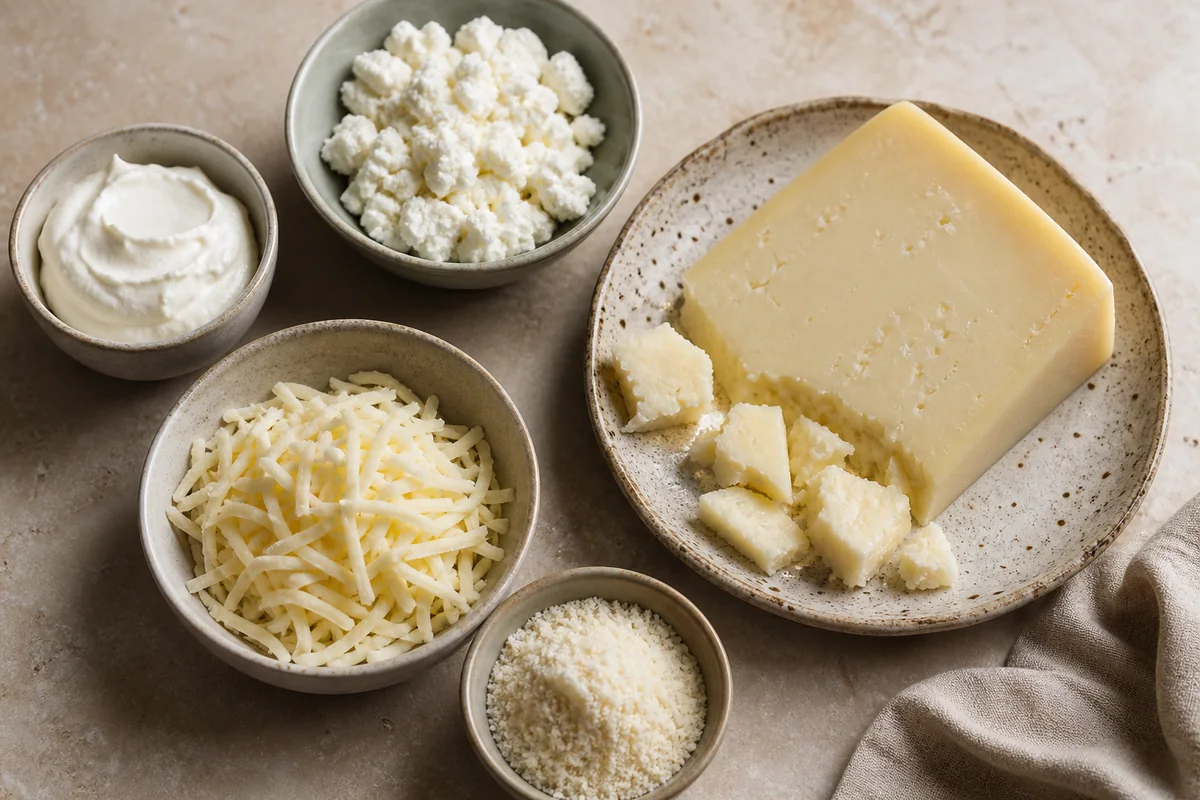
5 Best Caerphilly Cheese Substitutes for Home Cooks
Ingredients
Equipment
Method
- Decide your use case: topping/crumb vs. melting for baking; this determines whether you prioritize crumbliness or melt.
- Choose the substitute from the list that matches that use case first, then apply the listed ratio.
- If the substitute is saltier/tangier than caerphilly (e.g., feta), use a reduced ratio and taste after baking or heating.
- For better texture, shred harder cheeses and crumble crumbly cheeses; mix into the base rather than dumping on top for more even behavior.
- If your dish needs a softer bite, warm the cheese with a spoon of hot dairy (milk/cream) for 30–60 seconds before stirring in.
Notes
- Texture matching matters: caerphilly is often used for its mild flavor and crumbly character.
- When swapping for baking, salt level and melt behavior are the two biggest variables to adjust.
Tried this recipe?
Let us know how it was!
Carrie is a food writer and editor with more than 15 years of experience. She has worked for some of the biggest names in the food industry, including Bon Appétit, Food & Wine, and Martha Stewart Living.
As the Editor in Chief of EpicureDelight, Carrie oversees all of the content on the site. She also manages the team of contributing writers and editors, who help to create delicious recipes, helpful tips, and informative articles that you’ll find on the site.
A native of the Chicago area, Carrie is passionate about all things food. She loves trying new restaurants and experimenting with new recipes in her kitchen. She’s also a graduate of the Culinary Institute of America, so she knows a thing or two about food!



