
That tart, floral punch calamansi delivers is hard to fake. It sits between lime and mandarin, carrying a brightness that most citrus can't fully copy on its own.
Still, a good calamansi substitute gets you most of the way there. The key is knowing which swap suits your use case: drinks need citrus brightness, baking needs acidity, and marinades need tang without competing flavors.
Calamansi's aroma comes partly from its peel oils. When you're replacing just the juice, you lose some of that top note.
Adding a small amount of zest from mandarin or orange often closes that gap.
For most recipes, lime juice at a 1:1 ratio is the fastest calamansi swap. For a closer aroma match, combine lime juice with a small amount of mandarin or orange zest. In cooked savory dishes, a blend of rice vinegar and lemon juice adds tang without overpowering the dish.
5 Best Calamansi Substitutes Ranked by Citrus Brightness
The substitutes below are ordered by how closely they preserve calamansi's tart, citrus-forward character. The first two are near-direct swaps.
The last two work best in cooked or savory contexts where a little more tang and less floral aroma is acceptable. If your recipe also calls for fresh versus dried zest choices, lean toward fresh for any fragrance-forward dish.
For the vinegar-based options, that mellow pantry acid holds its potency longer than citrus, so start with less.
| # | Substitute | Best For | Ratio | Key Note |
|---|---|---|---|---|
| 1 | Key Lime / Lime Juice | Both | 1:1 | Closest tartness match |
| 2 | Fresh Lemon Juice | Both | 1:1 | Add small sweetener |
| 3 | Lime + Mandarin Zest | Both | ¾:1 | Best aroma match |
| 4 | Rice Vinegar + Citrus | Savory | ¾:1 | Use in cooked dishes |
| 5 | ACV + Lemon Juice | Savory | ½:1 | Emergency savory only |
1. Key Lime Juice
Key lime is the closest single-ingredient stand-in for calamansi. Both carry a high-pitched tartness with a slightly floral edge that regular Persian limes can miss.
Regular lime still works well, but key lime is the better call when you can find it.
For tangy citrus swaps in drinks and marinades, the 1:1 ratio holds up without any adjustment. Add a half-teaspoon of orange zest if you want to push the aroma closer.
- Swap ratio: 1:1 in drinks, marinades, salad dressings, and quick sauces
- Key lime tip: Key lime reads slightly more floral than standard lime; prefer it for cocktails
- Standard lime tip: Use standard lime with a tiny pinch of sugar to soften the "green" note
- Skip if: Your recipe needs calamansi's sweeter perfume and you can't add zest
2. Fresh Lemon Juice
Lemon juice is the go-to when lime isn't available. It carries similar acidity, but the flavor is sharper and cleaner without calamansi's floral warmth.
That sharpness is easy to manage with a small sweetener.
Start at a 1:1 ratio, then taste. If the lemon reads too harsh, pull back by 1 teaspoon and add a pinch of sugar or a drop of honey.
For choosing a sharper citrus option, lemon is the most accessible pick when you're baking or making cold dressings.
Fresh Lemon Juice
Works for: Baking, cold dressings, marinades, and any recipe where clean acidity is more important than floral aroma
Skip if: Your recipe is bitterness-sensitive and you're tempted to add lemon zest, as zest can push bitterness noticeably higher
- Swap ratio: 1:1 to start; reduce to ¾:1 if the dish tastes too sharp
- Sweetness fix: A quarter-teaspoon of sugar or honey per tablespoon of lemon softens the bite
- Zest caution: Use juice only in bitter-sensitive dishes; skip zest unless the recipe is robust
- Best baking use: Citrus cakes, glazes, and marinades where exact floral note is less critical
3. Lime + Mandarin Zest
This combination is the best aromatic match on the list. Lime delivers the tartness, and mandarin zest adds the sweeter citrus perfume that calamansi carries naturally.
It takes one extra step, but the result is noticeably closer.
Use lime juice at about ¾ of the amount called for, then stir in a small amount of mandarin or orange zest. If you're choosing between fresh or dried zest options, go fresh here for the most fragrant result.
- Swap ratio: ¾ teaspoon lime juice per 1 teaspoon calamansi, plus ¼ teaspoon fresh mandarin zest
- Zest timing: Stir zest in after heating or right before serving; heat fades its fragrance fast
- Best uses: Cocktails, finishing sauces, citrus dressings, and cold drinks where top-notes matter
- Skip if: Your dish cooks for more than 20 minutes and you can't add zest at the end
4. Rice Vinegar + Citrus Juice
This blend works well when the recipe involves heat. Rice vinegar brings a mild, clean tang without the strong bite of white or cider vinegar.
Combined with lemon or lime juice, it rebuilds the acidic character of calamansi in stir-fries, braises, and dipping sauces.
Mix two parts lime or lemon juice with one part rice vinegar, then use this blend at ¾:1 against the calamansi amount. Keep in mind that swapping pantry acids in cooked dishes usually needs a taste-check halfway through cooking.
- Swap ratio: Use ¾ of the total calamansi amount as the blended mix
- Blend formula: Combine 2 parts citrus juice to 1 part rice vinegar for a balanced result
- Best uses: Stir-fries, braises, warm dipping sauces, and glazes where acidity matters more than aroma
- Vinegar control: Start at less than you think you need; taste and add more vinegar by ¼ teaspoon
- Skip if: You're making a cold dish or drink, where the vinegar note will stand out unpleasantly
5. Apple Cider Vinegar + Lemon
Apple cider vinegar is the last resort. It has more depth and a faintly fruity note, but it's far less "citrus" than calamansi.
Lemon juice is what saves this pairing, pulling the flavor back toward brightness.
Use the combined mix at about ½:1, meaning half the amount you'd use calamansi. That lower ratio keeps the ACV from dominating.
For this bright citrus acid, fresh lemon makes a bigger difference here than anywhere else on the list.
Apple Cider Vinegar + Lemon Juice
Works for: Savory marinades, braised meats, and cooked sauces where you need tang and already have bold competing flavors
Skip if: You're making desserts, cocktails, or any sweet-forward dish where ACV's heavier profile will overpower everything else
- Swap ratio: ½:1 total (use half the amount you'd normally use for calamansi)
- Blend formula: Combine equal parts ACV and fresh lemon juice to form the swap mix
- Rescue step: Add lemon first, taste, then introduce ACV slowly to avoid over-souring
- Skip if: The recipe is sweet, delicate, or served cold - ACV overwhelms in those contexts
Making a Calamansi Substitute Work
Every substitute on this list needs a two-step check: brightness first, then aroma. Brightness is the easy fix - reduce or increase the amount to hit the right tartness for your dish.
Aroma is subtler, and tart citrus character is what most swaps are missing at the top of the flavor. If the substitute tastes flat after adjusting acidity, a pinch of zest or a drop of sweetener usually closes the gap.
- Tartness control: If the substitute tastes too sharp, reduce by 1 teaspoon and add a small amount of sugar or honey before tasting again
- Aroma control: Stir in mandarin or orange zest after cooking, not before, to keep the citrus fragrance from fading
- Storage note: Check how long fresh citrus stays potent before using older juice in a recipe that depends on brightness
Frequently Asked Questions
Yes, lime juice works at a 1:1 ratio in most drinks. Key lime is the better choice for cocktails since its flavor sits closer to calamansi's floral tartness than standard Persian lime.
Fresh lemon juice at a 1:1 ratio is the most reliable pick for baking. Add a small sweetener to offset lemon's sharper bite, and skip the zest if bitterness is a concern.
Lemon is sharper and less floral than calamansi. A quarter-teaspoon of sugar or honey per tablespoon of lemon juice softens that edge without changing the dish's overall acidity noticeably.
Use bottled lime or lemon juice for acidity, then add fresh mandarin or orange zest for the floral aroma. Bottled juice alone cannot replicate calamansi's peel fragrance.
Skip apple cider vinegar in any sweet or dessert context. Its deep, fermented note clashes with delicate flavors; use fresh lemon or lime juice instead.
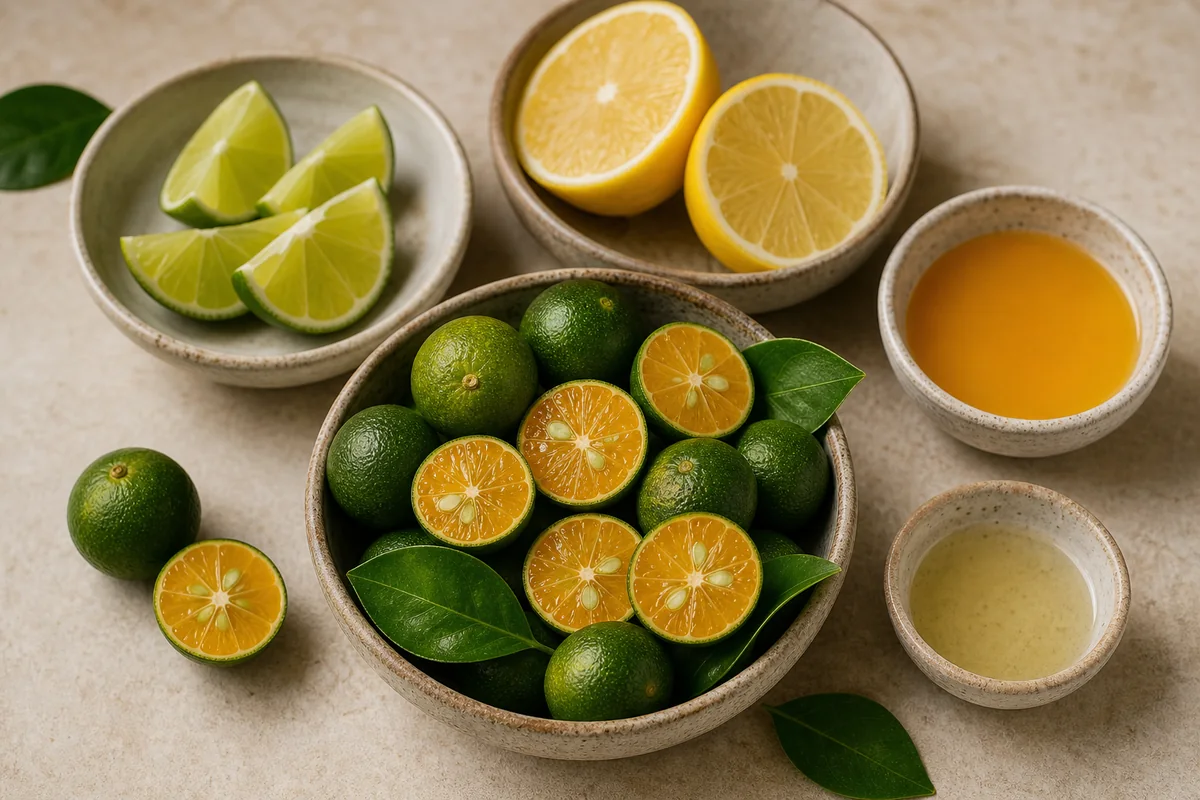
5 Best Calamansi Substitutes You Can Trust
Ingredients
Method
- Choose a substitute based on your dish: drinks/marinades (lime or lemon) vs. cooked recipes (vinegar + citrus).
- Start with the listed ratio; if your substitute is sharper (lemon, ACV), use slightly less and ramp up gradually.
- For flavor closer to calamansi, add zest (mandarin/orange) after mixing, not before heating.
- Adjust balance: add a small amount of sugar/honey for drinks or sauces that taste too thin or too tart.
- In baking, reduce other acids slightly and let the batter rest 5 minutes so acidity “settles” before judging.
Notes
- Use fresh juice for the best aroma; zest can help recreate calamansi’s bright, slightly floral top notes.
- If a recipe already contains strong acidity (vinegar, sour citrus, tomatoes), reduce the substitute amount first.
Tried this recipe?
Let us know how it was!
Carrie is a food writer and editor with more than 15 years of experience. She has worked for some of the biggest names in the food industry, including Bon Appétit, Food & Wine, and Martha Stewart Living.
As the Editor in Chief of EpicureDelight, Carrie oversees all of the content on the site. She also manages the team of contributing writers and editors, who help to create delicious recipes, helpful tips, and informative articles that you’ll find on the site.
A native of the Chicago area, Carrie is passionate about all things food. She loves trying new restaurants and experimenting with new recipes in her kitchen. She’s also a graduate of the Culinary Institute of America, so she knows a thing or two about food!



