
Cane syrup has a particular personality: amber-dark, moderately thick, and just caramel-y enough to round out a pecan pie or deepen a gingerbread without tipping into bitterness. Running out mid-recipe is annoying.
The good news is that several pantry staples can cover for it without killing your bake.
The key is matching the right property first. If your recipe depends on caramel color and depth, go toward molasses or golden syrup.
If you just need moisture and sweetness, maple or honey will do the job. This cane syrup substitute guide covers five options ranked by how closely they mirror the original's flavor and texture.
Cane syrup is valued for its caramel-like color, moderate thickness, and rounded sweetness. Light molasses is the closest match for flavor and browning. Golden syrup wins on texture. Maple syrup and honey work well for moisture-focused bakes. Light corn syrup is the neutral backup when flavor depth doesn't matter.
5 Best Cane Syrup Swaps for Baking and Glazes
Use the table below as your starting point, then scroll to each pick's section for "skip if" guidance and adjustment tips.
| # | Substitute | Best For | Ratio | Key Note |
|---|---|---|---|---|
| 1 | Light Molasses | Both | 1:1 | Closest caramel depth |
| 2 | Golden Syrup | Both | 1:1 | Best texture match |
| 3 | Maple Syrup | Both | 1:1 | Flavor shifts to maple |
| 4 | Honey | Both | 1:1 | Reduce if batter is loose |
| 5 | Light Corn Syrup | Baking | 1:1 | Neutral, add brown sugar |
Most of these swaps darken baked goods slightly more than cane syrup. If your recipe needs a completely neutral syrup, none of these caramel-leaning options are your answer.
1. Light Molasses
Light molasses is the sharpest flavor match for cane syrup. Both carry that same dark amber color and rounded sweetness, though molasses leans slightly more intense.
For brown sugar comparisons, molasses is the common thread, which tells you something about how naturally these flavors overlap.
- Flavor match: Strong caramel with mild bitterness at the edges, very close to cane syrup.
- Viscosity: Slightly thicker, so stir it in well before judging your batter consistency.
- Best uses: Pecan pie, gingerbread, barbecue glazes, and dark cookies.
- Adjustment: Pull back on added sugar by about 1 teaspoon per quarter cup to avoid oversweetening.
Light Molasses
Works for: Dark bakes, spiced cookies, savory glazes needing caramel depth
Skip if: Your recipe is light-colored (vanilla frosting, blondies) and you need to avoid dark, intense caramel notes
2. Golden Syrup
Golden syrup is arguably the cleanest swap on this list. It has mild caramel undertones, a near-identical glossy consistency, and no assertive flavor to compete with your recipe.
If you bake cookies or sticky puddings regularly, golden syrup is worth keeping in your pantry for exactly this reason. It is also this amber sweetener's closest relative in terms of how it behaves when heated.
- Cookies and bars: Use 1:1 with no adjustment needed.
- Sticky bakes (puddings, tarts): Performs beautifully without added thinning.
- If it seems thicker: Warm it for 10 seconds in the microwave before measuring.
- If it seems thinner: Reduce by 1 tablespoon per half cup and compensate with a touch of brown sugar.
Skip if: You need a substitute from standard pantry staples only and can't find golden syrup locally.
3. Maple Syrup (Medium Amber)
Medium amber maple syrup is smooth, moderately thick, and browns well in the oven. The trade-off is that the maple flavor is real and readable in the finished bake.
Use it in recipes where a gentle, woody sweetness is welcome: quick breads, pancake glazes, oat cookies, and roasted vegetable sauces. For anything where swapping away from maple might matter, consider whether the flavor shift works for your dish before committing.
Sweetness is slightly higher than cane syrup, so you can reduce by about 1 tablespoon per half cup if your recipe already has plenty of sugar. Browning is good and consistent, though the color is slightly lighter than molasses-level dark. The maple character stays mild in baked goods once the oven heat hits it, but comes through clearly in no-bake applications like sauces and dressings.
Skip if: Your recipe depends on a neutral background sweetness and you don't want maple to read as the dominant flavor.
4. Honey
Honey is a solid cane syrup stand-in when moisture is the priority. It keeps baked goods tender and soft for days longer than granulated sugar would.
Floral flavor notes in honey vary a lot by variety, and a light clover honey is your safest bet here since it reads closest to a neutral sweet.
- Thickness fix: If your honey is very runny, simmer it for 1 to 2 minutes to concentrate before measuring.
- Sweetness balance: Honey is sweeter than cane syrup, so reduce by 1 tablespoon per half cup.
- Best uses: Soft cookies, glazed carrots, quick breads, muffins, and marinades.
- Flavor pairing: Works especially well alongside cinnamon, lemon, or ginger, which soften the floral edge.
Skip if: Your recipe needs cane syrup's mild caramel character and you find honey's floral flavor intrusive.
5. Light Corn Syrup
Light corn syrup is the neutral choice. It doesn't add caramel depth, but it matches cane syrup's consistency well and keeps the structure of cookies, candies, and glazes intact.
Think of it as the clear syrup swap that prioritizes texture over flavor. It prevents sugar crystallization in candies and keeps chewiness in cookies, which is often exactly what you need.
It just won't contribute any of the color or roasted-sugar notes that cane syrup brings.
- Candy and caramel: Excellent for preventing crystallization at 1:1.
- Cookies and bars: Keeps chew intact; add a teaspoon of brown sugar per quarter cup for a touch of depth.
- Glazes: Works well for shine; add a drop of vanilla extract if flavor seems flat.
- Browning: Less than cane syrup, so don't expect a dark finish without additional sugar.
Skip if: You want caramel depth in your bake. Corn syrup is mostly neutral and won't darken or deepen flavor the way cane syrup does.
DIY Brown Sugar Syrup
This is a bonus technique rather than a sixth substitute. When you have no liquid syrup at all, dissolving packed, moist brown sugar in warm water gets you close.
| Use | Ratio | Notes |
|---|---|---|
| Baking (cookies, bars) | ¾ cup sugar + ¼ cup water per 1 cup cane syrup | Simmer until glossy, about 3 minutes |
| Glazes and sauces | ½ cup sugar + ½ cup water per 1 cup cane syrup | Thinner result; reduce glaze by simmering longer |
- Dissolving tip: Stir over medium-low heat until no grains remain before removing from heat.
- Avoiding grittiness: Strain through a fine mesh sieve if sugar didn't fully dissolve.
- Thicker result: Simmer 1 to 2 minutes longer after the sugar dissolves.
Skip if: You need a fully smooth, ready-to-use syrup immediately and don't have time to dissolve and cool.
Making the Swap Work (Baking + Cooking Tips)
Picking the right substitute is step one. Getting it to behave correctly in your recipe is step two.
The biggest variable across all these options is viscosity, so check your batter before adding all of the substitute at once. You can read more about warm amber flavor notes to help judge whether your swap needs flavor correction after mixing.
- Viscosity check: If your substitute is thinner than cane syrup (common with honey and maple), reduce by 1 to 2 tablespoons and see if the consistency looks right.
- Darkening control: If you're worried about over-browning, lower your oven temperature by 10 to 15 degrees Fahrenheit and check for doneness a few minutes early.
- Flavor balancing: A small pinch of salt or a half-teaspoon of vanilla can round out any flatness left by neutral substitutes like corn syrup. A teaspoon of brown sugar works similarly for color and depth.
Frequently Asked Questions
Light molasses is the closest match for caramel color and depth, used at a 1:1 ratio. Golden syrup is the second-best option and has a milder, cleaner caramel flavor.
Yes, use medium amber maple syrup at 1:1. Expect a noticeable maple flavor and slightly less caramel color than cane syrup produces.
Simmer the substitute in a small saucepan for 1 to 2 minutes to concentrate it before measuring. Alternatively, reduce the amount by 1 to 2 tablespoons and adjust your batter consistency.
It will darken your bake slightly and add a hint more intensity than cane syrup. Reduce added sugar by about 1 teaspoon per quarter cup to keep sweetness balanced.
Stir over medium-low heat until every grain dissolves, then strain through a fine mesh sieve. Let it cool before using so the consistency firms up to a syrup-like texture.
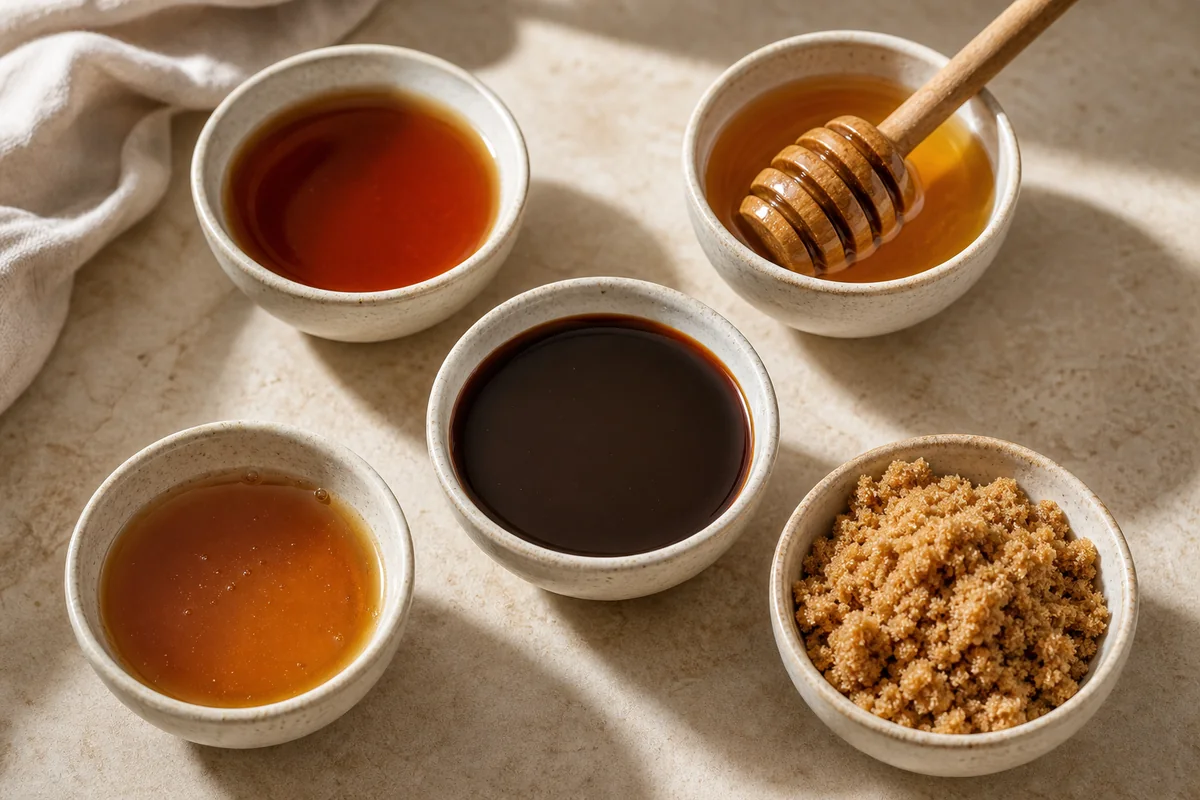
5 Best Cane Syrup Substitutes (Quick Swaps)
Ingredients
Equipment
Method
- Identify your use: baking (cookie/bread) vs. cooking (sauce/glaze) so you match viscosity and browning needs.
- Pick the substitute that best matches flavor intensity: mild sweetness (maple/honey) vs caramel depth (molasses/golden syrup).
- Use the listed ratio to replace cane syrup 1:1 (or ¾:1 for the brown sugar + water option).
- If the substitute is thinner than cane syrup (often honey), simmer the syrup for 1–2 minutes to concentrate before adding.
- Taste and fine-tune after mixing: add a pinch of salt for balance or a little extra sugar/brown sugar for stronger caramel notes.
Notes
- Most cane syrup swaps work best at equal volume for baking and glazes; adjust only if your batter looks too thin or too dark.
Tried this recipe?
Let us know how it was!
Carrie is a food writer and editor with more than 15 years of experience. She has worked for some of the biggest names in the food industry, including Bon Appétit, Food & Wine, and Martha Stewart Living.
As the Editor in Chief of EpicureDelight, Carrie oversees all of the content on the site. She also manages the team of contributing writers and editors, who help to create delicious recipes, helpful tips, and informative articles that you’ll find on the site.
A native of the Chicago area, Carrie is passionate about all things food. She loves trying new restaurants and experimenting with new recipes in her kitchen. She’s also a graduate of the Culinary Institute of America, so she knows a thing or two about food!



