
Carob powder has a quiet, almost nutty chocolatiness that doesn't hit you with bitterness the way cocoa does. That makes finding a good carob powder substitute trickier than it sounds, because most cocoa-based swaps need a small sweetness bump to land in the same flavor zone.
The good news is that the right swap comes down to two decisions: how much bitterness your recipe can handle, and whether the powder needs to behave chemically or just add flavor and color.
Carob is naturally milder and often slightly sweet on its own. If your recipe was built around that gentleness, a straight cocoa swap without any adjustment will taste sharper.
Keep that in mind before you measure anything.
Unsweetened cocoa powder is the closest swap at a 1:1 ratio, but it tastes more bitter than carob. Dutch-process cocoa is milder and darker. Black cocoa is intense, so use less. Date powder adds sweetness. Ground cacao nibs work only when finely milled.
5 Best Carob Powder Substitutes Ranked by Flavor Match
| # | Substitute | Best For | Ratio | Key Note |
|---|---|---|---|---|
| 1 | Unsweetened Cocoa Powder | Both | 1:1 | Add sweetness to balance |
| 2 | Dutch-Process Cocoa | Both | 1:1 | Milder, darker color |
| 3 | Black Cocoa Powder | Baking | ¾:1 | Very intense, use less |
| 4 | Date Powder | Baking | ¾:1 | Naturally sweet, denser crumb |
| 5 | Cacao Nibs (finely ground) | Baking | 1:1 | Must grind very fine |
1. Unsweetened Cocoa Powder
Unsweetened cocoa powder is the go-to swap because it behaves almost identically in batter. It absorbs moisture the same way, disperses evenly in dry mixes, and gives you a genuine chocolate flavor.
Knowing carob's flavor profile before you swap helps you decide exactly how much sweetness to add back.
The one real difference is bitterness. Cocoa tends to be noticeably sharper than carob, so you'll want to add a small amount of sugar to even things out.
- Swap ratio: 1:1 by weight for most baked goods
- Sweetness fix: Add 1-2 teaspoon of sugar per ¼ cup of cocoa to mimic carob's softer taste
- Texture: Nearly identical to carob powder in dry mix behavior
- Color: Slightly lighter brown than some carob powders; still close
Skip if your recipe depends on carob's specific sweetness and you won't adjust sugar at all.
2. Dutch-Process Cocoa Powder
Dutch-process cocoa is washed with an alkalizing agent, which strips out acidity and gives it a mellower, rounded flavor. That makes it sit closer to carob's taste than natural cocoa does.
It also produces a noticeably darker color in baked goods.
- Swap ratio: 1:1 by weight; no other volume changes needed
- Color: Richer and darker than natural cocoa, often closer to carob's deep brown
- When to choose it over natural: Any recipe where sharp cocoa edge would clash, like a mild chocolate cake or a carob cookie
Understanding the cocoa powder type differences will help you decide which variety fits your recipe before you start measuring.
Skip if your recipe relies on acid-base chemistry and you're not tracking how alkalinity affects rise.
3. Black Cocoa Powder
Black cocoa is Dutch-process taken further. It's ultra-alkalized, nearly black, and has a roasty depth that is noticeably stronger than carob.
Use it when you want dramatic color and don't mind a bolder flavor. It's the powder behind the dark color of classic sandwich cookies.
Because it's more intense, reduce the amount to about ¾ of what the recipe calls for. Then add a small sweetness bump, around 1 teaspoon of sugar per ¼ cup used, to pull the flavor back toward carob's gentler zone.
Exploring how storing cocoa affects flavor is worth knowing too, since black cocoa can go stale and turn flat faster than standard cocoa.
Skip if you want a mild, lightly chocolatey result without any roasted edge.
4. Ground Dried Dates (Date Powder)
Date powder is the swap to reach for when your recipe can't handle any bitterness at all. It's made from dried, ground dates and carries a natural caramel-like sweetness that sits in the same flavor neighborhood as carob.
It won't taste chocolatey, but it adds warmth and color that works in cookies, energy bars, and quick breads.
| Use | Ratio | Notes |
|---|---|---|
| Cookies / bars | ¾:1 | Date powder; reduce sugar by 1-2 tsp |
| Quick breads | ¾:1 | Date powder; sieve well to avoid lumps |
| Smoothie powder | 1:1 | Date powder; no adjustment needed |
- Swap ratio: ¾:1 in baking; it's sweeter, so reduce added sugar
- Mixing tip: Whisk or sieve date powder before adding to prevent graininess in the final crumb
- Texture: Expect a slightly denser, chewier result than carob powder produces
Skip if you need a free-flowing cocoa-style powder; date powder can clump and adds measurable moisture.
5. Cacao Nibs (Finely Ground)
Cacao nibs are whole pieces of roasted cacao bean, so they carry real chocolate flavor and fat. They work as a last-resort powder swap, but only if you can grind them to a genuinely fine consistency.
A coarse grind will leave gritty bits in your batter and change the structure of the bake. If you're already comfortable swapping whole cacao pieces in other recipes, this step is straightforward.
- Grind fineness: Powder must feel like cocoa against your fingers, with no grit
- Swap ratio: 1:1 only when ground very fine; reduce to ¾:1 if the grind is even slightly coarse
- Bitterness adjustment: Nibs taste roasty and sharp; add 1 teaspoon sugar per ¼ cup to balance
Skip if you don't have a high-powered grinder. Partial grinding will ruin batter texture.
Making Carob Powder Substitutes Taste Right
The single biggest adjustment you'll make is sweetness. Carob sits naturally in a milder, slightly sweet range, and most cocoa-based powders don't.
Start with the listed ratio, taste your batter, and add small sweetness increments rather than dumping in extra sugar at once. Understanding the cocoa versus chocolate drink difference can actually help you calibrate how bitter your chosen swap will taste before you commit to it.
Texture is the second watch point. Date powder and coarsely ground nibs behave differently than a fine cocoa powder.
If your bake comes out denser than expected, the powder consistency is usually the cause.
- Sweetness: Add 1-2 teaspoon sugar per ¼ cup cocoa used when replacing carob in any recipe that isn't already very sweet
- Chemistry: Dutch-process and black cocoa are alkalized; if your recipe uses baking soda for rise, check your leavening agent options to keep lift on track
- Texture: Sieve any lumpy powder and always mix into dry ingredients before adding wet ones
Frequently Asked Questions
Yes, a 1:1 swap by weight works in most baked goods. Cocoa is more bitter than carob, so add 1-2 teaspoon of sugar per ¼ cup to keep the flavor balanced.
Carob is naturally less bitter than cocoa. Add a small amount of sugar or switch to Dutch-process cocoa, which has a milder flavor profile than natural unsweetened cocoa.
It can. Dutch-process cocoa is alkalized and doesn't activate baking soda the same way natural cocoa does. Use baking powder if your recipe relies heavily on chemical rise.
Date powder does add density and some moisture. Use a ¾:1 ratio and sieve it well; this reduces clumping and keeps the crumb from becoming too heavy.
Dutch-process cocoa gives the darkest color with the mildest, least acidic flavor. It's the closest visual and flavor match when you want a gentle swap.
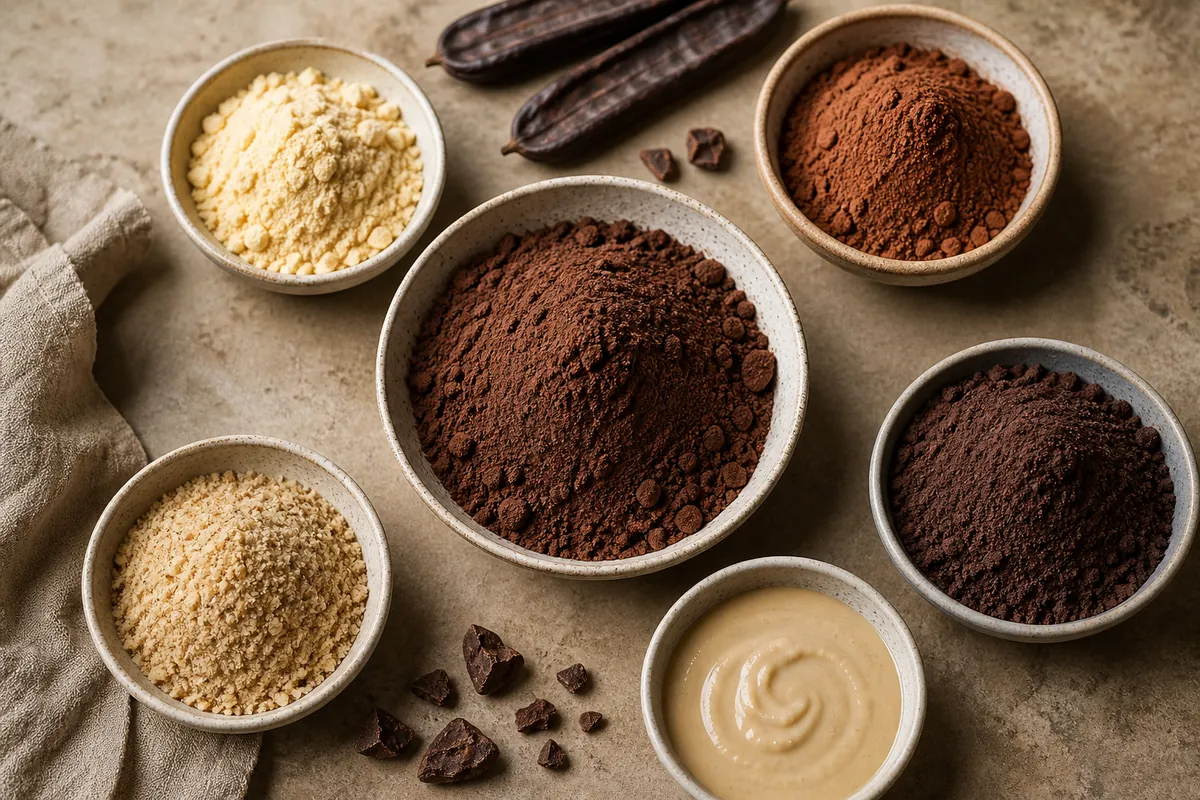
5 Best Carob Powder Substitutes (Pantry Swaps)
Ingredients
Equipment
Method
- Match the substitute to the job: for color and chocolate flavor in baking, choose cocoa powder variants; for naturally sweet flavor, choose date powder.
- Start with the listed swap ratio, then taste-test your batter/dough balance (especially if the recipe already has sweeteners).
- Adjust for bitterness: if using natural cocoa or black cocoa, increase sweetness slightly to mimic carob’s gentler profile.
- Adjust for texture: if using date powder, whisk and scrape lumps, and expect a denser crumb than carob.
- Keep baking performance steady by mixing the powder into the dry ingredients before adding wet ingredients.
Notes
- If your recipe uses baking soda, note that cocoa alkalinity can affect rise; start with 1:1, then adjust leavening only if your batter behaves differently than usual.
Tried this recipe?
Let us know how it was!
Carrie is a food writer and editor with more than 15 years of experience. She has worked for some of the biggest names in the food industry, including Bon Appétit, Food & Wine, and Martha Stewart Living.
As the Editor in Chief of EpicureDelight, Carrie oversees all of the content on the site. She also manages the team of contributing writers and editors, who help to create delicious recipes, helpful tips, and informative articles that you’ll find on the site.
A native of the Chicago area, Carrie is passionate about all things food. She loves trying new restaurants and experimenting with new recipes in her kitchen. She’s also a graduate of the Culinary Institute of America, so she knows a thing or two about food!



