Go Back
+ servings
5 Best Carob Powder Substitutes (Pantry Swaps) | EpicureDelight

5 Best Carob Powder Substitutes (Pantry Swaps)

No ratings yet
Pick a carob powder substitute based on how sweet your recipe is and whether you need the powder to behave like cocoa in batter.
Prep Time 5 minutes
Cook Time 0 minutes
Total Time 5 minutes
Servings: 1 batch
Course: Substitutes

Ingredients
  

Best Matches
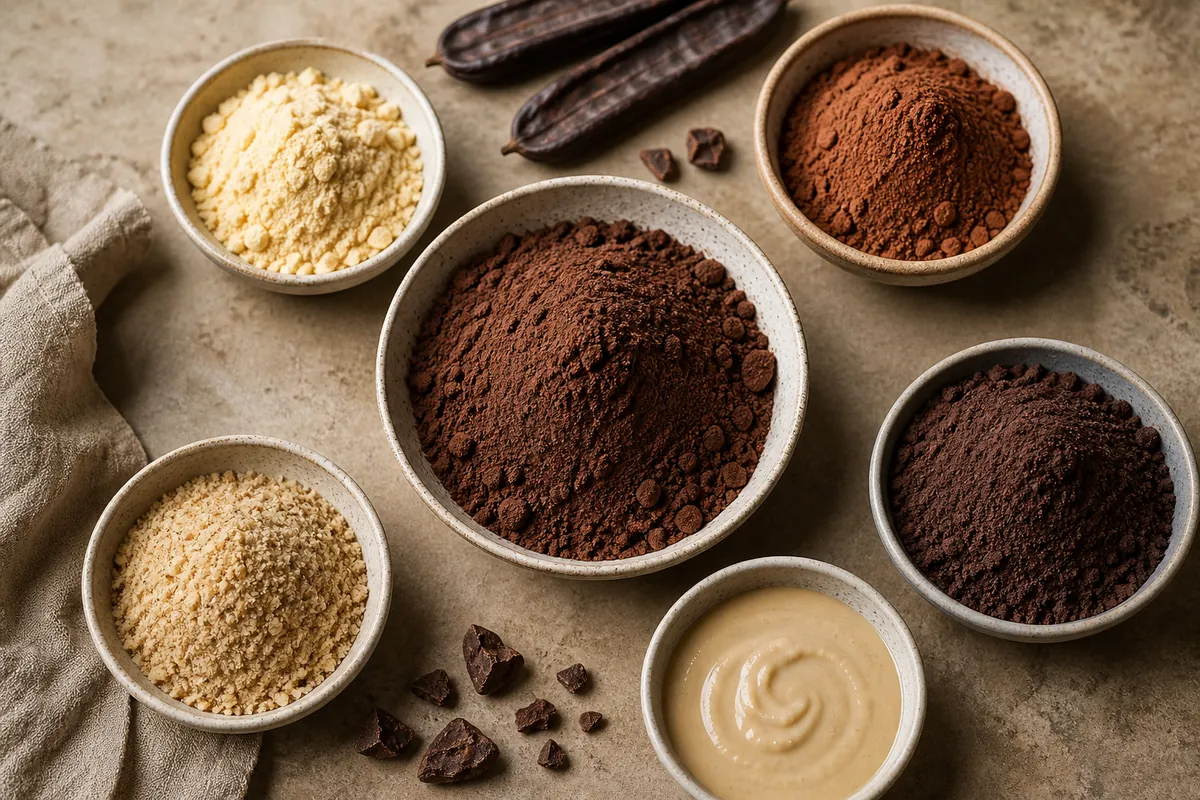
  • 1:1 Unsweetened cocoa powder Closest baking behavior; carob is typically less bitter—add 1–2 teaspoon sweetener per ¼ cup cocoa if your recipe tastes flat.
  • 1:1 Dutch-process cocoa powder Smoother, darker color; slightly milder acidity than natural cocoa—best for cakes and cookies that rely on a neutral profile.
Good Alternatives
  • ¾:1 Black cocoa powder Very dark and intense; use a bit less, then increase sweetness to mimic carob’s gentler roast notes.
  • ¾:1 Ground dried dates (date powder) Adds natural sweetness and chew; whisk well to prevent graininess—reduce added sugar because it’s already sweet.
Emergency Swaps
  • 1:1 Cocoa + sugar mix (stirred, pre-blended) If your recipe expects carob’s sweetness, combine cocoa powder with a small amount of sugar/corn syrup alternative before mixing into dry ingredients.

Equipment

  • Measuring cups/spoons
  • Whisk
  • Sieve (optional, for lump-free date powder)

Method
 

  1. Match the substitute to the job: for color and chocolate flavor in baking, choose cocoa powder variants; for naturally sweet flavor, choose date powder.
  2. Start with the listed swap ratio, then taste-test your batter/dough balance (especially if the recipe already has sweeteners).
  3. Adjust for bitterness: if using natural cocoa or black cocoa, increase sweetness slightly to mimic carob’s gentler profile.
  4. Adjust for texture: if using date powder, whisk and scrape lumps, and expect a denser crumb than carob.
  5. Keep baking performance steady by mixing the powder into the dry ingredients before adding wet ingredients.
Notes

  • If your recipe uses baking soda, note that cocoa alkalinity can affect rise; start with 1:1, then adjust leavening only if your batter behaves differently than usual.

Tried this recipe?

Let us know how it was!