
Cassava flour has a way of making gluten-free baking feel almost normal. It mimics wheat flour's neutral flavor and gives sauces a smooth, starchy body that other grain-free flours rarely match.
When you run out, the right cassava flour substitute depends heavily on what the recipe is actually doing: thickening a sauce, building baked structure, or holding a batter together.
Starches and flours behave differently here. Tapioca starch, arrowroot, and cornstarch are purely thickening agents.
Almond flour and rice flour add baked crumb but won't thicken a sauce the same way. Matching the right tool to the job is what keeps the final dish on track.
Cassava flour also has a surprisingly long pantry life, so if you're curious about this starchy white powder's storage window before restocking, that's worth a quick check too.
Cassava flour is a neutral, starchy, gluten-free flour used for thickening, baking, and batters. For thickening, tapioca starch or arrowroot are the closest swaps. For baked structure, almond flour or rice flour step in. Cornstarch and potato starch work as emergency thickeners. Match by use-case first, then adjust moisture or binders.
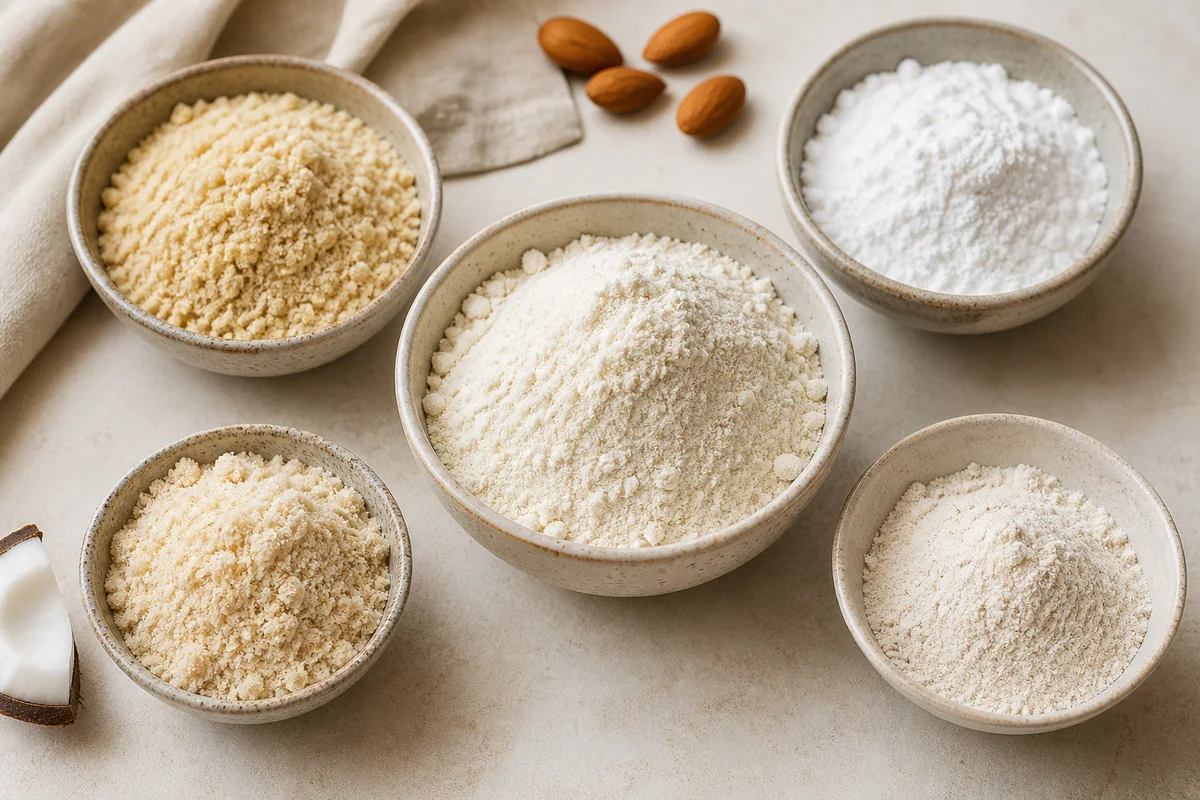
5 Best Cassava Flour Substitutes Worth Trying
Use the table below to match a substitute to your recipe goal before reading the detail sections.
| # | Substitute | Best For | Ratio | Key Note |
|---|---|---|---|---|
| 1 | Tapioca Starch | Thickening + Batter | 1:1 | Glossy, elastic, chewy set |
| 2 | Arrowroot Starch | Thickening + Sauce | 1:1 | Smooth, clean, no grain |
| 3 | Almond Flour | Baking | 1:1 | Tender crumb, nutty flavor |
| 4 | Rice Flour + Binder | Baking + Batter | 1:1 | Neutral; needs structure help |
| 5 | Cornstarch | Thickening | ¾:1 | Firms up; less elastic |
1. Tapioca Starch
Tapioca starch and cassava flour actually come from the same plant. The difference is that cassava flour uses the whole root, while tapioca starch is just the extracted starch.
That makes tapioca the single closest match for starch behavior.
For thickening, it produces a glossy, slightly elastic finish that cassava flour gives sauces and glazes. For batters, starch-based binding options like this one help the coating stay crisp as it cools.
Tapioca Starch
Works for: Thickening sauces, glazes, pie fillings, and crispy batter coatings at a 1:1 swap
Skip if: You want a non-elastic set-tapioca can make cooled sauces and puddings feel springy or gummy
- Ratio: Start 1:1 for thickening; for very delicate sauces, pull back by 1 teaspoon and stir in after simmering
- Texture: Glossy and semi-elastic when set; more translucent than a flour-thickened sauce
- Batter use: Mix into dry coating ingredients for fried foods to lock in crunch
2. Arrowroot Starch
Arrowroot is the cleaner-tasting option. It thickens at a lower temperature than cornstarch and leaves no chalky aftertaste behind.
It works well in fruit sauces, clear gravies, and delicate dessert glazes. One practical note: arrowroot breaks down quickly if you simmer it too long, so add it near the end of cooking.
If you're also swapping out grain-based flours elsewhere in the recipe, arrowroot pairs cleanly with those changes.
- Timing: Whisk into a cold liquid slurry, then stir into the hot pan during the last 2-3 minutes
- Simmer limit: Bring just to a brief bubble; extended boiling will thin the sauce back out
- Reheat stability: Arrowroot sauces can thin when reheated-stir over low heat and add a small slurry if needed
*Skip if:* You want a chewier, more elastic mouthfeel. Arrowroot sets softly, not springily.
3. Almond Flour
Almond flour fits a different job entirely. It is not a thickener.
It is a baked-good flour that adds fat, moisture, and a tender crumb to cookies, cakes, and quick breads.
The nutty, slightly sweet quality of almond flour works beautifully in chocolate chip cookies or a simple banana bread, but it will change the flavor profile noticeably. It also browns faster than cassava flour, so drop your oven temperature by 10-15°F and watch the timer.
- Ratio: Use 1:1, but expect a denser, moister crumb than cassava flour produces
- Binder: Add an egg or a flax egg to hold structure; almond flour has no gluten and can crumble without it
- Fat adjustment: Almond flour is naturally fatty-reduce butter or oil by 1-2 tablespoon if the batter looks oily
- Browning: Check baked goods 5 minutes early; edges darken before the center sets
*Skip if:* You need neutral flavor or any kind of starchy chew. Almond flour changes both noticeably.
4. Rice Flour + Binder
Fine white rice flour is one of the most neutral gluten-free flours available. It bakes up light and mild, which makes it a good cassava flour stand-in for cakes, cookies, and simple batters.
The problem is structure: cassava flour has a natural binding quality that rice flour does not replicate on its own.
You will almost always need to add something to hold the bake together. The mild, clean flavor of rice flour means the binder you choose won't compete with the dish.
| Use | Ratio | Notes |
|---|---|---|
| Cakes / muffins | 1:1 + ¼ teaspoon xanthan gum per cup | Keeps crumb from falling apart |
| Cookies | 1:1 + 1 egg | Egg binds and adds chew |
| Flatbreads / wraps | 1:1 + 1 teaspoon psyllium husk per cup | Psyllium adds stretch and flex |
- Hydration: Rice flour absorbs liquid slowly-let the dough rest 5 minutes before judging consistency
- Dry dough fix: Add liquid 1 tablespoon at a time if the mix feels stiff after resting
- Avoid for sauces: Rice flour thickens less predictably than a starch; use tapioca or arrowroot instead
5. Cornstarch
Cornstarch is the most common pantry thickener, and it works as a cassava flour substitute when thickening is the only goal. It sets firmly and produces a glossy finish, but it does not have the elastic quality of tapioca or the delicacy of arrowroot.
Cornstarch is also less forgiving when the dish cools. Puddings and glazes can turn stiff and almost gel-like.
For sauces served immediately, that firmness rarely matters. For anything served cold or reheated the next day, you may want arrowroot instead.
- Ratio: Use ¾ the cassava flour amount first; simmer 30-45 seconds to fully activate
- Slurry method: Always mix cornstarch into cold water before adding to a hot pan-never add it dry
- Cooling behavior: Expect a firmer set as the dish cools; thin with a small splash of broth if needed before serving
- Baking: Not a direct replacement for baking-cornstarch adds no structure or crumb
*Skip if:* You want chewy elasticity or a flour-like baked texture. Cornstarch is starch-only and will not supply baked structure.
Making Cassava Flour Substitutes Work
The biggest adjustment mistake is treating all substitutes as drop-in swaps without checking the recipe's structural role. Starches need a slurry.
Flours need a binder. Getting that right before mixing saves a lot of corrective guesswork later.
If you're curious how fiber-based binding options compare as baking support, those work alongside both rice flour and almond flour setups.
- For thickening: Always mix your starch into cold water first (roughly 1 tablespoon starch per 1 tablespoon water), then stir the slurry into the hot liquid and simmer 30-60 seconds until the sauce clears and thickens
- For baking structure: If your baked good looks crumbly after a test bake, add ¼ teaspoon xanthan gum or 1 teaspoon psyllium husk per cup of flour substitute, or add a whole egg for binding and moisture
- Texture rescue: Too thick? Whisk in liquid (water, broth, or milk) 1 tablespoon at a time over low heat. Too thin? Mix a small cold-water slurry with an additional 1 teaspoon starch and stir in slowly
Frequently Asked Questions
Tapioca starch is the closest match at a 1:1 ratio. It produces the same glossy, slightly elastic finish that cassava flour gives sauces and gravies.
Only in small amounts as a binder, not as a full flour replacement. Tapioca starch alone will not supply the crumb structure that baked goods need.
Not quite. Arrowroot sauces can thin when reheated. Stir over low heat and add a small fresh slurry to restore thickness.
Use ¼ teaspoon xanthan gum per cup for cakes, or 1 teaspoon psyllium husk per cup for wraps and flatbreads. A whole egg also works well in cookies.
Whisk in warm liquid (water or broth) 1 tablespoon at a time over low heat until the consistency loosens. Stir constantly to avoid lumps forming.
5 Best Cassava Flour Substitutes Worth Trying
Ingredients
Equipment
Method
- Identify your recipe goal: thickening (sauces), binding (batter/dough), or baking structure (cakes/breads).
- Use the closest match from the table: starches for thickening/chew, flours for baked structure.
- Measure using the listed ratio; if switching from cassava flour to a starch, start with the lower end when thickening sauces.
- Test texture: simmer/thicken 30–60 seconds longer for starches if it looks thin, or loosen with a splash of water/broth.
- For baking, add a binder if your batter looks sandy (xanthan gum, psyllium, or an egg) and re-test once.
Notes
- Cassava flour is a starch-forward gluten-free flour—starches mimic thickening best, while nut/rice flours mimic baked structure.
- If your substitute is a starch (tapioca/arrowroot/corn/potato), reduce start amount slightly for sauces and adjust after heating.
Tried this recipe?
Let us know how it was!
Carrie is a food writer and editor with more than 15 years of experience. She has worked for some of the biggest names in the food industry, including Bon Appétit, Food & Wine, and Martha Stewart Living.
As the Editor in Chief of EpicureDelight, Carrie oversees all of the content on the site. She also manages the team of contributing writers and editors, who help to create delicious recipes, helpful tips, and informative articles that you’ll find on the site.
A native of the Chicago area, Carrie is passionate about all things food. She loves trying new restaurants and experimenting with new recipes in her kitchen. She’s also a graduate of the Culinary Institute of America, so she knows a thing or two about food!



