
Caster sugar dissolves faster than regular granulated sugar, and that speed matters more than most bakers realize. It disappears into butter, eggs, and cream without leaving gritty spots, which is why sponge cakes and mousse recipes call for it by name.
A good caster sugar substitute matches that dissolving behavior as closely as possible.
Understanding how fine sugar behaves in a batter helps you pick the right swap. Some alternatives are nearly identical.
Others change flavor, moisture, or crumb texture in ways you need to know before the oven is on.
Caster sugar's fine grain dissolves fast and keeps batters smooth. Extra-fine granulated sugar or superfine sugar are the closest 1:1 swaps. For coarser options like brown sugar or demerara, sift first. Powdered sugar works in a pinch but use about ¾ the amount and expect a softer crumb.
5 Best Caster Sugar Substitutes (and How to Use Them)
Every substitute below is ranked by how well its grain size and dissolving speed match caster sugar. Use this table to find your swap fast, then read the H3 section below it for the full picture.
| # | Substitute | Best For | Ratio | Key Note |
|---|---|---|---|---|
| 1 | Fine Granulated (Extra-Fine) | Both | 1:1 | Closest dissolve match |
| 2 | Superfine Sugar | Both | 1:1 | Fastest dissolving option |
| 3 | Light Brown Sugar | Baking | 1:1 | Sift first; adds molasses |
| 4 | DIY Blitzed Granulated | Both | 1:1 | Pulse short; avoid powder |
| 5 | Powdered Sugar | Baking | ¾:1 | Starch changes crumb softness |
1. Fine Granulated Sugar
Extra-fine granulated sugar is the substitute that behaves most like caster sugar in the bowl. The crystals are small enough to dissolve into butter and eggs without leaving grit, and it produces the same light crumb in whipped batters.
We use it 1:1 with no adjustment needed. It is the safest swap for sponge cakes and any recipe where you cream butter and sugar together.
If your finely ground pantry sugar has been stored well and flows freely, it should perform exactly like caster sugar.
Extra-Fine Granulated
Works for: sponge cakes, whipped batters, cookies, shortbread, meringue
Skip if: your granulated sugar has noticeably large crystals, or if your recipe needs a powdery texture that only icing sugar gives
- Ratio: 1:1 with no changes to liquid or leavening
- Cream time: Beat butter and sugar 1 minute longer than usual to ensure full dissolution
- Texture result: Crumb stays light and even; no gritty finish when crystals are truly fine
2. Superfine Sugar
Superfine sugar is sold in many supermarkets as "baker's sugar" and it dissolves even faster than most extra-fine granulated sugar. It is the one to reach for when a recipe stresses a light, even crumb or calls for sugar to dissolve into a cold or room-temperature liquid.
Use it in angel food cakes, chiffon cakes, and any batter where the sugar must integrate before heat starts. It can slightly increase tenderness compared to caster sugar, which is a minor difference most recipes won't notice.
- Best for: Angel food cake, chiffon, cold-set desserts, lemon curd, simple syrups
- Sweetness: Identical to caster sugar; no adjustment needed
- Skip if: You're reaching for powdered sugar thinking it's the same thing. Superfine is still grainy, not powdery. And if you need a caramel or molasses depth, choosing brown sugar instead is the better call.
3. Light Brown Sugar
Brown sugar adds a mild molasses note and slightly more moisture, which changes the outcome in delicate recipes. That said, it is a reliable pantry substitute for cookies, banana bread, and anything where a little extra warmth in flavor is welcome.
Sift it before measuring. Clumps are the main problem here, not the flavor.
Once broken down, storing brown sugar properly prevents it from hardening again between uses. Measure by leveling after sifting, not by packing.
- Use for: Chocolate chip cookies, muffins, banana bread, gingerbread, crumbles
- Texture note: Sifting removes clumps and brings grain size closer to caster sugar
- Flavor adjustment: Expect a slightly deeper, caramel-adjacent sweetness; reduce any added vanilla by half if it feels too heavy
- Skip if: Your recipe needs a clean, neutral sweetness. Brown sugar's molasses note will show in pale sponges or vanilla cakes.
4. DIY Blitzed Granulated Sugar
Blitzing regular granulated sugar in a food processor or blender is the fastest way to recreate caster sugar's texture at home. The goal is fine, free-flowing grains, not dust.
You want it to look like fine sand, not cornstarch.
Pulse in 5-second bursts and check the texture after each one. Stop the moment the crystals look uniformly fine.
You can find raw sugar swaps useful for context on how grain size affects baking, since the same dissolving logic applies here.
- Step 1: Add regular granulated sugar to a dry food processor or blender
- Step 2: Pulse 3 to 4 times in 5-second bursts; stop and check texture each time
- Step 3: Tilt the bowl - it should flow freely like fine sand, not clump
- Quality tip: Over-blitzing creates powdered sugar with starch-like particles; if it looks opaque and cloudy, you've gone too far
- Skip if: You already have superfine sugar or your blender runs hot and tends to over-process
5. Powdered Sugar
Powdered sugar, also called icing sugar, contains a small amount of cornstarch to prevent clumping. That starch changes how it behaves in batters.
It produces a softer, more tender crumb than caster sugar, which is good in some recipes and a problem in others.
The ratio is not 1:1. Use ¾ cup of powdered sugar for every 1 cup of caster sugar called for.
If you want a full comparison of swaps in this category, swapping icing sugar covers the same tradeoffs in more detail.
| Use | Ratio | Notes |
|---|---|---|
| Shortbread / butter cookies | ¾:1 | Softer crumb; edges less crisp |
| Sponge / layer cake | ¾:1 | Tender but can be gummy if overbaked |
| Frosting or glaze | 1:1 | Works perfectly here; starch helps stability |
| Meringue | Avoid | Starch prevents proper stiff peaks |
- Key rule: Always sift powdered sugar before adding it to batter; it clumps during storage
- Crumb impact: Expect a softer, more cakey result even in recipes that should be chewy
- Skip if: You need a crisp cookie or a properly aerated meringue; powdered sugar's starch works against both
Making Any Caster Sugar Substitute Work
The single factor that determines whether a substitute succeeds is how fast the crystals dissolve into your fat or liquid. Undissolved grains show up as a gritty texture in the finished bake, or as a slightly sandy crust on cookies.
If your swap is coarser than caster sugar, extend your creaming time by 60 to 90 seconds and watch the batter closely. When working with coarser raw sugars, crush and sift before measuring to avoid wasted effort after baking.
You can also check storing powdered sugar correctly if your emergency swap has been sitting in the pantry a while and might have clumped.
- Choose by grain size: Extra-fine or superfine first, DIY blitzed second, brown sugar or powdered sugar only when the others aren't available
- Prep before measuring: Sift clumpy substitutes and level the cup; packed or airy measurements throw off the ratio
- Check before baking: Rub a small amount of batter between your fingers. If you feel grains, beat for another 30 seconds before proceeding
Frequently Asked Questions
Yes, if your granulated sugar is extra-fine. Standard granulated has larger crystals that may leave a gritty texture in whipped batters, so extend creaming time by about 60 seconds.
Superfine or extra-fine granulated sugar at a 1:1 ratio. Both dissolve quickly enough to keep the crumb light and even without any adjustment to the recipe.
Use ¾ cup powdered sugar per 1 cup of caster sugar and sift it well. Reducing the ratio limits the cornstarch content, which is the main cause of gummy crumb.
Yes, always. Brown sugar clumps during storage and the lumps don't break down in the batter, leaving uneven sweetness and a slightly grainy texture in the finished bake.
We'd skip it in that case. Whole demerara crystals are too coarse for most batters and won't fully dissolve, leaving crunchy spots in delicate cakes or cookies.
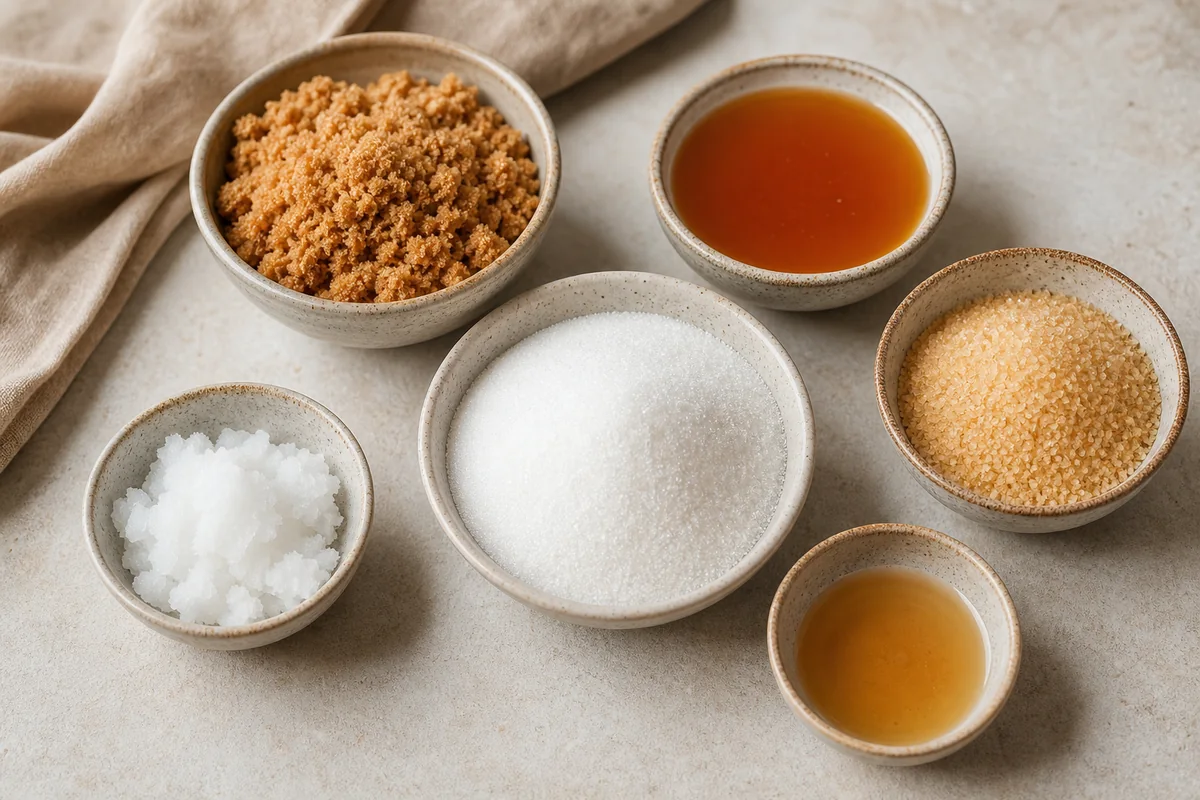
5 Best Caster Sugar Substitutes for Better Results
Ingredients
Equipment
Method
- Match the bake: for whipped batters or cakes, prioritize fastest-dissolving options (extra-fine/superfine or DIY).
- Measure using the listed ratio (especially for powdered sugar and coarse sugars).
- If your substitute is clumpy or packed (like brown sugar), break it up and sift for a smoother texture.
- Adjust as needed: if the batter feels overly thick or the crust browns too fast, reduce liquid slightly next time.
- Taste and check texture in the batter before baking if possible; undissolved crystals often show up as a gritty finish.
Notes
- Goal: caster sugar’s fine grain helps dissolve quickly; choose substitutes with similar dissolve behavior.
- Coarser sugars may need crushing/sifting and sometimes a slightly reduced amount.
Tried this recipe?
Let us know how it was!
Carrie is a food writer and editor with more than 15 years of experience. She has worked for some of the biggest names in the food industry, including Bon Appétit, Food & Wine, and Martha Stewart Living.
As the Editor in Chief of EpicureDelight, Carrie oversees all of the content on the site. She also manages the team of contributing writers and editors, who help to create delicious recipes, helpful tips, and informative articles that you’ll find on the site.
A native of the Chicago area, Carrie is passionate about all things food. She loves trying new restaurants and experimenting with new recipes in her kitchen. She’s also a graduate of the Culinary Institute of America, so she knows a thing or two about food!



