
That faintly bitter, savory-green note celery powder adds to a dry rub or soup base is easy to miss until it's gone. The good news is that a celery powder substitute is probably already in your spice drawer.
Measure carefully, taste early, and dissolve your substitute in hot liquid before judging the flavor.
A quick note on salt: some substitutes carry salt already. If you're swapping in celery salt, pull back on any other salt in the recipe by at least half a teaspoon per tablespoon of celery salt used.
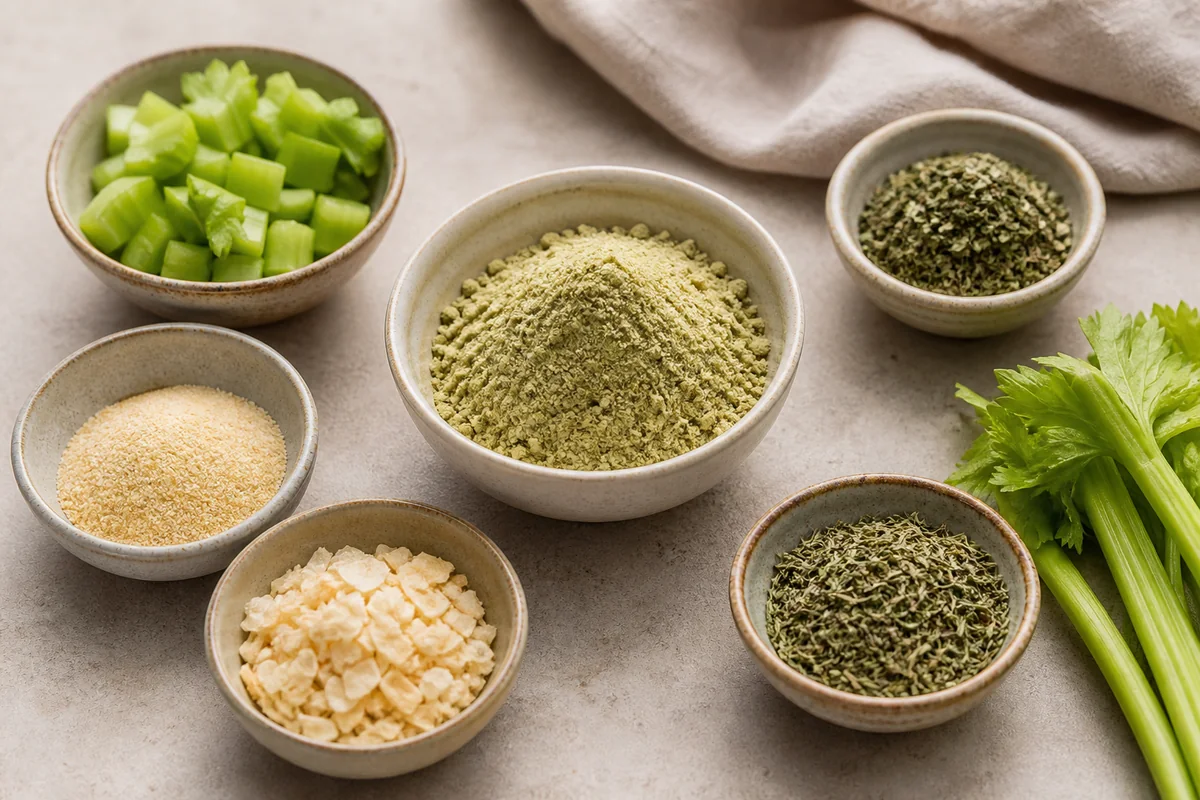
Celery seed is the closest 1:1 swap for celery powder in most recipes. Dried celery flakes (crushed fine) and homemade ground dried celery both work well. Use celery salt at ¾:1 and cut other salt. Ground fennel seed is a last-resort aromatic swap at ½:1.
5 Best Celery Powder Substitutes Ranked by Flavor Closeness
Every substitute below keeps your dish in that savory, celery-forward lane. The table gives you a fast reference, and the sections below explain the details for each one.
| # | Substitute | Best For | Ratio | Key Note |
|---|---|---|---|---|
| 1 | Celery Seed | Both | 1:1 | Closest flavor profile |
| 2 | Homemade Celery Powder | Both | 1:1 | Grind fine for even mix |
| 3 | Dried Celery Flakes | Both | 1:1 | Crush before measuring |
| 4 | Celery Salt | Both | ¾:1 | Reduce other salt first |
| 5 | Ground Fennel Seed | Cooked | ½:1 | Mild anise; use sparingly |
1. Celery Seed
Celery seed is the most direct swap. It carries the same sharp, slightly bitter celery flavor and works at a straight 1:1 ratio in nearly every application.
For a closer look at how swapping celery seed changes a recipe's base notes, that breakdown is worth a read before committing to large-batch blends.
The seeds are whole by default, so grind them lightly in a mortar or spice grinder before adding to a dry rub or seasoning mix. In soups or stews, whole seeds soften enough during cooking that grinding is optional.
- Dry rubs: Grind seeds fine and measure 1:1 by volume
- Soups and stews: Add whole seeds early in cooking, same quantity
- Seasoning blends: Grind first so texture matches the other powders
Skip if you want a milder, background savory base. Celery seed keeps a distinctly strong celery note that can dominate a lightly seasoned dish.
2. Homemade Celery Powder
Grinding dried celery into powder at home gives you the nearest possible match. The flavor profile is almost identical to commercial celery powder, and the only real variable is grind fineness.
If you have store-bought dried celery or can dry fresh stalks in a low oven, this option is worth the extra five minutes. A good blitz in a savory-green dried form like this dissolves cleanly into hot dishes without adding any off-notes.
- Grind fineness: Aim for a powder, not coarse flakes, so it blends evenly
- Storage: Keep in a sealed jar away from heat; use within 3 months
- Texture note: A finer grind dissolves better in sauces and soups
Skip if you don't have a spice grinder. Coarse particles from a rough chop won't dissolve evenly and can leave visible bits in a smooth sauce.
3. Dried Celery Flakes
Dried celery flakes and powder share the same base ingredient, but the texture difference matters. Flakes release flavor more slowly than powder because less surface area is exposed, so you may need to add them earlier or crush them first.
Crushing flakes between your fingers or giving them a quick 3-second pulse in a spice grinder brings them much closer to powder behavior. Understanding how celery-forward seasoning interacts with liquid-heavy dishes helps you decide when to crush versus leave whole.
Crushed Flakes
Works for: dry rubs, spice blends, soups added early in cooking
Skip if: finishing a sauce off-heat where grit would show
Whole Flakes
Works for: slow-cooked soups, stews, braises with long cook times
Skip if: you need a smooth texture in a blended or pureed dish
- Soups and stews: Use 1:1 and add at the start of cooking
- Rubs and blends: Crush fine first, then measure 1:1
- Blended dishes: Grind to near-powder or switch to celery seed
Skip if you're finishing a sauce off the heat. Uncrushed flakes stay noticeable in a smooth sauce; choose celery seed for those situations.
4. Celery Salt
Celery salt is celery seed ground with table salt, usually at roughly a 1:3 ratio of celery to salt. That salt load is what you need to manage before anything else.
Use ¾ teaspoon of celery salt for every 1 teaspoon of celery powder called for, and immediately cut other added salt in the recipe. The lightly salty, herbal edge it brings can actually round out a soup base well, as long as you taste before adding any extra seasoning.
- Start lower: Use ¾:1 ratio and add more only after tasting
- Cut added salt: Reduce other salt by at least ½ teaspoon per tablespoon of celery salt used
- High-sodium recipes: Skip entirely if bouillon, soy sauce, or cured meat is already in the dish
- Dry rubs: Adjust the whole blend's salt first, then add celery salt to fill the celery role
Skip if your recipe already has salty ingredients. Celery salt in that context pushes the dish past the point where you can fix it easily.
5. Ground Fennel Seed
Ground fennel seed is an aromatic swap, not an exact one. It brings a slightly sweet, anise-adjacent note that reads as savory and warming, which makes it useful when the celery powder's job is background depth rather than a distinct celery flavor.
Use it at ½ teaspoon per 1 teaspoon of celery powder. When leaning into aromatic spice swaps like this, pairing with a small amount of onion powder helps anchor the flavor so it doesn't tip toward licorice.
| Use | Ratio | Notes |
|---|---|---|
| Dry rubs | ½:1 | Pair with onion powder to balance sweetness |
| Soups and stews | ½:1 | Add early; taste at midpoint and stop if anise note is strong |
| Sausage seasoning | ½:1 | Works well here; fennel is traditional in many sausage blends |
- Avoid over-use: More than ½:1 makes anise flavor dominant
- Best pairings: Works alongside garlic powder, smoked paprika, and black pepper
- Worst case: Delicate broth-based soups where clean celery notes matter most
Skip if you're making a light vegetable soup or any dish where clean celery flavor is the point. Fennel reads as anise in that context.
Making Celery Powder Substitutes Work in Any Recipe
The substitute you pick matters less than when and how you add it. Powders and fine-ground seeds dissolve fastest in hot liquid, while coarser flakes need more time and heat to release their flavor fully.
For seasoning blends used in things like choosing the right dry-blend base, texture consistency across ingredients matters most.
- Soups and stews: Add the substitute in the first half of cooking so flavor fully integrates. Celery seed and crushed flakes both need heat and time.
- Dry rubs and blends: Grind seeds or flakes to a consistent powder before mixing. Inconsistent particle size means uneven flavor across the surface of the meat or vegetable. For managing salt when switching seasonings, pre-mixing dry ingredients first saves you from over-salting at the pan.
- Finishing and garnish: Avoid coarse flakes or whole seeds here. Stick with finely ground celery seed or homemade powder for clean, even coverage.
Frequently Asked Questions
Celery seed is the closest match and uses a straight 1:1 ratio. Grind it lightly before using in dry blends so the texture stays consistent with other powdered spices.
Yes, but use ¾ teaspoon for every 1 teaspoon of celery powder and reduce other salt in the recipe. Skip it entirely if the dish already contains soy sauce, bouillon, or cured meat.
Crush the flakes fine before measuring, then use a 1:1 ratio. Add them early in cooking so they have enough heat and time to release flavor evenly.
It works as an aromatic background swap at ½:1, but the flavor reads slightly sweet and anise-like. Avoid it in light soups where clean celery flavor is expected.
Start at the listed ratio for your chosen substitute, add it in the first half of cooking, and taste at the midpoint. Adjust up in small increments, not all at once.
5 Best Celery Powder Substitutes in Every Recipe
Ingredients
Method
- Choose a substitute based on what you have: celery seed for closest flavor, dried celery flakes for similar body, or celery salt if you can control added salt.
- Measure by the listed ratio (or start slightly under if your substitute contains salt).
- Stir into hot liquids early for flavor release; for blends, mix with other seasonings before adding.
- Taste at the midpoint of cooking and adjust: add more for flavor, or balance with a pinch of sugar/acid if it turns sharp or too bitter.
- If using coarse flakes or seeds, crush/pulse for a finer texture so the substitute dissolves more evenly.
Notes
- Ratios assume you’re substituting for celery powder in seasoning blends or cooked dishes.
- For celery salt, reduce added salt elsewhere in the recipe.
Tried this recipe?
Let us know how it was!
Carrie is a food writer and editor with more than 15 years of experience. She has worked for some of the biggest names in the food industry, including Bon Appétit, Food & Wine, and Martha Stewart Living.
As the Editor in Chief of EpicureDelight, Carrie oversees all of the content on the site. She also manages the team of contributing writers and editors, who help to create delicious recipes, helpful tips, and informative articles that you’ll find on the site.
A native of the Chicago area, Carrie is passionate about all things food. She loves trying new restaurants and experimenting with new recipes in her kitchen. She’s also a graduate of the Culinary Institute of America, so she knows a thing or two about food!



