Celery root tastes like mild celery mixed with parsley, earth, and a faint nutty sweetness. Raw celeriac feels crisp and dense, with a fresh herbal bite that is gentler than a mouthful of celery leaves.
Cooking softens both its flavor and texture. Boiled celery root becomes creamy and mild, while roasting adds browned sweetness and a deeper toasted edge.

Celery root, also called celeriac, tastes herbal, earthy, mildly nutty, and a little sweet. Raw flesh has a dense crunch, while cooked flesh can become tender enough for mash, soup, or puree.
What Does Celery Root Taste Like?
Cutting a celery root releases an aroma that resembles celery leaves and parsley. The scent feels greener and more concentrated than the watery smell of a pale celery stalk.
The first raw bite is firm, juicy, and slightly peppery. Its flavor then settles into mild celery, damp earth, and a soft nut-like finish.
Fresh celeriac should not taste sharply bitter. A little herbal bitterness can sit near the skin or fibrous base, which is why cooks remove the rough outer layer instead of shaving it as thinly as a carrot.
The flesh is denser than a raw potato and less sweet than a parsnip. It lacks the strong sugary perfume of parsnip and the starchy blankness of potato.
Celery stalks taste brighter and more watery, with strings that run along the length. Celery root feels compact, and its celery flavor stays in the pale flesh instead of relying on green leaves.
A fresh root can also suggest turnip, parsley root, or a very mild radish. Those comparisons describe its earthy and herbal side, though celeriac usually tastes rounder and less sharp.
The vegetable belongs in dishes where a quiet savory base helps other flavors. It can taste clear in a raw slaw, mellow in soup, and rich in a buttered puree without changing into three different vegetables.
How Does Raw Celery Root Compare With Cooked?
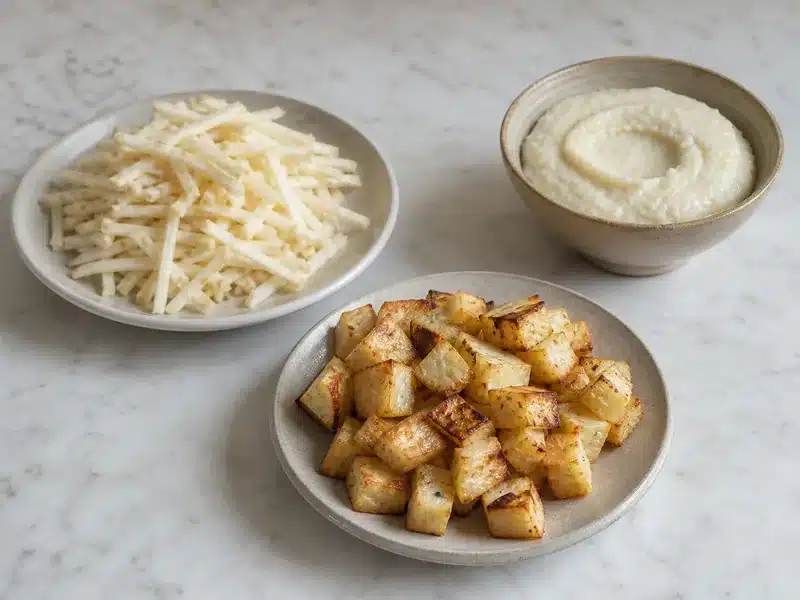
Heat changes celeriac more than seasoning does. Water softens the cells and carries away some aroma, while dry heat concentrates flavor at the surface.
| Method | Texture | Flavor | Best use |
|---|---|---|---|
| Raw, thin cut | Dense and crisp | Fresh, herbal, lightly peppery | Slaw and salad |
| Boiled | Soft and moist | Mild and gently earthy | Mash and soup |
| Steamed | Tender with more body | Cleaner celery aroma | Puree and warm salad |
| Roasted | Brown outside, creamy inside | Sweet, nutty, and savory | Side dish and grain bowl |
| Fried | Crisp edges and soft center | Toasty with a stronger salt response | Fritters and thin chips |
Raw celeriac works best in thin matchsticks or fine shreds. Thick raw chunks can feel woody because the dense cells need more chewing than a carrot.
Boiling makes the root easy to mash, though a large pot of water can mute its aroma. Steaming keeps more of the herbal flavor because less of the cut surface sits in water.
Puree feels smoother when you combine celeriac with potato, cream, or butter. Potato adds starch and body, while celeriac contributes the greener flavor.
Roasted cubes create the strongest contrast. Their edges turn brown and nutty while the centers become creamy, so one piece delivers both toasted and mild flavors.
Why Does Roasting Make Celery Root Sweeter and Nuttier?
Roasting first drives water from the cut surfaces. Once those surfaces dry, they can brown instead of staying pale and steaming.
Browning creates toasted aromas that the raw root does not have. It also concentrates the vegetable's mild sweetness, which reduces the impression of celery-like bitterness.
Cube size controls the balance. Small cubes offer more browned surface in every bite, while large pieces keep a bigger creamy center.
Oil helps the pieces contact the hot pan and brown evenly. Too much oil makes the surface greasy, while too little can leave dry leathery corners before the center softens.
A crowded tray traps steam between the pieces. The roots may become tender, but they stay pale and taste closer to boiled celeriac than roasted celeriac.
Dark golden edges taste nutty and savory. Black edges taste burnt and can make the whole piece seem bitter, especially when the cubes are small.
Salt pulls the sweetness and celery aroma forward. Thyme, black pepper, garlic, or mustard can support that flavor, though a heavy spice crust hides the root you wanted to taste.
Leave visible space between the pieces. Dry moving air creates browned, nutty edges, while a crowded tray creates steam.
Which Foods Balance Celery Root Best?
Celery root likes partners that answer one of its main traits. Fat softens the herbal edge, acid brightens the earthiness, fruit adds sweetness, and mild starch reduces intensity.
Potato is the easiest partner for mash or soup. It makes the texture familiar and lets you control how much celery aroma reaches each spoonful.
Apple works in the opposite direction. Its crisp sweetness and acidity sharpen raw celeriac in slaw, especially with lemon and a creamy dressing.
Lemon juice also slows browning on a cut surface. The acid keeps a raw salad looking pale while making the parsley-like flavor feel fresher.
Mustard adds heat and tang without covering the vegetable. Cream and butter create a rounder finish, which helps when roasted or pureed celeriac tastes too earthy for your preference.
Parsley and thyme echo the root's herbal side. Toasted hazelnuts or walnuts echo its roasted, nutty side and add a crisp texture that puree lacks.
Mushrooms and lentils build a deeper savory plate around celeriac. Chicken and pork also fit because their mild meat flavor leaves room for the root, while a strong smoky sauce can cover it.
For a light plate, combine raw celeriac, apple, mustard, and herbs. For a warm plate, roast it beside chicken or mushrooms and use lemon at the end to lift the browned flavor.
How Do You Choose and Prepare a Good Celery Root?
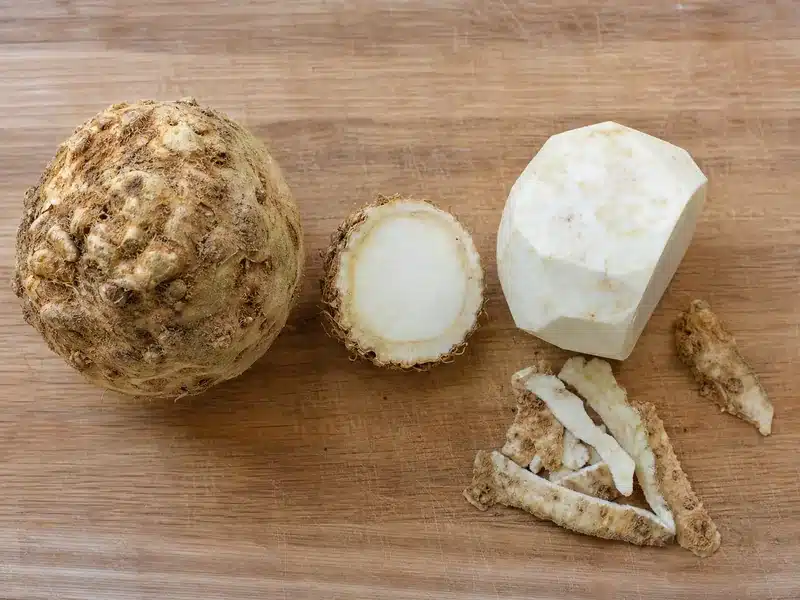
Choose a root that feels firm and heavy for its size. Soft patches, wet cracks, deep mold, and a hollow feel point to water loss or decay.
Small and medium roots often have tender solid flesh. Very large roots can still be good, but some develop a woody or hollow center that needs extra trimming.
- Cut off the top and fibrous base. Create two flat surfaces so the root sits safely.
- Slice away the rough skin. Follow the curve with a knife and remove deep creases that hold soil.
- Inspect the center. Trim brown, spongy, hollow, or unusually tough areas.
- Rinse the clean flesh. Remove any soil carried in by the knife.
- Cut for the method. Use thin shreds raw and even chunks for boiling or roasting.
The pale cut surface starts to brown when air reaches it. Put raw pieces in lemon water when they need to wait, then drain and dry them before dressing or roasting.
Do not soak the pieces for hours because water can pull away flavor. A short hold during preparation is enough to slow visible browning.
A woody root still works in stock or a long-cooked soup after you remove hard sections. Use a tender solid root for raw dishes, where every fiber remains obvious.
Keep an uncut root cold and dry until use. Once cut, wrap the exposed flesh and refrigerate it so the surface does not dry out or collect refrigerator odors.
Sources
- University of Kentucky Center for Crop Diversification, celeriac identity, smooth celery flavor, and storage quality
- Purdue Extension FoodLink, celery family selection and pairing guidance
Celeriac is a celery variety bred for its swollen stem base, while stalk celery is bred for long crisp ribs. They share a species and aroma, but stores sell them as different vegetables.
Fresh attached leaves can flavor stock or garnish, though they may taste stronger than the root. Remove wilted or damaged leaves before storing the bulb.
Cut flesh oxidizes when air reaches it, much like apple or potato. Browning alone is a quality change, while slime, mold, or a rotten odor calls for disposal.
It can replace part or all of the potato, but the result tastes more herbal and contains less potato starch. Mixing both gives a familiar body with clear celeriac flavor.
Fresh celeriac may have a faint aromatic edge, but it usually lacks the sweet licorice force of anise or fennel. Celery and parsley remain the closer comparisons.

Carrie is a food writer and editor with more than 15 years of experience. She has worked for some of the biggest names in the food industry, including Bon Appétit, Food & Wine, and Martha Stewart Living.
As the Editor in Chief of EpicureDelight, Carrie oversees all of the content on the site. She also manages the team of contributing writers and editors, who help to create delicious recipes, helpful tips, and informative articles that you’ll find on the site.
A native of the Chicago area, Carrie is passionate about all things food. She loves trying new restaurants and experimenting with new recipes in her kitchen. She’s also a graduate of the Culinary Institute of America, so she knows a thing or two about food!