
Chicken bouillon granules are basically dehydrated, compressed flavor. One teaspoon does a lot of work: salt, umami, and a faint roasted-chicken note that ties a whole pot together.
When the jar is empty, most cooks panic. They shouldn't.
Several pantry items replicate that savory punch without a trip to the store. The key is matching three things: salt level, body, and how fast the flavor dissolves into hot liquid.
Get those right, and your soup, rice, or sauce won't know the difference.
Chicken bouillon granules dissolve fast and deliver concentrated salt plus chicken-forward umami. The closest swaps are bouillon powder and bouillon paste at a 1:1 ratio. For pantry emergencies, jarred concentrate, reduced stock, or soy sauce with chicken seasoning all work well with small salt adjustments.
5 Chicken Bouillon Granules Swaps That Work Immediately
A good chicken bouillon granules substitute matches salt, chicken-leaning umami, and fast dispersal in hot liquid. If you also need broth-based swaps, that list covers liquid options in more depth.
The table below shows where each option lands.
| # | Substitute | Best For | Ratio | Key Note |
|---|---|---|---|---|
| 1 | Bouillon Powder | Both | 1:1 | Dissolve in hot water first |
| 2 | Bouillon Paste | Both | 1:1 | Thin before adding to pot |
| 3 | Jarred Concentrate | Both | ¾:1 | Use less; more intense |
| 4 | Reduced Stock | Both | 1:1 | Simmer down first |
| 5 | Soy Sauce + Seasoning | Both | 1:1 | Thin with water to taste |
1. Chicken Bouillon Powder
Powder and granules are almost the same product. The difference is grind size: powder is finer, so it dissolves faster and with less stirring.
Bouillon Powder vs. Granules
Works for: soups, rice, braises, pan sauces-any recipe calling for granules
Skip if: you're on a low-sodium diet, because powder carries the same salt load as granules
Use 1:1 by volume and dissolve the powder in a tablespoon of hot water before adding it to the pot. This prevents any gritty undissolved patches.
For a helpful look at the bouillon alternative to broth, that comparison lays out the tradeoffs clearly.
- Measurement: 1 teaspoon powder = 1 teaspoon granules, no adjustment needed
- Dissolving: Stir into 1-2 tablespoon hot water, then add to your dish
- Salt check: Taste before adding any extra seasoning-powder can run salty
2. Chicken Bouillon Paste
Paste is denser than granules, so it holds more flavor per teaspoon. The texture can fool people: it looks like it needs less, but the 1:1 ratio is still your safest starting point.
The biggest mistake with paste is dropping it straight into a cold or lukewarm dish. It clumps, and one bite gets all the flavor while the rest of the pot stays flat.
Always mix it into a few tablespoons of hot water first until it fully loosens, then stir that slurry into your pot.
- Ratio: Start 1:1, then taste-some brands are more concentrated than others
- Dissolving: Mix with 2-3 tablespoon hot water before adding to your recipe
- Flavor note: Paste often has a slightly richer, more roasted finish than granules
- Salt check: Reduce added salt by half until you've tasted the final dish
Skip if: you're short on time and can't dissolve it first. Undissolved paste creates uneven seasoning and a slightly gummy texture in light broths.
3. Jarred Chicken Stock Concentrate
Jarred concentrate (the kind sold as "bouillon in a jar" or as small pods) is typically more intense than granules by volume. Start at ¾ teaspoon concentrate for every 1 teaspoon of granules, then taste before adding more.
Stir the concentrate into hot water, then simmer your dish for 1-3 minutes after adding it. That brief simmer rounds off any sharp, high-sodium edges.
For a broader look at stock versus bouillon options, that page covers the full comparison.
- Ratio: Use ¾ of the volume called for in granules, then adjust up
- Dissolving: Stir into hot water; never add it cold or undiluted
- Simmer rule: 1-3 minutes of simmering after adding softens the concentrate flavor
Skip if: your dish needs a clean, light broth. Concentrate can feel heavier and darker than granules in delicate preparations.
4. Reduced Chicken Stock
This is the swap for when you have a carton of stock but no granules. The trick is reducing it first.
Standard stock is too thin and too mild to replace concentrated granules at a 1:1 liquid ratio.
Simmer carton stock uncovered for 5-10 minutes until it looks noticeably thicker and the flavor is more forward. Then use it at roughly 1:1 to replace what the granules would have contributed in liquid form.
| Use | Ratio | Notes |
|---|---|---|
| Soup or stew | 1:1 | Reduced stock; thin with water if dish gets too thick |
| Rice or pilaf | 1:1 | Replace part of cooking water; watch salt level |
| Pan sauce | 1:1 | Add reduced stock after deglazing; simmer 2 min |
- Reduction time: 5-10 minutes uncovered on medium heat for carton stock
- Salt note: Reduced stock concentrates any existing sodium-taste before seasoning
- Texture: Adds slight body to soups; thin with unsalted water if the dish gets heavy
Skip if: you need the swap immediately. Reduction takes time, and rushing it means your stock won't be concentrated enough to match granules.
5. Soy Sauce + Chicken Seasoning
This is the true pantry emergency move. Soy sauce brings salt and umami fast, but it lacks the chicken note.
Bridging that gap is simple: add garlic powder, onion powder, or poultry seasoning to push the flavor closer to chicken bouillon.
The bigger risk here is oversalting. Soy sauce is often saltier per teaspoon than granules.
Start at 1:1, then thin the liquid with a splash of water or unsalted stock until the saltiness feels right. If you're also working through choosing a soy-free option, that page covers the best alternatives.
For good results, check how you're storing soy sauce before use, since older bottles can taste sharper.
- Ratio: 1 teaspoon soy sauce per 1 teaspoon granules, then taste before adding more
- Chicken boost: Add ¼ teaspoon garlic powder + ¼ teaspoon onion powder per teaspoon of soy sauce
- Salt control: Thin with 1-2 tablespoon water or unsalted stock to avoid over-salting
Skip if: your recipe can't tolerate any soy flavor. Light, clear broths will pick up the soy note noticeably.
Making Any Chicken Bouillon Substitute Taste Right
Getting a substitute to land well is about two things: how you add it and when you taste. Concentrated swaps like paste or jarred concentrate need to be dissolved in hot water before they hit the pot-dropping them in cold creates uneven pockets of saltiness.
Once your substitute is in, simmer for at least a minute to let the flavors knit together before you judge the seasoning. If you want to understand the broader stock-versus-concentrate tradeoffs, that comparison is worth a quick read.
- Dissolve first: Stir paste, powder, or concentrate into 2-3 tablespoon hot water before adding to the pot
- Simmer briefly: Give any concentrate-based swap 1-3 minutes of heat to round off sharp edges
- Taste-adjust last: Add salt in small pinches only after the substitute has fully dispersed and you've tasted the dish
Frequently Asked Questions
Yes. Use the same volume and dissolve in hot water first. Both products carry similar salt levels, so taste before adding extra seasoning.
Start at ¾ teaspoon concentrate per 1 teaspoon of granules. Concentrate is more intense, so go smaller first, then taste and add more if needed.
It works in heartier soups but shows in light broths. Add garlic powder and onion powder to mimic the chicken note, and thin with water to control salt.
Yes, it works well. Simmer carton stock for 5-10 minutes first, then use it to replace part of the cooking water, watching salt carefully.
Add unsalted stock or plain water in small amounts, then simmer briefly. A raw potato simmered in the dish for 10 minutes can also absorb some excess salt.
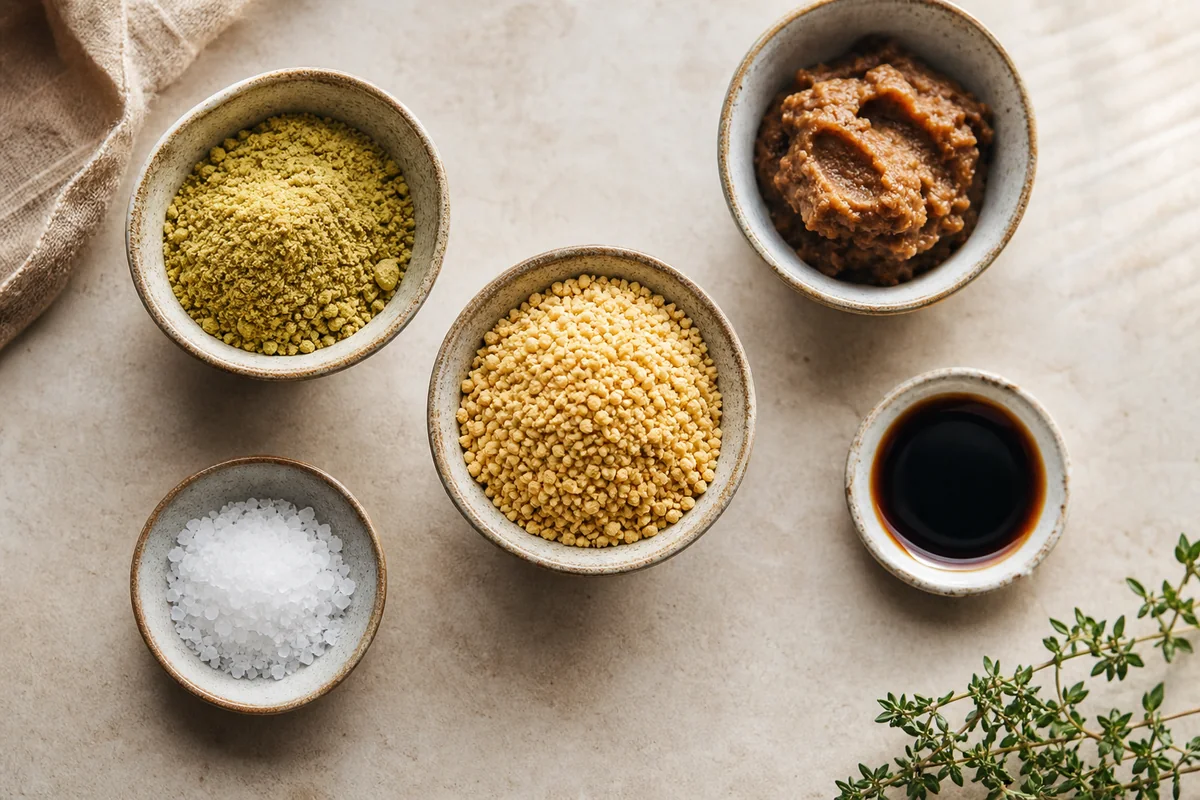
5 Best Chicken Bouillon Granules Substitutes (Pantry Swaps)
Ingredients
Equipment
Method
- Identify what you’re cooking (soup/stew vs. pan sauce) so you can match body and saltiness.
- Pick the closest substitute from the article list and use the listed ratio to start.
- Dissolve paste/powder/concentrate in a few tablespoons of hot water first, then stir into your dish.
- Taste after mixing; if it’s flat, add a tiny pinch more, and if it’s salty, thin with water or unsalted stock.
- Simmer or cook briefly (1–3 minutes) to round off sharp edges from concentrate-based swaps.
Notes
- Bouillon granules are concentrated salt + flavor; substitutions can vary widely in salt level.
- When swapping in liquid recipes, dissolve first to prevent uneven seasoning.
Tried this recipe?
Let us know how it was!
Carrie is a food writer and editor with more than 15 years of experience. She has worked for some of the biggest names in the food industry, including Bon Appétit, Food & Wine, and Martha Stewart Living.
As the Editor in Chief of EpicureDelight, Carrie oversees all of the content on the site. She also manages the team of contributing writers and editors, who help to create delicious recipes, helpful tips, and informative articles that you’ll find on the site.
A native of the Chicago area, Carrie is passionate about all things food. She loves trying new restaurants and experimenting with new recipes in her kitchen. She’s also a graduate of the Culinary Institute of America, so she knows a thing or two about food!



