
Chicken broth does three things in a pot: it adds savory depth, carries salt, and gives liquid dishes their body. When you run out mid-recipe, the good news is that several pantry staples can step in as a solid chicken broth substitute without wrecking the dish.
The right swap depends on what your dish actually needs. A light pan sauce needs umami and salt.
A braise needs body and flavor transfer. A soup needs all three.
Pick your substitute against that need, not just by what's closest on the label.
Taste after warming, always. Most substitutes are either saltier or thinner than broth, and you won't know which until the liquid is hot.
A good chicken broth substitute replaces three things: umami, salt, and liquid body. Vegetable broth and low-sodium chicken stock work 1:1 in most dishes. Bouillon, mushroom broth, and miso are stronger, so dilute them first and taste before adding salt.
5 Best Chicken Broth Substitutes Ranked by Flavor Closeness
These five swaps cover nearly every cooking situation, from a fast weeknight soup to a long weekend braise. The table below gives you the quick scan; each section below it gives you the real-world detail.
| # | Substitute | Best For | Ratio | Key Note |
|---|---|---|---|---|
| 1 | Vegetable Broth | Soup & Sauce | 1:1 | Add salt after simmering |
| 2 | Chicken Stock (low-sodium) | Both | 1:1 | Closest flavor, skim fat |
| 3 | Bouillon + Water | Both | 1:1 | Start at half-strength |
| 4 | Mushroom Broth | Soup & Braise | 1:1 | Deep umami, dark color |
| 5 | White Miso + Water | Sauce & Braise | ¾:1 | No hard boil |
1. Vegetable Broth
Vegetable broth is the easiest 1:1 swap for most soups and sauces because it already has liquid body and a mild savory base. If you're deciding between store-bought options, choosing a lower-sodium version gives you more control over the final salt level.
Use low-sodium or unsalted if you can find it.
- Ratio: 1:1 in soups, sauces, rice, and braises
- Salt check: Add substitute first, simmer 3-5 minutes, then taste before adding any extra salt
- Thin flavor fix: Stir in a small splash of soy sauce or a pinch of garlic powder if the dish tastes flat
- Color note: Some vegetable broths are darker and may slightly tint a pale dish
Skip if your recipe depends entirely on true chicken flavor, like a classic chicken noodle soup, and you have no way to add extra umami.
2. Chicken Stock (Low-Sodium)
Chicken stock and chicken broth are close relatives. Stock is made with bones, so it has more gelatin and a slightly richer mouthfeel-but in most recipes, that difference is barely noticeable.
If you want to understand the full contrast between them, the bouillon-versus-stock breakdown is worth a quick read before you shop.
Use it 1:1 whenever chicken broth is called for. The flavor is the nearest match you'll find on a grocery shelf.
- Ratio: 1:1, no adjustment needed for most dishes
- Too rich? Simmer uncovered for 2-3 minutes to reduce slightly, or skim surface fat before adding
- Soups: Works perfectly for chicken soups, risotto, and gravies
- Storage tip: Opened stock keeps 4-5 days refrigerated; freeze what you don't use
Skip if you're cooking for someone avoiding animal products or following a plant-based diet.
3. Bouillon (Chicken Base) + Water
Bouillon base is concentrated, so a little goes a long way. One teaspoon dissolved in one cup of warm water roughly equals one cup of chicken broth, but that ratio can vary by brand.
Before adding it to your pot, compare how bouillon and broth actually differ in saltiness-the bouillon-versus-broth tradeoff is a useful reference for calibrating.
Bouillon Base + Water
Works for: soups, sauces, rice dishes, braises-any recipe where you control the liquid amount
Skip if: the recipe needs a clean, delicate broth flavor and you're unable to taste and adjust during cooking
- Starting ratio: Dissolve half the recommended amount first; then add more base to taste
- Dissolving tip: Stir base into warm (not cold) water so it fully blends before going into the pot
- Salt control: Hold off on any added salt until after you've tasted the diluted base in the dish
- Powder vs. paste: Paste-style bases (like Better Than Bouillon) dissolve cleaner and taste less artificial than powder cubes
4. Mushroom Broth
Mushroom broth punches well above its weight on umami. It won't taste like chicken, but it gives soups and stews the same savory backbone that makes broth worth using in the first place.
It works especially well in braises, lentil soups, and pan sauces where deep earthiness is a plus. If the flavor seems flat after a few minutes of simmering, add a small splash of dark umami alternatives like soy sauce or tamari to round it out.
- Ratio: 1:1 for soups, stews, and pan sauces
- Flat flavor fix: Add a few drops of soy sauce (or a half-teaspoon of miso) after simmering 5 minutes
- Color warning: Mushroom broth is dark-it will deepen the color of light-colored dishes noticeably
- Canned vs. homemade: Canned works fine; just check sodium and adjust seasoning accordingly
Skip if your dish needs chicken-specific aroma (think ramen or light cream sauces) and you can't balance the earthy notes with additional seasoning.
5. White Miso + Warm Water
White miso stirred into warm water is one of the fastest umami-forward swaps you can make from a pantry staple. It's not chicken-flavored, but it has salt and fermented depth that fills the same flavor role broth plays in sauces and braises.
If you ever run low on miso itself, swapping in miso paste has solid options worth knowing.
Use about three-quarters of the liquid volume called for, then taste before adding the rest.
White Miso + Warm Water
Works for: pan sauces, braised greens, grain cooking, and any dish that benefits from fermented savory notes
Skip if: you can't avoid a hard boil-high heat makes miso taste sharp and slightly bitter
- Ratio: 1 tablespoon white miso whisked into 1 cup warm water = roughly ¾ cup broth equivalent
- Mixing tip: Whisk miso into warm (not boiling) water off-heat for a smooth, lump-free result
- Heat rule: Add miso liquid to the pot only after the main simmer-never let it boil hard
- Salt check: Miso is salty; skip added salt until after you've tasted the finished dish
Making a Chicken Broth Substitute Taste Like the Real Thing
Getting a substitute to land right is mostly about a three-step habit: add, simmer briefly, then taste before you touch the salt shaker. Most off-flavors in dishes made with substitutes come from seasoning too early, before the liquid has had time to settle into the recipe.
If you're storing broth for longer use, that same patience applies-letting it come to temperature before tasting gives you the most accurate read. For a quick hit of extra depth, a few drops of our top Worcestershire picks can round out a flat-tasting liquid in seconds.
- Salt adjustment: Add the substitute, simmer 3-5 minutes uncovered, then taste. Only add salt after that first taste-substitutes often bring their own sodium.
- Body adjustment: If the liquid feels thin, reduce it gently for 2-3 minutes. If it's too strong or concentrated, stir in a splash of water or unsalted broth to pull it back.
- Umami adjustment: If depth is missing after simmering, add one small boost: a pinch of salt, a few drops of soy sauce, or a half-teaspoon of Worcestershire (if your dish allows it).
Frequently Asked Questions
Yes, vegetable broth works 1:1 in soups, sauces, and rice dishes. The flavor won't be identical, but the body and saltiness are close enough that most recipes won't miss a beat.
Low-sodium chicken stock is the closest match for both flavor and body. It's made from bones, so it brings more gelatin and a richer mouthfeel than standard broth.
Start with half the recommended amount dissolved in warm water, then taste before adding more. Hold off on any extra salt until after the bouillon is fully incorporated.
Miso works well for umami depth in sauces and braises, but don't boil it hard-high heat makes the flavor sharper and less pleasant. Whisk it into warm water off-heat instead.
Reduce the liquid uncovered for 2-3 minutes to concentrate flavor. A few drops of soy sauce or a half-teaspoon of Worcestershire can also bring back savory depth quickly.
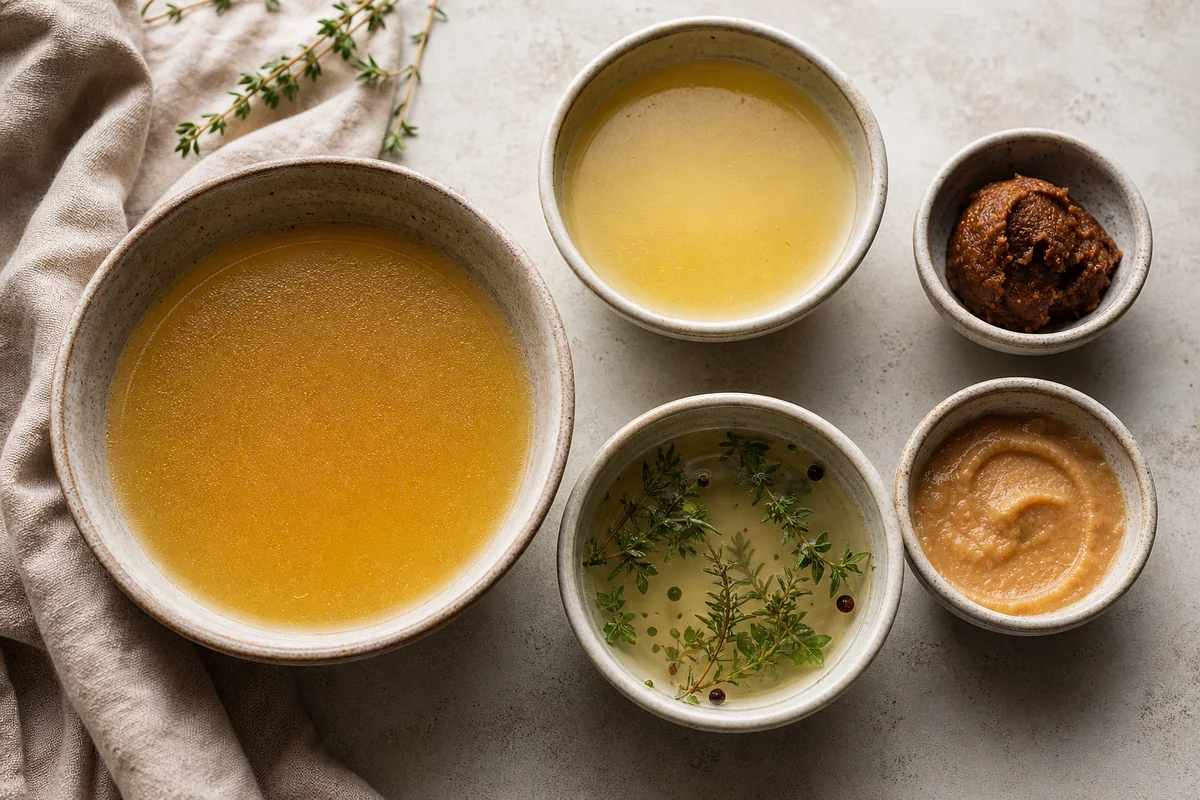
5 Best Chicken Broth Substitutes You Can Trust
Ingredients
Equipment
Method
- Identify your dish’s broth role: soup for body, sauce/gravy for richness, or braise for flavor transfer.
- Choose the closest substitute from the list, then use the listed ratio (start slightly lighter on salt).
- If your substitute is reduced/concentrated (base, bouillon, miso), dilute to match broth strength before adding to the dish.
- Simmer (or warm) just long enough to blend flavors; finish by tasting and adjusting salt/umami.
- If the flavor feels thin, add one small boost: a pinch of salt, a small drizzle of oil, or a tiny splash of soy/worcestershire.
Notes
- Broth substitutes are mostly about salt + savory depth + mouthfeel—adjust salt last after warming.
- For reduced/strong concentrates, start with less, then add until it tastes right.
Tried this recipe?
Let us know how it was!
Carrie is a food writer and editor with more than 15 years of experience. She has worked for some of the biggest names in the food industry, including Bon Appétit, Food & Wine, and Martha Stewart Living.
As the Editor in Chief of EpicureDelight, Carrie oversees all of the content on the site. She also manages the team of contributing writers and editors, who help to create delicious recipes, helpful tips, and informative articles that you’ll find on the site.
A native of the Chicago area, Carrie is passionate about all things food. She loves trying new restaurants and experimenting with new recipes in her kitchen. She’s also a graduate of the Culinary Institute of America, so she knows a thing or two about food!



